
The supplied sources do not preserve a narrative origin myth for Kolanthes. Epigraphic and hymnic material record him as a son within the local patron triad of Akhmim/Athribis — with Min named as father and Repyt/Triphis or Aperetiset appearing as mother — and identify him with Horus and as 'the child of Osiris and Isis.' These cultic and inscriptional attestations (Greek, Demotic and hieroglyphic) frame Kolanthes as a local divine child figure in the late Ptolemaic–Roman religious landscape rather than providing an extant, narrated cosmogonic or mythic origin in the supplied materials.
No specific iconographic description of Kolanthes is attested in the supplied excerpts. The sources record his epithet 'the Child' and his theological identification with the divine child (Horus/royal child), but the provided material contains no preserved, detailed statue types, attire, animal attributes, or consistent visual markers for this deity.
The available inscriptions and hymnic references do not enumerate individualized miraculous acts or a catalogue of powers for Kolanthes. Within the provided material he functions cultically as a divine child identified with Horus and called 'the child of Osiris and Isis,' which situates him in the cultural semantic field of kingship, regeneration and the Osirian family complex; however, no distinct mythic deeds or magical competencies unique to Kolanthes are preserved in the supplied sources.
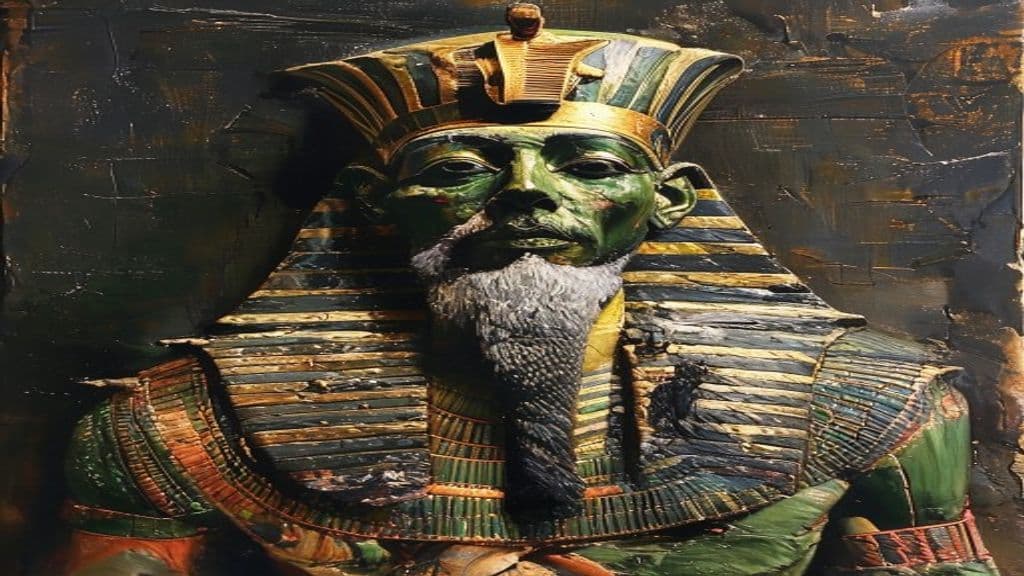
Osiris
Osiris is the major ancient Egyptian god of fertility, vegetation, death, resurrection, and the afterlife. He functions as sovereign of the realm of the dead, a guarantor of postmortem renewal and agricultural fertility, and the archetypal divine figure with whom deceased kings and mortals ritually unite to gain continuity after death.
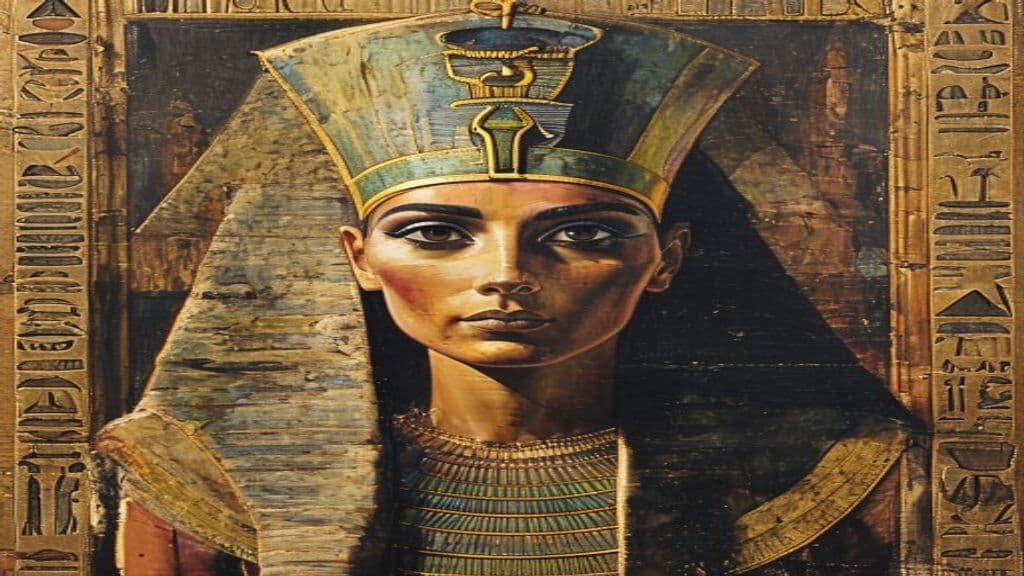
Isis
Isis is a major goddess of ancient Egyptian religion, a member of the Heliopolitan Ennead who functions as sister and consort of Osiris, mother and protector of Horus, a funerary and royal protector, and a locus of potent magic whose cult spread through the Hellenistic and Roman Mediterranean.

Min
Min (Egyptian mnw) is an ancient Egyptian deity of male fertility, sexual potency, and agricultural renewal whose cult began in the predynastic period and was centered at Upper Egyptian cities such as Coptos (Koptos/Qift) and Akhmim (Panopolis). His worship involved public festivals (a "coming forth" and harvest-season rites), votive phallic offerings, and royal associations through syncretism with Horus and Amun and kamutef (self-fathering) imagery.
Koka and Vikoka (Hindu tradition)
Asura brothers, twin generals serving their brother Kali in battle against the 10th avatar of Vishnu, Kalki. (Note: - Power tier should be Greater (deity-level strength as twin generals supporting their brother, a powerful deity) - No information about sensory cues or wards and weaknesses; these should be removed -)
Kokabiel
Kokabiel is a named Watcher in the Enochic tradition, whose name means roughly "star of God" and who is associated with astral knowledge. In the Book of Enoch he is listed among the two hundred angels who descended on Mount Hermon and bound themselves by oath, an act that led to the transmission of forbidden knowledge and human corruption.
Kokko
Kokko is an item name that appears in discussions of Finnish mythology but is not described in the single provided source. The available material situates Kokko within the broader corpus of Finnish pagan folklore without providing specific details about its nature, appearance, or associated practices.
Kokum (Grandmother spirit)
No information about Kokum (a grandmother spirit in Algonquin tradition) is present in the single provided source. The supplied source (a Wikipedia entry for Joshua Whitehead's novel Jonny Appleseed) does not mention Kokum, Algonquin beliefs, or any grandmother spirit, so no factual claims about Kokum can be drawn from it.
Kola Sanni Yaka (Sanni yakuma / Daha ata sanniyas)
A set of ritual spirits invoked in the Sinhalese Sanni yakuma (Daha ata sanniyas) exorcism; understood as spirit-beings responsible for specific illnesses and addressed through a sequence of 18 masked dances that identify, confront, and banish the afflicting spirits.
Kola kanda
Kola kanda is a traditional Sri Lankan herbal congee (porridge) used as a breakfast food and in folk medicinal practice. Sources provided do not support treating 'Kalu Kandha' as a supernatural being; instead the documented term in the sources is the culinary/medicinal preparation 'Kola kanda'.
Komainu
Komainu (狛犬) are paired lion- or dog-like guardian statues placed at thresholds of Shinto shrines (and sometimes temples, noble residences, or private homes) in Japan. As apotropaic architectural figures they ward off evil and mark liminal boundaries; their paired 'a-un' mouths symbolize beginning and end.
Komodo dragon (tradition)
The Komodo dragon (Varanus komodoensis) is a real, living species of large monitor lizard endemic to several Indonesian islands. In ethnolinguistic material recorded from the Komodo language the animal is called sebae ('twins'), a name that encodes a local belief tying island people and dragons through a shared spiritual motherhood; beyond this naming note the supplied sources treat the animal primarily in biological, conservation, and museum terms rather than as a spirit or supernatural agent.
Kompira (Konpira / Konpira Gongen)
Kompira (Konpira, Konpira Gongen) is a locally venerated Japanese protective deity associated primarily with the sea, sailors, and seafaring safety. Centered on the mountain Kotohira in Kagawa Prefecture, the cult is syncretic—embedded in Shinto shrine practice, Shugendō asceticism, and historically described in some texts with Buddhist identifications or foreign-origin narratives.
Komur Han
Komur Han is a named underworld functionary in Turkic myth, listed among the nine sons or subordinate 'hans' of Erlik. He is associated symbolically with coal/charcoal and darkness and is described in popular summaries as commanding evil entities and mediating between Erlik and 'dark shamans.'
Konaki-jiji
Konaki-jiji (子泣き爺) is a yōkai from Japanese folklore, originating in the mountain regions of Tokushima Prefecture on Shikoku and later recorded in national yōkai collections. It is known for luring compassionate travelers by imitating the cry of an infant and then suddenly becoming a crushing heavy weight that kills the carrier.
Kongamato
A pterosaur-like creature said to be a fearsome entity capable of causing large wounds, reportedly seen in the Jiwundu Swamps in western Zambia, Angola, and Democratic Republic of the Congo. (Note: 1. Power tier: Primordial seems too high given the limited abilities described (causing large wounds, aggressive behavior). Lesser would be more plausible. 2. Sensory cues: Add that witnesses report s)
Community Record
- [1]Kolanthes — Wikipedia. Wikipedia entry 'Kolanthes' summarizing attestations, triadic relations, identifications and philological uncertainty.wiki
- [2]Hymn to Kolanthes (fragment). Attalus Project: text fragment and commentary noting a hymn and temple dedication at Athribis.other
- [3]Athribis Project (summary and publications). Athribis Project and related publications cited for the temple inscriptions and archaeological work at Athribis (Leitz, Mendel, El‑Masry, et al.).wiki
- [4]Henadology: Kolanthes. Henadology blog noting variant hieroglyphic reading (Qlndja) and speculative comparison to a Libyan term; marked as tentative in supplied notes.other
- [5]Wikidata: Kolanthes. Wikidata entry classifying Kolanthes as an Egyptian deity.wiki
- [6]News report on recent Athribis finds. Press coverage noting recent archaeological discoveries at Athribis mentioned in the supplied dossier; underscores continuing field relevance but does not add ritual detail for Kolanthes.other
- [7]Biblical Archaeology Society: Treasure Trove of Ancient Astrology Unearthed in Egypt. Contextual reference to horoscopic and documentary materials from Athribis that help date the temple corpus to the late Ptolemaic/early Roman period.other