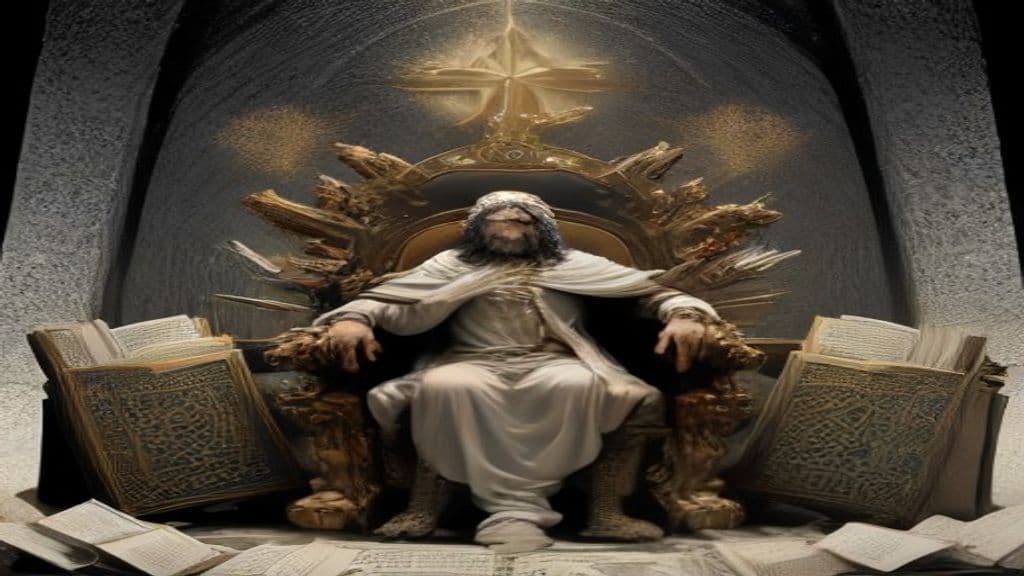
The Last Judgment is presented in scriptural and doctrinal materials as the culmination of history appointed by God. In Nicene Christian accounts it is tied to the Second Coming of Jesus Christ, who returns to judge all humanity (living and resurrected dead); Catholic teaching distinguishes between the particular judgment immediately after death and the general or Last Judgment at history's end, while Eastern Orthodox theology commonly distinguishes a particular judgment and a subsequent final tribunal after the resurrection. Islamic doctrine frames an analogous event (Yawm al-Qiyamah) in which bodily resurrection and account-taking occur, with deeds weighed on a divine scale (Mizan). Wikidata and comparative summaries classify the concept as an eschatological judgment present across Abrahamic-related systems, indicating shared concern with a final accounting rather than a single mythic origin (sources: Wikipedia Last Judgment; Wikidata Day of Judgment; doctrinal summaries).
Scriptural imagery commonly associated with the Last Judgment includes Christ seated upon a "great white throne" (Revelation 20:11), the standing of the dead before the throne, the opening of books containing deeds, and the visible separation of righteous and wicked. Artistic traditions (e.g., Michelangelo's Il Giudizio Universale, medieval cathedral tympana, Bosch triptychs) have elaborated and popularized these motifs—showing resurrected bodies, angels and demons, books, and scenes of reward and punishment—yet such artistic depictions are interpretations of the canonical motifs rather than additional doctrinal claims (sources: Wikipedia Last Judgment; Michelangelo The Last Judgment; art-historical references).
As an event the Last Judgment effects juridical and cosmological consequences: it brings about the general bodily resurrection, publicly reveals the secrets of hearts, and renders the definitive verdict assigning eternal destinies. Christian formulations depict the righteous receiving eternal life in God's presence and the wicked receiving eternal punishment; Catholic teaching adds the doctrinal framework of particular judgment, the possibility of Purgatory for purification, and a final resurrection and judgment. Islamic summaries emphasize that deeds will be weighed on the Mizan and determine entry into Paradise (Jannah) or punishment (Jahannam). The event is thus revelatory, adjudicative, and transformational for creation as a whole (sources: Wikipedia Last Judgment; doctrinal summaries; Wikidata).
Weaknesses
- conditionNone — as an inevitable divine eschatological event it is not wardable or defeatable
Wards
- ritualSacramental and moral preparedness (Christian traditions)
Abel
Abel is the second son of Adam and Eve in the Genesis narrative, a shepherd whose accepted offering and subsequent murder by his brother Cain form the biblical account of the first death. Later interpretive traditions expand his role, treating him as an archetypal righteous victim, a postmortem avenging or adjudicating figure, and in some systems (notably Mandaean) identifying him with an angelic lightbeing.
Abraham
Abraham (originally Abram) is the foundational patriarchal ancestor in the Hebrew Bible whose life establishes a covenantal relationship between his family/people and God. He functions as an exemplar of faith, the progenitor of promised descendants, and a narrative anchor for claims of land, blessing, and communal identity in later religious traditions.
Abraham (Ibrāhīm) in Islam
Ibrāhīm (Abraham) in Islam is a human prophet and messenger chosen by God, a paradigm of pure monotheism (hanīf), patriarchal ancestor to later peoples and prophets, and traditionally regarded as having helped establish the Kaʿbah with his son Ismāʿīl. He is called Khalīl Allāh ('Friend of God') and is central to rites commemorated in Hajj and Eid al‑Adha.
Adam (ʾĀdam)
In Islamic theology Adam (Arabic: آدم, ʾĀdam) is presented as the first human being and the first prophet (nabī), created by God from earth/clay, granted life by God's spirit, placed in a paradisal Garden, taught knowledge (the "Names"), tested by divine command, tempted by Iblīs, and ultimately sent to live and die on Earth while remaining eligible for repentance and forgiveness.
Adam and Eve
Adam and Eve are the primordial human pair in the Abrahamic creation narratives who function as the first man and woman, placed in the Garden of Eden to steward creation. Their eating of the forbidden fruit produces a changed human condition—knowledge of good and evil, shame, pain, labor, mortality—and their story underpins later doctrines such as the Christian doctrine of original sin while being read differently across Jewish and Islamic traditions.
Allah
Allah is the Arabic-language term for the singular monotheistic God of the Abrahamic tradition as used in Islamic theology and by Arabic-speaking Jews and Christians. Linguistically related to other West Semitic divine names, the term in Islamic usage functions as God's unique proper name (Lafẓ al-Jalālah) and denotes the transcendent creator and sovereign of the universe.
Alpha and Omega
A titulary formula and visual symbol formed from the first and last letters of the Greek alphabet (Α/α and Ω/ω), used in Christian scripture and art to denote God's or Christ's totality — 'the beginning and the end.' It functions as a theological appellation rather than an independent supernatural being.
Al‑Yasa (Elisha)
Al‑Yasa (Elisha) is a prophetic figure attested in Abrahamic scriptural traditions. In the Hebrew Bible he is described as an Israelite prophet and 'wonder‑worker'; later traditions in Christianity and Islam also recognize him among the line of prophets.
Angel
A spiritual or heavenly being functioning primarily as a messenger and intermediary between a transcendent deity and humanity; angels also act as protectors, guides, and executors of divine will across several Abrahamic and adjacent traditions.
Angel of the Lord
A recurring divine messenger in the Hebrew Bible and New Testament who appears on behalf of the God of Israel, acting as God's representative in speech and deed. The figure—Hebrew מַלְאַךְ יְהוָה (mal’ākh YHWH)—functions as intermediary, guide, protector, judge, and announcer at decisive narrative moments.
Aram (Nahapet)
Legendary leader and patriarch in Armenian tradition who united Armenians into one state. (Note: - Power tier: Primordial (given cosmic/unifying abilities) - Summary: Expand to include "unification of Armenians" as a key aspect of his leadership - Abilities: More specific and detailed description)
Archangel
An archangel is a ranked heavenly messenger in Abrahamic and related religious literatures, understood in many traditions as a high‑level angelic agent charged with carrying out divine missions. The term and ranked office are framed by Greek etymology (archángelos, 'chief messenger') and by medieval Christian angelology (notably Pseudo‑Dionysius), while named figures such as Michael, Gabriel, and Raphael appear across Jewish, Christian, and Islamic texts and liturgies.
Community Record
- [1]Last Judgment - Wikipedia. Wikipedia, Last Judgmentwiki
- [2]Day of Judgment - Wikidata. Wikidata, Day of Judgmentwiki
- [3]The Last Judgment (Michelangelo) - Wikipedia. Wikipedia, The Last Judgment (Michelangelo)wiki
- [4]Hieronymus Bosch: The Last Judgment (art reference). VisitingVienna, Hieronymus Bosch: The Last Judgmentother
- [5]Assorted archive and art-historical items referencing Last Judgment imagery. Archive.org materials (art-historical and doctrinal summaries)other