
The category of the lilin in Jewish and related traditions is traced in the sources to older Mesopotamian spirit categories. Sources link the Hebrew forms לִילֵי / לִילִין (lilin) to Akkadian lilû (a class of spirits) and to the female forms lilītu / ardat-lilî (wind-demons/ghosts). Jewish texts present lilin as related to or descended from Lilith—sometimes as male counterparts or as her offspring—and they appear in late antique ritual and literary contexts (e.g., 2 Baruch's lamentation summons 'Lilin, come you from the desert'). The archaeological and textual incantation-bowl corpus of late antiquity (Sasanian-period Mesopotamia) shows lilin being named, bound, and sealed in household magic, indicating a syncretic development from Mesopotamian demonology into Jewish and local magical practices.
Descriptions vary across the sources. Some summaries (modern reference to the compiled corpus) describe lilin as human in form with wings; other variant descriptions in the literature note an otherwise bald visage with hair covering other parts of the face and body. Incantation-bowl formulas record lilin appearing to people in human likenesses—specifically 'appear to men in the likeness of women, and to women in the likeness of men'—suggesting either shape-changing or presentation in opposite-gender guises in the magical texts.
Across Talmudic, targumic, apocalyptic, and incantation-bowl sources, lilin are depicted primarily as nocturnal spirits that sexually accost humans (bowls and rabbinic anecdotes describe coupling with humans and producing spirit-offspring), cause terror and household affliction, and enter into relationships with people that ritual specialists treat as contractual or legal ties. They are numerous and routinely subject to binding or sealing by higher ritual authorities (e.g., bowl formulas that adjure seals or invoke named demon-kings), indicating they are powerful enough to menace households but not sovereign over divine or demonic order.
Weaknesses
- ritualBinding and sealing by named seals (as in incantation-bowl formulas invoking 'the great seal of Ashmedai') — documented in bowl inscriptions
- ritualFormal annulment/divorce (geṭ-like) formulae used in bowls to sever spirit-human attachments — documented in 'Divorce Text' bowl material
- ritualConfinement in inscribed incantation bowls that are buried upside down to trap and distance them — attested archaeological practice
- mantraAdjuration by authoritative demon-names and parental names (e.g., Palḥadad, Palḥas, Elisu(r) Bagdana) as recorded in bowl formulas used to compel or bind lilin
Wards
- ritualIncantation bowl deposition (inscribed clay bowls, spiral writing, buried upside down to trap lilin) — preventive and remedial practice in the bowl corpus
- mantraPriestly/liturgical blessing expansions (Targum Pseudo-Jonathan's Priestly Blessing variant adding 'keep thee from demons of the night (lilin)') — liturgical apotropaic speech
- ritualBinding/sealing adjurations invoking seals and named authorities (e.g., 'Bound are the demons and sealed are the lilis... by the great seal of Ashmedai') — protective formulas in bowls
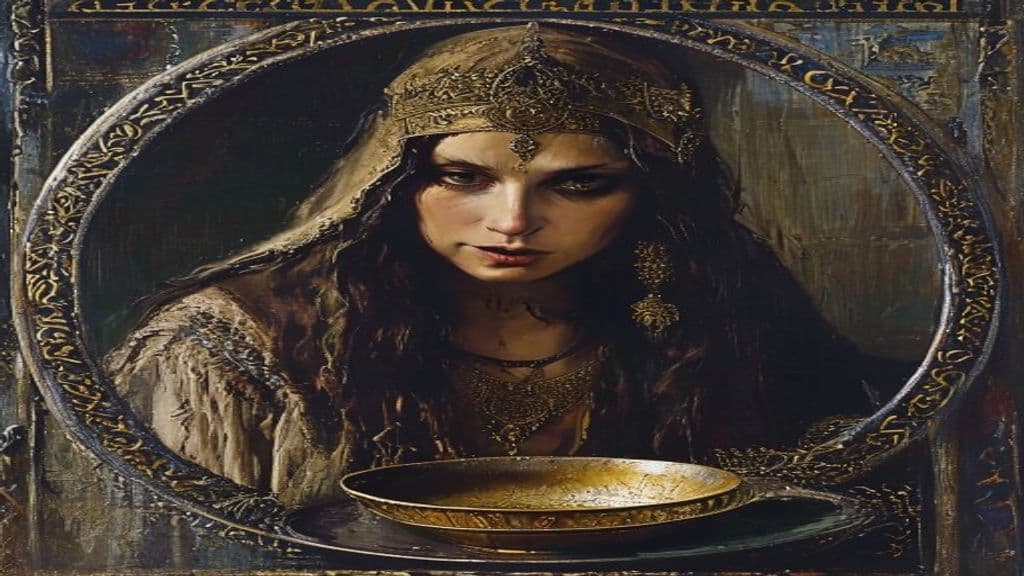
Lilith
Lilith is a feminine night‑spirit in Jewish mythic, magical, and folkloric traditions associated with harmful nocturnal activity, especially threats to sleeping people and infants. The figure appears both as a class of night‑spirits (lilit/lilītu) in Near Eastern demonologies and as an individualized dangerous woman in later medieval Jewish narratives and amulets.
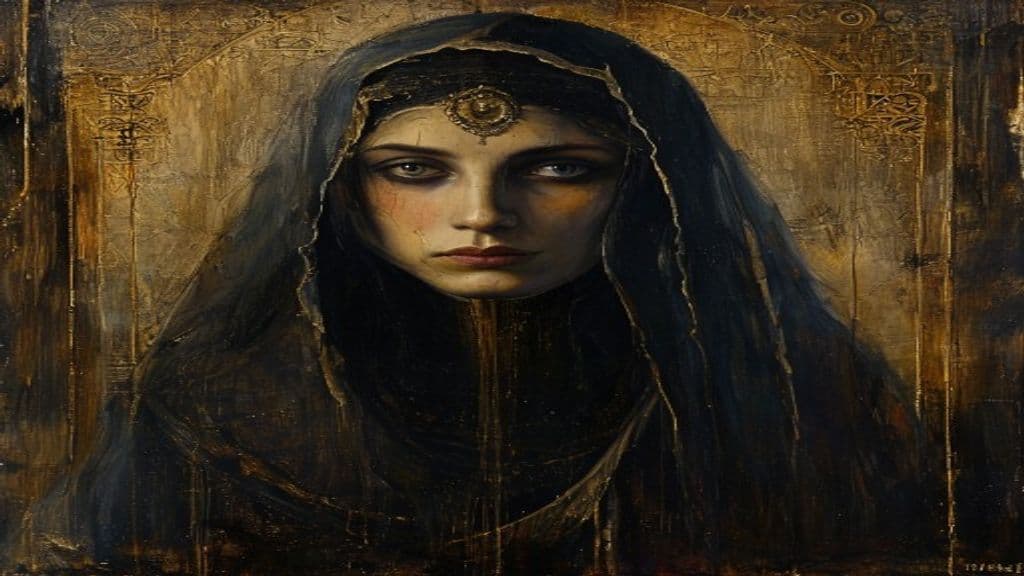
Shedim
In Jewish tradition, Shedim are spirits associated with foreign deities and idolatrous worship, embodying a theological context where monotheistic devotion is threatened by other divine entities. (Note: 1. Factual claim "Primordial" power tier should be adjusted to "Ancient", as Shedim are described as tied to foreign deities and do not appear to possess cosmic-level powers. 2. Remove reference to "m)
Lieaibolmmai
Lieaibolmmai (also Leibolmai, Liejbbeålmáj, Leib-Olmai) is a Sami forest deity who rules wild animals and is petitioned by hunters for good fortune. He is associated specifically with alder trees and appears to humans in the form of a bear.
Life Replacement Narratives (Korean Tradition)
Shamanic narratives or mythological stories conveying cultural and spiritual significance in Korean regional traditions. (Note: - Power tier should be Primordial (as they convey cultural and spiritual significance at a cosmic level) rather than Ancient. - Abilities should mention that they do not have transformative effects on)
Ligeia
Ligeia is the central female figure of Edgar Allan Poe's 1838 short story "Ligeia." Within the story she is portrayed as an extraordinary, raven‑haired intellectual whose intense will and metaphysical learning are suggested as enabling a possible postmortem return; the narrative, however, leaves open psychological explanations (opium‑induced vision, unreliable narrator) and does not present her as a codified folkloric being.
Likho
An anthropomorphized embodiment of bad luck and evil fate in Slavic folktales. Likho appears in narratives as a detachable, transferable force of misfortune—often depicted as a one‑eyed old woman or as an evil male forest goblin—and features in proverbs and cautionary tales that teach avoidance, cunning, or the perils of greed.
Likhoradka
A female spirit in Slavic (particularly Russian) popular belief who personifies fever and sickness. Traditionally portrayed as an agentive being that can possess people or bring disease by touch or kiss; the term likhoradka later lexicalized in modern Russian to mean 'fever'.
Lilaea
Lilaea (Ancient Greek: Λίλαια / Lilaia) is attested in classical and modern reference sources as (1) a Naiad — a freshwater nymph of a named spring in Phocis, daughter of the river-god Cephissus — and (2) separately, as the name of a Maenad recorded on a vase painting. The name is also preserved in toponyms (the ancient polis and modern village Lilaea/Lilaia) and in later namesakes (asteroid 213 Lilaea).
Lilith
Lilith is a feminine night‑spirit in Jewish mythic, magical, and folkloric traditions associated with harmful nocturnal activity, especially threats to sleeping people and infants. The figure appears both as a class of night‑spirits (lilit/lilītu) in Near Eastern demonologies and as an individualized dangerous woman in later medieval Jewish narratives and amulets.
Lilitu / Lilith
Lilitu (Mesopotamian) and later Lilith (Hebrew/Jewish folklore) are feminine night-associated supernatural figures whose identity shifts between goddess, underworld queen, and demoness across sources. In Mesopotamian iconography (e.g., the Burney Relief) the figure combines divine regalia with nocturnal and avian features; in medieval Jewish folklore a fuller character, Lilith, develops from the Hebrew term lilit attested in Isaiah 34:14.
Lillu (Akkadian)
A name attested in modern indices as a Mesopotamian supernatural figure but not supported by direct attestations in the supplied source set; may be related in scholarship and popular literature to the Lilitu/Lilith family of Mesopotamian night- and wind-spirits, though the provided materials do not document the form lillu in primary Akkadian texts.
Lilu (lilû) / Lilītu / Ardat-lilî
A class of Mesopotamian nocturnal spirits or demons (lilû, lilītu, ardat-lilî) thought to arise from the unfulfilled spirits of those who died before marriage or conceiving children; attested in Akkadian magical-medical texts and in Sumerian-Akkadian literature (e.g., the ki-sikil-lil-la-ke of the Gilgamesh cycle).
Lime Tree (Germanic Tradition)
The lime tree is a sacred and symbolic plant in Germanic tradition, associated with protection, peace, and healing. (Note: - Power tier: Primordial (Given its association with protection from harm, evil spirits, or negative energies, which suggests a more cosmic level) - Abilities: Remove "good dreams" as it is not suppor)
Liminal deity (category)
A scholarly category of gods and divine figures whose proper sphere is thresholds, borders, and transitions — places and moments where one state gives way to another. The term aggregates culturally specific deities (e.g., Janus, Hecate, Charon, Cheng'huang, Menshen, Jangseung, Bes) that function as guardians, psychopomps, or mediators at crossings of space, time, or condition.
Community Record
- [1]Lilin (Wikipedia). Wikipedia article 'Lilin' (summary of traditions, appearance variants, relation to Lilith, and incantation-bowl references).wiki
- [2]Incantation bowls and bowl inscriptions (compiled examples cited in research notes). Summarized incantation-bowl corpus excerpts as cited in the research notes (Montgomery's Bowl 1; bowl-binding formulas quoting 'Bound are the demons and sealed are the lilis'; 'Divorce Text' passages naming Palḥadad, Palḥas, Elisu(r) Bagdana).academic
- [3]2 Baruch (Syriac Apocalypse of Baruch) — cited lamentation phrase. 2 Baruch 10:8 as cited in the research notes: 'I will call the Sirens from the sea, And you Lilin, come you from the desert...'literary
- [4]Targum Pseudo-Jonathan (expanded Priestly Blessing). Targumic expansion of the Priestly Blessing adding 'keep thee from demons of the night (lilin),' cited in the research notes as evidence of liturgical protection.literary
- [5]Talmud, Eruvin 18b (paraphrase cited). Paraphrase from Eruvin 18b in the research notes describing how Adam's involuntary nocturnal emissions attracted 'female spirits, who coupled with him and bore spirits (ruhin), demons (shedim) and lilin.'literary