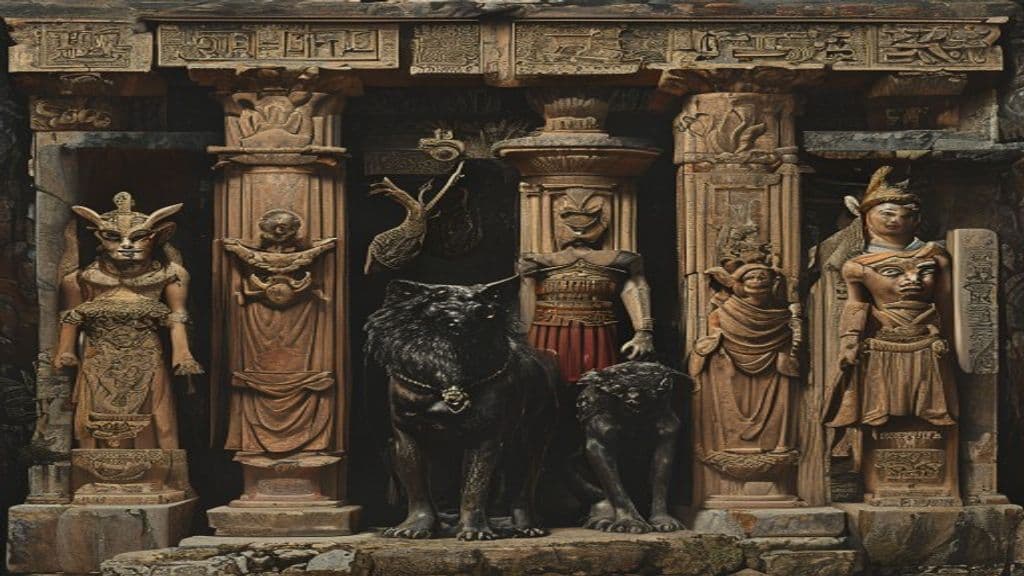
Liminal deity is not a single mythic origin figure but a modern scholarly category derived from the Latin limen 'threshold' and popularized in 20th‑century anthropology (notably Victor Turner) to describe divine figures whose role is to oversee crossings and transitions. Sources collect many culturally specific origin myths for individual members of the category (for example, Janus in Roman cosmology or Persephone's descent in Greek myth), but the category itself is an analytical construct grouping gods whose originary narratives explain their protective, mediating, or ferrying roles at boundaries.
No single physical description applies; iconography varies by culture and by the deity's particular function. Representative examples cited in the sources include Janus as a dual‑faced Roman guardian of beginnings, Cerberus as a multi‑headed underworld watchdog, carved village‑edge totem poles in Korea (Jangseung), painted door‑panels or shrine images for Chinese Menshen, and small apotropaic amulets representing Bes or Pataikos in Nubian/Egyptian material culture. Archaeological and textual evidence thus shows diverse material forms—statues, amulets, reliefs, or poles—deployed at thresholds or on the person.
Liminal deities oversee and regulate transitions: they protect and mark boundaries, frighten off malign beings, guide or ferry souls (psychopomp functions), mediate travel and communication, and embody cyclical dying‑and‑return motifs (vegetation and seasonal gods). Specific abilities are culturally specific: some act as guardians preventing passage (Cerberus at the underworld), others as guides between realms (Charon, Hermes), while civic examples (Cheng'huang) are institutional protectors of city walls and moats. The category therefore encompasses protective, guiding, apotropaic, and calendrical functions rather than a single uniform power set.
Weaknesses
- conditionVaries by individual deity and tradition; not generalizable
Wards
- ritualErection of boundary guardians (Jangseung)
- ritualPlacement of door guardian images (Menshen)
- ritualAppointment and ritual role of city gods (Cheng'huang)
- otherApotropaic amulets representing liminal deities (e.g., Bes, Pataikos)
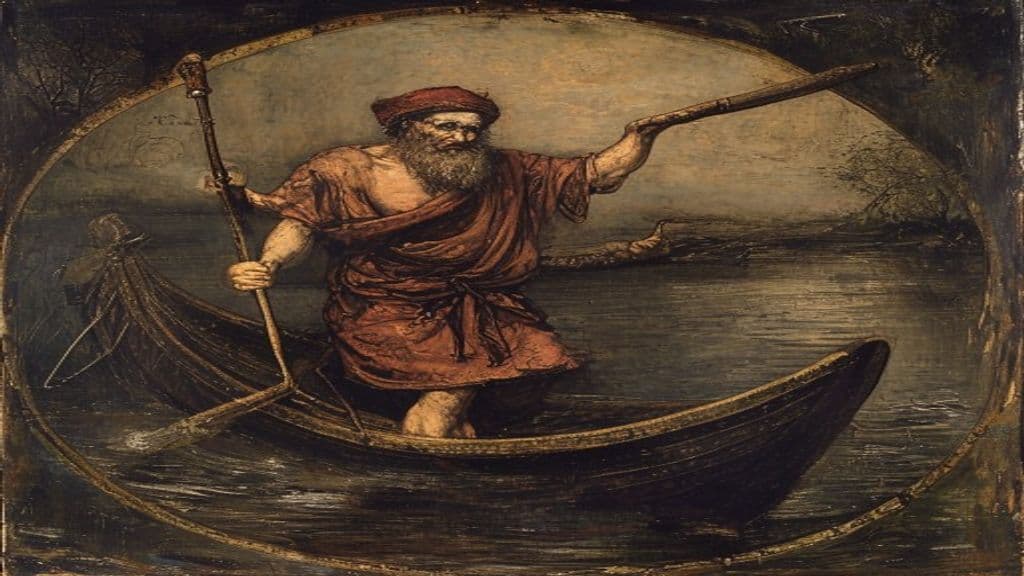
Charon
Charon (Χάρων) is the ferryman of the Greek underworld who conveys the souls of the dead across the boundary river (variously Acheron or Styx). He functions as an underworld attendant and psychopomp whose service typically requires funeral rites and payment (Charon's obol).
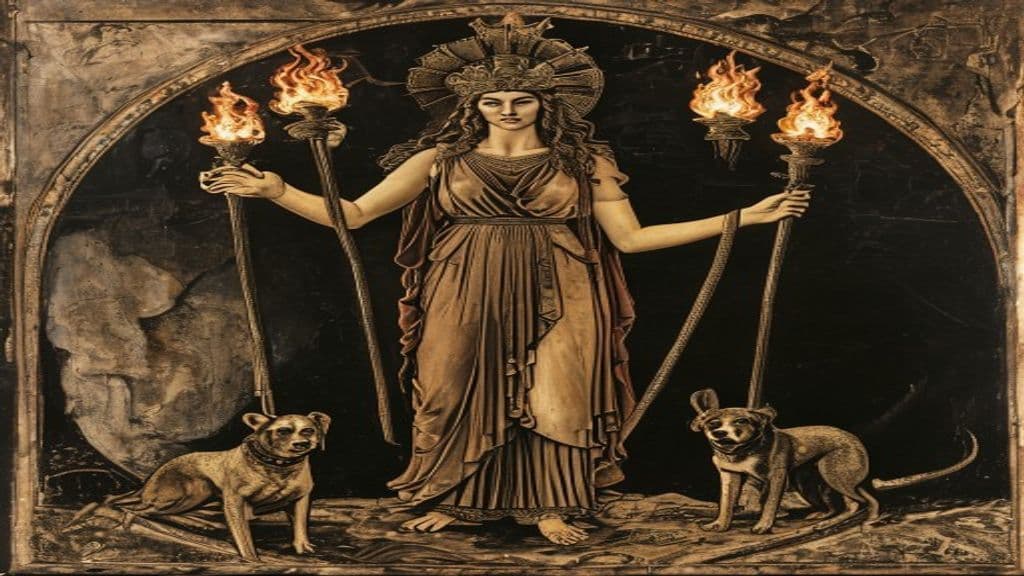
Hecate
Hecate (Ancient Greek: Ἑκάτη) is a liminal goddess in ancient Greek religion associated with crossroads, night, light, magic/witchcraft, the Moon, and household protection. She appears in early Greek poetry (Hesiod) with broad domains and in later traditions (notably the Chaldean Oracles) with expanded cosmological roles; she retained important regional cults, especially in Anatolia (Lagina) and had popular associations with witches in Thessaly.
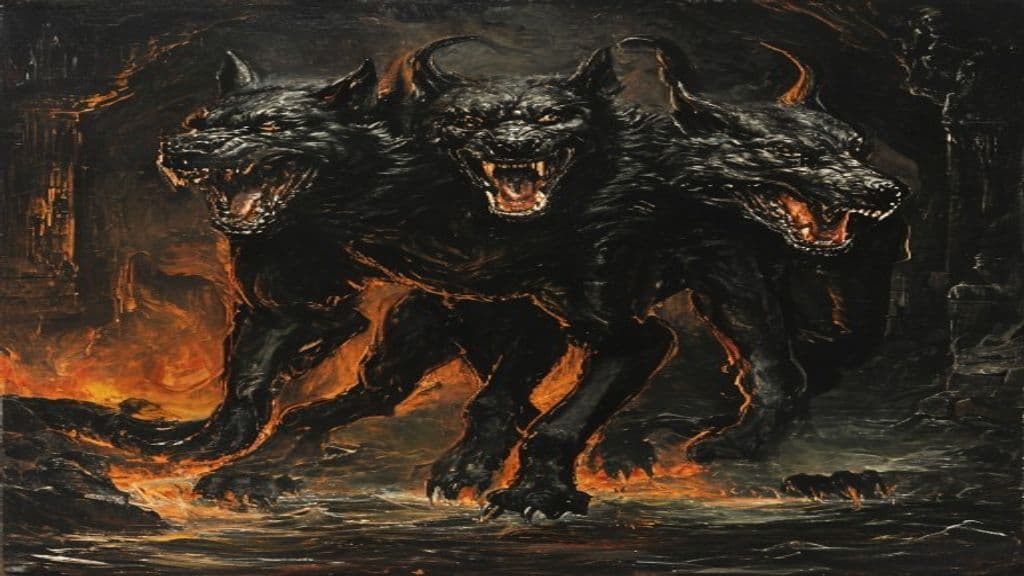
Cerberus
The three-headed hound of Hades, guardian of the underworld's gates — welcoming the dead in but allowing no shade to leave and no living mortal to enter uninvited.
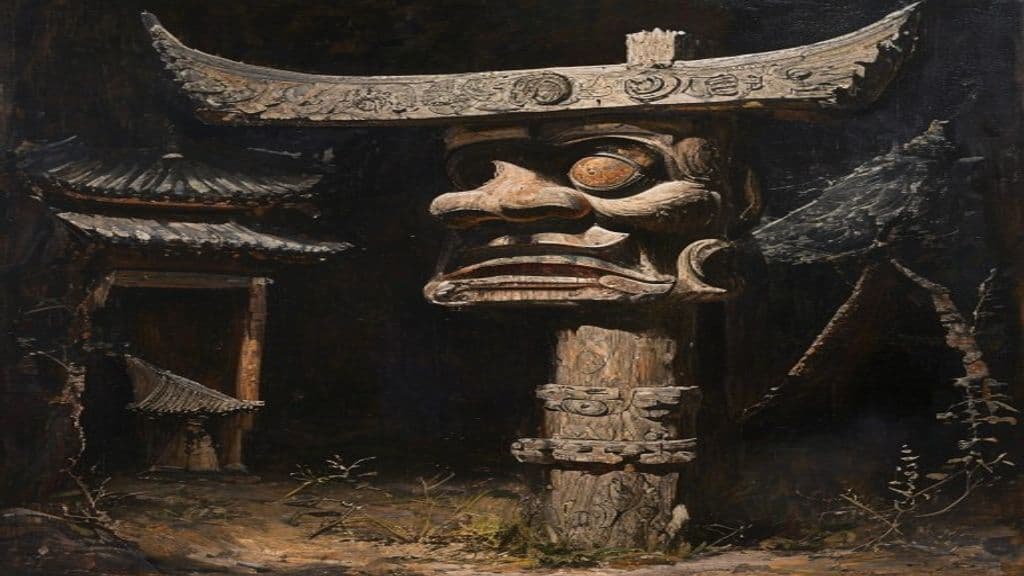
Jangseung (Korean tradition)
A physical object serving as a guardian or tutelary deity for Korean villages, typically made of wood and placed at village edges. (Note: * Power tier: Minor Spirit (a Greater entity would have more significant abilities) * Abilities: The jangseung is not believed to ward off evil spirits/demons, but rather serves as a deterrent and a r)

Bes
Bes is an ancient Egyptian household protective deity, commonly kept close to domestic life to guard mothers, children, and childbirth; he also defends households against snakes and malevolent spirits and is associated with music, dance, and sexual vitality.
*Péh₂usōn (reconstructed)
Péh₂usōn is a hypothetical Proto‑Indo‑European pastoral guardian reconstructed by comparative scholars from parallels in Greek and Vedic traditions. Proposed as a Graeco‑Aryan ancestor‑figure, the reconstruction describes a protector of flocks, roads, and travellers rather than an attested historical cultic personality.
Acestes
Acestes is a Roman/Greek founder-hero associated with the Sicilian city Segesta (Aegesta/Acesta). Presented as son of a Trojan woman and, in one tradition, the Sicilian river-god Crinisus (in animal form), he hospitably receives Aeneas and the Trojans, participates in the funeral games in Virgil's Aeneid (Book V), and functions as an eponymous culture-founder and local ruler.
Aetnaeus
An epithet associated with gods and mythical beings connected to Mount Etna. (Note: - Power tier: Primordial (due to association with major gods like Zeus) - Weaknesses: Needs to be filled - Wards: Needs to be filled - Sensory cues: Needs to be filled - The summary should be revised )
Alexander the Great (legend)
A pan-cultural legendary hero-king whose historical career was transformed into a body of miraculous and etiological tales (the Alexander Romance). In these traditions he is alternately a divinely sanctioned conqueror, boundary-builder credited with the Gates of Alexander, and a questing culture-hero associated with oracles, votive dedications, and tests of loyalty.
Almo
Almo is attested in the provided sources as a river-deity named for the ancient River Almone near Rome. The supplied material identifies Almo only by name and by association with that river; no detailed myths, rites, iconography, or powers are recorded in the provided documents.
Ancile
The Ancile is a sacred shield in Roman tradition, said to have fallen from heaven and perpetuating Rome's sovereignty. (Note: 1. Power tier should be Ancient (deity-level) instead of Primordial. 2. Origin story should note that it is said to have "fallen from heaven" but does not imply direct supernatural or divine origin. )
Attis
Attis is a mythic consort and semi-divine cult figure associated with the Anatolian Mother Goddess (Cybele / Agdistis). He functions as a vegetation-associated beloved whose self-castration, death, and ritual rebirth form the core myth enacted by his priests and festivals, especially around the vernal equinox in Phrygia, Greece and later Rome.
Baldr
Baldr (Old Norse Baldr; Old English Bældæġ; Old High German Balder/Palter) is a god in Germanic mythology. In the Norse branch he is named as a son of Odin and Frigg and as a member of the Aesir, attested alongside brothers such as Thor and Váli in the supplied sources.
Baton (Greek Mythology)
In Greek mythology, the origin, appearance, and abilities of Baton are unknown due to lack of information. (Note: 1. Add "incomplete" or "insufficient information" to the summary to reflect that there's no actual description of Baton, rather than it being unknown. 2. Power tier should be listed as "Unknown" since)
Black Shuck
A spectral black dog of East Anglian legend, with glowing red or green eyes. Its appearance is an omen of death. Its howl has been heard on clifftops during storms for centuries.
Báigǔ Jīng
The White Bone Demon of Journey to the West — a skeletal demoness who shapeshifts into innocent humans three times to attempt to capture and devour the monk Tripitaka.
Caieta
Caieta is a named wet-nurse in Roman mytho-historical tradition who is commemorated as the eponym of Caietae Portus (modern Gaeta). She appears in the literary and commentarial tradition connected to the Aeneas cycle and is remembered primarily through a funerary epitaph and the toponym derived from her grave.
Community Record
- [1]Liminal deity — Wikipedia. Wikipedia, 'Liminal deity' articlewiki
- [2]liminal deity — Wikidata. Wikidata entry for 'liminal deity'wiki
- [3]Liminal Deities in the Borderlands: Bes and Pataikos in Ancient Nubia. Journal of Ancient Egyptian Interconnections article (title/abstract referenced)academic
- [4]Liminal Zones: Where Lakes End and Rivers Begin. Trevathan, Liminal Zones (book, cultural reflections referenced)other