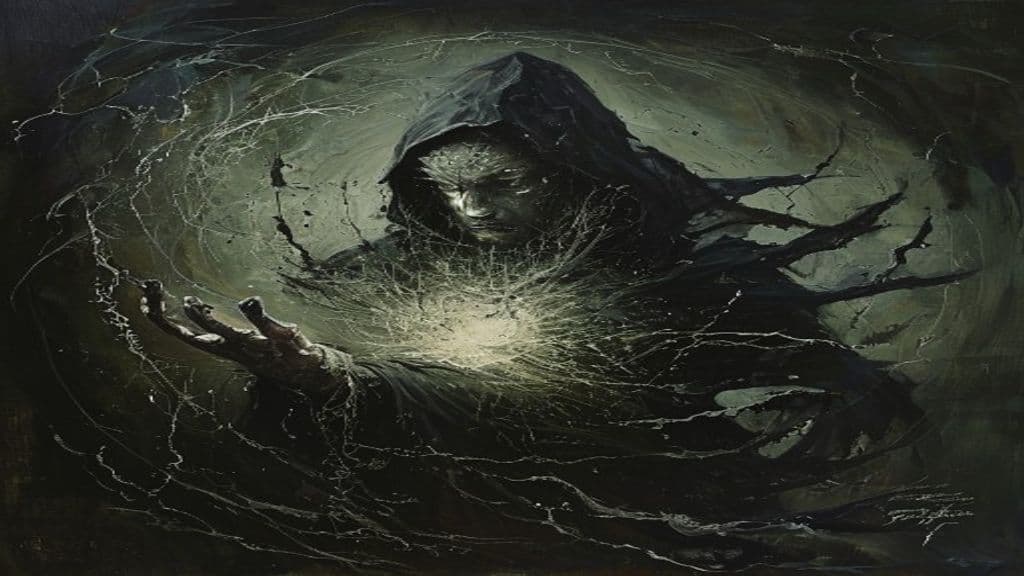
A luote serves as a tool for magic users to cast powerful spells, conveying holy words and commands.
Weaknesses
- non-magical threatsphysical attacks
- specific conditionslack of chanting during full moon
Wards
None recorded.
Lugal‑irra and Meslamta‑ea
A paired divine duo in Mesopotamian religion, Lugal‑irra and Meslamta‑ea function as warrior guardian gods of thresholds and gates—especially gates of the underworld—and are identified in astronomical tradition with the 'Great Twins' (Alpha and Beta Geminorum). They were cultically paired (Maštabba, "the divine twins") and honored in temple and apotropaic contexts across multiple Mesopotamian cities.
Lugh
Lugh is a prominent figure of Irish myth, a member of the Tuatha Dé Danann variously portrayed as a warrior, king, master craftsman and saviour. Epithets (e.g., Lámfada, Samildánach) stress his long arm and polyvalent skill; medieval texts place him centrally in the mythic history of Ireland (notably the Battle of Mag Tuired) and later comparative traditions identify him with the pan‑Celtic Lugus and, by interpretatio romana, with Mercury.
Luit Xuri
The spirit of the Brahmaputra river itself — 'Luit' being the Assamese name for the Brahmaputra and 'Xuri' meaning spirit or essence. One of the few major rivers in Hindu tradition that is male (Brahma's son), his spirit in Assamese folk belief is unpredictable, powerful, and must be addressed before any seasonal beginning.
Luke Cage
Luke Cage is a fictional African-American comic-book superhero created for Marvel Comics in 1972. Portrayed as a formerly incarcerated man who gained superhuman strength and highly durable skin through an experimental procedure, he operates as a street-level hero—originally a 'Hero for Hire'—whose stories engage themes of race, class, and the criminal justice system.
Lulal
Lulal is a Sumerian-origin divine figure attested as a minor god and as an anthropomorphized protective being in Mesopotamian ritual practice. He functions mythically as an attendant or bodyguard of Inanna and pragmatically as an apotropaic presence deployed on amulets, bells, reliefs and clay statues to guard thresholds, baths, and courtyards.
Lumma
Lumma is a minor Mesopotamian deity attested in temple lists and incantations, functioning as a warrior-farmer and a guardian of the Ekur (Enlil’s temple) often invoked to seize or restrain harmful supernatural beings.
Lupae
In Roman tradition, Lupae refers to a female wolf or prostitute symbolizing fertility and protection. (Note: - Power tier: Change to Ancient (deity-level) as Lupae's abilities and symbolism suggest a higher level of power than Primordial. - Abilities: Clarify that Lupae is associated with fertility and prote)
Lupercal
A Primordial entity associated with the mythological origins of Rome, connected to fertility and nurturing through its relationship with the she-wolf (Lupa). The Lupercal entity is linked to a cave at the southwest foot of the Palatine Hill in Rome. (Note: 1. The power tier should be reevaluated; being associated with fertility and nurturing through a mythological context does not necessarily imply Primordial-level powers. 2. Sensory cues are unknown ba)
Lusca
A Caribbean folkloric sea monster associated especially with the blue holes and submerged limestone caverns of Andros Island, The Bahamas; described as a large mollusk-like or hybrid cephalopod predator said to seize swimmers, fishermen, and boats and drag them into underwater sinkholes.
Luxovius
Luxovius (Latinized Luxovios) is a local Gallo‑Roman god associated with the waters of Luxeuil (the sanctuary at Luxeuil‑les‑Bains). He is attested in votive inscriptions as a place‑bound healing/spring deity and is paired in the cult with a female consort, Bricta (Brixta). Etymology links his name to a Proto‑Indo‑European *leuk‑ 'light/whiteness', suggesting combined associations of light and curative waters in his character.
Lwa (Loa)
Lwa, also spelled loa, are spirit beings venerated within the African diasporic religion of Haitian Vodou and incorporated into some revivalist forms of Louisiana Voodoo. Many lwa identities derive in part from deities of West African traditions, especially Fon and Yoruba.
Lycaon (king of Arcadia)
Lycaon is a legendary early king of Arcadia in Greek myth, portrayed as an archetypal impious ruler whose filicidal crime and attempt to deceive Zeus function as a moral and etiological tale linking Arcadian genealogy to mythic origins.
Community Record
- [1]Wikipediawiki