
Sources do not record a single, classical origin myth for Mamlambo in the materials provided. Contemporary and scholarly commentary presents the mamlambo as part of an African repertoire of powerful water beings (explicitly compared to Mami Wata) and situates its prominent modern emergence in public discourse around changing social conditions. Felicity Wood and others frame the mamlambo as arising in part from anxieties about disconnection from traditional communal life, inequalities, and the lure of Western material prosperity; in this interpretive account the mamlambo functions as a seductive, dangerous presence that mediates relationships between wealth, social change, and the unseen. The 1997 media accounts of sightings and attributed deaths at the Mzintlava River near Mount Ayliff gave the figure renewed public visibility in recent history.
Contemporary eyewitness and press reports (noted in sources summarizing the 1997 episode) describe the creature as extremely large (reports claimed about 20 meters long) and composite in form: a head likened to a horse, a lower body like a fish, short legs, and a neck compared to a snake; some witnesses said it shone with a green light at night. These press/eyewitness descriptions coexist with shorter traditional summaries in reference sources that call Mamlambo a large snake-like river deity or 'goddess of rivers.' The detailed 20-meter, horse-head/fish-body description derives from modern press accounts and should be read as contemporary popular imagery rather than a documented canonical traditional iconography.
Reported behaviors in the supplied materials include villagers' attributions of multiple deaths (January–April 1997) to the mamlambo and claims that it 'had the habit of eating faces and brains,' leading to the sobriquet 'the Brain Sucker.' Scholarly interpretation frames mamlambo as both benefactor and threat: a seductive water-spirit associated with offers of wealth and power (analogous to Mami Wata) but capable of ruin. The sources also record a competing forensic explanation offered by police, who suggested post-mortem scavenging by crabs rather than a supernatural predator. Beyond these contested 1997 attributions, sources place Mamlambo among large African lake/river monsters and water spirits that can mediate wealth and social influence.
Weaknesses
- otherNo documented traditional weaknesses in supplied sources
Wards
- otherNo documented wards or protective rituals specific to Mamlambo recorded in the provided sources
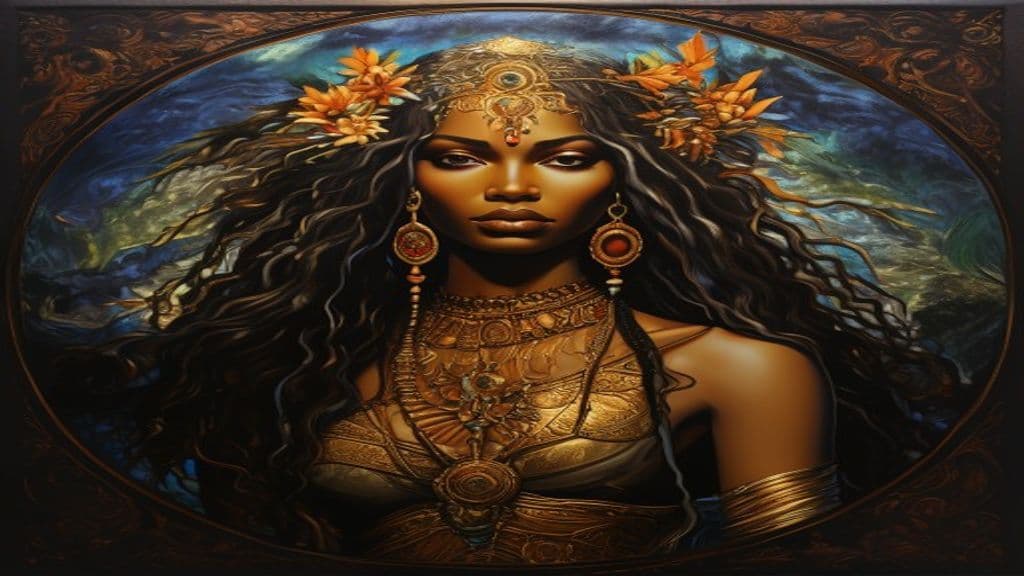
Mami Wata
Mami Wata is a class of water-associated female supernatural beings and deities found across parts of West, Central, East and Southern Africa and in the African Atlantic diaspora. Associated with wealth, fertility, healing, beauty and possession phenomena, Mami Wata figures combine mermaid-like and snake- or crocodile-linked imagery and have absorbed foreign visual forms through historical contact.
Mami Wata
Mami Wata is a class of water-associated female supernatural beings and deities found across parts of West, Central, East and Southern Africa and in the African Atlantic diaspora. Associated with wealth, fertility, healing, beauty and possession phenomena, Mami Wata figures combine mermaid-like and snake- or crocodile-linked imagery and have absorbed foreign visual forms through historical contact.
Mami Wata
Mami Wata is a class of water-associated female supernatural beings and deities found across parts of West, Central, East and Southern Africa and in the African Atlantic diaspora. Associated with wealth, fertility, healing, beauty and possession phenomena, Mami Wata figures combine mermaid-like and snake- or crocodile-linked imagery and have absorbed foreign visual forms through historical contact.
Impundulu
The Impundulu, commonly called the "lightning bird," is a legendary avian creature from Zulu and wider Nguni folklore. Sources describe it as associated with lightning and as a formidable, fear‑inducing supernatural being that appears in modern retellings and popular culture.
Inkanyamba
A serpent-like water-and-storm spirit in southern African (principally Zulu and Xhosa) oral tradition tied to particular deep pools, rivers, and waterfalls. Folklore associates the inkanyamba with tornadoes, seasonal storms, rain and fertility, and with occasional predation on people and animals.
Tokoloshe (Tokolosh)
A diminutive non-human spirit in Nguni and broader Bantu-speaking Southern African traditions, frequently portrayed as a dwarf-like, sometimes hairy water spirit used by malicious people to harass, frighten, or harm others. It functions both as a bogeyman for social discipline and as an explanatory agent for unexplained illness and death, and communities invoke traditional healers or pastors with an apostolic calling to counter it.
Mama Uqllu
Mama Uqllu (Hispanicized Mama Ocllo, Mama Occllo, Mama Okllo) is an Inca mother-figure and culture-founder associated with fertility, marriage, the menstrual cycle, and the transmission of domestic and civilizing arts (weaving, house-building). She is paired with Manco Cápac in foundation myths and appears in variant genealogies as child of either Inti and Mama Killa or of Viracocha and Mama Qucha.
Mamdo Bhoot
The ghost of a Muslim person in Bengali Hindu folk belief — 'Mamdo' deriving from 'Mahmood.' The Mamdo Bhoot occupies a unique place in Bengal's supernatural taxonomy: a cross-religious ghost in a deeply syncretic tradition, with its own distinctive characteristics and ward practices that follow the ghost's religious tradition rather than the observer's.
Mami (disambiguation)
The term "Mami" in the supplied sources is a lexical form found in multiple unrelated contexts (personal names, popular culture, and as part of the compound "Mami Wata"). The provided documents do not support a coherent folkloric entity named solely "Mami." The nearest folkloric referent in the material is the water-spirit complex Mami Wata, mentioned only briefly in the sources.
Mami Wata
Mami Wata is a class of water-associated female supernatural beings and deities found across parts of West, Central, East and Southern Africa and in the African Atlantic diaspora. Associated with wealth, fertility, healing, beauty and possession phenomena, Mami Wata figures combine mermaid-like and snake- or crocodile-linked imagery and have absorbed foreign visual forms through historical contact.
Mamitu
Mamitu (variants Mammitum, Mammitu, Mammi) is a Mesopotamian goddess associated with the underworld, attested in god lists, theophoric names, and cultic contexts, most likely worshiped primarily in Kutha. Her importance in the broader Mesopotamian pantheon was minor and localized; she is recorded as consort to underworld gods such as Nergal, Erra, or Meslamtaea in different textual traditions.
Mamo (Hawaiʻi mamo / Black mamo)
Mamo in the provided sources refers not to a Tibetan spirit but to two extinct Hawaiian nectarivorous finches (Drepanis pacifica — Hawaiʻi mamo; Drepanis funerea — black mamo). The sources document their appearance, ecology, cultural use of feathers, endemic ranges, and last recorded sightings; they do not describe any supernatural or Tibetan entities called Mamo.
Mamu (sleep demon) — note on source absence
No supplied sources document an Aboriginal Australian entity called Mamu as a sleep demon. The name 'Mamu' appears in the provided materials in other, unrelated senses (a Mesopotamian dream deity; an Indigenous Australian people; a Queensland place name), but no ethnographic or folkloric account of an Aboriginal sleep demon named Mamu is present in the supplied sources.
Mana (Oceanic cultures)
A universal, cosmic force in Oceanic cultures that can be intentionally cultivated or possessed, granting supernatural abilities and power. (Note: - Change Power tier from Primordial to Ancient (as Mana is described as a "supernatural force" that can be cultivated or possessed by individuals, suggesting it's deity-level but not cosmic in scope) )
Manaia (legendary chief)
In Māori mythology, Manaia is a legendary chief and ancestor figure who led a great fleet to attack Ngātoro-i-rangi in New Zealand. (Note: 1. Power tier: Greater (not Primordial) - as Manaia is an ancestor figure with significant military prowess, but not a cosmic or deity-level being. 2. Abilities: While Manaia exhibited fierce rivalry )
Community Record
- [1]Mamlambo — Wikipedia. Wikipedia: Mamlambowiki
- [2]Khotso Sethuntsa — Wikipedia. Wikipedia: Khotso Sethuntsawiki
- [3]African Lake Monsters — cryptozoo-oscity. Cryptozoo-oscity: African Lake Monstersother
- [4]Some other African lake creatures — cryptozoo-oscity. Cryptozoo-oscity: Some other African lake creaturesother
- [5]Globalizing African Cinema? | African Film Festival, Inc.. African Film NY: Globalizing African Cinema?other