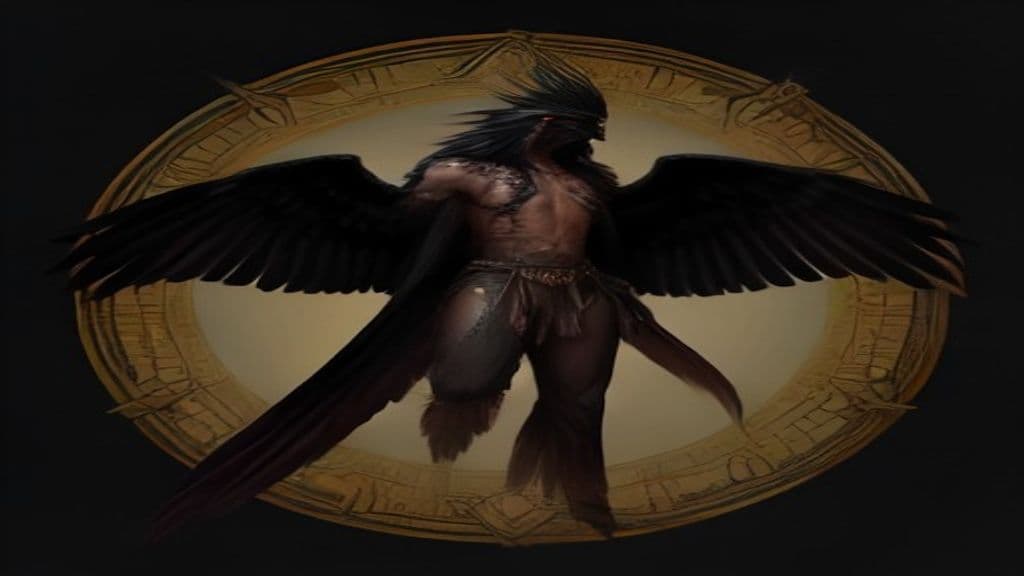
In Tagalog accounts Bathala sends a tigmamanukan omen bird named Manaul to peck a bamboo; when Manaul pecks it the bamboo splits and releases the first man (Malakas) and woman (Maganda). In Bisaya traditions Manaul is a king who guided destinies and who, after instigating war between earth and sky, clawed rocks from the ocean and threw them to form islands. In Mangyan and some Negrito versions Manaul is a wrathful king imprisoned by Tubluck Lawi, who escapes, revolts against gods and spirits, and is punished by Kaptan; Kaptan throws rocks that miss Manaul and become islands where Manaul later rests.
Sources describe Manaul variably as a bird (the Manaul bird) and as a kingly or personified figure; no consistent detailed physical description (plumage, size, or anthropomorphic features) is given in the cited materials. Later common usage of the name also applies to large Philippine raptors (Philippine eagle, white-bellied sea eagle) but mythic texts do not equate Manaul with a specific modern species.
Manaul functions as an omen-bearing agent in Tagalog lore (its flight direction and pecking signal a labay or good omen), as a cosmogonic actor (pecking bamboo to release first humans; flinging or clawing rocks to create islands), and as a powerful/rebellious figure who can instigate conflict among cosmic powers and shape destinies (Bisaya tradition describes him as a king who guided destinies). In Mangyan variants Manaul's rebellion and punishment produce landscape-forming effects.
Weaknesses
None recorded.
Wards
- conditionProhibition on killing (Code of Kalantiaw reference)
Amihan
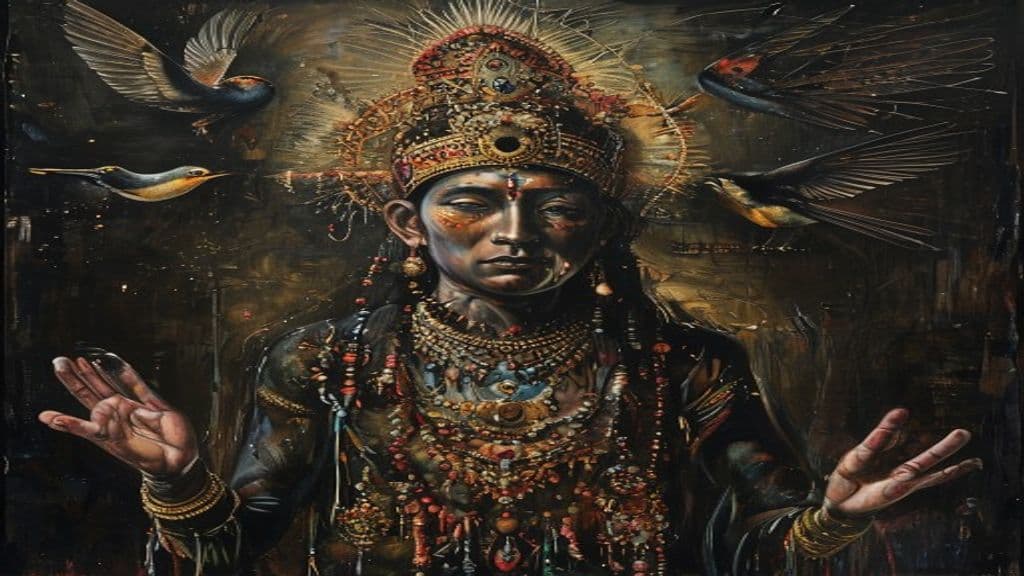
Amihan is a figure in Tagalog/Philippine tradition presented both as a bird-deity in origin narratives and as the name for the northeast monsoon season (a cool trade wind). In mythic accounts Amihan appears in the Malakas and Maganda creation story as the bird who frees or rescues the first humans from a bamboo; in cultural usage the same term denotes the recurring amihan season across the Philippines.
Anito
Anito is a category of non‑human and post‑human spiritual beings in indigenous Philippine animistic worldviews, encompassing ancestor spirits, nature spirits/local deities, and sometimes carved effigies (taotao) that house or represent those spirits. They mediate relations between the living and the unseen world, functioning as household guardians, owners of places, intercessors, or occasional agents of harm when offended.
Bakla
Bakla is a Philippine social and gender category—commonly an assigned‑male‑at‑birth person who adopts a feminine gender expression and is often treated as a third gender. Historically some bakla served as indigenous ritual specialists (babaylan, katalonan), but the term itself denotes a social identity, not a supernatural being.
Tigmamanukan
A Tagalog augural bird — a class of omen-bearing bird (and by extension other animals) read as messages from the creator deity Bathala. Its flight direction and song were interpreted to authorize or forbid journeys and, in some origin myths, a bird identified as the tigmamanukan acts as an agent opening the primordial bamboo.
Mana (Oceanic cultures)
A universal, cosmic force in Oceanic cultures that can be intentionally cultivated or possessed, granting supernatural abilities and power. (Note: - Change Power tier from Primordial to Ancient (as Mana is described as a "supernatural force" that can be cultivated or possessed by individuals, suggesting it's deity-level but not cosmic in scope) )
Manaia (legendary chief)
In Māori mythology, Manaia is a legendary chief and ancestor figure who led a great fleet to attack Ngātoro-i-rangi in New Zealand. (Note: 1. Power tier: Greater (not Primordial) - as Manaia is an ancestor figure with significant military prowess, but not a cosmic or deity-level being. 2. Abilities: While Manaia exhibited fierce rivalry )
Manananggal
A terrifying Philippine vampire who severs its own upper body from its lower half at night, sprouting bat wings to fly out and feast on sleeping pregnant women's fetuses.
Manasā
Manasā is a Hindu goddess associated primarily with snakes, widely worshipped across large parts of India as a protector against snakebite and as a source of fertility and prosperity. In mythic genealogies she is a daughter of the sage Kaśyapa, sister of the nāga king Vasuki, wife of the sage Jaratkaru, and mother of the sage Aṣṭaka/Astika.
Manco Cápac
Manco Cápac is the foundational ancestral figure and culture‑founder of the Inca (Quechua) tradition: remembered as the first ruler (Sapa Inca) and progenitor who, according to origin legends, established Cusco after emerging with Mama Ocllo from Lake Titicaca. Sources treat him variably as mythic ancestor, legitimizing founder, and a possibly historical early ruler.
Mandanu
Mandanu (also Madanu) is a Mesopotamian deity primarily attested after the Old Babylonian period who functions as a divine judge and court official in the entourage of the god Marduk. He is associated with judicial functions, temple-topography in Babylon (notably the temple E-rabriri), and appears in god lists and ritual/topographical texts.
Mandavi
Mandavi (Sanskrit: Māṇḍavī) is a princess of Videha (Mithila) in the Ramayana tradition, wife of Bharata, and is regarded in some retellings as an incarnation of the shankha (conch shell) of goddess Lakshmi. She functions as an exemplary pativrata (dutiful wife) noted for sacrifice and perseverance and figures in narratives that link Mithila and Ayodhya through dynastic marriage.
Mandodari
Mandodari is the principal queen-consort of Rāvaṇa in the Rāmāyaṇa tradition: a beautiful, pious, and morally clear-sighted royal woman of mixed supernatural parentage who functions as a counselor, protector, and ritual exemplar (one of the Pancha-kanyā). Her story appears in multiple regional retellings with variant origin accounts.
Community Record
- [1]Manaul (Wikipedia). Wikipedia: Manaulwiki
- [2]List of Philippine mythological creatures (Wikipedia). Wikipedia: List of Philippine mythological creatureswiki
- [3]Wikidata: Manaul. Wikidata entry for Manaulother