
In the Goetic/grimoire corpus (Ars Goetia) Marchosias is listed as a Marquis of Hell who formerly belonged to the angelic order of Dominations (Dominions) before falling; the grimoire account records that he told Solomon he hoped after 1,200 years to return to Heaven (to the 'Seventh Throne'). Johann Weyer (Pseudomonarchia Daemonum) preserves a variant entry (as 'Marchocias') and records that the being hopes to return but is 'deceived in that hope.' Modern writings and archives treat Marchosias as an emblematic Goetic marquis reused in contemporary occult practice, fiction, and gaming as a martial/ambivalent protective agent or monstrous combatant.
Classical grimoire description (Ars Goetia) depicts Marchosias as a wolf with griffin wings and a serpent's tail, spewing fire from his mouth, and able to assume the form of a man at the magician's request. Weyer (Pseudomonarchia) records a variant as a 'she-wolf' and notes uncertainty about exactly what the creature expels from its mouth. Modern fictional and gaming sources preserve and adapt a lupine, hellhound, or fire-breathing motif (e.g., immense hellhound with red eyes or a fire-breathing wolf).
The Ars Goetia attributes to Marchosias command of thirty legions of spirits, notable martial prowess, the ability to give true answers to all questions, and obedience to a conjuror when bound by ritual; that grimoire context frames him as a combatant, oracle, and obedient summoned agent. Modern interpretations cast Marchosias as a dangerous but sometimes utilitarian ally used against greater threats or as a summoned combatant in games and fiction.
Weaknesses
- ritualSolomonic conjuration and binding (grimoire control)
Wards
- ritualEvocation, binding and seals as recorded in Goetic/Grimoire practice
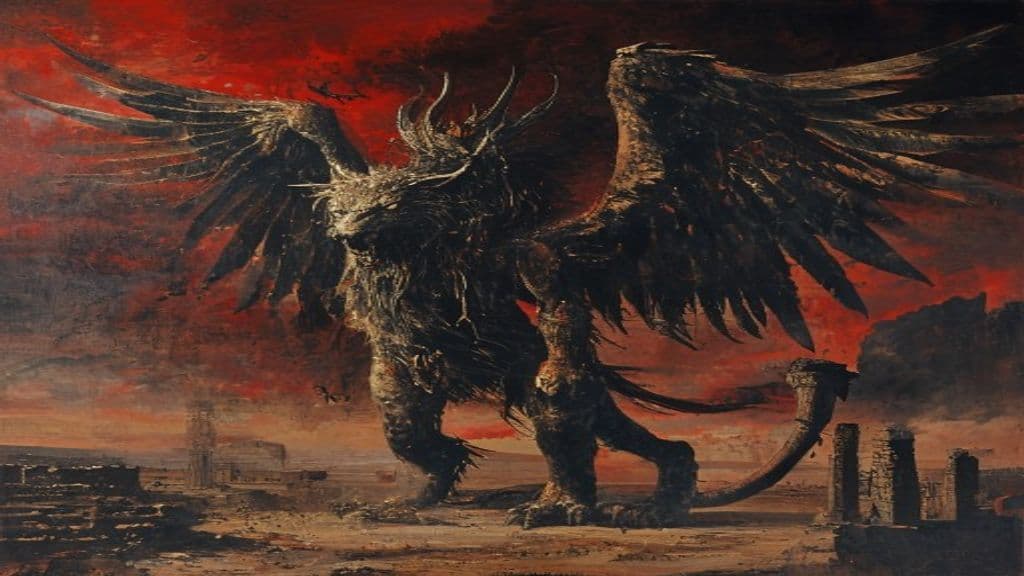
Pazuzu
The king of the wind demons of ancient Mesopotamia, lord of the southwest wind — paradoxically invoked as a protector against Lamashtu and other demons despite being evil himself.
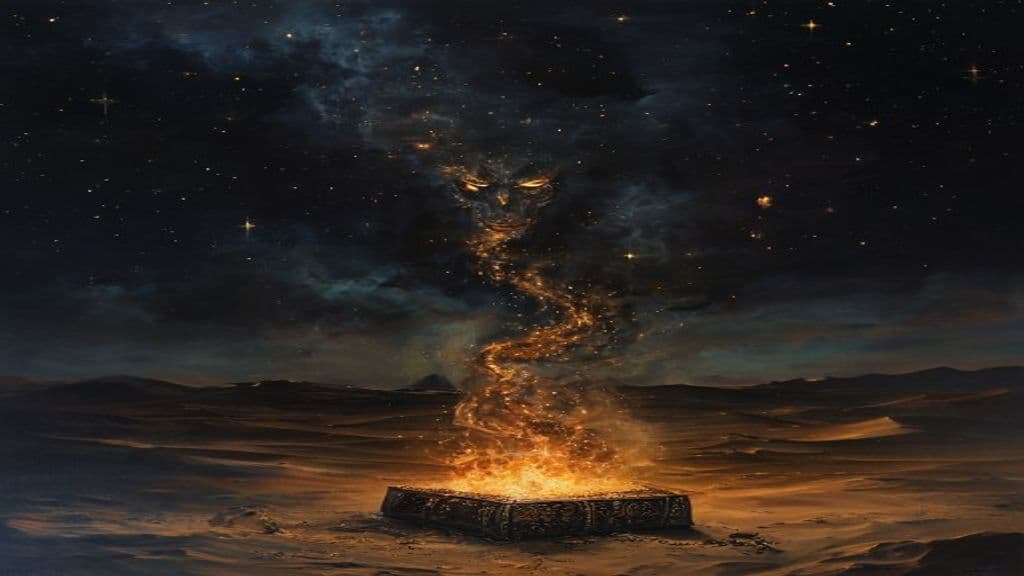
Djinn
The class of supernatural beings created from smokeless fire in Islamic cosmology — a parallel civilization to humanity, capable of belief or unbelief, with their own prophets, society, and judgment before God.
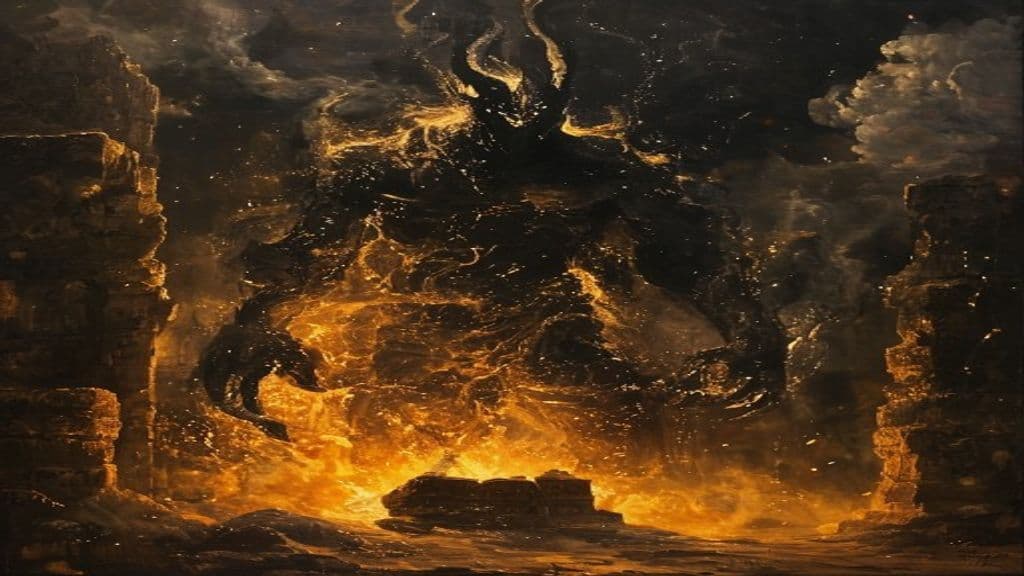
Ifrit
One of the most powerful classes of jinn in Islamic and pre-Islamic Arab tradition — a fire-born being of immense strength and cunning, capable of great works of engineering and terrible violence.
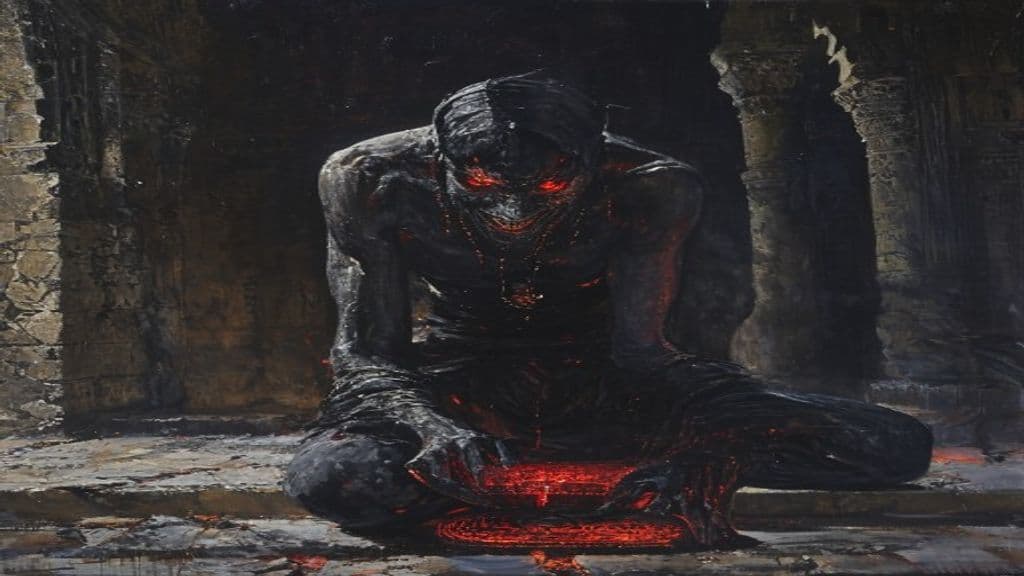
Shaitan
A class of corrupted djinn who follow Iblis and dedicate themselves to leading humans astray — distinct from Iblis himself, the Shayatin are a species of evil djinn who whisper doubts and temptations into the minds of the living.
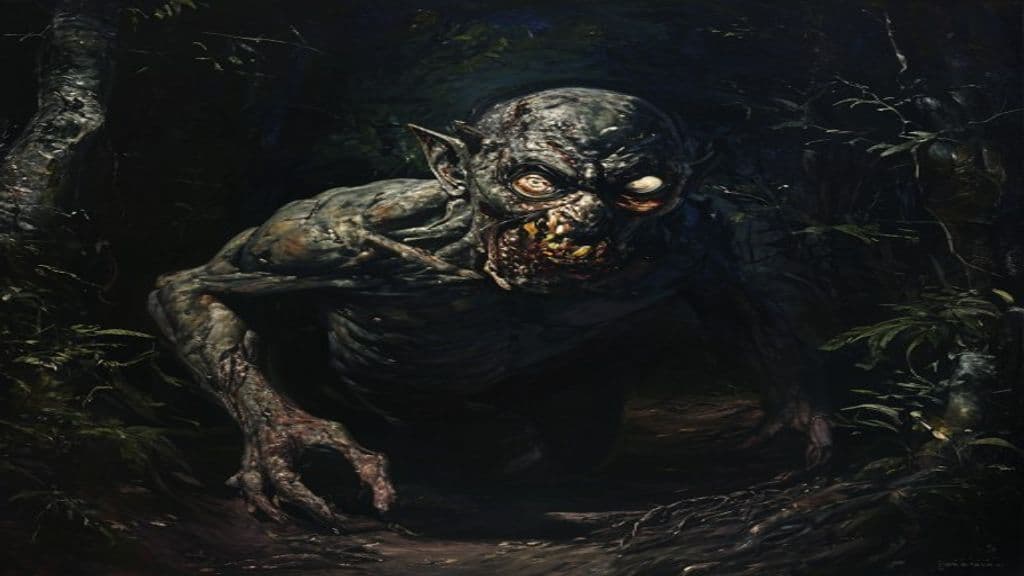
Pishacha
Flesh-eating spirits of Hindu mythology that haunt cremation grounds and are associated with disease, madness, and possession. The lowest class of demon in the Vedic hierarchy.
Demogorgon
A name that emerged in Latin medieval commentary and was later taken up in Renaissance and early modern literature and demonology as a powerful, primordial subterranean or infernal figure associated with fate and accountability. Modern popular culture reuses the name for monsters, but those visualizations are distinct from the medieval and Renaissance textual tradition.
Mara
The nightmare spirit of Northern European tradition who rides sleeping people at night, causing suffocation, terror, and the sensation of an invisible weight on the chest.
Mara (Iza)
Mara (Iza) is a geographic feature — a left-bank tributary of the river Iza in northern Romania. The supplied sources document it as a physical river with measured length, basin area, and a noted tributary; no supernatural or folkloric being named "Mara (Iza)" is attested in the provided materials.
Mara (Tagin)
Mara (also rendered Mra or Mura) is an ethnonym for a human subgroup of the Tagin (Na) peoples of Arunachal Pradesh, India. Attested sources describe the Mara as inhabitants of Limeking in Upper Subansiri (just south of Taksing), with cultural ties to the indigenous Donyi Polo religion and considerable Tibetan Buddhist influence; the supplied corpus contains no documentation of a supernatural being named Mara within Tagin belief.
Mara Jade
Mara Jade is a fictional human character from the Star Wars Expanded Universe (Legends). Introduced in Timothy Zahn's Thrawn trilogy, she is introduced as the Emperor's Hand (an operative for Palpatine), later a smuggler and ultimately a Force-sensitive Jedi who becomes Luke Skywalker's wife and, after her death in later Legends continuity, appears as a Force spirit.
Marassa (Marassas, Marassa Jumeaux)
In Haitian Vodou the Marassa (Marassas, Marassa Jumeaux) are described as divine twins: childlike yet presented as older than other loa and as personifications of core moral and cosmological principles. Sources characterize them as paradoxical 'children mysteries' who synthesize aspects of the loa and are linked to love, truth, justice, reason, and astronomic‑astrological learning.
Marbas
Marbas is a named entry in Western goetic grimoire lists (Ars Goetia and related demonological catalogues) and the name has been reused in various modern secular contexts (music, companies, fiction). The supplied sources do not provide primary folkloric narratives, physical descriptions, or detailed ritual material for Marbas.
Mare (folklore)
A nocturnal malicious spirit from Germanic and neighboring Slavic popular belief that afflicts sleepers and animals by 'riding' or pressing on chests, producing nightmares, sleep‑suffocation, night‑sweats, and exhausted animals. The mare overlaps with related Germanic night‑beings (alp, Mahr, Trute/Drude) and appears in varied regional tale forms and household practices.
Mares of Diomedes
A herd of man-eating horses belonging to the Thracian chieftain Diomedes, famed as the eighth labour of Heracles. They are monstrous animals whose carnivorous habit and violence against guests make them a canonical threat in Greek heroic narrative.
Margot la fée
A vernacular class-name in Breton and Mayenne folklore for a type of powerful, territorial earthly fairy associated with the land, subterranean riches, megalithic monuments, and ambivalent dealings with humans. The category is traditionally linked in local imagination to Morgana (Morgan le Fay) and, more distantly and tentatively, to an aspect of the Earth Mother.
Maria Cacao
A localized Visayan diwata associated with Mount Lantoy (Argao, Cebu) and with nearby cacao cultivation; traditionally depicted as a female mountain/plant spirit who travels by a golden boat along the mountain's river and whose movements are invoked to explain floods and broken bridges. Contemporary variants add a soul‑harvesting/ punitive role in post‑disaster rumors.
Maria Sinukuan
Maria (Mariang) Sinukuan is a Kapampangan mountain diwata associated with Mount Arayat who, in oral tradition and later folklore, oversees the mountain's abundance, aids villagers in need, and punishes greed. The figure is also linked in local narratives to an earlier pre‑colonial deity known as Aring (Apúng) Sinukuan, a solar/war god; sources describe a Spanish‑era reshaping that introduced the Marian honorific and a feminized diwata form in later tradition.
Community Record
- [1]Marchosias - Wikipedia. Wikipedia entry summarizing Ars Goetia and Pseudomonarchia Daemonum descriptions of Marchosias, including appearance, rank, legions commanded, and the claim of hope to return after 1,200 years.wiki
- [2]Marchosias - Wikidata. Wikidata item indexing Marchosias as a Goetic entry (Ars Goetia position).wiki
- [3]The Architecture Of Intervention (archive). Modern interpretive/archive source discussing 'The Paradox of the Protective Demon' and using Marchosias as an example of a 'Noble Demon' engaged instrumentally by occult investigators.other
- [4]Dakota Frandsen Vs. The Lord Of Shadows Interior Preview (archive). Archive item referencing Marchosias in a modern narrative/fictional context (example of contemporary reuses of the figure).other
- [5]RPG and fandom references (compiled sources). Examples of gaming and fandom usage cited among the supplied materials; gaming sources treat Marchosias as a martial summoned combatant or vestige in modern systems.other
- [6]All The Tropes - Ars Goetia. Reference noting thematic links among Goetic figures who profess aspiration to return to Heaven; used to situate Marchosias among similar Goetic motifs.other
- [7]Rainverse Wiki - Marchosias. Fictional/wiki entry exemplifying modern adaptations portraying Marchosias as a martial infernal being.other