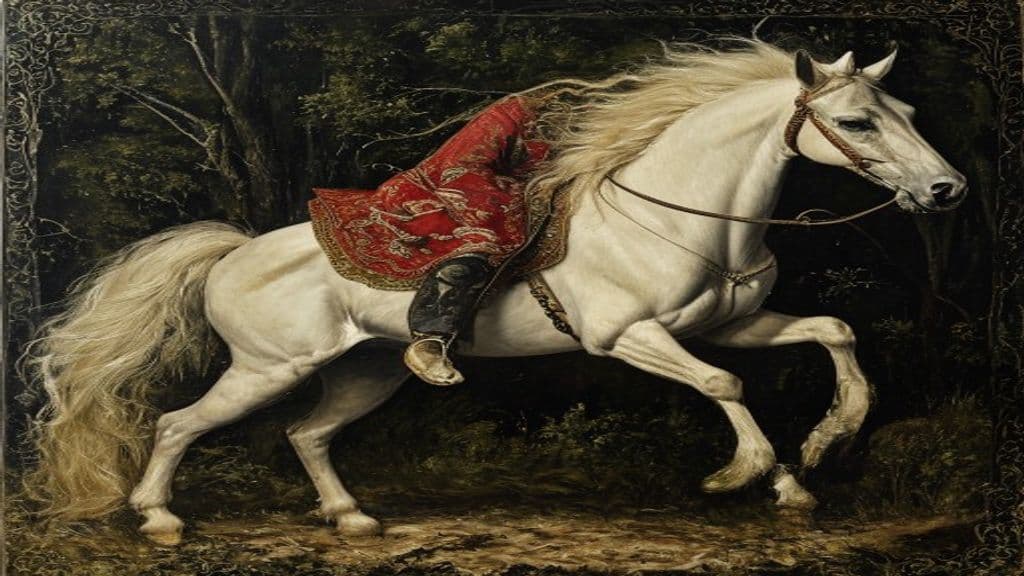
The lexical and folkloric tradition of the mare traces to Old English mære and cognates across Germanic languages (Old Norse mara; Old High German mahr/mara; Low German mahrt/mårt), derived from reconstructed Proto‑Germanic *marōn. Scholars trace the root further to Proto‑Indo‑European *mer‑ associated with crushing/pressing; late medieval and regional German sources blur distinctions among mare, alp, and related night‑beings, with some texts describing the Mare as the Alp's mother. The tradition developed as a vernacular explanation for night oppression, nightmares, and related domestic phenomena, with regional tale variants and remedies attested in places such as Pomerania, Westphalia, Rügen and other Germanic areas.
Accounts vary regionally and in tales. The mare is often presented as a female being with magical abilities and occasional shapeshifting; some local tales depict it as a girl with a defective foot (e.g., a Pomeranian daughter of a smith). Folklore also links it to equine imagery — it 'rides' horses and is associated with mare‑locks (entangled manes/hair). In narrative episodes the mara may appear semi‑corporeal (able to be trapped in a househole or caught by painting its hands and setting it on an oak in a Pomeranian tale), though precise form and sex vary by account.
Primary behavior is nocturnal affliction: the mare sits, walks, or rides on peoples' chests while they sleep, producing nightmares, a suffocating sensation, cold sweats, and a state in which victims can groan yet are otherwise speechless and hard to awaken (a feature noted in German accounts). It also rides animals (notably horses), leaving them exhausted and sweaty, and tangles human and animal hair (marelocks; regional terms marflätor, marefletter, marefloker). Some traditions and scholars link these phenomena to witch‑like soul‑flight or shapeshifting spirits whose animal forms cause similar effects.
Weaknesses
- conditionbeing called by baptismal/given name (can awaken victim)
Wards
- ritualplugging holes in house (regional, German)
- conditionplacing an upside down pair of slippers by the bed (Pomerania)
- ritualboiling water in a newly bought jar plugged with a new cork (Quazow/Schlawe district remedy)
- ritualoffering a cold bowl and buttered bread the morning after a visit (Pomeranian variant of appeasement)
- mantraregional charms/prayers (e.g., Westphalian charm, medieval Münchener Nachtsegen examples)
Alp
A German nightmare demon — often the projected spirit of a living person — who sits on sleeping victims' chests causing terrifying dreams, sleep paralysis, and wasting illness.

Drude
A female nocturnal spirit in German folklore associated with causing nightmares and the sensation of being pressed in sleep (Alpdruck). Treated as a kind of alp or witch-hag in southern German and alpine traditions, with household apotropaics and local counter-practices recorded.
Berggeist
A German-language term denoting a mountain-spirit: an immanent, place-bound personality associated with a specific mountain. The concept is discussed in 19th-century German folkloristic classification of nature-spirits (Mannhardt) and appears in 20th-century artistic representation (Josef Madlener's painting "Der Berggeist").
Bäckahäst
A Scandinavian water-horse figure: a horse-shaped water spirit associated with streams, rivers, lochs and other watery edges. Presented in comparative folklore as a member of the wider water-spirit or ‘water-horse’ family that functions as a cautionary figure about the hazards of water and unknown horses at the water’s edge.
Changeling
A changeling is a human-like substitute left by nonhuman beings (fairies, trolls, demons, etc.) after they abduct a human—most often an infant. Found throughout much of European folklore, the changeling functions as an uncanny domestic replacement whose presence explains sickness, developmental difference, or sudden loss.
Deildegast
A Norwegian folkloric ghost bound to boundary stones as postmortem punishment for those who moved or tampered with property markers; compelled to attempt to restore displaced stones but never succeeding, it serves as a social deterrent against moving borders.
Doppelgänger
A supernatural double or look‑alike of a living person, frequently reported in folklore and literature as a haunting counterpart or an omen of misfortune. The motif appears across cultures with related but distinct concepts (e.g., Egyptian ka, Norse vardøger, Finnish etiäinen, Muslim karin/qareen).
Einherjar
Warriors who died in battle and were brought to Valhalla by valkyries, playing a crucial role in the events leading up to Ragnarök. (Note: - Power tier should be Primordial since they are associated with a cosmic event (Ragnarök) and are not described as deities or regional powers. - Abilities: The einherjar don't actually engage in dail)
Flogdrake
A Scandinavian firedrake or "fly‑dragon" associated with evening streaks of light in the sky and with tunnelling mountain lairs that hide ore and treasure. Primarily attested in Swedish folklore, it participates in a pan‑European motif of fiery serpents and is sometimes linked with household or earth spirits in nearby traditions.
Frau Holle
Frau Holle (also Hulda, Holda, Holla, Perchta/Berchta and regional variants) is a persistent Germanic folkloric female figure associated with household arts (spinning and linen-making), nocturnal spirit-processions of women, and a winter/snow motif (the Grimm tale of shaking featherbeds). She appears across medieval canonical texts and later folklore, where she functions as a domestic protector/teacher, a leader of nocturnal female companies, and an agent of moral reward and punishment.
Freyja
Freyja is a major Vanir goddess in Norse mythology associated with love, beauty, fertility, gold, war, and the seiðr form of magic. She rules the field Fólkvangr and the hall Sessrúmnir, where she receives half of those slain in battle, and is attested across the Poetic Edda, the Prose Edda, skaldic poetry, and later Scandinavian folklore.
Haymon
A giant from Germanic folklore associated with the founding of Stift Wilten, a premonstratensian abbey. (Note: 1. The power tier should be Primordial, as it is described as a "giant" from Germanic folklore and associated with founding an abbey, implying a significant level of cosmic influence. 2. Add origin st)
Loathly Lady
In Germanic folklore, the Loathly Lady is a narrative device used in medieval literature to convey transformation and redemption. She appears unattractive but becomes desirable upon being approached by a man. (Note: - Power tier: Greater (deity-level abilities not specified, but transformative power implies regional or greater scope) - Appearance: Clarify that physical description is implied to be ugly/unpleasant)
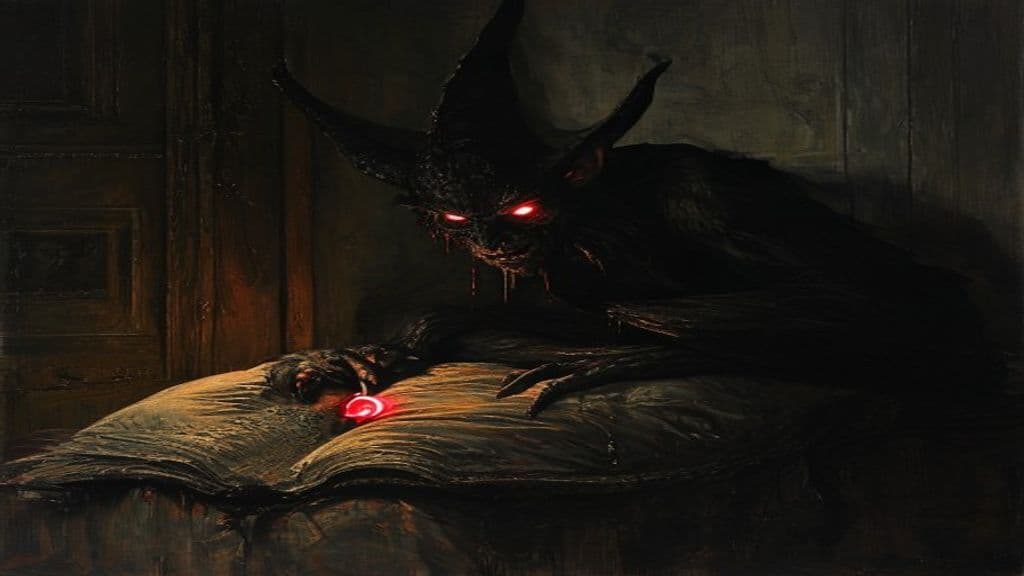
Mara
A nocturnal malevolent spirit in Germanic and Slavic folk belief that sits on or 'rides' sleepers' chests to produce nightmares and the sensations associated with sleep paralysis. Frequently depicted as female and possessing magical abilities such as shapeshifting, the mara functions as an agentive folk explanation for oppressive nocturnal experiences.
Community Record
- [1]Mare (folklore) — Wikipedia. Wikipedia: Mare (folklore) — etymology, German and Pomeranian accounts, wards and remedies, relation to Alp/Drude.wiki
- [2]Research notes compiled from provided source excerpts. Compiled research notes supplied by user summarizing regional Germanic and Pomeranian variants, etymology, and ritual practices (includes mentions of Paul Devereux and Éva Pócs as cited in source material).other