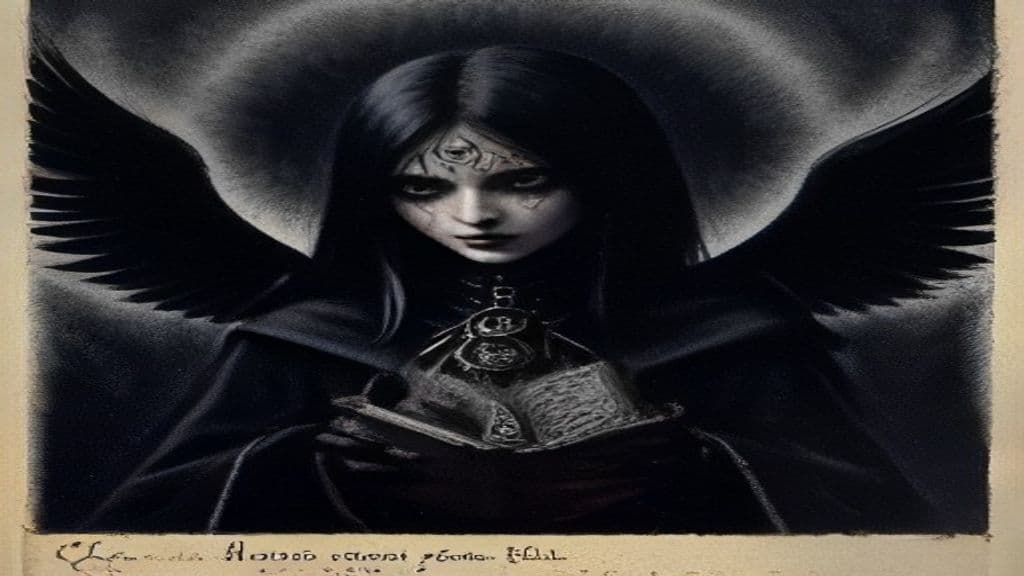
No historical or mythic origin narrative for Murmur is provided in the supplied sources. The available materials show the name circulating as a catalogued demon-name in modern reference pages and as a reused proper name in contemporary creative projects and popular-culture pages, but they do not provide an attestable origin story or classical grimoire provenance.
The supplied sources do not record any consistent physical description or pictorial attributes for Murmur. No classical-goetic appearance details are present in the provided corpus.
The provided material does not document specific powers, offices, or behaviors for Murmur from classical grimoires. A modern creative source (NUMOTECHNICS archive) attributes symbolic correspondences and an internal syzygetic rite to Murmur, but this is a contemporary/fictional portrayal and is not corroborated by historical grimoire evidence in the supplied documents.
Mummy (undead) (Egyptian tradition)
In Egyptian folklore, a mummy is an undead creature believed to be the reanimated corpse of a deceased person. (Note: * Power tier: Should be Primordial, given the association with cosmic entities and magical powers tied to ancient Egyptian rituals. * Abilities: Clarify that supernatural abilities refer to those on a)
Mumudu (Mamu)
Mumudu (more commonly Mamu) is a Mesopotamian deity associated with dreams, attested both as described in god lists as one of the seven Šassūrātu/assuratu and in other texts as a daughter of the sun god Shamash/Utu who could be called the 'Utu of dreams'. Surviving excerpts provide no iconography or ritual prescriptions tied specifically to her.
Muneeswarar
Muneeswarar is a Tamil folk Hindu rural guardian deity venerated especially in Tamil Nadu and Tamil diaspora communities as protector of plantations, estates, and as an attendant or emanation connected to Shiva and to major folk goddesses such as Mariamman. His cult exists in both orthodox Vedic/Agamic temple modes and in non-Vedic folk modes, and much of his history and attributes are preserved in oral tradition and temple practice rather than in Vedic or Purāṇic texts.
Munisuvrata
Munisuvrata (Munisuvratanātha) is the twentieth tīrthaṅkara of the present Jain avasarpini (descending half cycle), a human exemplar who, according to Jain tradition, attained kevala jñāna and later liberation. He is venerated in temple cults, liturgical poetry, and monumental images across the Indian subcontinent.
Munjeon (Munjeon Bonpuri)
A Jeju Island household deity-concept focused on the house doorway, preserved in a shamanic narrative genre (Bonpuri) that explains the doorway's place within the Gasin, the ensemble of household deities.
Munjya
Spirit of a Konkani boy who died before his sacred thread ceremony, forever trapped between childhood and adulthood — mischievous, lonely, and hungry for belonging.
Muses
Divine inspirational figures of ancient Greek religion and mythology who personify and authorize the arts, literature, and learned knowledge; traditionally enumerated as nine daughters of Zeus and Mnemosyne in the Hesiodic account and associated with sacred springs and cult sites such as Mount Helicon and Delphi.
Musgosu
Musgosu (alternately attested as busgosu) is a named figure in the folk catalogs of Cantabria and is also mentioned in Asturian popular-legends material. Available sources record the name and regional placement but provide no detailed ethnographic description; one comparative commentary equates the name with the Basque Basajaun as an analogue rather than supplying direct Cantabrian testimony.
Muspilli
An Old High German alliterative verse poem from a ninth-century Bavarian manuscript, describing the fate of souls in Norse cosmology. (Note: - Power tier should be Primordial (cosmic level) due to its description of Norse cosmology. - Origin story should clarify that the etymology is unclear and that many aspects of interpretation are disp)
Mustukene
Mustukene is attested in a literary source as the proper name of a dog listed among 'the dogs of the sons of Kalev.' The cited passage glosses the name as meaning 'Blackie' and notes a disputed alternative translation ('Throttler'). No supernatural status, actions, or rituals are provided in the source.
Mut
Mut is an ancient Egyptian mother goddess associated with the primordial waters (Nu), the Theban Triad, and the Eye of Ra corpus. She functions as a cosmic maternal principle, a local patroness of Thebes with temples and priesthood, and a shifting consort/maternal figure within Amun-centered theology.
Mutya (TV series character)
Mutya is a fictional child mermaid character from a 2011 Philippine television drama who is portrayed as the love child of a human woman and a prince of an underwater kingdom; the narrative emphasizes her liminality between human society and a seaworld royal realm rather than a traditional folkloric ontology.
Community Record
- [1]Murmur. Wikipedia, 'Murmur' (disambiguation entry listing 'Murmur (demon)')wiki
- [2]Murmur (Wikidata entry). Wikidata entity Q2357824 labeled 'demon'wiki
- [3]List of demons in the Ars Goetia. Wikipedia, 'List of demons in the Ars Goetia' (modern reference list including Murmur)wiki
- [4]Murmur // NUMOTECHNICS. NUMOTECHNICS archive entry (modern/creative project) describing symbolic correspondences for 'Murmur' as one of five 'syzygetic demons'.other
- [5]Silence — A Fable (Edgar Allan Poe). Edgar Allan Poe Society reprint of 'Silence — A Fable' (literary uses of the words 'Demon' and 'murmur' noted in research notes; not a source for the goetic entity Murmur).literary