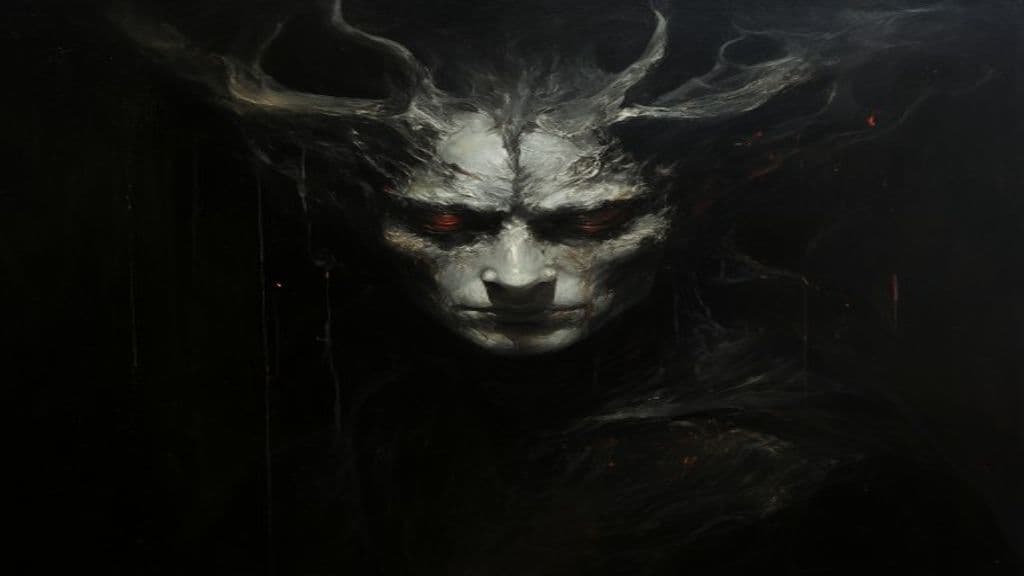
General Sinui is a legendary figure in Korean tradition who defied death, as per the myth.
No physical description of General Sinui is provided in the source material.
The connection or ability related to life or vitality attributed to General Sinui is unclear or unspecified.
Bulgae (Korean Fire Dog)
A mythical Korean fire dog said to cause eclipses by biting the Sun and Moon. (Note: * The power tier is incorrect; according to the source, Bulgae cause eclipses by biting both the Sun and Moon, but there's no indication that they're on a primordial level. It should be at least Ancie)
Gunungsin (War Gods)
Korean deities associated with war and conflict, possibly connected to the Jakjaegeon myth. (Note: 1. Power tier should be Primordial only if it's supported by source material; based on the provided sources, the power level is unspecified. 2. Abilities are unknown or unspecified in source material,)
Haneunim / Hananim
Haneunim (하느님) or Hananim (하나님) is the sky god in Korean mythology presented as the supreme heavenly deity. The figure functions as the Lord of Sky in older Korean cosmology, appears in the Dangun foundation myth (via the closely related Hwanin/Hwanung genealogy), and is identified in syncretic religious contexts with high deities such as Indra (Śakra), the Jade Emperor (Okhwang Sangje), and is named in modern Korean religions including Cheondoism and Jeungsanism; the terms have also been used as Korean translations for the Christian concept of God.
Onjo and Biryu's Baekje Creation Myth
The creation myth of Baekje revolves around the two brothers, Onjo and Biryu, who founded the dynasty. They possess human capabilities like decision-making and leadership skills. (Note: 1. Power tier: Greater (Onjo and Biryu's actions drove the founding of an entire kingdom) 2. Abilities: Add that their abilities also include diplomatic efforts and negotiations with other kingdoms 3.)
Samsin Halmeoni
A Korean goddess associated with childbirth and fate, revered for her connection to family lineage. (Note: * Power tier: Lesser (based on the description of being a localized spirit) * Abilities: Add that she has no specific abilities or behaviors described * Sensory cues: None listed in source material * )
Seonangshin
Korean patron deity of protection and war, guarding villages from harm. (Note: * Power tier should be Ancient, not Primordial, as the description implies a deity-level power but does not describe cosmic or universal implications. * Appearance is missing, but since it's not provi)
Sosamshin
In Korean mythology, Sosamshin is a household deity and the goddess of the birth of cattle. She occupies an important place in the cosmology of her source culture. (Note: * Power tier: Lesser (not Greater), given that Sosamshin is a household deity and not described as having deity-level powers. * Summary: While it's mentioned she occupies an important place in her sou)
Tan'gun
Legendary founder and first king of Gojoseon, considered divine with heavenly ancestry. (Note: - Power tier should be Primordial (but with caution, as it's not explicitly stated) - Appearance should note that no physical description exists - Abilities should specify that there is no information)
Genderuwo
Genderuwo is a Javanese/Indonesian supernatural humanoid spirit, commonly depicted in modern sources as a large, hairy, muscular creature with reddish or black skin and bulging eyes; it is described as able to appear, disappear, and assume human form. It is treated in regional folklore and popular culture as one member among many named hantu (supernatural beings) in the Malay–Indonesian mythic landscape.
General Ironfist
“General Ironfist” is not a single folkloric or mythic being but a recurring modern fictional epithet or proper name applied to disparate martial characters across games, pulp fiction, comics, and novels. The label signals martial authority, toughness, or fighting prowess in English-language popular media rather than a unified supernatural tradition.
Genevieve of Brabant
Genevieve of Brabant (Genoveva, Genoveffa) is a legendary/hagiographic medieval European heroine: a chaste wife falsely accused of adultery who survives execution, lives in exile with her child nourished by a roe deer, and is later vindicated and restored to honour. The tale functions as a moral exemplum and became popular in early modern drama, opera and puppet theatre.
Gengen-Wer
Gengen-Wer (also Negeg-Wer) is an Egyptian mythological avian figure presented in secondary summaries as a celestial goose associated with the origin of life; sources describe it either as bearing or guarding a cosmic egg from which creation emerged and note a minor textual appearance in Chapter 59 of the Book of the Dead.
Community Record
- [1]Wikipediawiki