
In Babylonian tradition Nabu rose to prominence in the 1st millennium BC when he was identified as the son of the chief god Marduk. In that role he becomes the pantheon’s divine scribe and announcer: a cosmic artisan who invents and legitimates writing, records the fates assigned to men, and performs filial and cultic duties in relation to Marduk—most famously by having his cult statue brought from Borsippa to Babylon for New Year rites to pay respects to his father.
Iconographically Nabu is depicted wearing a horned cap and standing with hands clasped in the traditional gesture of priesthood. His common attributes are a stylus and a writing tablet or wedge-shaped signs; he is also shown riding a winged dragon, the sirrush, a creature earlier associated with Marduk and described in sources as originally belonging to Marduk. Regal associations include attestations such as King Nabonidus possessing a royal sceptre topped with Nabu's wedge motif. Clay tablets executed with refined calligraphy were used as offerings at his cult temple.
Nabu functions as a divine scribe who, in Babylonian tradition, 'inscribed the fates assigned to men.' He is credited within cultic ideology as the inventor of writing (an attribution in tradition), the patron of scribes and the rational arts, and a god of vegetation. He serves as an oracle and authoritative announcer—his Akkadian name deriving from a Semitic root meaning 'announcer' or 'authorised person'—and he is integrated into Mesopotamian astral science by identification with the planet Mercury, linking his office to astrological and calendrical divination.
Weaknesses
- othernone attested in sources
Wards
- othernone attested in sources
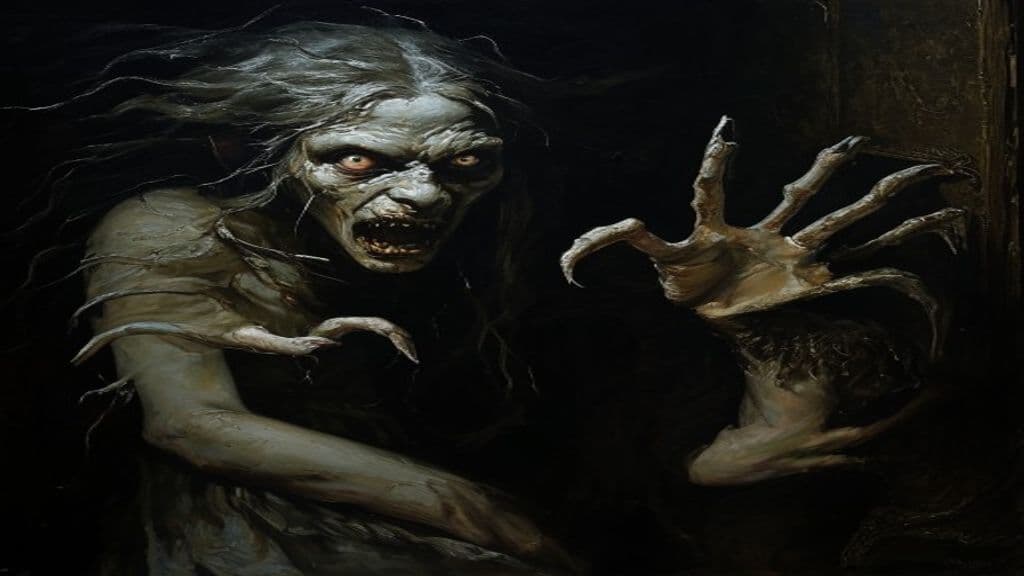
Mormo
A Greek child-eating bogeywoman used to frighten children into obedience, sometimes depicted as a shape-shifting female phantom who bit naughty children.
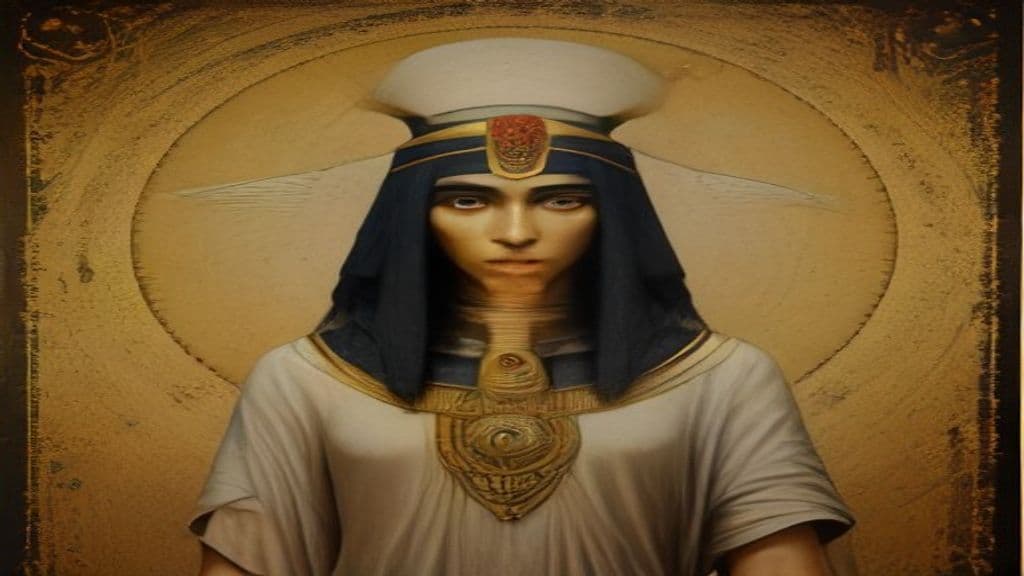
Thoth
Thoth is an ancient Egyptian deity of the Moon, wisdom, writing, measurement, and magic, functioning as divine scribe, counsellor, and maintainer of Ma'at; he appears in myth as inventor/author of knowledge and as a recorder in funerary judgment and cosmic calculation.
Enki (Ea)
Enki, also known by the Akkadian form Ea, is a major Mesopotamian deity associated with wisdom, crafts, magic and incantations, and the freshwater deep called the Abzû. Centered at the cult-city Eridu (temple E‑Abzû), he functions in myths as a crafty counsellor, culture‑hero and creator figure who aids humans and orders aspects of the world.
Gidim / Eṭemmu (Mesopotamian ghost)
The gidim (Sumerian) or eṭemmu (Akkadian) is the shade or continuing personal spirit of a deceased person in Mesopotamian religion. Created at death and received into the ordered netherworld (Irkalla) by the Anunnaki court, these spirits depend on funerary offerings and are implicated in a Mesopotamian causal world where neglect can produce illness and misfortune among the living.
Inanna
Inanna is a major ancient Mesopotamian goddess, primarily worshipped in Sumer and later identified with the Akkadian Ishtar. Her domains include love, sex, war, political power, divine law and procreation; she is a principal cult figure of Uruk and bearer of the mes, the decrees of civilization.
Mīšaru
Mīšaru is the Mesopotamian divine hypostasis of justice and rectitude. Named from the Akkadian root ešēru, he functions both as the abstract concept of correct rulings and as an active cultic deity invoked in temple worship, divination, and state ritual lists across Mesopotamia.
Sin (Nanna)
Sin (Akkadian Sîn/Su'en) and Sumerian Nanna is the Mesopotamian moon god, an astral deity associated with the lunar cycle, calendrical timekeeping, and civic cult. He is tutelary deity of Ur (and later Harran), father of Inanna/Ishtar and Utu/Shamash, and is represented iconographically by the crescent.
Zarpanitu
Zarpanitu (also Sarpanit) is a Mesopotamian goddess principally attested as the consort of the Babylonian chief god Marduk. Late sources associate her with pregnancy and describe her in roles parallel to her husband, including a queenly status among the gods; her cult centers were the village of Zarpan and the city of Babylon.
Naamah
Naamah is a name attested in the Hebrew Bible for several mortal women and later reworked in Jewish mystical and folkloric literature as a feminine supernatural figure associated in Zoharic material with the archangel Samael and with erotic/nocturnal motifs; in some later traditions she is linked with unions to angelic or fallen figures that produce classes of spirits (shedim/sedim).
Nabataean Religion
Ancient Arabian polytheistic tradition with aniconic worship practices, centered around multiple local gods and deities. (Note: 1. Power tier should be "Ancient" as the sources describe multiple local deities and deities from other cultures (Baalshamin, Isis, Tyche, Dionysus), indicating deity-level powers. 2. Add sensory cues)
Naberius
Naberius is a marquis-ranked spirit in the Western grimoral/Goetic tradition (Lesser Key of Solomon) described as commanding legions and teaching arts—especially rhetoric—and associated with restoring or (in one source) removing honors. He appears in canine and corvine forms and is catalogued among early modern demonological lists.
Nacht-Alb
A German-language folkloric night-being invoked in older parlance to explain sudden nocturnal terror in children; described in archival material as a fabled visitor that frightens sleeping children and is associated with what modern medicine calls pavor nocturnus.
Nachzehrer
A German revenant who gnaws its own shroud in the grave while draining the life-force of surviving family members, causing them to waste away one by one.
Naga
Divine serpent beings of Hindu, Buddhist, and Jain cosmology — powerful guardians of water, earth, and underground treasures. Revered as deities in South and Southeast Asia.
Community Record
- [1]Nabu. Wikipedia, 'Nabu' entry (accessed via provided research notes)wiki
- [2]Nabu - GatewaysToBabylon. GatewaysToBabylon summary on Nabu (cited in research notes)other
- [3]Nabu (DC Comics). Wikipedia entry noting modern adaptations (provided as related material in research notes)wiki