
Folklorically, the night-hag is not a single origin tale but a recurring explanatory slot: many cultures attribute episodes of sleep paralysis and terrifying nocturnal dreams to an external agent that visits the sleeper at night. In Old English and Norse lore this was personified as the mare/mære, a damned or cursed woman whose nocturnal travels visit and oppress sleepers; in Islamic-influenced contexts the intruder is often identified with a jinn (karabasan), while other traditions treat it as the recently dead returning (Fiji) or use vernacular phrases that describe the pressing or binding sensation (East Asian terms). Scholarly summaries treat these as culturally specific ways of locating agency for a shared physiological experience rather than as a single, unitary mythic origin.
Descriptions vary by culture and do not form a single uniform image. Scandinavian accounts describe a damned woman (mare) whose body is carried in sleep and who visits villagers to sit on their rib cages. Atlantic-diaspora and southern U.S. accounts portray an 'Old Hag'—an old or malevolent female figure who leaves her physical body at night and sits on victims' chests. Albanian accounts describe the Mokthi/Makthi as a male spirit sometimes wearing a golden fez. Turkish tellings may imagine the intruder in a jinn form, sometimes depicted with a wide hat. East Asian idioms (Chinese, Japanese, Korean, Mongolian) focus on action-based descriptions—'ghost pressing' or being bound—rather than detailed anthropomorphic features. Fijian kana tevoro is framed as a demon that 'eats' the sleeper; visual specifics are not emphasized in the summarized sources.
Commonly reported behaviors across traditions include visiting a sleeping person at night, inducing paralysis or the sense of being held down, producing a heavy pressure on the chest or ribs, generating terror and frightening dreams, and in some contexts causing breathlessness or the sensation of strangulation. Particular traditions add culturally specific attributes: Scandinavian lore emphasizes the mare sitting on rib cages; Newfoundland/Atlantic accounts describe the hag leaving her body at night; Turkish karabasan narratives treat the attacker as a jinn that can hold and strangle; Fijian kana tevoro interprets the event as 'eating' and may allow conversation with the dead if prolonged; Albanian Mokthi can be placated or tricked (taking his hat grants a wish but invites repeat visits). Some traditions imply night-travel or bilocation/astral leaving of a physical body. The figure is therefore a folkloric agent attributed with perceptual and interactive powers during sleep rather than a clinically verified being.
Weaknesses
- mantraRecitation of Al‑Falaq and Al‑Nas (Qur'anic chapters)
- otherTaking/removing a spirit's hat (Albanian Mokthi motif — taking the hat compels the spirit to grant a wish but causes repeat visits)
Wards
- mantraRecitation of Al‑Falaq and Al‑Nas to expel jinn (Turkish practice)
- otherPlace husband's hat near the pillow (Albanian talismanic practice against Mokthi/Makthi)
- ritualVerbal expulsion / cursing of the spirit (Fijian post-episode practice)

Jinn
A class of supernatural beings from pre-Islamic Arabian religion later integrated into Islamic theology; jinn are created, morally accountable entities distinct from humans and angels, often unseen but capable of taking visible forms and interacting with people in varied ways.
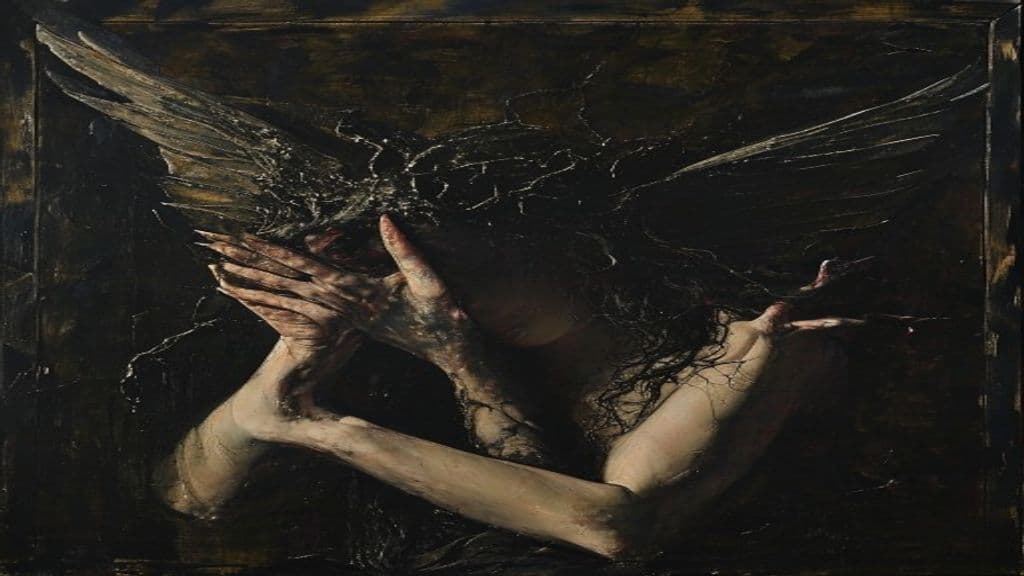
Incubus (Jewish Tradition)
A male demon that preys on female humans in their dreams, seducing them and leading to physical interactions. (Note: 1. Power tier should be Primordial (cosmic) is too high; a more fitting power tier would be Greater (deity-level), given its ability to manipulate humans' dreams and lead to physical interactions. 2. )
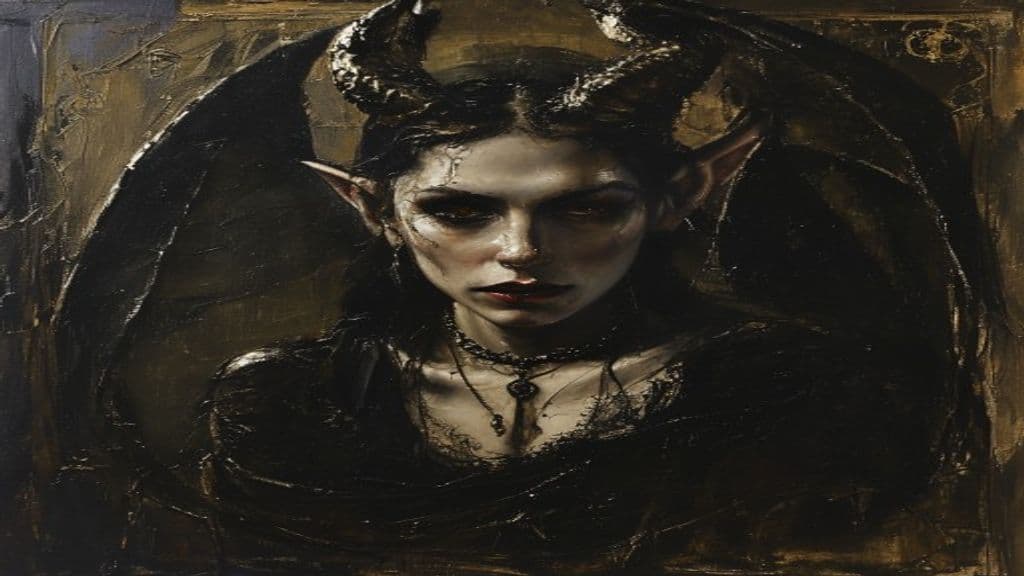
Succubus (Jewish Tradition)
Female demon that seduces male humans through dreams, potentially leading to a hybrid child and the man's decline. (Note: 1. Power tier should be Ancient, not Primordial (Primordial powers are cosmic, while Ancient powers are deity-level). 2. No information on physical appearance is missing because it's simply not mentio)
Baldr
Baldr (Old Norse Baldr; Old English Bældæġ; Old High German Balder/Palter) is a god in Germanic mythology. In the Norse branch he is named as a son of Odin and Frigg and as a member of the Aesir, attested alongside brothers such as Thor and Váli in the supplied sources.
Black Shuck
A spectral black dog of East Anglian legend, with glowing red or green eyes. Its appearance is an omen of death. Its howl has been heard on clifftops during storms for centuries.
Deutsche Mythology
A collection of mythological narratives representing the collective myths, legends, and beliefs of ancient Germanic cultures. (Note: 1. Power tier: Primordial (Deutsche Mythology as a collective mythological narratives does not have supernatural abilities and behaviors attributed to it; rather, it contains those of individual Germa)
Domar (Dómarr)
Domar (Old Norse Dómarr, 'Judge') is a legendary Swedish king of the Yngling dynasty attested in medieval Scandinavian genealogical sources. He is presented as a mytho-historical ancestral ruler whose long and peaceful reign follows the sacrificial death of his father Domalde and whose own death was marked by cremation at Fyrisvellir and erection of a memorial stone at Uppsala.
Dragon (Long)
Long (龍, "dragon") is a pervasive cultural and artistic motif that appears in Taoist sacred-geographical contexts, Chinese literature, and modern exhibitions; the provided sources treat it as part of the broader mythic imagery present around Taoist sites and ritual scenes rather than as a single, consistently described doctrinal entity.
Draugr
In Nordic folklore the draugr (plural draugar; anglicized draug) is an archaic term for a malevolent revenant — a dead person who returns and remains active in the world of the living. Accounts emphasize variability: traits, behaviours, and descriptions change between stories and across regions, especially in early medieval Icelandic sagas and surviving Norwegian folklore.
Dís (dísir)
In Norse/North Germanic tradition, a dís (pl. dísir) is a collective term for female supernatural beings whose roles range from protective ancestral spirits and fertility figures to fate‑linked women comparable to valkyries or norns; they are invoked in both private and public cult (notably the dísablót) and can be benevolent or hostile toward humans.
Eystein Halfdansson
Eystein Halfdansson (Old Norse: Eysteinn Hálfdansson) is presented in Norse king-list and saga tradition as a semi-legendary Norwegian petty king of the House of Yngling who ruled Romerike and acquired Vestfold by marriage. He is depicted as a dynastic ruler and Viking raider whose death is attributed in Snorri's Ynglinga saga to a magical act performed by King Skjöld of Varna.
Fenrir
The monstrous wolf son of Loki, bound by the gods with a magical ribbon until Ragnarök — when he will break free and swallow Odin, and the world.
Fylgja
A supernatural accompanying spirit in Old Norse tradition tied to a person's or family's fate and fortune. The fylgja appears most often as a female human figure or as an animal, commonly in dreams, and functions as an omen-bearing presence connected to destiny rather than an agent that alters fate.
Huldra
A seductive forest spirit of Scandinavian folklore — beautiful from the front but with a cow's tail or hollow back — who lures men into the wilderness, sometimes to their ruin.
Jörmungandr
In Norse mythology, Jörmungandr is an unfathomably large sea-serpent, the Midgard Serpent or World Serpent, that dwells in the world sea and encircles Midgard, biting its own tail; Jörmungandr releasing his tail is described as one of the signs of the beginning of Ragnarök. The name has been reused in modern astronomy for near-Earth asteroid 471926 Jormungandr (provisional 2013 KN6), discovered 28 May 2013.
Community Record
- [1]Night hag — Wikipedia. Wikipedia, 'Night hag' article (summarizes cross-cultural accounts of night-hag figures and links to sleep paralysis explanations).wiki
- [2]night hag — Wikidata. Wikidata short description: 'name given to a supernatural creature, used to explain the phenomenon of sleep paralysis.'wiki
- [3]CIA Reading Room archive (document collection). Archive.org: CIA Reading Room document referenced in provided materials (catalog entry).other
- [4]Night Hag — 5th Edition SRD (game source noted as modern fantasy use). SRD entry for the Night Hag in role-playing game context; cited as a modern fictional elaboration distinct from folkloric accounts.other