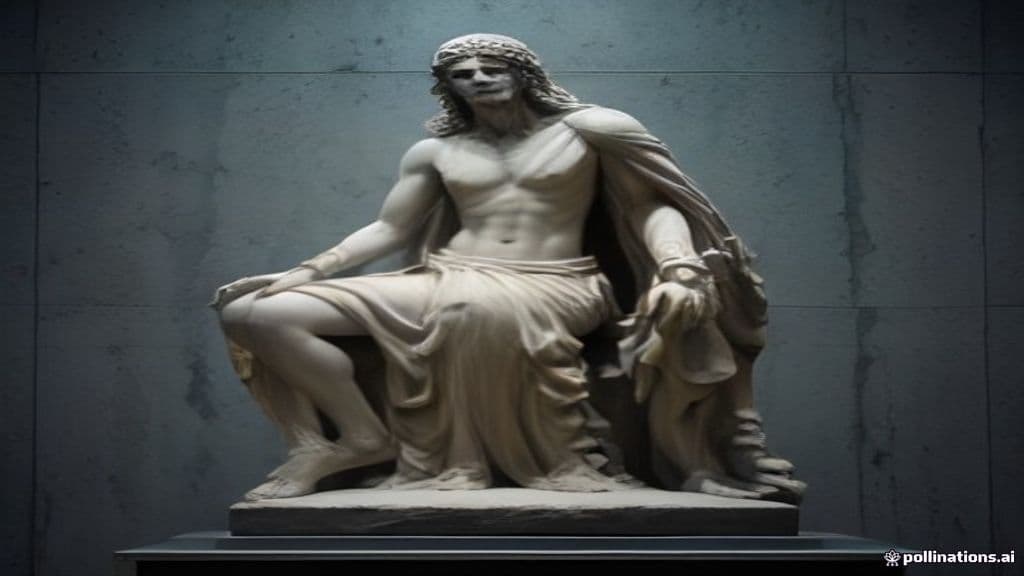
Within Greek mythohistorical and genealogical traditions Pelasgos functions as the eponymous ancestor of the Pelasgians, an archaic population attributed with great antiquity. Sources present him in multiple, regionally varied genealogies — the literature records more than one local figure named Pelasgos — and some traditions even describe him as a primeval or "first man." Rather than a single uniform origin tale, Pelasgos functions as a flexible founding-personification used by different city-states and authors to explain indigenous origins, territorial claims, and the great age of certain cults and peoples.
Classical and modern summaries treat Pelasgos as a mythic or mythohistorical human founder rather than a described supernatural apparition; no consistent iconography or corporeal description is attested in the provided sources. Where commentators note particular characterizations, they present him as human or proto-human (e.g., traditions calling him "the first man"). Variants across regions and sources mean there is no single canonical physical depiction recorded in the referenced material.
The attributed "powers" of Pelasgos are social and legitimatory rather than magical: he is invoked as an eponymous progenitor who explains the origins and antiquity of peoples, territories, and cultic institutions. Specific associations in the sources link Pelasgian origins to the establishment or ancient entitlement of cults such as the Dodonaean Zeus, Hephaestus, and the Cabeiri. The sources do not ascribe supernatural feats, malign agency, or metaphysical powers to Pelasgos; his agency is genealogical and cultural.
Weaknesses
- othernone attested
Wards
- othernone attested
Peird van Sint-Gillis (Bayard)
A single legendary magical bay horse originating in the medieval chansons de geste and preserved in regional folkloric tradition (notably Belgian). Described as an intelligent, strong mount with the supernatural ability to adjust its size to its riders, serving as a wondrous companion to human heroes.
Peisistratus (son of Nestor)
In the Homeric tradition Peisistratus is a mortal nobleman, the son of Nestor of Pylos, who accompanies Telemachus during parts of his voyage in the Odyssey. The same name also belongs to a separate historical figure, the 6th-century BC Athenian ruler Pisistratus; modern sources sometimes conflate the two by name only.
Peitho
In ancient Greek thought Peitho (Πειθώ) is the personification and occasional goddess of persuasion, winning eloquence, and charm. She functions both as a named divine attendant in myth and cult and as the abstract power or virtue of persuasive speech, especially in erotic/nuptial and civic contexts.
Peko
Peko is a Baltic‑Finnic agrarian spirit and cult figure associated with barley, brewing, and field fertility, particularly attested in Seto, Estonian, and Finnish traditions. He appears in cult practice as a guardian of granaries and crops, a focus of seasonal feasts and offerings, and is invoked in rituals for rain, abundance, and certain soil‑related cures.
Pelagon
Pelagon is a personal name attested in ancient Greek mythic and genealogical sources for several distinct mortal or semi-divine figures (kings, warriors, hunters, companions). The supplied sources present multiple individuals called Pelagon rather than a single coherent supernatural entity; later modern uses of the name are homonymous and do not indicate a unified mythic being.
Pelasgians
In Greek tradition, the Pelasgians were a collective term for indigenous people inhabiting Greece before the emergence of the Greeks. (Note: 1. Power tier should be Primordial is incorrect; given that there's no information about their abilities or behaviors, they should not have a power tier assigned. 2. Appearance should state "No physic)
Pelasgus
Pelasgus (Πελασγός) is a mythic ancestral and eponymous founder figure in ancient Greek tradition credited in various local accounts with founding cities, teaching agriculture, receiving Demeter, and giving his name to the Pelasgians and regions such as Pelasgiotis. He appears across competing regional genealogies (Argive, Arcadian, Thessalian) rather than as a standardized supernatural being.
Pele
Pele is the Hawaiian goddess of fire, lightning, wind, and volcanoes, traditionally credited in Hawaiian narratives as the creator of the Hawaiian Islands and addressed with honorifics such as "Madame Pele" and "Tūtū Pele." She figures in genealogies of Hawaiian deities and in myths that explain volcanic activity and island formation.
Pele's Curse
A supernatural concept that manifests as an implied threat of bad luck associated with taking native Hawaiian materials away from Hawaii. (Note: 1. Power tier: Greater (the curse can have significant consequences for those who disregard it) 2. Abilities: specify that the bad luck is said to manifest as accidents, mishaps, or other unfortunate )
Pelesit
A Malay familiar spirit traditionally conceived as a small insect (generally a cricket or sometimes a grasshopper) kept by a human owner—usually a woman—and used as an instrument of magical harm. The pelesit chirps and may enter a victim's mouth tail-first; its chirping can call a more dangerous spirit (the polong).
Peleus
Peleus (Ancient Greek Πηλεύς) is a mortal heroic king of the Greek heroic age—son of Aeacus and an oread, husband of the sea-nymph Thetis, and father of Achilles—figuring as a founder-ancestor and culted hero in later local practice. He is portrayed in epic narrative as a warrior-king, Argonaut, and participant in the web of marriages and purifications that link human rulership to divine beings.
Peliades (Daughters of Pelias)
In Greek myth, the Peliades (Greek: Πελιάδες) are the daughters of King Pelias who, deceived by Medea's staged 'rejuvenation' demonstration, dismembered their father believing he would be restored to youth. The story survives in fragmentary literary references, summaries of Euripides' lost play Peliades, and later mythographic accounts.
Community Record
- [1]Pelasgus — Wikipedia. Wikipedia, entry Pelasgus; summary of classical traditions identifying Pelasgos as eponymous ancestor linked to Dodonaean Zeus, Hephaestus, the Cabeiri, and noting belief by some Greeks that he was the "first man".wiki
- [2]Wikidata: Pelasgos (Pauly-Wissowa). Wikidata entry referencing Pauly-Wissowa on Pelasgos (classical reference work noted in source list).other
- [3]Newton Project — Miscellaneous notes on history, chronology and theology. Newton Project notes citing Homeric and Strabo references that treat Pelasgians as very ancient and record Homeric usage calling certain neighbors Pelasgians.literary
- [4]Anastas Byku / Promytheus o Pelasgos reference (modern cultural reuse). Wikipedia entry for Anastas Byku; cited in sources as an instance of modern reuse of the Pelasgian name in nationalist/identity contexts (Promytheus o Pelasgos).other
- [5]Old European culture: Pelasgos (blog). Blog summary noting etymological uncertainty and discussions of Pelasgos as a pre-Greek or substrate name of uncertain meaning.other
- [6]Cybalist / forum and miscellaneous references. Forum and miscellaneous notes cited among the provided materials documenting varied modern discussions and searches regarding Pelasgos and Pelasgians.other
- [7]Pelasgians overview (Polatkaya.net). Online summary referenced in the provided set on Pelasgian identity and antiquity claims (used as contextual material).other
- [8]Paussanias and Mythical Kinship Reckoning — MYTHLAB (blog). Discussion noting multiple local Pelasgos figures and the use of eponymous ancestors in regional genealogies (cited in provided materials).other