
In Balkan belief the dhampir is produced when a vampire returns to a living woman — commonly framed as a male vampire revisiting his wife or a woman he was attracted to in life — and fathers a child. The resulting offspring is understood to inherit a mixed lineage: biologically human but marked by descent from a vampire, a condition that both explains certain family oddities and, in some local traditions, produces a hereditary line of vampire-hunters.
Accounts vary regionally. Many legends portray dhampirs as for the most part normal members of their communities who can eat normally and do not require blood. Albanian tradition emphasizes untamed dark or black hair and a reputation for cunning or courage. Bulgarian variants record a range of local signs (in some locales described as very dirty, soft-bodied, lacking nails or bones, or bearing a deep mark on the back like a tail; in others described with pronounced nose, large ears, teeth, or eyes). Extreme degenerative features are reported only in some local variants and are not universal.
Folkloric attributions are uneven and often gendered: especially male dhampirs of paternal vampire descent are said in many accounts to be able to see invisible vampires and to practice sorcery, and such families sometimes transmit vampire-hunting skills from father to son. Unlike vampires, dhampirs are generally said not to crave blood and can eat normally, though a few stories allow that a dhampir might bite in exceptional circumstances. Modern fiction and roleplaying games widely rework the figure as a mixed-heritage protagonist or playable race with varying powers; these literary adaptations are distinct from the summarized folk beliefs.
Weaknesses
- otherNo specific traditional weaknesses recorded
Wards
- otherNo distinct folkloric wards for dhampirs documented in the supplied sources
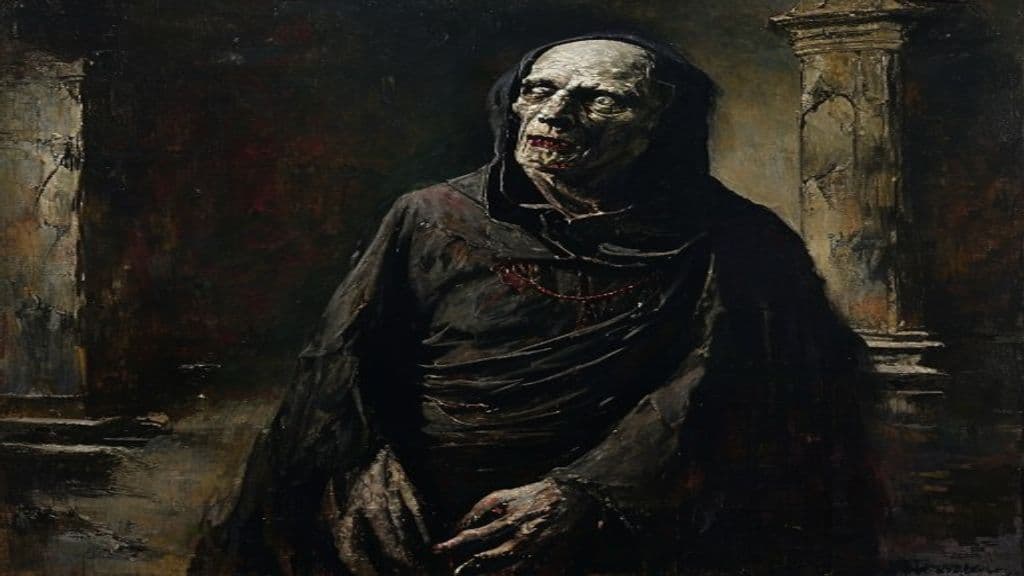
Vampire (tradition)
A class of revenant beings in southeastern and eastern European folk belief that subsist by feeding on the vital essence (generally blood) of the living. Recorded chiefly in early modern to modern oral traditions, these vampires are typically described as reanimated corpses whose presence explains unexplained illness, death, and post-mortem disturbances in their communities.
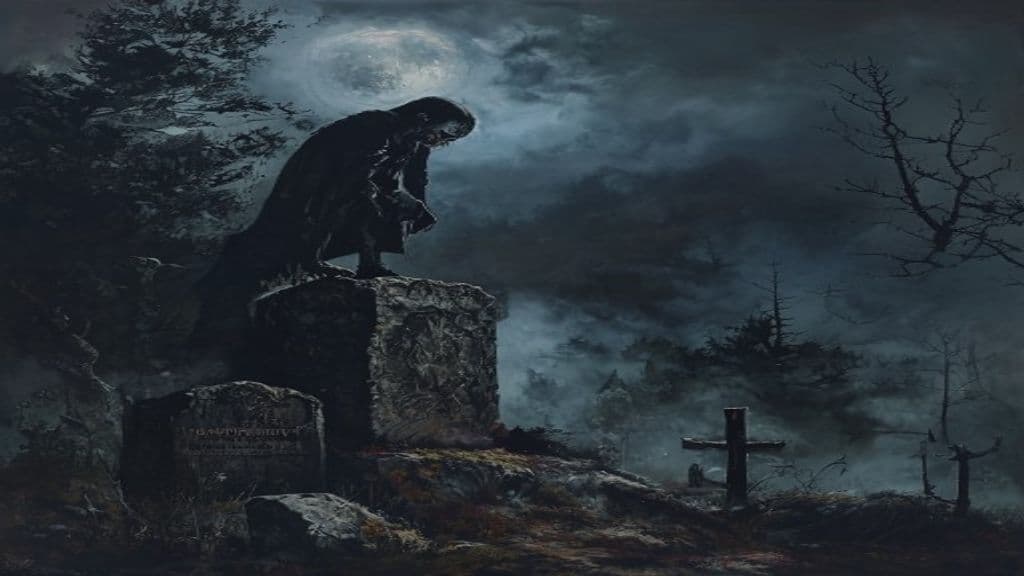
Strigoi
The vampire of Romanian folklore — either a living witch (strigoi viu) or an undead blood-drinker (strigoi mort). The source tradition from which the literary vampire emerged.

Rakshasa (Himalayan variants)
A Himalayan reception of the pan-Indian rakshasa motif: hostile or disruptive non‑human beings known from Sanskrit epic and Puranic literature, here noted where Himalayan sources and discussions intersect with the broader epic tradition. The supplied sources do not document distinct, well‑attested Himalayan folklore variants; the entry therefore presents primarily the epic/legendary profile as transmitted into Himalayan contexts in general references.

Ghoul
A ghoul is a demon-like or monstrous humanoid originating in pre-Islamic Arabian religion, traditionally associated with graveyards and the consumption of human flesh. The concept later entered broader folklore and has been widely reused and transformed in modern fiction and popular culture.
Cikavac
Cikavac is a creature of Serbian folklore described as a winged bird kept by an owner through a specific acquisition ritual; in tradition it brings honey and milk taken from others to its owner, fulfills wishes, and enables understanding of animal speech.
Kallikantzaros
A malevolent goblin-like creature in Greek and related Balkan and Anatolian traditions that dwells underground sawing at the world‑supporting tree for most of the year and emerges during the Twelve Days of Christmas (25 December–6 January) to harass households and people.
Samodiva
A South- and West-Slavic (especially South Slavic/Balkan) female nature spirit and personification of wild places. Samodivas are ambivalent supernatural women associated with mountains, springs, trees, songs and dances; they can grant healing knowledge or punish humans who offend the landscape.
Dewi Ratih
Dewi Ratih is a Hindu-derived lunar goddess worshipped in Java and Bali, revered for her beauty and associated with the Moon and the explanation of lunar eclipses. She is honored in recurring Balinese full-moon (purnama) ceremonies that celebrate the Moon's beauty alongside the lunar god Chandra.
Dewi Sri
Dewi Sri (also Shridevi, Nyai Pohaci Sanghyang Asri in Sundanese contexts) is the indigenous rice-and-fertility goddess of parts of the Indonesian archipelago (Java, Bali, Lombok and surrounding islands). She is a living cultic presence in village ritual life believed to preside over rice, household and communal prosperity, and the prevention of famine; in Hindu-influenced contexts she is often equated or syncretized with the Sanskritic goddess Sri/Lakshmi.
Dexamene
Dexamene (Greek: Δεξαμένη) is one of the fifty Nereids, the sea-nymph daughters of the sea-god Nereus and the Oceanid Doris in Greek myth. She is named in genealogical lists of the Nereids but has no individually attested myths or distinct cult practices in the cited sources.
Dexamenus
Dexamenus (Ancient Greek Δεξάμενος) is a name applied to multiple mytho-historical mortal figures in Greek tradition—chiefly local kings or eponymous ancestors associated with Olenus and Ambracia—best known from tales in which Heracles rescues a daughter from the centaur Eurytion. The name literally means 'hospitable' or 'receiver' and functions as a host-figure and genealogical anchor in regional heroic narratives.
Dhadu Monara
In Sri Lankan folklore, Dhadu Monara is a legendary pre-historic aircraft associated with King Ravana's reign. The Department of Archaeology has rejected the story as fiction due to lack of evidence. (Note: 1. Power tier should be Ancient, not Primordial, as it's described as a mode of transportation used by King Ravana, implying deity-level abilities. 2. The Department of Archaeology has rejected the st)
Dhanvantari
Dhanvantari is the divine physician in Hindu tradition, identified as an avatar of Viṣṇu who emerges from the Samudra Manthana bearing the pot of amṛta and is credited in Purāṇic and later accounts with promulgating and systematizing Āyurveda. He appears both as a cosmic being born from the churning of the Ocean of Milk and in later Purāṇic narratives as a terrestrial king/teacher who transmits medical knowledge.
Dhanyamalini
Dhanyamalini (also Dhanyamala, Dhanyamali, Dhanyamālinī) is named in Ramayana tradition as one of Rāvaṇa's wives — frequently listed among his many junior wives — and is cited in some recensions as the mother of notable sons such as Atikāya and, in other versions, Narantaka, Devantaka, and Trishira. The extant sources provided record her relational and genealogical role within Rāvaṇa's household but do not attribute independent deeds or supernatural functions to her.
Dharmanātha
Dharmanātha is the fifteenth Tirthankara of Jainism's present age (Avasarpini). Sources state he attained siddhahood (liberation by destroying all karma) and is portrayed in tradition as a supreme spiritual teacher who establishes the ford (tīrtha) across saṃsāra.
Dharmapāla
In Buddhist traditions, a dharmapāla is a protective deity or guardian whose role is to defend the Dharma (the Buddha's teaching) and to avert obstacles to spiritual practice. Appearing across Mahāyāna and Vajrayāna contexts (notably Tibetan, Chinese, and Japanese), dharmapālas range from local worldly guardians to wrathful enlightened emanations invoked in tantric ritual.
Community Record
- [1]Dhampir (Wikipedia). Wikipedia: Dhampirwiki
- [2]Dhampir (Wikidata). Wikidata: dhampirwiki
- [3]Dhampir — Barb & J.C. Hendee (novel) and reviews/archival references. Barb & J.C. Hendee, Dhampir (novel) and related reviewsliterary
- [4]Dhampir (Vampire: The Requiem) — Onyx Path Publishing. Onyx Path Publishing — Dhampir (game supplement)literary
- [5]Archive materials and other secondary online references collected in research notes. Various archived fiction and fan-content referenced in corpusother