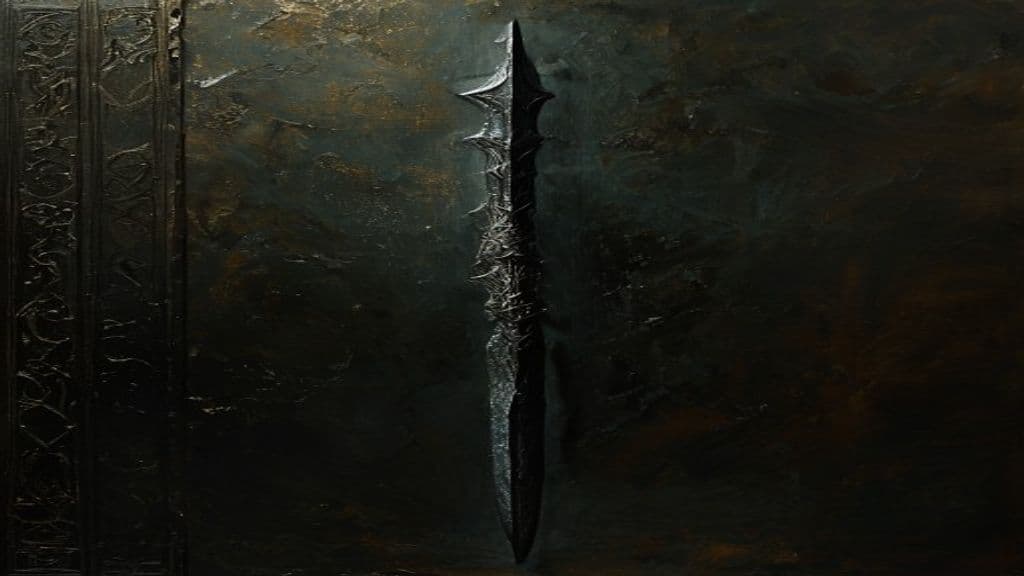
Sharur is an enchanted talking mace associated with the Mesopotamian god Ninurta. Its original name, 'Sharur', means 'smasher of thousands' and suggests its massive destructive power.
There is no physical description of Sharur in the source material.
Sharur has been imbued with divine authority by its association with Ninurta and possesses magical properties that enable it to speak. Its capabilities are not specified in the source material.
Kishar
Kishar (Akkadian Kišar) is a primordial female principle in Babylonian cosmology attested in the opening lines of the Enuma Elish. She functions as the paired earth-counterpart to the sky-principle Anshar and is genealogically the mother of Anu; surviving sources present her as an abstract, cosmological origin-aspect rather than an actively worshiped cult figure.
Sukkal
In Mesopotamian mythology, the Sukkal is a class of deities that act as mediators, advisors, and envoys between humans and the divine. They are servants and advisors of the main gods. (Note: * Power tier should be Primordial, not Ancient, as Sukkals are described as mediators between humans and the divine, acting as servants and advisors of the main gods, implying a cosmic level of power.)
Shamshir-e Zomorrodnegār
A sacred sword in the Persian legend Shahnameh, capable of piercing the invulnerability of Fulad-zereh, a demonic entity created by a witch mother's charm. (Note: 1. Remove Power tier: Primordial as it is likely Greater (powerful regional) given its ability to counter a demonic entity. 2. Add sensory cues from Source 1: mention of King Solomon's ownership could)
Shangdi (上帝)
Shangdi is the name of the Highest Deity or 'Lord Above' in classical Chinese theology. In Shang dynasty practice he was the supreme spiritual power invoked by the ruling elite for polity-scale outcomes; in Zhou thought he increasingly overlaps with Tiān and functions as an ethical cosmic authority who grants or withdraws the Mandate of Heaven.
Shankha
A sacred symbol associated with Lord Vishnu, used in Hindu rituals and ceremonies as a conch shell trumpet or horn. (Note: - Power tier should be Greater, as it plays a crucial role in Hindu rituals and ceremonies, implying deity-level power. - Appearance should mention that it's often made from a large conch shell, but d)
Shape-shifters
A cross-cultural motif and capability in mythology, folklore, and speculative fiction describing beings or persons who can physically transform themselves through unnatural means. Appears across ancient ritual contexts, foundational epics, and modern popular culture rather than as a single unified species or entity.
Shar-Kali-Sharri
Shar-Kali-Sharri was an historical king of Agade/Akkad in the late third millennium BCE (reigned c. 2218–2193 BC, 25 years in the Sumerian King List) who, in some inscriptional and later traditions, is attested with divine epithets and the dingir (divine) determinative. He is recorded as an imperial sovereign active in temple building, military campaigns, and administration and is treated in some sources as a deified royal figure after or during his reign.
Shashank (Hindu Tradition)
In Hindu tradition, Shashank is a poetic and mythological epithet for the Moon, derived from Sanskrit. (Note: - Power tier: Primordial (inconsistent with the fact that it's an "epithet" or descriptor of the Moon, not a separate entity with cosmic power) - Origin story: Not mentioned in the source material - A)
Shatans
Shatans (Belarusian: Шатаны) are folkloric creatures in Belarusian tradition portrayed as odd-looking, aimless wanderers who embody idleness and laziness; they influence others by example rather than acting as active agents of harm or help.
Shatarupa
The first woman created by Brahma, considered the first ancestor of humanity in Hindu cosmology. (Note: - Power tier should be Ancient (Shatarupa's role in Hindu cosmology is important but not considered a primordial being) - Abilities statement should be revised to "There is no evidence of supernatural)
Shax
Shax (also spelled Chax, Shan, Shass, Shaz, Scox) is a named spirit in ceremonial-grimoire listings, recorded with the rank of Marquis (and as Duke by some authors), said to command thirty legions and credited with removing sight, hearing, and understanding from targets and with stealing money.
Shaytan (Iblis)
In Islamic tradition Shaytan (also Iblis) is the archetypal rebellious tempter who opposes God's will and seeks to mislead humans. In Quranic and sermonic accounts he is the leader of devils who entices people to falsehood and sin; in some Sufi readings he is also interpreted symbolically as a metaphysical veil or principle of cosmic illusion.
Community Record
- [1]