
Quranic narrative as summarized in the supplied sources presents Iblis as a spiritual being who was expelled from heaven after he refused God's command to prostrate before Adam; this primordial refusal marks him as the archetypal rebel and leads to his role as adversary (Source 1). Sufi commentary cited in the sources treats Iblis less only as an individual offender and more as a metaphysical functionary or symbol—an embodiment of a 'cosmic veil' that separates aspects of divine reality—thus framing his origin and role within mystical ontologies as well as scriptural history (Source 1).
The provided sources do not supply a consistent physical description. Scriptural and sermonic materials quoted treat Shaytan/Iblis primarily as a moral and spiritual agent rather than detailing anatomy or visage; some popular summaries and comparative discussions place him among jinn or devils, but the excerpts do not document a stable corporeal form (Source 1; Source 3; Source 5).
Across the sources Shaytan/Iblis is described chiefly as a deceiver and tempter who persistently seeks to mislead humans into sin and false speech (Quran 2:169 cited in Source 3). Sermonic material characterizes him as a patient, conniving hunter who entraps people in a web of deception so that harmful things appear acceptable (Source 3). Sufi interpretations attribute to Iblis a metaphysical capacity to veil or obscure divine realities—described as 'master of cosmic illusion' or a 'cosmic veil'—which frames some of his power as structural or ontological rather than merely behavioral (Source 1). The sources also connect his influence to moral inversion and late-time social decline in eschatological preaching (Source 3).
Weaknesses
- mantraSeeking refuge and cursing the tempter (e.g., formulaic 'May Allah curse him' and invoking God's protection)
- conditionAdherence to scripture and prophetic guidance (remembrance of divine truth, patience and gratitude) as corrective measures
Wards
- ritualScriptural remembrance and adherence
- mantraFormulaic cursing and seeking God's refuge
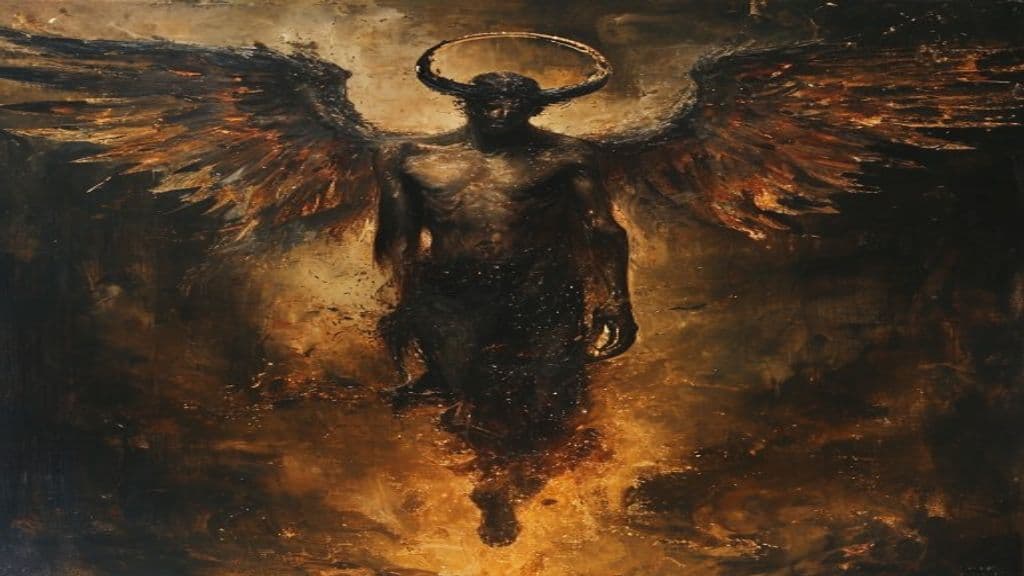
Iblis
The primordial deceiver in Islamic theology; a jinn who refused God's command to bow before Adam and was expelled from heaven. The source of all temptation and whispered suggestion.
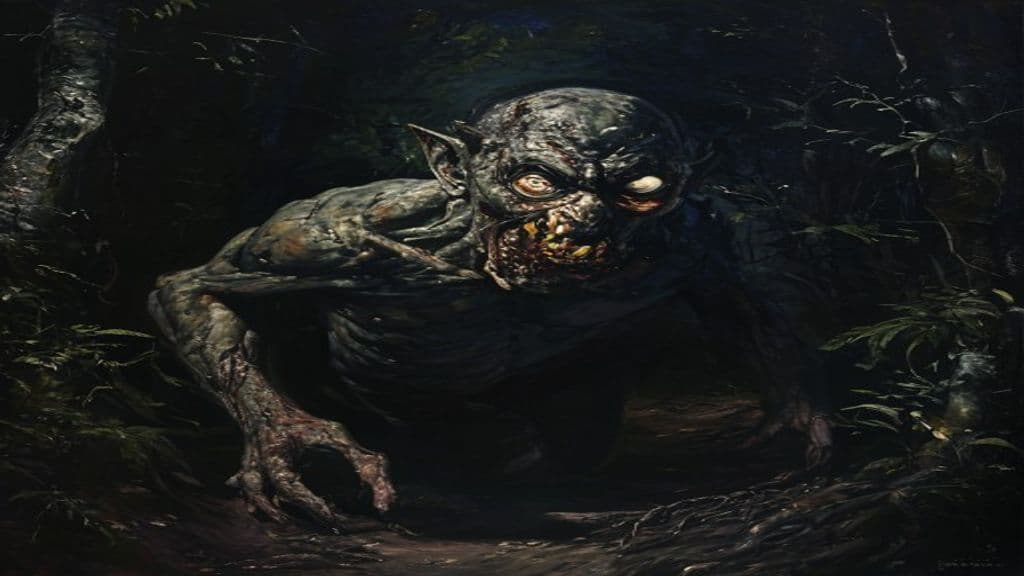
Pishacha
Flesh-eating spirits of Hindu mythology that haunt cremation grounds and are associated with disease, madness, and possession. The lowest class of demon in the Vedic hierarchy.
Iblis
The primordial deceiver in Islamic theology; a jinn who refused God's command to bow before Adam and was expelled from heaven. The source of all temptation and whispered suggestion.
Shar-Kali-Sharri
Shar-Kali-Sharri was an historical king of Agade/Akkad in the late third millennium BCE (reigned c. 2218–2193 BC, 25 years in the Sumerian King List) who, in some inscriptional and later traditions, is attested with divine epithets and the dingir (divine) determinative. He is recorded as an imperial sovereign active in temple building, military campaigns, and administration and is treated in some sources as a deified royal figure after or during his reign.
Sharur (mythological weapon)
Enchanted talking mace and symbol of the Mesopotamian god Ninurta, imbued with divine authority. (Note: 1. Power tier should be Lowered to Greater, given that Sharur is associated with a deity-level god (Ninurta) but described as an enchanted object. 2. Appearance should be updated to "No specific descr)
Shashank (Hindu Tradition)
In Hindu tradition, Shashank is a poetic and mythological epithet for the Moon, derived from Sanskrit. (Note: - Power tier: Primordial (inconsistent with the fact that it's an "epithet" or descriptor of the Moon, not a separate entity with cosmic power) - Origin story: Not mentioned in the source material - A)
Shatans
Shatans (Belarusian: Шатаны) are folkloric creatures in Belarusian tradition portrayed as odd-looking, aimless wanderers who embody idleness and laziness; they influence others by example rather than acting as active agents of harm or help.
Shatarupa
The first woman created by Brahma, considered the first ancestor of humanity in Hindu cosmology. (Note: - Power tier should be Ancient (Shatarupa's role in Hindu cosmology is important but not considered a primordial being) - Abilities statement should be revised to "There is no evidence of supernatural)
Shax
Shax (also spelled Chax, Shan, Shass, Shaz, Scox) is a named spirit in ceremonial-grimoire listings, recorded with the rank of Marquis (and as Duke by some authors), said to command thirty legions and credited with removing sight, hearing, and understanding from targets and with stealing money.
Shayāṭīn
In Islamic discourse, shayāṭīn (sing. shayṭān) are a class of malevolent unseen beings who incite humans and jinn to evil by whispering (waswasa) in hearts. Textual sources treat them as real agents of temptation and disturbance who operate under divine permission and whose exact ontological status is variously described in scripture, tafsîr, and later commentary.
Shedim
In Jewish tradition, Shedim are spirits associated with foreign deities and idolatrous worship, embodying a theological context where monotheistic devotion is threatened by other divine entities. (Note: 1. Factual claim "Primordial" power tier should be adjusted to "Ancient", as Shedim are described as tied to foreign deities and do not appear to possess cosmic-level powers. 2. Remove reference to "m)
Sheela na Gig
A medieval figurative architectural carving of a naked woman displaying an exaggerated vulva, found on churches, castles and other buildings across parts of Europe. Scholarly interpretations disagree on original function—proposed roles include apotropaic protection of thresholds, survivals of fertility/mother‑goddess imagery, or medieval moralizing images condemning female lust—while modern groups sometimes reappropriate the motif in neopagan and artistic contexts.
Sheka
Sheka (Cyrillic: Шекә) is a small, liminal spirit attested in short summaries of Turkic/Tatar and Slavic popular traditions. In Turkic/Tatar material it is described as a dwarf‑like being inhabiting forests or derelict houses and appearing in comical episodes; in Slavic pagan description it functions as a field spirit that misleads, harms, or troubles peasants and children in crops.
Shen Ring
In ancient Egyptian culture, the shen ring is a symbol of eternal protection, associated with Horus and used as a talisman by builders and architects. (Note: 1. Power tier should be Primordial, as it represents eternal protection, which is more in line with cosmic powers. 2. Add sensory cues, weaknesses, and wards based on the source material (none are men)
Shentayet
Shentayet is a named, but otherwise obscure, ancient Egyptian deity attested in modern compilations and database entries of Egyptian gods. Available sources supply the name and classify it within the Egyptian pantheon but provide no primary-textual or iconographic documentation of her cult, functions, or attributes.
Community Record
- [1]Shaytan / Iblis (Wikipedia summary cited). Wikipedia: Iblis/Shaytan summary (Source 1)wiki
- [2]Devil's Trap (lecture by Shaykh Hamza Yusuf, sermonic material). Archive sermon material: 'Shaytan (May Allah curse him) ... patient hunter' and Quranic citations used as defenses (Source 3)other
- [3]Was ist Shari'a? (archive reference including Sufi commentary). Archive material summarizing Sufi readings: 'Iblis embodies the cosmic veil...' and 'leader of the devils in Islam' (Source 1)other
- [4]Iblis | Vengeful Djinn (popular comparative material). Popular comparative treatment placing Iblis among djinn/devils (Source 5 as compiled in research notes)other