
The source does not provide a creation myth or explicit origin for shatans. They are presented as taken-for-granted folkloric beings within Belarusian narrative space: customary figures used to symbolize and moralize about idleness and purposeless wandering rather than beings with a traced genesis in myth. Any account of their origin beyond this descriptive role is not recorded in the supplied material.
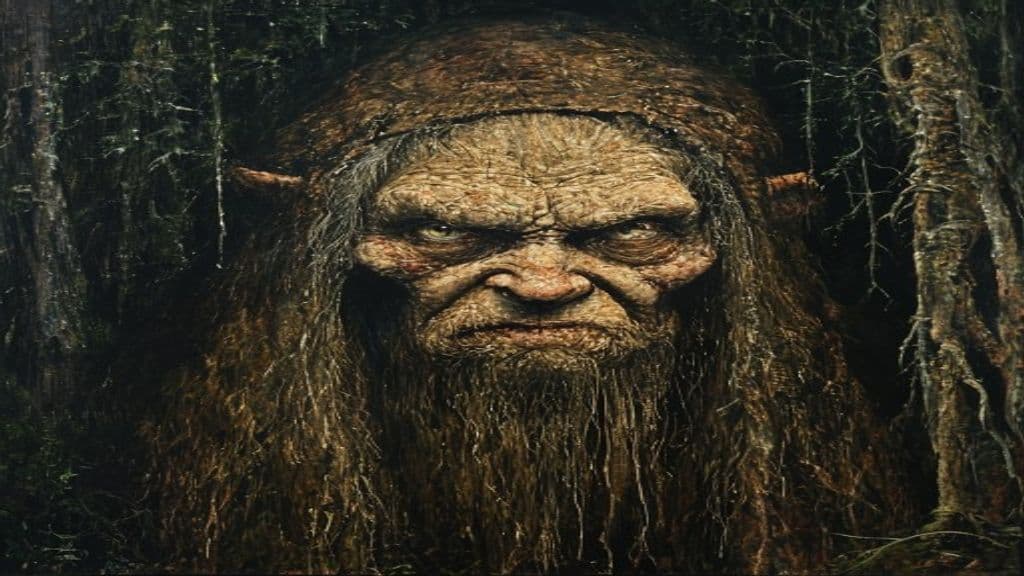
The primary source only describes shatans as "odd-looking creatures" and gives no consistent, reproducible physical details such as size, clothing, or features. No canonical visual description is provided in the cited material; thus their appearance remains vague in the documented record.
Shatans do not appear as agents of deliberate supernatural power in the source. Their characteristic behaviour is persistent, purposeless wandering: "all day long they wander about aimlessly without doing anything useful." They "cannot communicate with anyone in a normal way, even with each other," fail to "rescue and help one another" in trouble, and are described as "very annoying for other people" and disposed to lead others toward the same useless wandering (a social influence rather than an active magical effect). They are cowardly—hiding or running from offenders—and sometimes occupy subsidiary activities such as spinning bast shoes which quickly wear out from constant walking. The source also records that shatans have sometimes been killed by attacks of "evil spirits and beings."
Weaknesses
- conditioncowardice — they hide or run away from offenders
- othervulnerability to attack by other "evil spirits and beings" (sometimes killed)
Wards
None recorded.
Dzedka
Dzedka is a benevolent figure of Belarusian folklore associated with wealth and fortune. Described as an old man who walks roads and fields by day, he is said to cause a passerby to sleep and later find money, and to appear in dreams to advise wealthy but unhappy people.
Leshy
A tutelary forest being in Slavic folklore; an embodied, territorial power of the woods that can protect, mislead, or punish humans depending on their behaviour toward the forest. Highly variable in form and described across many regional variants and names.
Shankha
A sacred symbol associated with Lord Vishnu, used in Hindu rituals and ceremonies as a conch shell trumpet or horn. (Note: - Power tier should be Greater, as it plays a crucial role in Hindu rituals and ceremonies, implying deity-level power. - Appearance should mention that it's often made from a large conch shell, but d)
Shape-shifters
A cross-cultural motif and capability in mythology, folklore, and speculative fiction describing beings or persons who can physically transform themselves through unnatural means. Appears across ancient ritual contexts, foundational epics, and modern popular culture rather than as a single unified species or entity.
Shar-Kali-Sharri
Shar-Kali-Sharri was an historical king of Agade/Akkad in the late third millennium BCE (reigned c. 2218–2193 BC, 25 years in the Sumerian King List) who, in some inscriptional and later traditions, is attested with divine epithets and the dingir (divine) determinative. He is recorded as an imperial sovereign active in temple building, military campaigns, and administration and is treated in some sources as a deified royal figure after or during his reign.
Sharur (mythological weapon)
Enchanted talking mace and symbol of the Mesopotamian god Ninurta, imbued with divine authority. (Note: 1. Power tier should be Lowered to Greater, given that Sharur is associated with a deity-level god (Ninurta) but described as an enchanted object. 2. Appearance should be updated to "No specific descr)
Shashank (Hindu Tradition)
In Hindu tradition, Shashank is a poetic and mythological epithet for the Moon, derived from Sanskrit. (Note: - Power tier: Primordial (inconsistent with the fact that it's an "epithet" or descriptor of the Moon, not a separate entity with cosmic power) - Origin story: Not mentioned in the source material - A)
Shatarupa
The first woman created by Brahma, considered the first ancestor of humanity in Hindu cosmology. (Note: - Power tier should be Ancient (Shatarupa's role in Hindu cosmology is important but not considered a primordial being) - Abilities statement should be revised to "There is no evidence of supernatural)
Shax
Shax (also spelled Chax, Shan, Shass, Shaz, Scox) is a named spirit in ceremonial-grimoire listings, recorded with the rank of Marquis (and as Duke by some authors), said to command thirty legions and credited with removing sight, hearing, and understanding from targets and with stealing money.
Shaytan (Iblis)
In Islamic tradition Shaytan (also Iblis) is the archetypal rebellious tempter who opposes God's will and seeks to mislead humans. In Quranic and sermonic accounts he is the leader of devils who entices people to falsehood and sin; in some Sufi readings he is also interpreted symbolically as a metaphysical veil or principle of cosmic illusion.
Shayāṭīn
In Islamic discourse, shayāṭīn (sing. shayṭān) are a class of malevolent unseen beings who incite humans and jinn to evil by whispering (waswasa) in hearts. Textual sources treat them as real agents of temptation and disturbance who operate under divine permission and whose exact ontological status is variously described in scripture, tafsîr, and later commentary.
Shedim
In Jewish tradition, Shedim are spirits associated with foreign deities and idolatrous worship, embodying a theological context where monotheistic devotion is threatened by other divine entities. (Note: 1. Factual claim "Primordial" power tier should be adjusted to "Ancient", as Shedim are described as tied to foreign deities and do not appear to possess cosmic-level powers. 2. Remove reference to "m)
Community Record
- [1]Shatans. Wikipedia, article "Shatans"wiki