
In the Kojiki narrative Yomotsu-shikome appears in the episode after Izanami's death: when Izanagi enters Yomi to retrieve his spouse and then flees after seeing her decayed form, the ugly woman of Yomi pursues him at Izanami's behest. The Nihon Shoki records variant readings (including the name Yomotsu-hisame) and in some tellings indicates multiple hags (sometimes enumerated as eight), reflecting divergent textual traditions about whether the figure is singular or collective.
Classical sources label the being an 'ugly woman' or 'hag' (Kojiki: Yomotsu-shikome). Descriptive detail beyond that epithet is minimal in the provided chronicles; the Nihon Shoki gives an alternate name (Yomotsu-hisame) and some variants present multiple hags rather than a single named individual.
In the Kojiki episode the hag relentlessly pursues Izanagi as he flees Yomi and is slowed when Izanagi casts items that transform into edible impediments (headdress into grape-like food, comb into bamboo shoots). The Kojiki also narrates that the pursuer is joined by a host (reportedly 1,500 strong) led by eight thunder-deities; the Nihon Shoki contains variant accounts that may omit the thunder-deities and other details. Functionally they act as underworld agents enforcing the boundary between the living and the dead.
Weaknesses
- substancepeach (Kojiki: three peaches thrown by Izanagi)
- otherdistraction by transformed offerings or objects (Izanagi's cast items that became edible impediments)
- conditionphysical barrier at the entrance to Yomi (blocking the pass with a boulder in the narrative)
Wards
- substancepeach (traditional evil-warding association as attested in Kojiki and later commentary)
- othercasting down personal items as distractions (headdress, comb transformed in Kojiki)
- conditionsealing the underworld entrance with a boulder (narrative act by Izanagi)
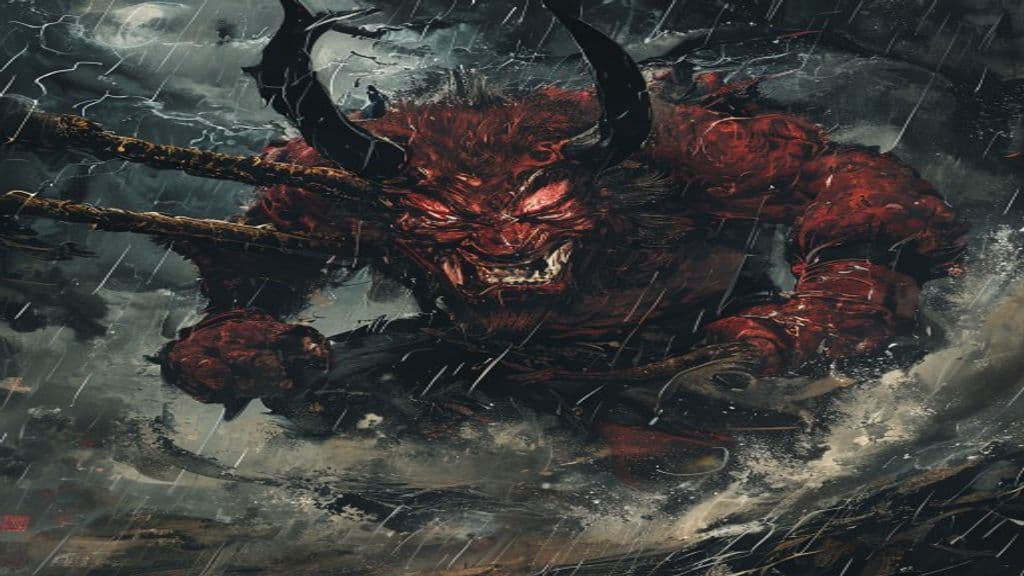
Oni
Powerful supernatural beings of Japanese folklore — associated with misfortune, disease, and the punishment of sinners in hell. Fearsome, often depicted as guardians of the underworld.

Datsue-ba
A supernatural old-woman ogress figure in Japanese Buddhist underworld imagery who sits by the Sanzu River and strips the deceased of their garments (or, in some accounts, their skin) as part of post-mortem judgement. She functions as a liminal, procedural agent within Ten Kings / Six Realms iconography rather than as a creator or cosmic force.
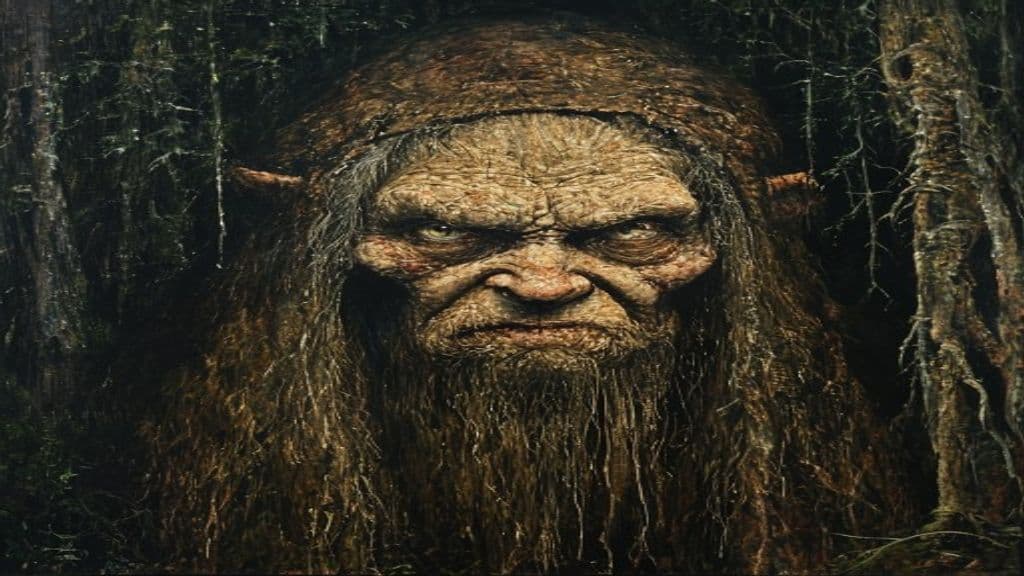
Baba Yaga
Baba Yaga is an ambivalent female figure of East Slavic folktale tradition, depicted variously as a fearsome, child-eating crone or as a helpful, maternal donor. She is associated with the deep forest, a hut described as standing on chicken legs, and the motific accoutrements of a mortar and pestle.
Yellow Emperor (Huangdi / Xuanyuan)
The Yellow Emperor (Huangdi, 黃帝), also known by the clan/name Xuanyuan, is a legendary culture-hero and thearchic sovereign in Chinese tradition who is venerated as an ancestral ruler and cosmic deity associated with the central/earth (yellow) phase, the Yellow Dragon, and certain astral identities. He is traditionally credited with foundational cultural, calendrical, medical, and political knowledge and is incorporated into the Five Regions Highest Deities scheme.
Yemọja
Yemọja is a major water deity (orisha) in the Yoruba religion, venerated as a maternal patron of rivers—particularly the Ogun River in Nigeria—and, in Afro-Cuban and Brazilian Orisha traditions, of the ocean. She is depicted as a protective mother figure associated with fertility, healing, wealth symbolism (cowrie shells), and both nurturing and potentially destructive aspects of water.
Yer iyesi
Yer iyesi is the familiar spirit or guardian of the earth and specific territory in Turkic/Tatar and related Tengrism traditions. Conceived as a land-attached iye, it appears in male and female forms (Yer Ata and Yer Ana) and is associated with protection of land and, in the female aspect, fertility and primordial presence at cosmogony.
Yesod
Yesod (Hebrew יְסוֹד, Tiberian Yăsōḏ, "foundation") is the ninth sephirah on the Kabbalistic Tree of Life; a metaphysical locus and channel that collects, balances and transmits the light of the higher sephirot into Malkuth, functioning as the foundation through which divine emanation is made manifest.
Yeti
A Himalayan legendary apelike humanoid—large, hairy, bipedal—embedded in pre‑Buddhist and local Himalayan folklore and later incorporated into Tibetan Buddhist classificatory schemes; it is variably described in local terms as a 'man‑bear' or 'wild man' and has been reinterpreted in modern popular culture as the 'Abominable Snowman.'
Ymir
Ymir is the primeval progenitor in Norse myth whose body is transformed by the gods into the material world; he is named in the Poetic Edda and the Prose Edda as ancestor of the jötnar and a source-substance for earth, sea, mountains, sky and more.
Youdu
Capital city of Hell or Diyu in Chinese mythology, surrounded by darkness. (Note: - The power tier should be Ancient (deity-level) instead of Primordial (cosmic), as Youdu is described as the capital of Hell, not a fundamental aspect of the universe. - The abilities listed are corr)
Yowie
Yowie is an Australian folkloric entity—recorded in some Aboriginal lexical records as a nocturnally roaming spirit and in colonial and modern accounts as a large, bipedal, hairy creature. The figure appears across eastern Australian traditions under many regional names and has been reinterpreted in settler literature and modern cryptozoology.
Ysätters-Kajsa
A localized Swedish wind-being from the province of Närke, presented in late 19th/early 20th-century sources (notably Selma Lagerlöf) as a singular, personified 'wind-troll' who delights in gales and whirlwinds and plays mischievous but sometimes protective roles in local life.
Yu Shi
Yu Shi (雨師; Yǔ Shī, "Master of Rain") is a named rain master in Chinese religion and mythology—an agent or deity associated with producing and governing rain. Yu Shi appears in mythic narratives (for example aiding Chiyou at the Battle of Zhuolu in alliance with wind and thunder deities) and is also a focus of ritual prayer ceremonies for rain among Han Chinese, Maonan, and other groups in southwest China.
Yuki-onna
The Snow Woman of Japanese folklore — a spirit born of blizzards who appears to travelers lost in snowstorms. Beautiful and lethal, she can show mercy or bring death depending on her mood.
Yumboes (Benevolent Supernatural Beings)
In Wolof mythology, Yumboes are benevolent supernatural beings referred to as 'good people' or Bakhna Rakhna. (Note: * Power tier: Not mentioned in source material; however, based on the context and the fact that they're referred to as 'good people' or Bakhna Rakhna, it's likely they should be classified as Minor Sp)
Community Record
- [1]Shikome (Wikipedia summary of Kojiki and Nihon Shoki material). Wikipedia: Shikome (summary of Kojiki and Nihon Shoki accounts)wiki
- [2]Megami Tensei Wiki entry: Yomotsu-Shikome. Megami Tensei Wiki: Yomotsu-Shikome (modern adaptation reference cited in notes)other
- [3]Walfas Custom Base: Hisami Yomotsu (archival adaptation reference). Archive: Walfas Custom Base – Hisami Yomotsu (modern adaptation archive referenced in notes)other
- [4]Archive: Frederik Ndoci,Këngë Shqiptare + te huaja (archival item listed among notes). Archive item referenced in provided research notesother