
According to the account preserved in Selma Lagerlöf's narrative and summarized in modern references, she was called Kajsa because 'wind-trolls used to be called by that name' and received the cognomen Ysätter from the swamp Ysätter in Asker parish where she was said to have been born. The tale frames her as a single, localized being tied to that place and to the Närke plain.
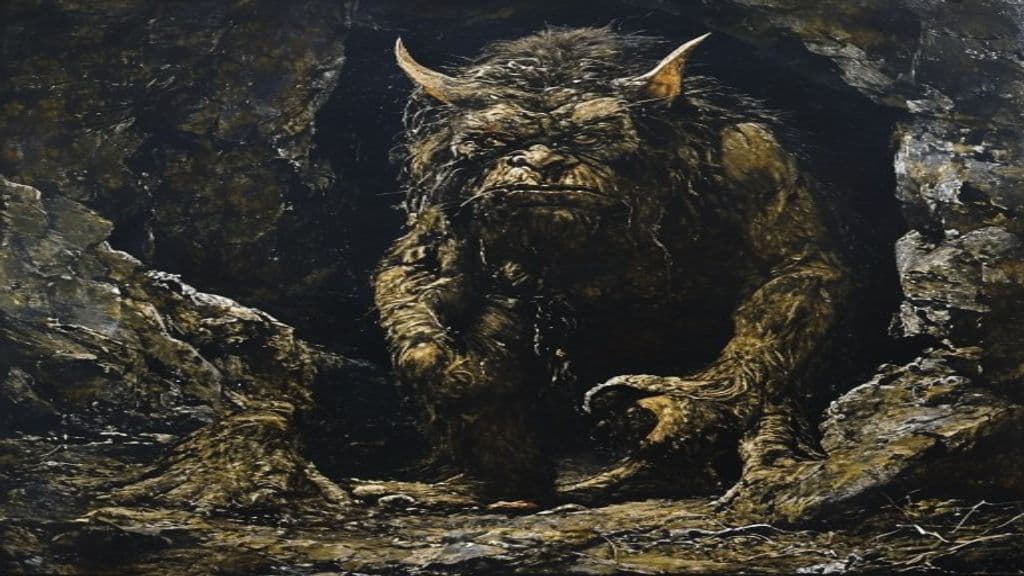
Lagerlöf's literary portrayal personifies her as a female troll integrated with the storm: she is described as standing in the centre of a whirlwind, with long hair whirling among the clouds and a skirt dragging on the ground like a dust storm, and as sometimes sitting atop a high Scots Pine on a cliff watching the plain. These poetic elements come from Lagerlöf's narrative rather than a catalogue of ethnographic descriptions.
Reported actions in the sources (chiefly Selma Lagerlöf) attribute to her control over winds, whirlwinds and localized weather phenomena: raising gales, creating whirlwinds and dust-storm-like trails, bringing fog that misleads travelers, causing sudden rains or snowdrifts that affect farming and transport, puffing on charcoal kilns so fires burn brightly, blowing laundry and tableware about, displacing hats and disturbing smoke into houses, and nudging small boats onto shoals. She is portrayed as mischievous rather than wholly malevolent and is said to be morally selective—harassing quarrelsome or mean people while sometimes protecting honest folk and children (including a story in which she extinguishes a church fire).
Bergsrå
A place-bound mountain spirit (a form of Scandinavian 'rå') thought to inhabit and preside over a mountain, often described as keeping a household or court within the mountain and known for luring or taking humans into the mountain (bergtagning).
Church Grim
A site-bound guardian spirit in English, Scottish and Nordic/Scandinavian folklore that watches over an individual Christian church and its churchyard, defending the consecrated ground from profanation and hostile spirits. Forms and origin accounts vary by region, including a large black dog in English tradition, the bound spirit of an animal (often a lamb) in Scandinavian accounts, and in some Scottish strands the spirit of the most recently buried person acting as a temporary watcher.
Sjörå
A female humanoid water spirit of Swedish folklore classed among the rå (place-keepers). Bound to a particular lake, pool, or freshwater site, the sjörå protects the waters and its fish, rewards respectful users with good catches and safety, and may seduce or drown those who are disrespectful.
Skogsrå
A female forest rå in Swedish folklore who rules the woods and its game; she appears as a beautiful woman from the front but reveals non-human features when seen from another angle. She interacts with hunters, woodcutters and charcoal-burners, offering favors (hunting luck, help with work, offspring) or ensnaring men who follow her into the forest.
Ymir
Ymir is the primeval progenitor in Norse myth whose body is transformed by the gods into the material world; he is named in the Poetic Edda and the Prose Edda as ancestor of the jötnar and a source-substance for earth, sea, mountains, sky and more.
Yomotsu-shikome
Yomotsu-shikome (literally 'Ugly Woman of the Underworld') is an ugly hag or hags of Yomi in early Japanese myth. In the Kojiki she pursues Izanagi as he flees the land of the dead; variant accounts in the Nihon Shoki present alternate names and numbers, sometimes suggesting multiple hags.
Youdu
Capital city of Hell or Diyu in Chinese mythology, surrounded by darkness. (Note: - The power tier should be Ancient (deity-level) instead of Primordial (cosmic), as Youdu is described as the capital of Hell, not a fundamental aspect of the universe. - The abilities listed are corr)
Yowie
Yowie is an Australian folkloric entity—recorded in some Aboriginal lexical records as a nocturnally roaming spirit and in colonial and modern accounts as a large, bipedal, hairy creature. The figure appears across eastern Australian traditions under many regional names and has been reinterpreted in settler literature and modern cryptozoology.
Yu Shi
Yu Shi (雨師; Yǔ Shī, "Master of Rain") is a named rain master in Chinese religion and mythology—an agent or deity associated with producing and governing rain. Yu Shi appears in mythic narratives (for example aiding Chiyou at the Battle of Zhuolu in alliance with wind and thunder deities) and is also a focus of ritual prayer ceremonies for rain among Han Chinese, Maonan, and other groups in southwest China.
Yuki-onna
The Snow Woman of Japanese folklore — a spirit born of blizzards who appears to travelers lost in snowstorms. Beautiful and lethal, she can show mercy or bring death depending on her mood.
Yumboes (Benevolent Supernatural Beings)
In Wolof mythology, Yumboes are benevolent supernatural beings referred to as 'good people' or Bakhna Rakhna. (Note: * Power tier: Not mentioned in source material; however, based on the context and the fact that they're referred to as 'good people' or Bakhna Rakhna, it's likely they should be classified as Minor Sp)
Yunak İyesi
Yunak İyesi is a Turkic household İye (possessor/guardian spirit) associated specifically with the bathhouse or bathroom (yunak/hammam/caghlyk). It functions as the bath's guardian and may punish those who disturb it; it is also reported to have a divinatory role by giving tactile signs to a consulter.
Community Record
- [1]Ysätters-Kajsa. Wikipedia: 'Ysätters-Kajsa' (summary of Selma Lagerlöf's account and local lore)wiki
- [2]Ysätters-Kajsa (Wikidata). Wikidata entry for Ysätters-Kajsaother
- [3]Troll - New World Encyclopedia. General reference on the broader category of 'troll' in folklore (used for contextualizing the term 'wind-troll')other