
In colonial-era Inca foundation traditions and later summaries, Sinchi Roca is the second Sapa Inca of the Hurin dynasty, succeeding the founder-figure Manco Capac. He is placed in the early dynastic era of Cuzco (dated in sources to c. 1230–c. 1260) and is described as continuing and institutionalizing political and ritual practices of the nascent Inca polity; genealogical and succession details derive from foundation myths and colonial chronicles rather than contemporary documentary evidence.
The sources do not give a physical portrait of Sinchi Roca. Chronicled descriptions of early Inca investiture regalia—mascapaicha (a red wool fringe with strands each passed through small gold tubes, surmounted by Korekenke feathers) and the llautu/llauto (a multicoloured braid turban of fine vicuña wool)—are reported in 16th-century accounts and are associated in tradition with early Sapa Incas; the sources attribute the association of such regalia to Sinchi Roca in Spanish chronicler tradition but do not provide a first-person physical description of him.
Reported actions and functions in the sources are political, administrative and judicial rather than supernatural: leading his family to the Cuzco valley (foundation narrative), dividing land into territories, initiating a census of the Inca population, ordering members of the Inca people to pierce their ears as a sign of nobility, and implementing agrarian improvements such as building terraces and importing soil (as reported by Pedro Cieza de León). A legend recorded in colonial accounts tells of a llama shepherd (llamamichi) who took a woman loved by the Inca; the shepherd confessed under torture that he had obtained a wacanqui (a love-amulet) 'from a demon in a cave'—this story functions as a judicial anecdote in the sources rather than evidence that Sinchi Roca himself possessed magical powers.
Weaknesses
- othernot applicable — sources present Sinchi Roca as a human ruler, not a supernatural adversary
Wards
- othernone recorded — no protective measures against Sinchi Roca are described in the sources
Apu
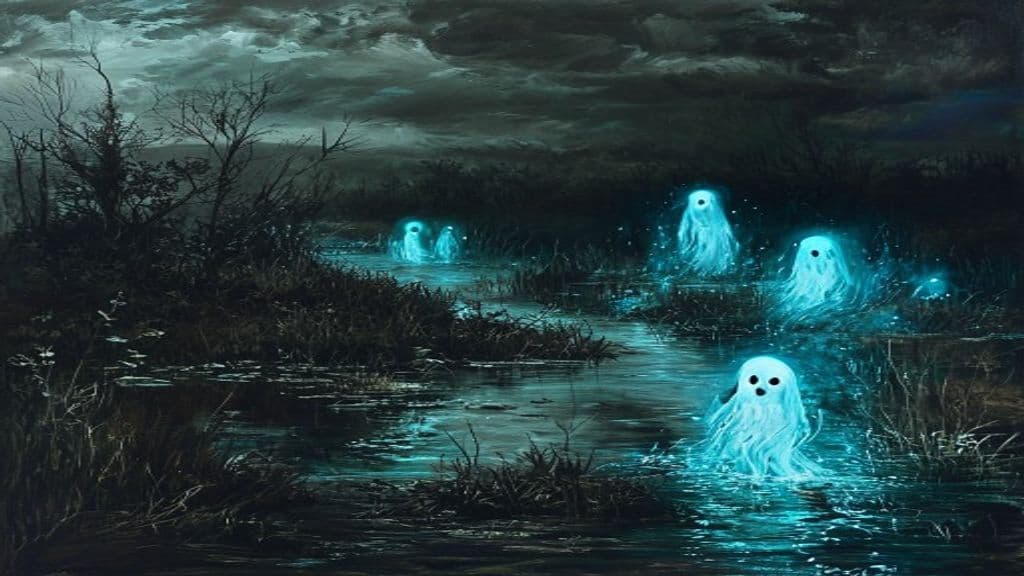
In Andean (Inca-era and continuing) belief, an apu is the spirit of a mountain or a solitary rock, conceived as a localized, often anthropomorphic guardian presence associated with a particular peak or notable stone in Peru, Ecuador, and Bolivia.
Ciqui Ollco
Ciqui Ollco is not documented in the supplied sources as a supernatural being; the materials reference historical Inca royals (notably Topa Inca Yupanqui and Mama Ocllo Coya). Any supernatural characterization of 'Ciqui Ollco' is unsupported by the provided research notes.
Inca Human Sacrifice Entity
A supernatural force in Inca tradition believed to demand human sacrifice, particularly children, as a form of placation. (Note: 1. The summary should mention that the entity demands appeasement, not just placation. 2. Power tier should be Ancient (deity-level) instead of Primordial (cosmic). 3. The source material does not sup)
Mama Huaco
Mama Huaco is an ancestral female figure in Inca origin narratives who emerges from the cave of Paqariq Tampu/Pacaritambo among the founding siblings; sources describe her as strong and skillful and record an act in which she hurled two golden staffs northward, an action tied to territorial marking in the origin cycle.
Mama Qucha
Mama Qucha (Mama Cocha) is an Inca water mother deity, personifying the sea and other bodies of water. She functions as guardian of sailors and fishermen, provider of fish and calm seas, and is counted among the principal female elemental mothers in Inca cosmology.
Manco Cápac
Manco Cápac is the foundational ancestral figure and culture‑founder of the Inca (Quechua) tradition: remembered as the first ruler (Sapa Inca) and progenitor who, according to origin legends, established Cusco after emerging with Mama Ocllo from Lake Titicaca. Sources treat him variably as mythic ancestor, legitimizing founder, and a possibly historical early ruler.
Pacha Mama
Pacha Mama is an Andean/Inca mother-deity representing 'space-time' and a universal, life-sustaining principle tied to earth, fertility, and the totality of the cosmos. Revered across the Andes, she functions as a foundational generative presence from which major cosmological principles are said to trace their origin.
Supay
Supay is an ambivalent subterranean spirit and regent of the Incan underworld (Uku Pacha / Hurin Pacha). In Quechua and Aymara tradition he embodies aspects of shadow, death, and chaos, functioning both as lord of the dead and as the archetype or progenitor of many dangerous local spirits; Spanish colonial sources later equated him with the Christian Devil.
Ukhu Pacha
Ukhu Pacha is the under- or inner-world layer in Andean (Quechua/Inca) tripartite cosmology. As a pacha it functions as a position in an integrated space–time ordering rather than as a single personal spirit or deity.
Viracocha
Viracocha (Quechua Wiraqucha, Huiracocha) is the principal creator and civilizing deity in pre-Inca and Inca mythology, portrayed as the originator of the universe, time, and human society who emerges from watery places to bring light, order, and knowledge.
Ñusta
Ñusta is a Quechua term used in Inca and Andean contexts to denote a high-status woman or noblewoman—often translated as "princess"—who occupied elite social, political, and ritual roles within the Inca imperial order and continued to be significant in colonial-era interactions with Spaniards.
Sin-you
A single-horned mythic quadruped in East Asian (especially Japanese) folklore, depicted as an emblem of judicial truth that can detect lies and sometimes execute the guilty. It is portrayed alongside rulers or judges in some accounts and contrasted with other auspicious composite beasts such as the Qilin.
Community Record
- [1]Sinchi Roca — Wikipedia. Wikipedia article 'Sinchi Roca' (summarizing colonial chroniclers and modern sources)wiki
- [2]Wikidata: Sinchi Roca. Wikidata entry Q165971other
- [3]Archive item imageedit_3_8297478944. Archive item referenced in research notesother
- [4]Archive item IMG 20241222 0005. Archive item referenced in research notesother
- [5]Pedro Cieza de León (as cited in summaries). Summary attribution to Pedro Cieza de León that Sinchi Roca built terraces and imported soil to improve valley fertility (reported in secondary summaries)literary