The provided sources do not supply a full origin narrative for Sunakake‑Baba. Available excerpts present her as a roadside antagonist encountered by travelers within retellings and collections of yōkai material; no creation myth, lineage, or backstory is recorded in the supplied materials.
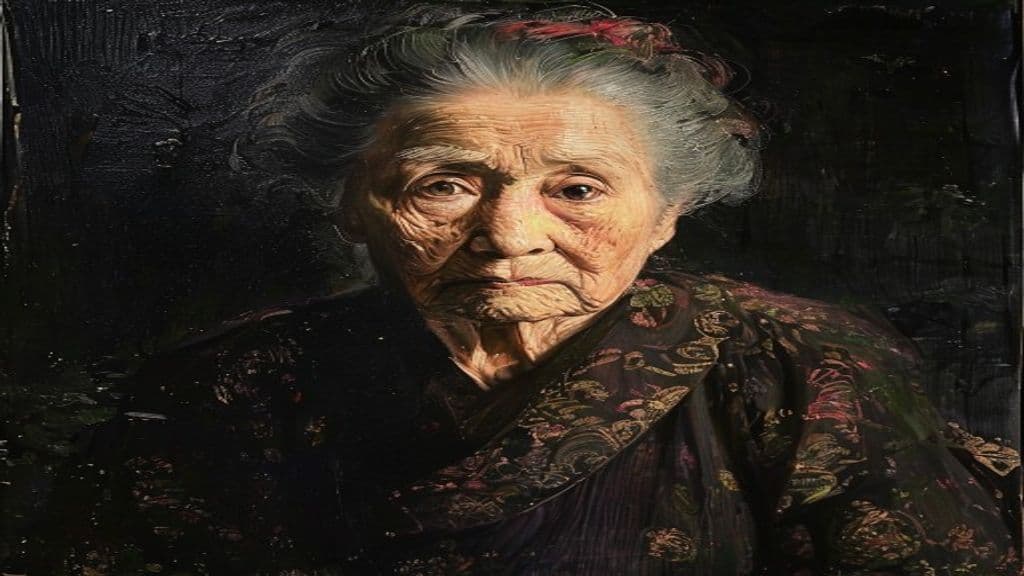
In the documented material Sunakake‑Baba is described only as "a little old lady." The sources supplied do not elaborate on clothing, supernatural physical features, or monstrous appendages; beyond the phrase indicating an elderly female form there are no consistent additional physical details in the available excerpts.
Attested behavior in the sources is limited to throwing sand into people's eyes; one source summarizes her as a little old lady who "will throw sand in your eyes," framing her as a hazard to travelers. The supplied materials do not record other abilities such as speech, shape‑changing, or wider magical powers, and make no claims about additional capacities beyond the sand‑throwing attack.
Sumatinātha
Sumatinātha is the fifth Tīrthaṅkara (ford-maker) of the current cosmic age in Jain tradition: a royal-born figure who renounced worldly life, attained omniscience (kevala jñāna), taught the dharma, and achieved liberation (mokṣa) on Mount Śikharjī. He is venerated in Jain temple and artistic contexts as one of the canonical Jinas.
Sumedha
Previous life of Gotama Buddha, demonstrating selflessness and spiritual dedication. (Note: - Power tier should be Ancient (deity-level), not Primordial (cosmic). Sumedha's abilities are remarkable but not cosmic in scope. - The article doesn't mention any sensory cues, wards, or weaknesses )
Summanus
Summanus is the ancient Roman divine figure associated with nocturnal thunder and lightning, functionally contrasted with Jupiter's daylight thunder. He is etymologically and ritually tied to the Manes (chthonic/ancestral spirits) and received public cult observances in Rome and at locales such as Mount Summano.
Sun Dance (Lakota tradition)
A spiritual practice and ritual ceremony practiced by certain Native American and Indigenous communities in North America, emphasizing personal and community sacrifice to reaffirm beliefs about the world and the supernatural. (Note: 1. Remove "certain" from the summary as it's not specified which communities participate. 2. Power tier should be Primordial as the Sun Dance has a more cosmic significance and isn't necessarily tied )
Sun Wukong
Sun Wukong (孫悟空, Sūn Wùkōng), popularly the "Monkey King," is a mythic non-human sapient figure from Chinese literary and religious tradition best known from the 16th‑century novel Journey to the West. Portrayed as an exceptional stone-born monkey who acquires supernatural powers through Taoist practice, he is alternately a rebellious trickster who challenges Heaven and, after punishment, a protector and disciple who accompanies the monk Tang Sanzang on a Buddhist pilgrimage.
Sun and Moon (Inuit myth)
An English-titled index entry for a traditional Inuit story concerning the Sun and Moon is listed on a Wikipedia disambiguation page. The supplied sources do not contain the narrative, characters, cosmology, or ritual details of this story; only the disambiguation listing itself is present in the provided material (Source 1).
Sundel Bolong
A Javanese-rooted Indonesian folkloric apparition: the vengeful ghost of a woman who died in circumstances tied to sexual stigma (pregnancy out of wedlock or death in childbirth), depicted as a white‑gowned woman with long black hair and a large hole in her back. The figure functions in folklore and modern media as a punitive revenant addressing sexual violence, social shame, and the loss of motherhood.
Sunekosuri
A Japanese yōkai from Okayama Prefecture described in folkloric sources as a small roadside spirit that rubs against the lower legs (the space between the legs) of pedestrians at night, causing brief difficulty walking but no lasting harm. Regional variants describe similar leg-catching behavior that can cause falls.
Suparṇākhyāna (Hindu tradition)
The Suparṇākhyāna is an ancient Hindu epic poem that tells the story of Garuda, a divine bird. (Note: 1. Power tier should be Primordial (as it's an ancient Hindu epic poem, but it describes a divine bird, which is more akin to a cosmic being) 2. No appearance description provided in the source excerp)
Supay
Supay is an ambivalent subterranean spirit and regent of the Incan underworld (Uku Pacha / Hurin Pacha). In Quechua and Aymara tradition he embodies aspects of shadow, death, and chaos, functioning both as lord of the dead and as the archetype or progenitor of many dangerous local spirits; Spanish colonial sources later equated him with the Christian Devil.
Supernatural Beings in Slavic Tradition
In the Slavic tradition, supernatural beings are a part of the natural world, existing alongside humans and other entities. They have a unique relationship with nature, reflecting an interconnected worldview. (Note: 1. The power tier should be Primordial, as it is implied that these supernatural beings are a fundamental part of the natural world and not limited by human regional boundaries. 2. Remove "Their abili)
Supernatural Entities in Vietnamese Mythology
In Vietnamese mythology, various spirits, ghosts, and demons inhabit a realm between heaven and earth, interacting with humans in complex ways. (Note: - Power tier should be Primordial (cosmic entities) since it's a realm between heaven and earth. - Remove vague phrase "in complex ways" and provide specific examples of interactions between humans an)
Community Record
- [1]Myths and Legends / Slavic Folklore: Kind of Forgot About Vengeance (part 2 of 2) — Audioboom synopsis. Audioboom episode synopsis (referenced in research notes) — names Sunakake‑Baba and describes her as a little old lady who will throw sand in your eyes.folk
- [2]GeGeGe no Kitarō (general reference). Overview of popular yokai media (GeGeGe no Kitarō) referenced in research notes to situate Sunakake‑Baba within broader yokai popularization; does not itself detail Sunakake‑Baba.wiki
- [3]Edo - the EDOPEDIA -: Edo Yokai and Yurei. Blog overview of Edo-era yokai referenced in research notes for contextualizing Sunakake‑Baba among roadside/old‑woman yokai; does not provide additional specifics on Sunakake‑Baba.other
- [4]BOO-GLEECH: GeGeGe no Kitaro Halloween compendium. Fan/media discussion cited in research notes that reflects how yōkai (including hag figures) appear in popular retellings; used in the research notes to contextualize Sunakake‑Baba's place in popular yokai lists.other
- [5]Myths and Legends podcast — author page (mentions). Author page referenced in research notes; related to the Audioboom/Myths and Legends materials that name Sunakake‑Baba in summaries.other