
Sources present the sundel bolong as the restless spirit of a woman who died under socially stigmatized conditions: commonly, a woman who died while pregnant outside marriage (variously told as giving birth in her grave) or who died in childbirth with the infant emerging through her back. The entity’s name combines sundel (glossed in sources as 'prostitute' or 'whore') and bolong (Javanese for 'hole'), linking social identity and a distinctive bodily wound. Modern folklore studies cited in summaries interpret the motif as socially functional — a cautionary or deterrent narrative tied to anxieties about female sexuality and prostitution during the colonial period — but this interpretive claim is presented as scholarly commentary in the sources rather than as part of a single canonical origin tale.
Consistently described in the supplied materials as a woman wearing a long white dress with long black hair that commonly conceals a large hole in her back (the eponymous 'bolong'). Film synopses and popular descriptions add that the wound is often shown as putrid or rotting in cinematic portrayals. The visual profile places the sundel bolong within the regional 'white lady' iconography of female revenants.
Reported behaviors across folklore summaries and film synopses portray the sundel bolong as a revenge‑motivated revenant: attacking and killing men implicated in her death or sexual violence, targeting children (especially newborns, who are said in some accounts to be taken to replace her lost child), and enacting mutilatory vengeance in some tales (sources record the belief that 'if rejected by a man, she is said to castrate him'). Modern popular culture adaptations recast or expand her attributes (for example, Marvel Anime: Blade depicts sundel bolong figures as an 'Asian vampire sub‑species'), but such reworkings are explicitly media reinterpretations in the cited materials rather than traditional cosmological classifications.

Pontianak (Kuntilanak)
A Southeast Asian female vengeful spirit common in Malay‑language traditions, often portrayed as the restless ghost of a woman who died in traumatic circumstances; she commonly appears as a beautiful woman who may reveal a monstrous form and is associated with banana and banyan trees.
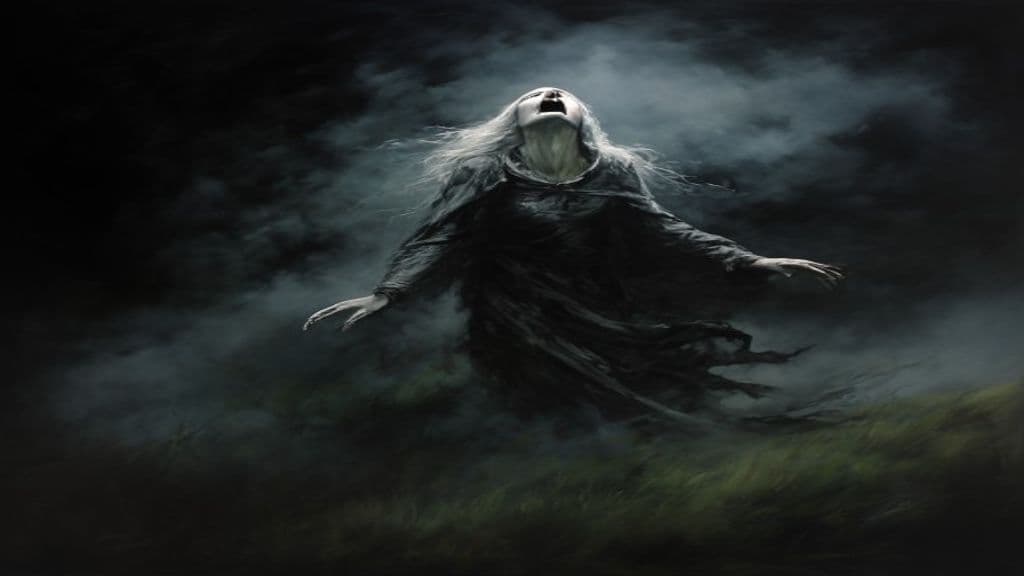
Banshee
A female spirit of Irish and Scottish folklore whose wail heralds an impending death in a family of Gaelic descent. Not a cause of death — a witness to it.
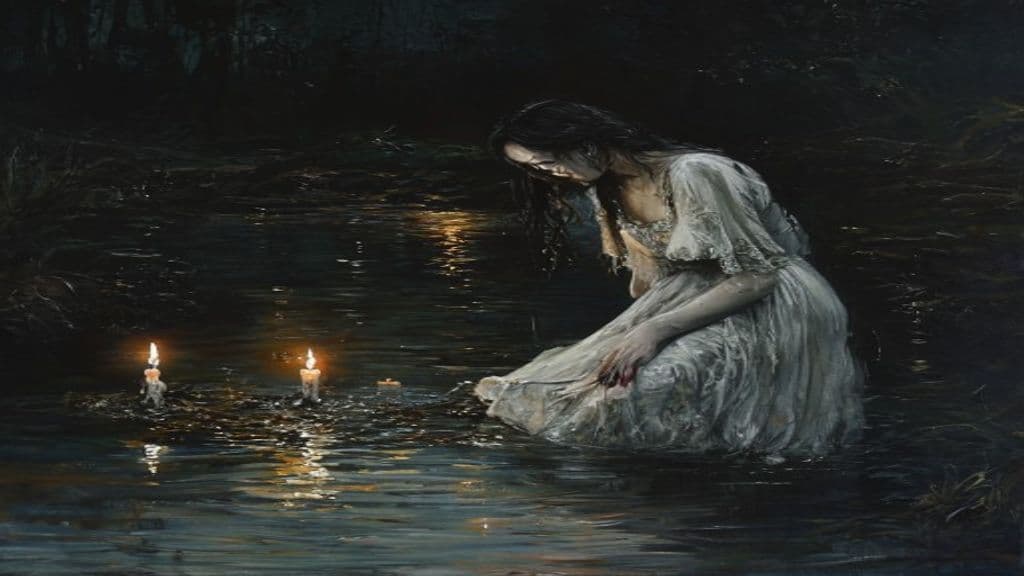
La Llorona
The Weeping Woman of Mexican folklore — the ghost of a mother who drowned her children and now wanders rivers and lakes, weeping for them and taking other children she finds at night.
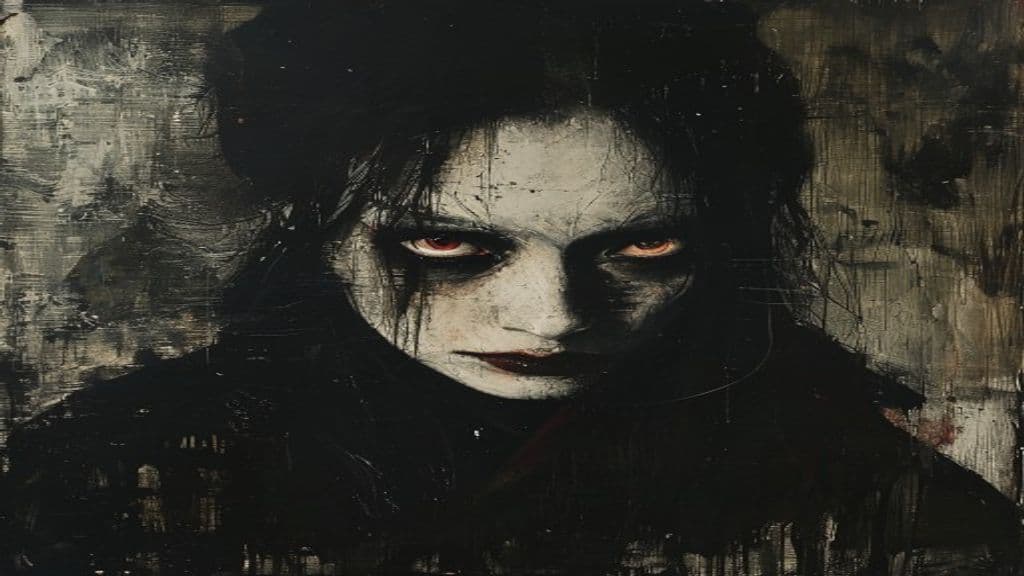
Onryō
Onryō are vengeful spirits in Japanese folklore who return after death to redress wrongs suffered in life by harming the living; they are commonly portrayed in literature and film as wronged individuals—frequently women—whose resentment manifests as lethal retribution, and in some accounts as causing wider calamities.
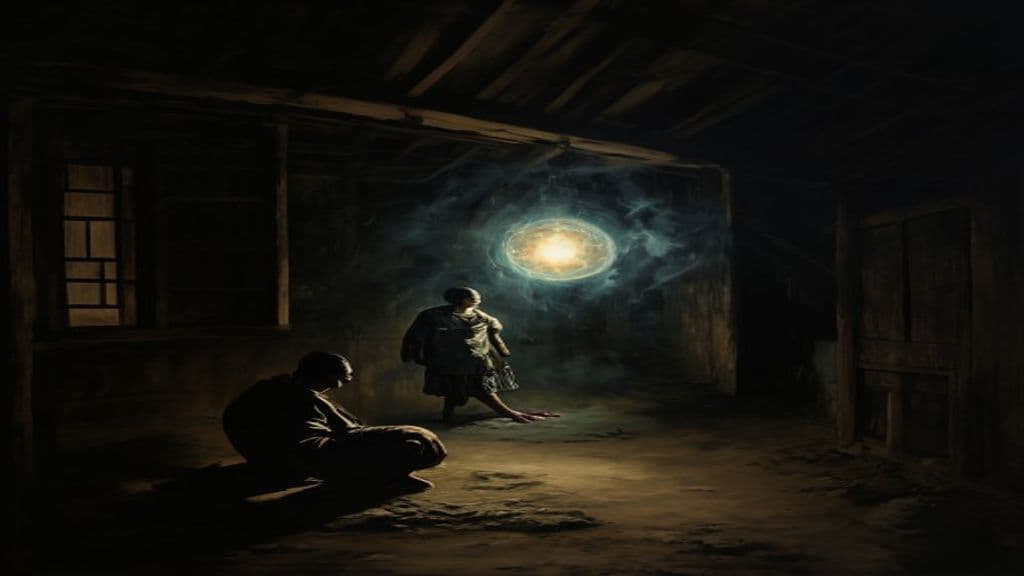
Phi Pop
A Thai possessing spirit that inhabits a living person and compels them to consume raw entrails at night — the possessed victim may be unaware, accused by their community, and driven out.
Calon Arang
Calon Arang is a witch figure in Javanese and Balinese folklore, traditionally portrayed as a master of black magic whose cemetery ceremony—including the sacrifice of a young girl to the goddess Durga—brings flood and an incurable plague to the village of Girah. In the tale a royal ritual specialist (Mpu Bharadah) and his disciple (Mpu Bahula) neutralize her by recovering her magic scroll and confronting her in ritual contest.
Genderuwo
Genderuwo is a Javanese/Indonesian supernatural humanoid spirit, commonly depicted in modern sources as a large, hairy, muscular creature with reddish or black skin and bulging eyes; it is described as able to appear, disappear, and assume human form. It is treated in regional folklore and popular culture as one member among many named hantu (supernatural beings) in the Malay–Indonesian mythic landscape.
Keong Emas
A princess magically transformed and contained within a golden snail shell, associated with the Panji cycle of Javanese folklore. (Note: - Power tier: Primordial (not Ancient), as it's described as a princess trapped in a magical object rather than having deity-level powers. - Abilities: Lack of information about abilities or behaviors)
Wewe Gombel
Wewe Gombel is a female spirit or vengeful ghost in Javanese/Sundanese Indonesian folklore associated with the abduction and protective custody of children who are mistreated or left out at night; she is used pedagogically to warn children to stay home and to signal parental responsibility.
Sun Dance (Lakota tradition)
A spiritual practice and ritual ceremony practiced by certain Native American and Indigenous communities in North America, emphasizing personal and community sacrifice to reaffirm beliefs about the world and the supernatural. (Note: 1. Remove "certain" from the summary as it's not specified which communities participate. 2. Power tier should be Primordial as the Sun Dance has a more cosmic significance and isn't necessarily tied )
Sun Wukong
Sun Wukong (孫悟空, Sūn Wùkōng), popularly the "Monkey King," is a mythic non-human sapient figure from Chinese literary and religious tradition best known from the 16th‑century novel Journey to the West. Portrayed as an exceptional stone-born monkey who acquires supernatural powers through Taoist practice, he is alternately a rebellious trickster who challenges Heaven and, after punishment, a protector and disciple who accompanies the monk Tang Sanzang on a Buddhist pilgrimage.
Sun and Moon (Inuit myth)
An English-titled index entry for a traditional Inuit story concerning the Sun and Moon is listed on a Wikipedia disambiguation page. The supplied sources do not contain the narrative, characters, cosmology, or ritual details of this story; only the disambiguation listing itself is present in the provided material (Source 1).
Sunakake‑Baba
Sunakake‑Baba is a malicious yokai depicted as a little old woman who attacks travelers by throwing sand into their eyes; attestations in the supplied materials are sparse and situate her within the broader Japanese yōkai tradition and popular media retellings.
Sunekosuri
A Japanese yōkai from Okayama Prefecture described in folkloric sources as a small roadside spirit that rubs against the lower legs (the space between the legs) of pedestrians at night, causing brief difficulty walking but no lasting harm. Regional variants describe similar leg-catching behavior that can cause falls.
Suparṇākhyāna (Hindu tradition)
The Suparṇākhyāna is an ancient Hindu epic poem that tells the story of Garuda, a divine bird. (Note: 1. Power tier should be Primordial (as it's an ancient Hindu epic poem, but it describes a divine bird, which is more akin to a cosmic being) 2. No appearance description provided in the source excerp)
Supay
Supay is an ambivalent subterranean spirit and regent of the Incan underworld (Uku Pacha / Hurin Pacha). In Quechua and Aymara tradition he embodies aspects of shadow, death, and chaos, functioning both as lord of the dead and as the archetype or progenitor of many dangerous local spirits; Spanish colonial sources later equated him with the Christian Devil.
Supernatural Beings in Slavic Tradition
In the Slavic tradition, supernatural beings are a part of the natural world, existing alongside humans and other entities. They have a unique relationship with nature, reflecting an interconnected worldview. (Note: 1. The power tier should be Primordial, as it is implied that these supernatural beings are a fundamental part of the natural world and not limited by human regional boundaries. 2. Remove "Their abili)
Community Record
- [1]Sundel bolong (Wikipedia). Wikipedia: Sundel bolongwiki
- [2]Wikidata: Sundel bolong. Wikidata entry Q6146143other
- [3]Sundelbolong (1981) — Archive film item. Archive.org: Sundelbolong (1981) film item and synopsesother
- [4]Legenda Ghost - Sundel Bolong (archive item). Archive.org: Legenda Ghost - Sundel Bolong (VCD bootleg item)other
- [5]Sundel Bolong: The Terrifying Woman - Mythlok. Mythlok summary article on Sundel Bolongfolk
- [6]Female Sexploitation in Indonesian Horror Films: Sundel Bolong (A Perforated Prostitute Ghost, 1981), Gairah Malam III.... Academic repository item on sexploitation and the monstrous feminine in Indonesian film (includes discussion of Sundel Bolong film themes)academic
- [7]Sundel Bolong (archive general). Archive.org: Sundel Bolong (general item)other
- [8]Nonmodernist: Sundel Bolong, 1981 film notes. Nonmodernist film discussion of Sundel Bolong (1981)other