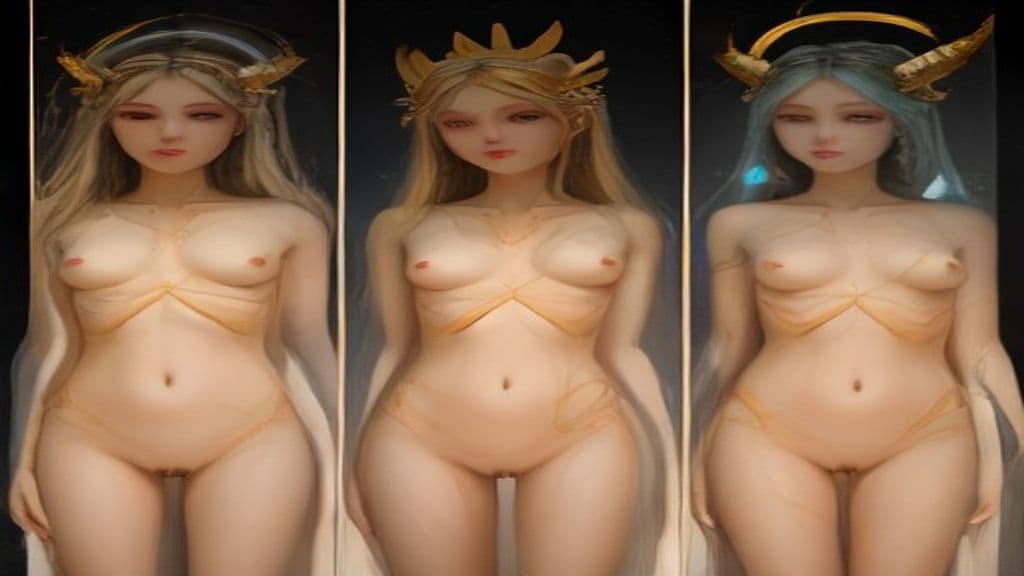
Taygete is presented in the classical corpus as one of the seven Pleiades, daughters of Atlas (Bibliotheca attribution for the Pleiades), and as a companion of Artemis in her archaic role as potnia theron, 'Mistress of the animals.' In mythic episodes summarized by ancient authors, Zeus pursues Taygete; to escape him she is transformed by divine means into a doe with golden horns (a detail preserved in Pindar, Olympian 3). She is also placed in genealogical narratives as mother (in some accounts by Zeus) or as spouse within Lacedaemonian foundation-myths (Pausanias 3.1.2 and later summaries), which situate her as an ancestor-figure for Sparta and connect her to local cult and toomtoponymy: Mount Taygetos is said to be named for her.
Primary descriptions present Taygete in three overlapping modes: as a nymph and attendant of Artemis (human female form), as one of the Pleiades (celestial/asterism identity), and in a notable metamorphosis as 'the doe with the golden horns' (the phrasing and motif derive from Pindar's account in Olympian 3). Scholarship noted in the sources (e.g. Kerenyi in summaries provided) emphasizes the conflation of divine beast, heroine, and goddess in such figures, so Taygete's appearance can be represented simultaneously as sacred animal, mythic woman, and star.
The sources attribute to Taygete narrative-functional abilities rather than a broad catalogue of magical powers. Attested capacities include metamorphosis (the transformation into a doe with golden horns to evade Zeus, as in Pindar), a cultic status in which her transformed form becomes dedicated to Artemis (Pindar's formulation that the doe was 'inscribed as a sacred dedication to Artemis Orthosia'), and genealogical/procreative roles (accounts that make her mother or consort in Lacedaemonian foundation myths, reported in Pausanias and summarized in classical mythographic traditions). No explicit powers such as cursing, healing, or prophecy are recorded in the supplied materials.
Weaknesses
- otherNo attested weaknesses
Wards
- otherNo attested wards or protective measures are recorded in the provided sources; Taygete is treated as a cultic/ancestral figure rather than as a hostile being requiring warding.

Pleiades
The Pleiades is an asterism — the open star cluster Messier 45 — visible as a compact group of bright stars and, in many cultures, personified as a set of mythic figures (notably the Seven Sisters in Greek myth). It functions both as a concrete astronomical object and as a widespread cultural calendrical and mythic motif used to mark seasons, navigation, and genealogies.

Artemis
Artemis is an ancient Greek goddess of hunting, the wilderness and wild animals, transitions (especially childbirth and puberty), vegetation, and chastity. Twin sister of Apollo and daughter of Zeus and Leto, she functions as a protector of young children and maidens while also capable of inflicting disease or punishment for transgressions against her sacred laws.
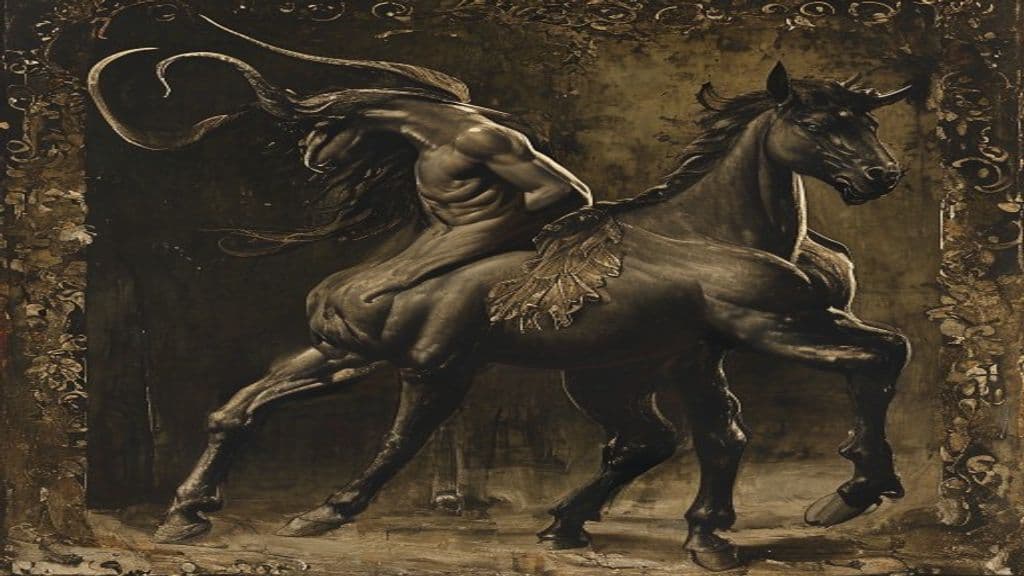
Centaur
A mythic hybrid from ancient Greek tradition with the upper body of a human and the lower body and legs of a horse. Centaurs appear as a tribal population associated with mountainous and wooded regions of Greece and embody tensions between human social order and untamed nature.
Aceso
Aceso (Ancient Greek: Ἀκεσώ, Akesó) is an ancient Greek goddess who personifies the process of healing and convalescence. She is attested as a daughter of Asclepius and Epione and was worshipped in healing centers such as Athens and Epidauros, appearing in sculptural reliefs alongside her family.
Achelous
Achelous is the personified river-divinity of the Achelous River in ancient Greek religion and mythology. Regarded among the potamoi (river-gods), he is portrayed as a shape-changing elemental deity associated with springs, naiads, and the production of abundance (the horn/cornucopia motif); he appears in myths chiefly as suitor to Deianeira and as Heracles' opponent.
Actia
Actia (Ancient Greek: Ἄκτια) is attested in the supplied sources not as a supernatural being but as (a) the ancient festival and epithet of Apollo Actius associated with Actium and Nicopolis, and (b) a modern taxonomic and commercial name (genus of flies; company and product names). No folkloric or mythic entity named Actia is documented in the provided materials.
Adikia
Adikia (Ancient Greek: Ἀδικία) is the personification and embodiment of injustice and wrongdoing in ancient Greek religious and visual culture, typically portrayed as the opposite and vanquished counterpart of the goddess Dike (Justice). She appears chiefly in archaic vase-paintings and emblematic visual programs where Justice punishes or restrains her.
Adonis
Adonis is a mythic mortal youth in ancient Greek tradition, beloved by goddesses (notably Aphrodite and Persephone) whose death and seasonal return are the focus of the women’s midsummer festival Adonia. The cultic practices—planting short-lived 'gardens of Adonis' on rooftops, ritual lamentation, and casting an effigy and withered plants into the sea—symbolically link him to vegetation cycles and Near Eastern dying-and-regenerating god traditions.
Adrasteia
Adrasteia is an ancient Anatolian/Greek goddess associated with mountain-mother cults and later identified with the Greek notion of inescapable fate and retributive necessity. She appears in Phrygian contexts as a mountain goddess connected to Cybele, in Cretan myth as a nurse of the infant Zeus, and by the fifth century BC is often equated or associated with Nemesis and other personifications of necessity.
Adrestia (Adrasteia)
Adrasteia (also Adrestia and multiple orthographic variants) is a figure in classical Greek tradition whose roles shift from a Phrygian mountain/mother-goddess probably associated with Cybele, to a Cretan nymph entrusted with nursing the infant Zeus, and by the fifth century BC identified with Nemesis as a deity/personification of divine retribution and balance.
Aeacus
Aeacus is a mythic king of the island of Aegina in Greek tradition, famed for his justice and piety. After death he is accorded a permanent office in Hades as one of the three judges of the dead alongside Minos and Rhadamanthus, and he is the eponymous ancestor of the Aeacidae.
Aegeas (Aegeus)
Aegeas (classical Aegeus) is the mytho-historical king of Athens from Greek myth, father of Theseus and traditional eponym of the Aegean Sea. The provided sources treat him as a mortal royal figure embedded in epic and local foundation narratives rather than a supernatural spirit or cultic being.
Aegina
Aegina is an eponymous nymph of Greek mythology who personifies the island of Aegina in the Saronic Gulf. She is remembered primarily as the mother of the hero-king Aeacus and as the island’s mythical ancestress, anchoring local civic identity and cultic landscape.
Aesculapius (Asclepius)
Aesculapius (Greek Asclepius) is the classical divine-hero of medicine and healing in ancient Greek religion and later Roman cult. He functioned as the patron and legitimating divine figure for temples, attendants (therapeutae), and organized healing practices; his emblem, the rod of Asclepius (a snake-entwined staff), endures as a symbol of medicine.
Agathos Daimon (Agathodaemon)
A beneficent household and civic daemon attested in classical Greek and Graeco‑Egyptian religion. In domestic Greece it is a household spirit honored with post‑meal libations; in Ptolemaic Alexandria it appears prominently in serpentine civic and household forms and is syncretised with various Egyptian protective and fate deities in late antiquity.
Community Record
- [1]Pindar, Olympian 3 (summary reference). Pindar, Olympian 3 (as cited in modern summaries): description of Taygete as transformed into 'the doe with the golden horns' and dedication to Artemis Orthosia.literary
- [2]Pausanias, Description of Greece 3.1.2 (summary reference). Pausanias 3.1.2 (as cited in modern summaries): accounts linking Taygete to Lacedaemon/Sparta in foundation myths.literary
- [3]Bibliotheca (Pseudo-Apollodorus) — Pleiades attribution (summary reference). Classical mythographies (Bibliotheca) that list Taygete among the Pleiades, daughters of Atlas.literary
- [4]Wikipedia: Taygete. Modern encyclopedia summary compiling classical sources on Taygete (Pindar, Pausanias, Bibliotheca) and secondary interpretation.wiki
- [5]Wikidata: Taygete. Structured data entry linking canonical identifiers and variant notes for Taygete.other