
In the cosmogonic framework of Greek myth, the name Aegaeon is most prominently applied to one of the Hecatoncheires—primeval, multiform offspring of the earlier divine generation (traditionally children of Uranus and Gaia). As a Hecatoncheir he belongs to the primordial/Chthonic generation that stands alongside Titans and other monstrous kin in accounts of the pre-Olympian world. Separately, the same name appears in local genealogies (for example an Arcadian prince and a son of Lycaon) and in some lists of Giants, reflecting the reuse of the name across different regional traditions rather than a single consistent biography. Some sources note a naming distinction: the gods called the Hecatoncheir Briareus while mortals called him Aegaeon. A minority or uncertain tradition also links Thalassa as mother of Aegaeon, underlining occasional maritime parentage in certain local variants.
As one of the Hecatoncheires the figure called Aegaeon/Briareus is described in the sources as a vast, multiform monster with many hands and heads—commonly summarized as having a hundred hands (or arms) and fifty heads or faces. The supplied materials do not provide sustained pictorial detail beyond those enumerations. Other personages named Aegaeon (the Arcadian prince, son of Lycaon, or a Giant in some lists) lack consistent physical descriptions in the cited sources.
The Hecatoncheires, including the Aegaeon figure, are presented as beings of overwhelming corporeal multiplicity and strength whose numerous hands and heads mark them as immensely powerful and suitable participants in the cosmic struggles of early mythic eras (for example the Titanomachy in broader tradition). One variant paraphrase in secondary materials reports a line claiming a Hecatoncheir could be 'mightier than his father Poseidon,' but this is noted in the sources as a contested or variant reading rather than a firmly attested attribute. Beyond their monstrous strength and primordial status, the supplied materials record no regularized behavioral repertoire, moral alignment, or routine interaction pattern with humans for Aegaeon, and the other figures named Aegaeon are mainly attested as genealogical entries without detailed behavioral lore.
Weaknesses
- otherImprisonment by elder gods (general mythic motif)
Wards
None recorded.
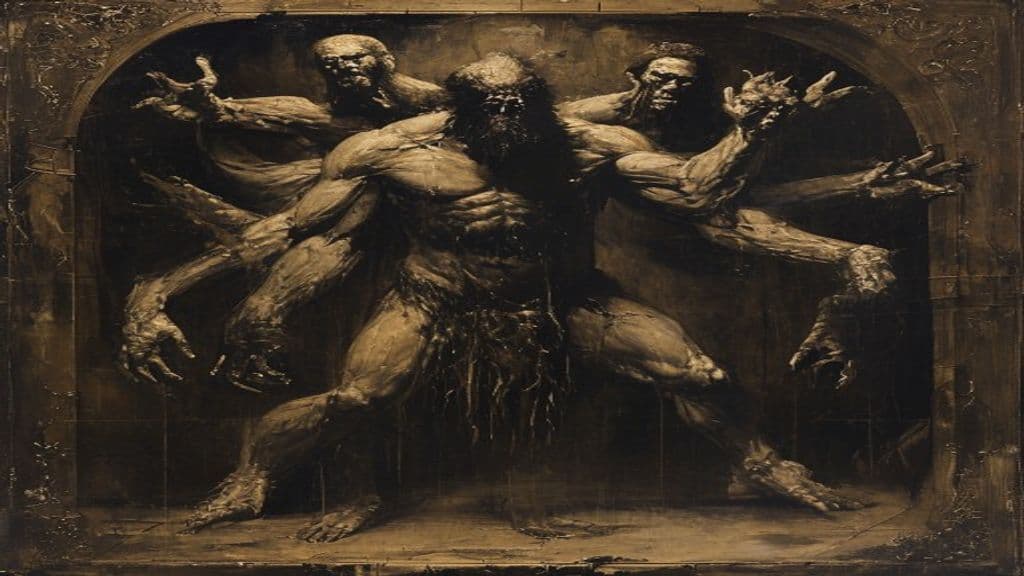
Briareus
Briareus is one of the Hecatoncheires (Hundred‑Handers) in Greek mythology: a primordial giant, offspring of Uranus (Sky) and Gaia (Earth), traditionally described with fifty heads and one hundred arms and credited with helping Zeus and the Olympians overthrow the Titans in the Titanomachy.
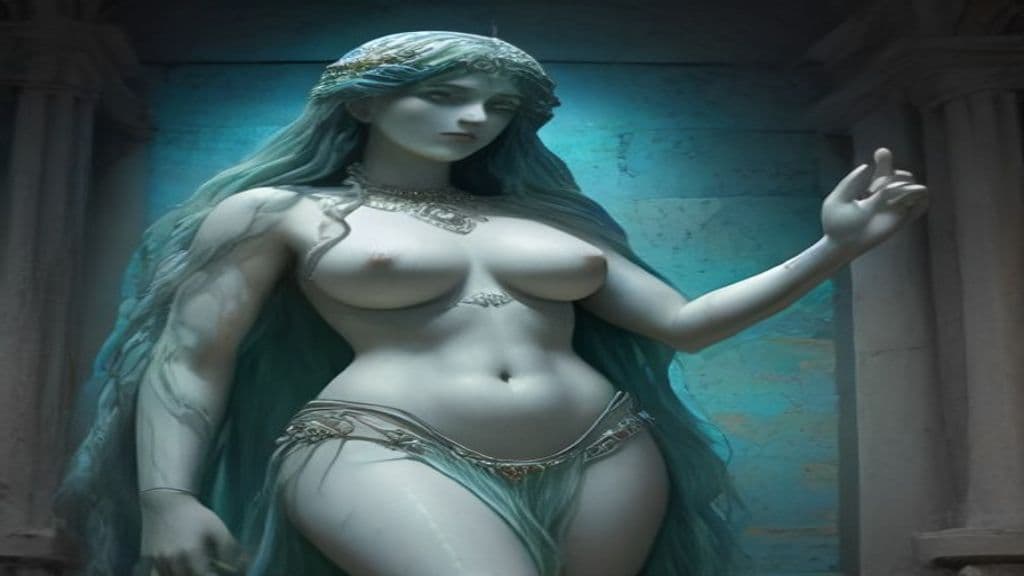
Thalassa
Thalassa (Ancient Greek: θάλασσα, 'sea') is the divine female personification of the sea in Greek mythographic, poetic, and visual traditions. Treated variably as a primordial sea-principle, a mother of certain sea-beings, and as an emblematic figure in Roman-era mosaics, she functions more as the sea made person than as a narrowly characterized cult-deity.
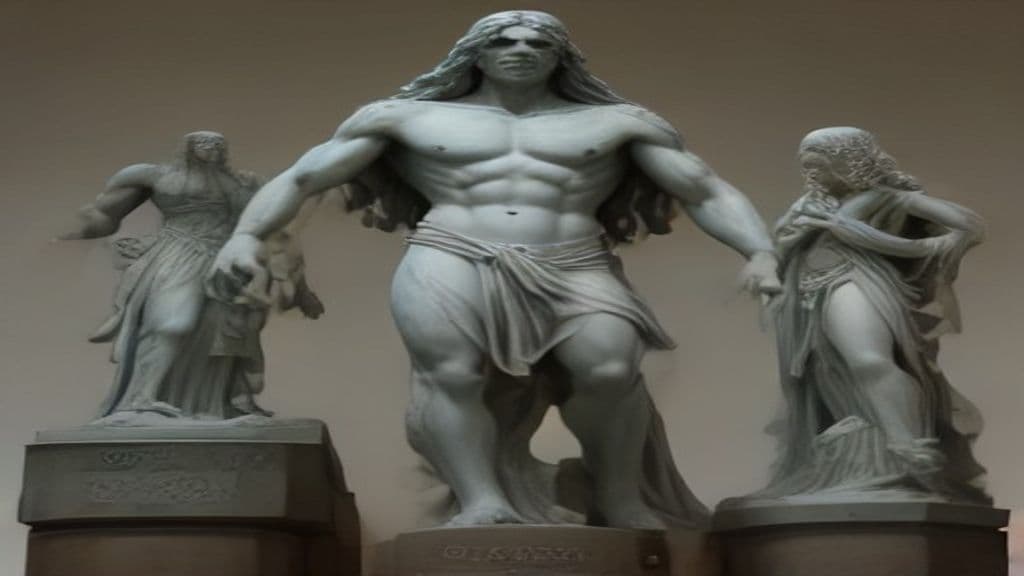
Titans
A generation of powerful primordial divine beings in Greek myth who preceded and were overthrown by the Olympian gods. They function as progenitors of many cosmic forces and later become chthonic powers confined beneath the earth (Tartarus) though some traditions allow certain Titans to remain free.
Aleuas
Aleuas (Greek: Ἀλεύας; Modern Greek: Alevas) is a figure in ancient Greek tradition presented as a mythical king and seer of Thessaly and the eponymous ancestor of the noble Aleuadae family of Larissa. The name also appears for distinct historical individuals and as a modern scientific/commercial homonym, but classical sources treat Aleuas as a legendary human ancestor rather than a recurring supernatural class.
Cyclops
In ancient Greek tradition the Cyclopes are one‑eyed giant beings appearing in multiple, sometimes contradictory strands: Hesiodic primordial artisan brothers who forge the gods' arms; Homeric solitary, cave‑dwelling shepherd‑monsters such as Polyphemus; and a legendary explanation for monumental ‘Cyclopean’ masonry.
Erechtheus
Erechtheus is a mythic-heroic foundational figure of ancient Athens whose identity blends an autochthonous, earth-born ancestor-king with a localized cultic name often syncretized with Poseidon; he functions as eponymous progenitor of the Erechtheidai and as the focus of ritual memory on the Acropolis (the Erechtheion).
Inachus
Inachus (Ἴναχος, Inachos) is a mythic ancestral figure of Argos who functions both as the region's eponymous first king/priest and as a river-divinity descended in some accounts from the Titans Oceanus and Tethys. He appears in etiological narratives that tie Argive territory, cult, and seasonal hydrology to a pre-Olympian generation of river-gods and founders.
Limnades
Limnades (Ancient Greek: Λιμνάδες) are classically attested nymphs associated with lakes in ancient Greek literature. They function as the lake-dwelling subgroup within the broader taxonomy of nymphs and are referenced as resident or offspring-attendants of named lake deities such as Bolbe.
Prometheus
Prometheus is a Titan of ancient Greek myth credited as a benefactor and culture-bringer to humanity, most famously for stealing fire from the Olympian gods and giving it to people. He is portrayed as intelligent and forward-looking (etymologically associated with 'forethought'), and as punished by Zeus for his transgression.
Salmacis
Salmacis is a naiad — a freshwater nymph tied to a specific spring near ancient Halicarnassus in Caria. In classical literature (notably Ovid) she appears in the Hermaphroditus narrative: her passionate pursuit and prayer are the occasion for the fusion of Hermaphroditus' and her bodies, and the spring acquires a reputation for making men 'effeminate and soft.'
Aed (Aodh)
Aed (Old Irish Aodh) is a named supernatural figure in Irish myth attested in variant genealogies: in some traditions he is one of the Children of Lir, while in others he appears as a son of the Dagda. His name derives from the Old Irish word for 'fire' and he appears in narratives that place him among the aristocratic households of the Tuatha Dé Danann/Daoine Sidhe.
Aedesia
Aedesia is a proper name attested in the supplied sources with three distinct referents: a fifth‑century Neoplatonic woman philosopher of Alexandria, a modern botanical genus (Aedesia O.Hoffm.) native to parts of West and Central Tropical Africa, and a reused toponym/moon name in a speculative fiction setting. None of the provided materials portray Aedesia as a supernatural being or attribute spiritlike powers to the name.
Aega
Aega is attested in modern reference works as a mythological name from the Greek tradition; the string 'Aega' is used for more than one minor figure or entry in Greek mythic catalogs. Surviving provided sources give no coherent myth, iconography, or rituals tied to a single, identifiable deity or spirit named Aega.
Aegaeus
Aegaeus (Ancient Greek: Αἰγαῖος) appears in Greek myth as (1) a local river-god associated with the island called Scheria (traditionally associated with Corfu) and father of the nymphs Aigaiides and of Melite (who in some sources bore Heracles a son, Hyllus), and (2) as a toponymic surname/epithet of the sea-god Poseidon derived from the town of Aegae in Euboea.
Aegeas (Aegeus)
Aegeas (classical Aegeus) is the mytho-historical king of Athens from Greek myth, father of Theseus and traditional eponym of the Aegean Sea. The provided sources treat him as a mortal royal figure embedded in epic and local foundation narratives rather than a supernatural spirit or cultic being.
Community Record
- [1]Aegaeon (mythology) - Wikipedia. Wikipedia contributors, 'Aegaeon (mythology)', Wikipedia, The Free Encyclopediawiki
- [2]Aegaeon | Facts, Information, and Mythology. Pantheon.org, 'Aegaeon: Facts, Information, and Mythology'other
- [3]Briareus in Greek Mythology - Greek Legends and Myths. GreekLegendsAndMyths.com, 'Briareus in Greek Mythology'other