
There is no single mythic origin story recorded for alkas; rather, they are attested in the historical record as a longstanding category of sacred site. The first written mention appears in Adam of Bremen (1075 AD), and Christian sources of the 15th–16th centuries continue to describe them, showing a trajectory of persistent cultic relevance in pre-conversion and early post-conversion periods.
Alkas are natural places rather than built temples: groves of trees (often described in sources as pine woods in historical accounts), hills, fields, lakes, rivers, wetlands, bogs, and islets occur as alkas. In modern survivals these natural sacral spots are sometimes accompanied by syncretic Catholic markers such as wooden chapels, crosses, or idols, but the defining feature in sources is a preserved natural locus of ritual activity.
Alkas are not described as personified beings with autonomous powers in the cited sources. Their culturally ascribed functions are ritual and symbolic: sites for burning sacrifices and making offerings, locales associated with burial and the dead, and—according to oral folklore—gateways to other worlds where souls of the dead might dwell in trees. They are treated as set-apart, holy ground whose sacral status is maintained by prohibitions and priestly acts of consecration.
Weaknesses
- conditionsocial/progressive desacralization by conversion efforts (Christian desecration)
- conditionbreach of customary taboos (prohibitions can be overridden by outsider action)
Wards
- ritualpriestly consecration (three-day fast and blood ritual/sacrifice at the tree base)
- conditionguarding and exclusion (community prohibition e.g., Christians excluded from grove entrances to avoid 'uncleaning')
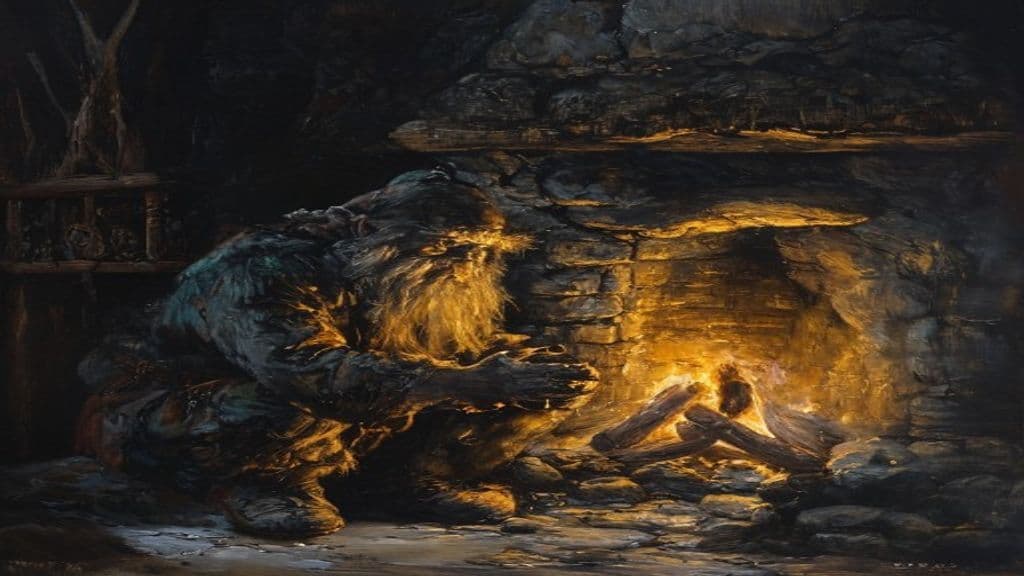
Domovoi
The house spirit of Slavic tradition — a small, invisible guardian of the home bound to a specific dwelling and its family. Protective when respected; dangerous when insulted or forgotten.
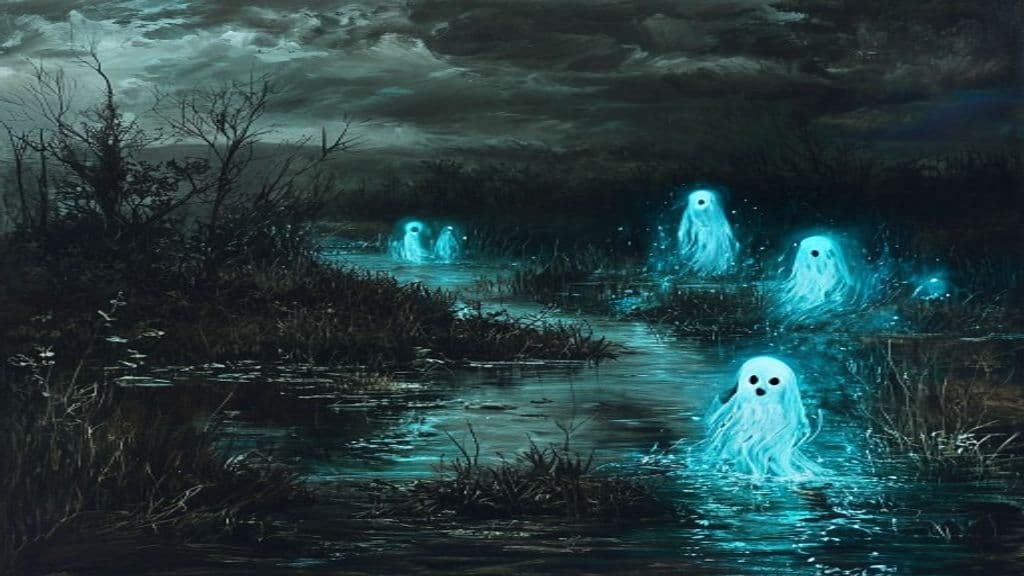
Will-o'-the-Wisp
A wandering light seen over marshy ground at night, leading travellers astray into bogs and fens. Possibly a spirit, possibly the soul of the unbaptised dead, possibly the devil himself.
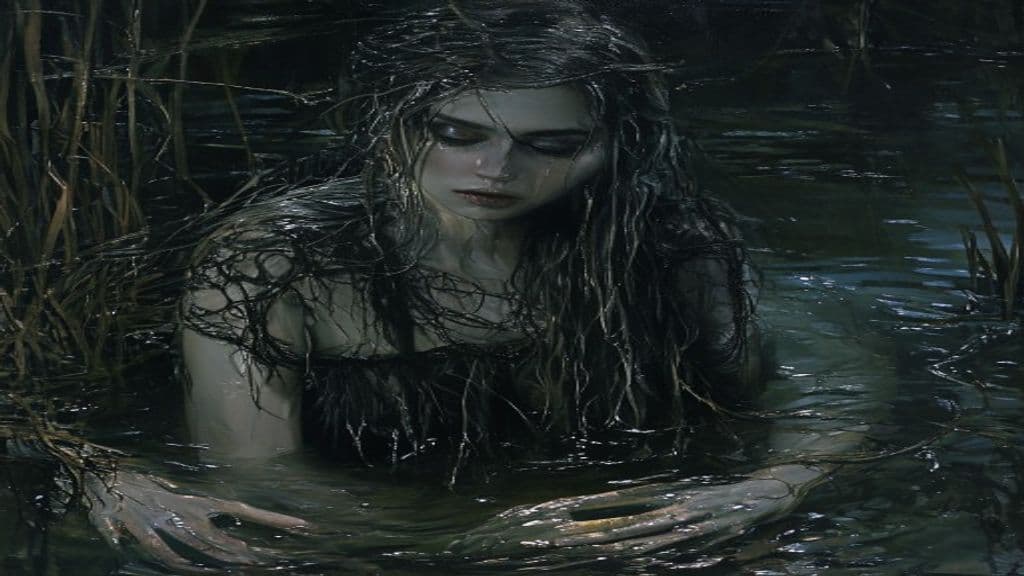
Rusalka
Water spirits in Slavic folklore — the spirits of young women who died by drowning or suicide, bound to rivers and lakes. Beautiful and dangerous, they can bewitch men to their deaths.
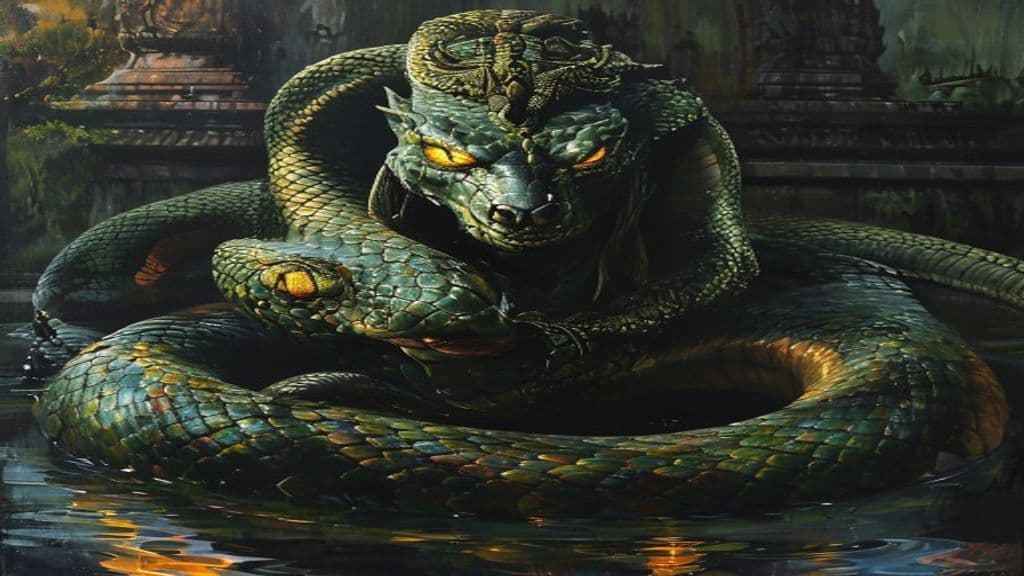
Naga
Divine serpent beings of Hindu, Buddhist, and Jain cosmology — powerful guardians of water, earth, and underground treasures. Revered as deities in South and Southeast Asia.
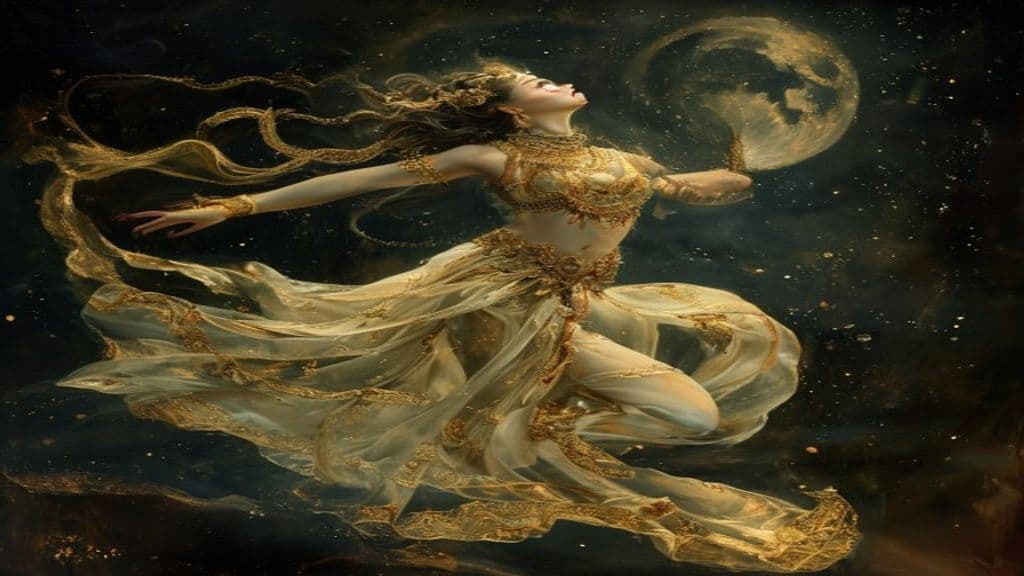
Apsara
Celestial dancers and water nymphs of Hindu cosmology — beautiful semi-divine beings who dance at the court of Indra and, by his command, descend to earth to distract sages from excessive asceticism.
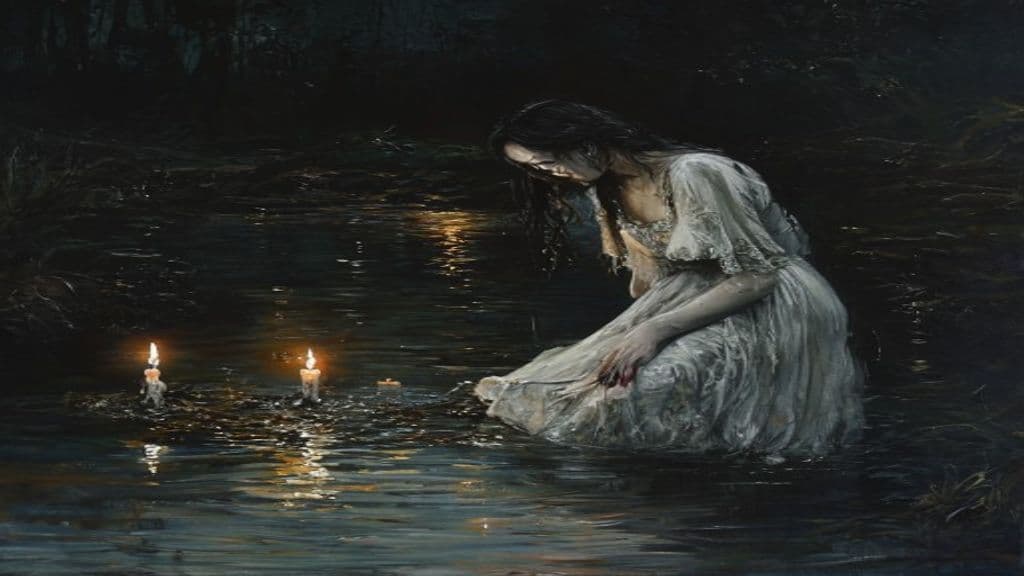
La Llorona
The Weeping Woman of Mexican folklore — the ghost of a mother who drowned her children and now wanders rivers and lakes, weeping for them and taking other children she finds at night.
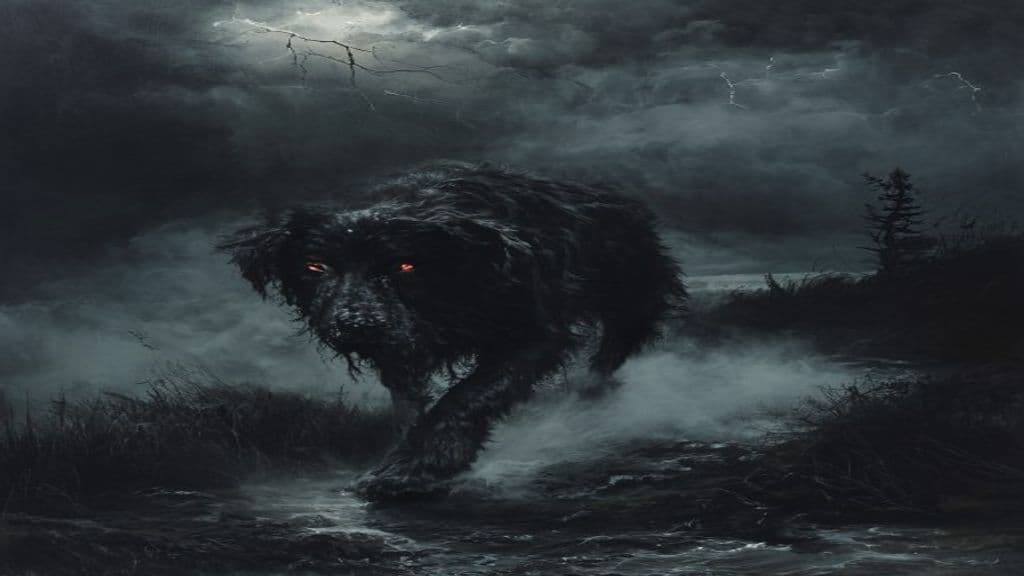
Black Shuck
A spectral black dog of East Anglian legend, with glowing red or green eyes. Its appearance is an omen of death. Its howl has been heard on clifftops during storms for centuries.
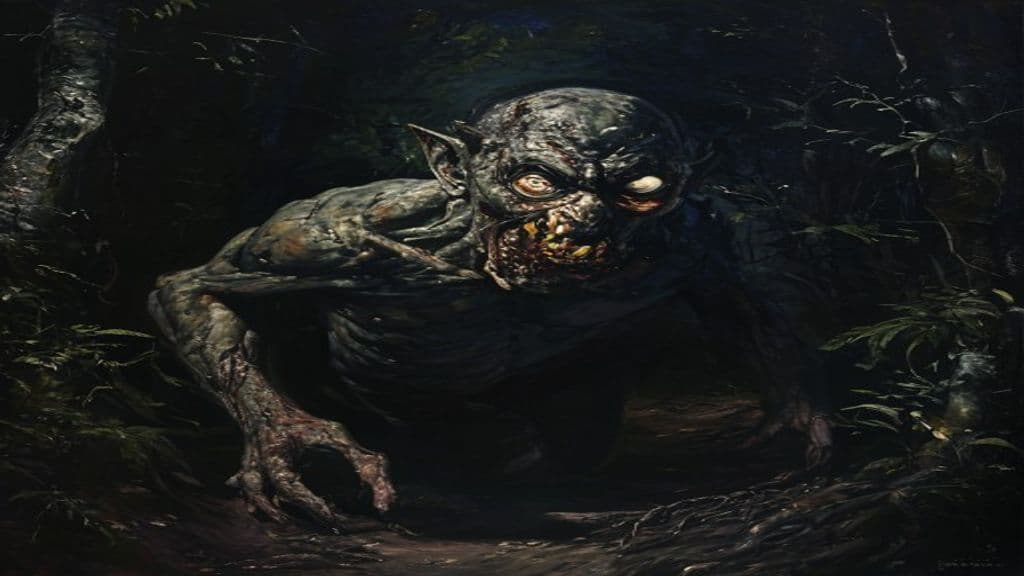
Pishacha
Flesh-eating spirits of Hindu mythology that haunt cremation grounds and are associated with disease, madness, and possession. The lowest class of demon in the Vedic hierarchy.
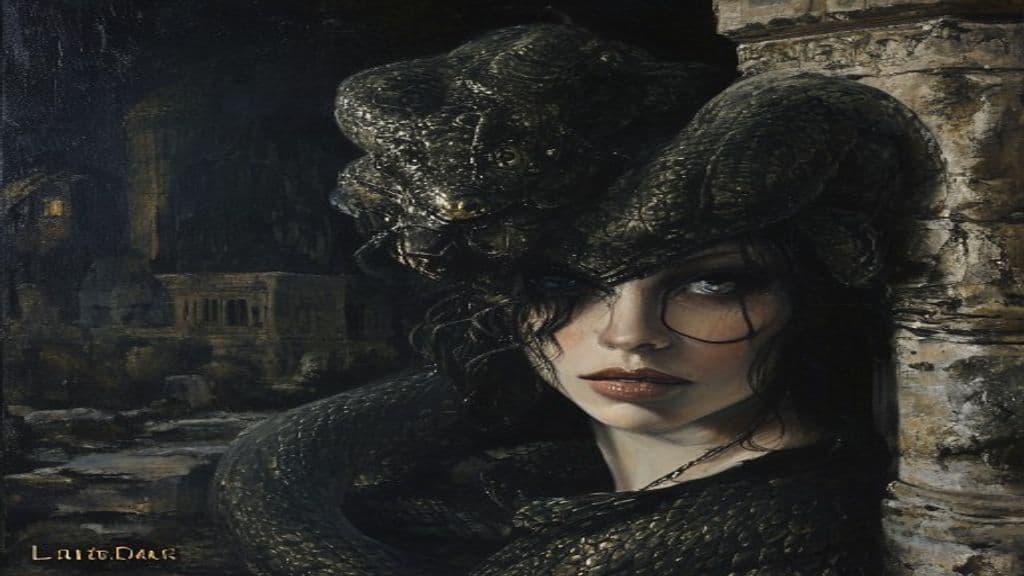
Lamia
A child-devouring demon of Greek mythology — once a queen of Libya and lover of Zeus, driven mad by Hera's destruction of her children and transformed into a monstrous hunter of other women's children.
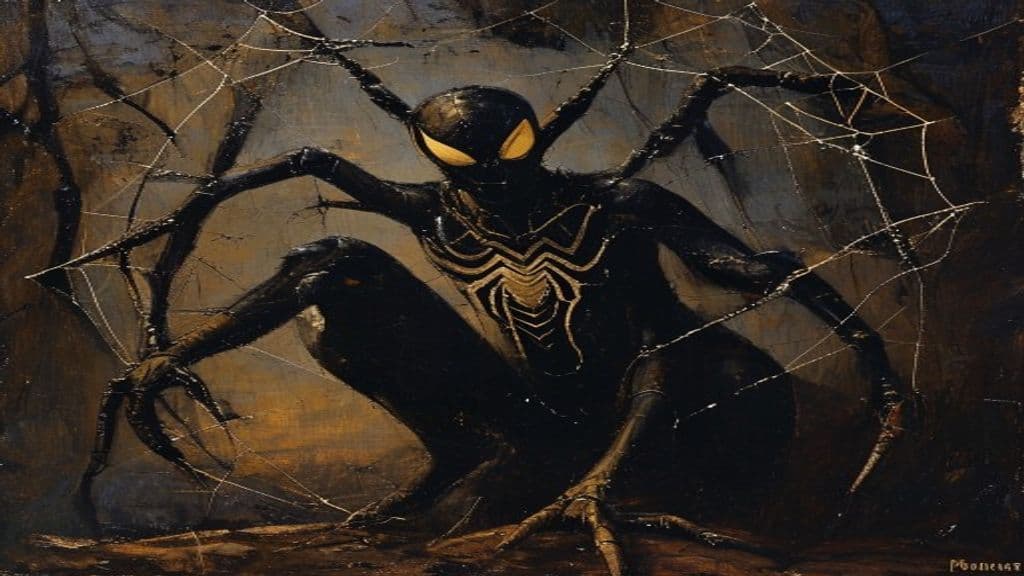
Anansi
The spider trickster god of Akan folklore — cunning, mischievous, and wise. Keeper of stories and teacher of human beings, brought through the slave trade into Caribbean and African-American tradition.
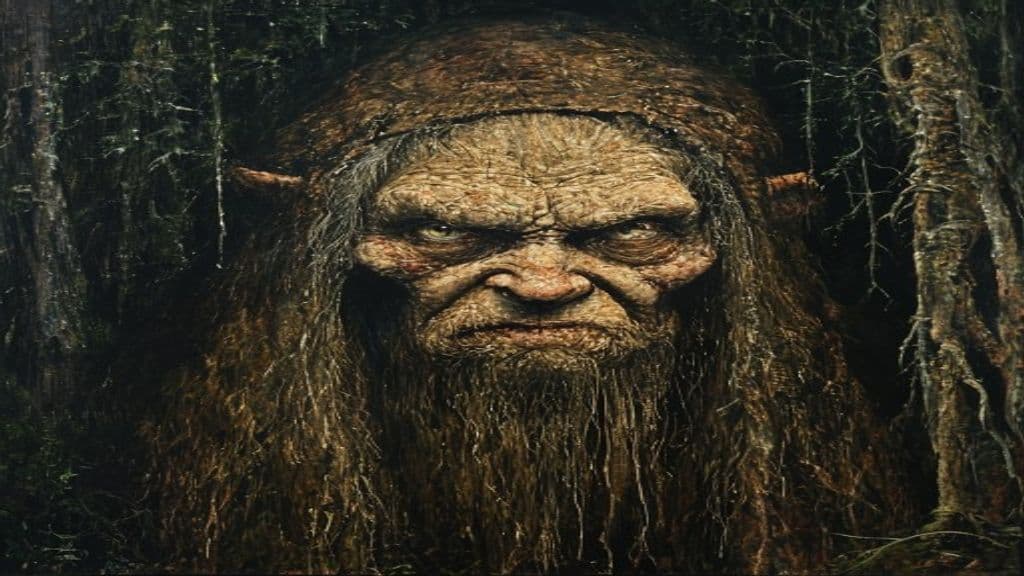
Baba Yaga
Baba Yaga is an ambivalent female figure of East Slavic folktale tradition, depicted variously as a fearsome, child-eating crone or as a helpful, maternal donor. She is associated with the deep forest, a hut described as standing on chicken legs, and the motific accoutrements of a mortar and pestle.
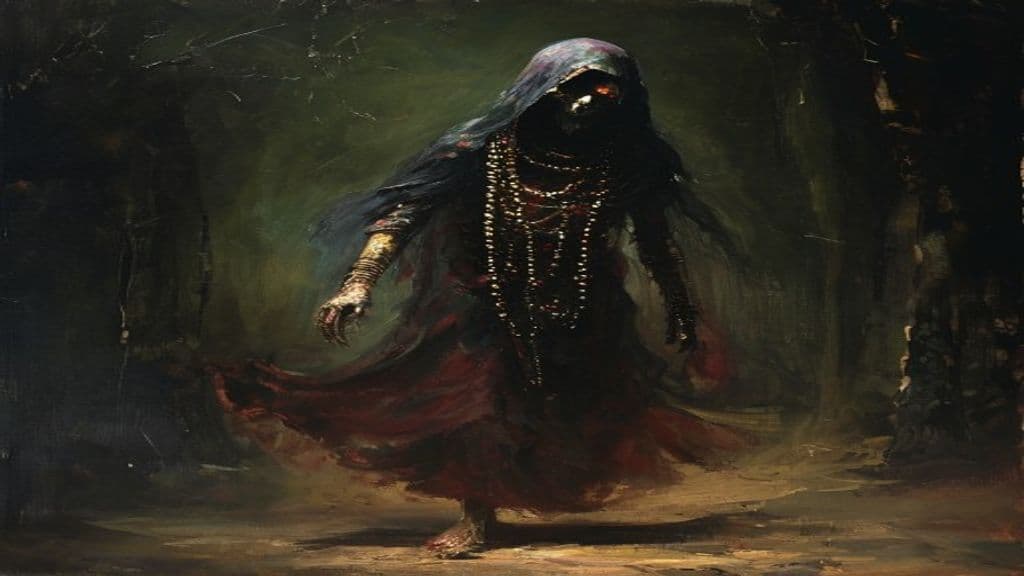
Bhoot (bhoota)
A bhoot (also bhoota, bhoot, bhut) is the culturally specific term across parts of the Indian subcontinent for a perturbed, restless spirit generally understood to be the ghost of a deceased person. Sources describe bhoots as arising when a person's death or post-death circumstances prevent them from moving on — for example violent death, unresolved affairs, or failures in funerary rites — and the term appears frequently in modern South Asian media and discussions.
Dievas
Dievas (Lithuanian; Dievs in Latvian; Diews in Old Prussian) is the primordial supreme sky deity in Baltic religion, understood as the luminous sky-dome, a creator and ruler of gods, and a god of light, prosperity and time. The lexeme is a Baltic reflex of Proto-Indo-European *Dyēus and, following Christianization, the same word came to denote the Christian God.
Dievs (Dievas)
Dievs (Latvian Dievs; Lithuanian Dievas) is the primordial sky‑father of the Baltic traditional pantheon, presented in sources as a supreme luminous sky power, creator and ruler of the gods, and associated with light, prosperity, and cosmic order. The theonym survives in modern Latvian language and civic/religious usage but the supplied corpus gives little on specific myths, iconography, or ritual praxis tied to the pre‑Christian figure.
Gabija
Gabija is the Lithuanian household fire spirit and protector of the hearth and family. Treated as a living presence in the home, she is cared for through routine domestic practices (feeding, covering embers, providing water) and is held responsible in folklore for wandering or destructive fires when offended or neglected.
Kapu Māte
Kapu Māte (Latvian: 'Grave Mother') is a named instance of the Baltic/Lavtian category māte — an epithet applied to numerous discrete mother-figures each presiding over a specific domain. In the sources she is identified only by name and classificatory placement as the mother associated with graves/cemeteries; no independent myths, iconography, or rituals for Kapu Māte are recorded in the supplied materials.
Māra
Māra is the highest-ranking goddess in Latvian mythology associated with domestic economy, fertility, livestock and the land; she is the female cosmological counterpart to Dievs and was honoured in an annual festival on August 15, a date reflecting later Christian syncretism.
Perkūnas
Perkūnas is the principal Baltic thunder deity attested in Lithuanian, Latvian and Old Prussian/Sudovian traditions, described as the common Baltic god of thunder and cited as the second most important deity in the Baltic pantheon after Dievas. He is associated with sky and storm phenomena as well as social and landscape markers such as law, war, fertility, oak trees, and mountains.
Saulė
Saulė is the personified Sun in Baltic (Lithuanian and Latvian) traditional cosmology, treated as a living solar goddess who rises, travels, and rests and who is central to seasonal festivals and life-giving imagery.
Alinda of the Loch
A literary character from a modern children's fantasy novel (published 2009) that blends Sleeping Beauty motifs with the Loch Ness legend; Alinda is presented as the daughter of Queen Aurora who falls under a 500-year enchanted sleep guarded by a young dragon called Nessie.
Alipherus
Alipherus is a mythological Arcadian prince in ancient Greek tradition, named among the many sons of King Lycaon. He is chiefly remembered as an eponymous founder of the town Aliphera and as a participant in the impious episode in which Lycaon's sons served a meal to Zeus containing human entrails and were destroyed by divine lightning.
Alisanos
Alisanos is a theonym attested in two Gallo‑Roman votive inscriptions from the Côte-d'Or (near Dijon) and interpreted by Celticists as a localized landscape divinity (possibly 'of the rock' or of certain trees). Separately, the name has been repurposed in modern fantasy literature as a sentient, predatory deepwood; the two usages are distinct in origin and evidence.
Alke
Alke (Ancient Greek: Ἀλκή) is the anthropomorphic personification of prowess, courage, and battle-strength in archaic and classical Greek poetic tradition. She is attested as a named figure depicted on Athena's aegis in Homeric epic and the name also appears in later mythographic lists as a number of distinct proper-name figures.
Alkonost
The Alkonost is a legendary woman-headed bird of East Slavic folklore, depicted as an individual mythic avian figure who lives in the underworld alongside her counterpart Sirin. Her song enchants listeners into forgetfulness or bliss, she is said to bless fruit during the Apple Feast of the Saviour, and her reproductive actions are causally linked in lore to sudden storms at sea.
Community Record
- [1]Alka (Baltic religion) - Wikipedia. Wikipedia, 'Alka (Baltic religion)'wiki
- [2]Alka - Wikipedia. Wikipedia, 'Alka'wiki
- [3]Alka (Baltic religion) - Wikidata. Wikidata entry Q11004363other
- [4]MYTHOLOGICAL, HOLY OR CULT PLACES? (Culture Crossroads article). Culture Crossroads, 'Mythological, Holy or Cult Places?'academic
- [5]Museums of Lithuania: Introduction (context on sacred sites and survivals). True Lithuania / Museums of Lithuaniaother
- [6]Quoted historical observations (Adam of Bremen; Jean Cabaret d'Orville) — summarized in secondary sources. Summaries of Adam of Bremen (1075) and Jean Cabaret d'Orville as recorded in secondary literaturewiki