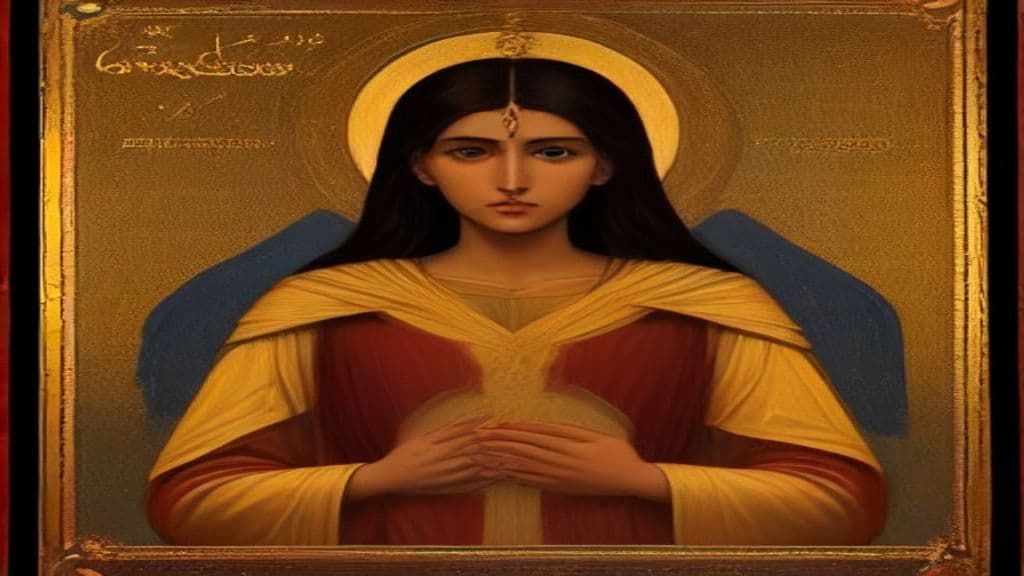
According to Coptic hagiographical summaries, George was born into a Christian family in Talkha, later entered monastic life at the Monastery of Saint Macarius in Wadi El Natrun, and rose to episcopal leadership in Assiut. In the late Fatimid period, during the campaigns associated with Shirkuh and Saladin, he is said to have led the people of Assiut in fasting and prayer; hagiographic accounts relate that following three days of communal fasting and prayer the city was spared an incursion and that George was later arrested, tortured, and beheaded, martyred with many laypeople. Modern reference sources place his martyrdom in the 12th century (Wikidata gives 1169).
The supplied sources do not provide a physical or iconographic description specific to Anba George of Assiut. There is no contemporaneous body-description or surviving detailed iconographic account in the provided materials; typical Coptic episcopal iconography is not attested for him in the cited summaries.
Sources do not ascribe independent supernatural powers to Anba George. Hagiographical tradition credits his pastoral leadership and ascetic initiatives (notably ordering a three-day communal fast and prayer) with procuring divine protection for the city—an attributed providential deliverance represented in the narrative as a storm and strong winds that impeded soldiers. His principal 'abilities' in the sources are spiritual leadership, ascetic authority, and the status of martyr whose witness is commemorated liturgically.
Abadiu of Antinoe
Abadiu of Antinoe was a fourth‑century bishop of Antinoe (Antinoopolis, in Roman Egypt) commemorated as a martyr and saint in the Coptic Orthodox Church, with a feast day on 26 December. Sources record that he was killed during a theological dispute with Arian opponents and reference him in collections of Egyptian martyrs.
Abaskhiron the Soldier
A Coptic Orthodox martyr venerated for refusing imperial idolatry during the Diocletian persecution; reputedly healed by the Archangel Michael, preserved in monastery relics, and commemorated on 14 June (7 Paoni).
Abdel Messih El-Makari
Abdel Messih El-Makari (1892–1963) was a Coptic Orthodox monk and priest venerated as a 20th‑century Coptic saint. Associated with the Monastery of Saint Samuel the Confessor and the Monastery of Saint Macarius (Scetes/Wadi El‑Natrun), he is remembered for humility, asceticism, charity, and reported spiritual gifts such as prescience, discerning of spirits, and healing.
Arsenius the Great
Arsenius the Great (c. 350/354–c. 445/450) was a Roman-born imperial tutor who renounced court life to become an anchorite among the Desert Fathers in Egypt. Venerated as a saint in Eastern Orthodox, Coptic, and Roman Catholic traditions, he is remembered for extreme humility, prolonged solitude, silence, copious tears of devotion, and brief monastic writings and sayings preserved in the Apophthegmata Patrum and other collections.
Bashnouna
Bashnouna is a Coptic Christian monk venerated as a saint and martyr in the Coptic Orthodox tradition. According to hagiographical accounts recorded in the Coptic Synaxarion and secondary summaries, he was a monk of the Monastery of Saint Macarius in Scetes, arrested during the Fatimid caliphate of al-'Āḍid, refused to convert to Islam, and was burned alive on 24 Pashons (19 May 1164). His relics are reported buried at the Church of Saint Sergius in Cairo and he is commemorated liturgically on that date.
Bishop Karas (Sorial Ayad Sorial)
Bishop Karas (born Sorial Ayad Sorial, 1955–2002) was a Coptic Orthodox monk, abbot, and the first bishop of the Coptic Orthodox Church in the United States to head its first monastery outside Egypt. He is documented as a historical ecclesiastical figure known for monastic leadership, pastoral care, and ascetic practice.
Anaxiroe
Anaxiroe is a named female figure in archaic Greek genealogical tradition associated with the ruling families of Elis. In the supplied sources she appears only in relational roles (daughter of Coronus; in some accounts the wife of Epeius) and carries no supernatural attributes, cult, or ritual functions.
Anaxo
Anaxo (Ancient Greek Ἀναξώ) is a proper name applied to mortal women in ancient Greek mythic genealogies and narratives. Attested figures named Anaxo appear as a Mycenaean princess—daughter of Alcaeus, wife of Electryon, and mother of Alcmene—and as a young woman from Troezen who was carried off by the hero Theseus. The name carries a lexical sense of female authority in Greek but denotes human participants in dynastic and abduction cycles rather than a supernatural class.
Anaye (Navajo tradition)
A 'race of monsters or evil gods' in Navajo mythology, killed by the hero Nayenezgani. (Note: - Power tier: Primordial (as they are described as "evil gods") - Appearance: Add that it's unclear and no physical description is provided - Abilities: Clarify that their powers were formidable enoug)
Anbay
Anbay (Qatabanian: 𐩱𐩬𐩨𐩺, romanized ʾnby, ʾAnbāy) is a pre-Islamic South Arabian deity worshipped in the kingdom of Qataban (in modern Yemen). He functioned primarily as a god of justice and as an oracular deity, invoked in legal and administrative contexts and described as attendant to the moon god Amm.
Ancaeus (son of Poseidon)
Ancaeus is a mythic Greek heroic figure, typically described as king of Samos, an Argonaut and an especially skilled helmsman. Often presented as a son of Poseidon, he belongs to the generation of heroes who sailed with Jason in the quest for the Golden Fleece. In the tradition he is a mortal hero (semi-divine by parentage) rather than a deity or monster; he is also frequently confused with another Argonaut named Ancaeus (son of Lycurgus), both of whom share a motif of dying by a boar's tusk.
Ancalagon the Black
A singular, individuated dragon of J. R. R. Tolkien’s legendarium, bred by the Dark Power Morgoth as a wrought weapon of war. Described as the greatest of the dragons and the first of the winged dragons, Ancalagon appears at the end of the First Age in the War of Wrath where his aerial assault and catastrophic fall shape the close of that age.
Community Record
- [1]Anba George - Wikipedia. Anba George. Wikipedia. https://en.wikipedia.org/wiki/Anba_Georgewiki
- [2]Anba George (Wikidata entry). Wikidata entry Q56885718 (Anba George). http://www.wikidata.org/entity/Q56885718wiki
- [3]Synaxarium Hator 7 (excerpt referencing St. Georges). Synaxarium Hator 7. CopticChurch.net. https://www.copticchurch.net/synaxarium/3_7.htmlother
- [4]Synaxarium Paona 19 (related synaxarium material). Synaxarium Paona 19. CopticChurch.net. https://www.copticchurch.net/synaxarium/10_19.htmlother