
In the son-of-Poseidon tradition Ancaeus is named as a son of the sea-god Poseidon and (in some accounts) Astypalaea; he is reckoned king of the island of Samos. He appears in epic genealogies and the catalogue of Argonauts as a member of Jason's crew. His parentage places him among the common Greek motif of semi-divine heroes whose lineage legitimizes rulership and exceptional skill.
The supplied sources do not provide a detailed physical description. Classical and summary sources emphasize his social identity (king of Samos) and functional role (helmsman) rather than specific bodily features, clothing, or marks.
Ancaeus is chiefly noted for exceptional helmsmanship: multiple classical passages and summaries describe steering the Argo and state that 'helmsmanship was his special skill' or that he was 'especially skilled in steering.' He functions also as a local king (rulership of Samos in many accounts) and as a participant in heroic actions typical of the Argonautic cycle. Narrative traditions record that he (like another Ancaeus) ultimately dies from a boar's tusk, a recurring heroic death motif.
Weaknesses
- othervulnerability in hunting/boar-encounter (dies by a boar's tusk)
Wards
None recorded.
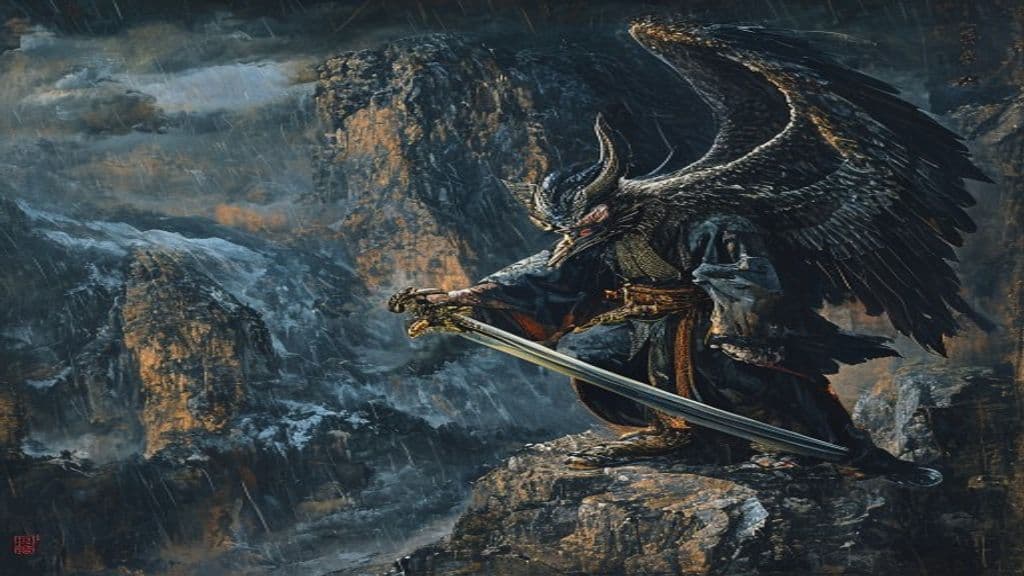
Tengu
Proud, warrior-like mountain spirits of Japan, associated with martial arts, pride, and the wild mountains. Neither fully good nor evil — they test and train warriors and monks, but punish the arrogant.
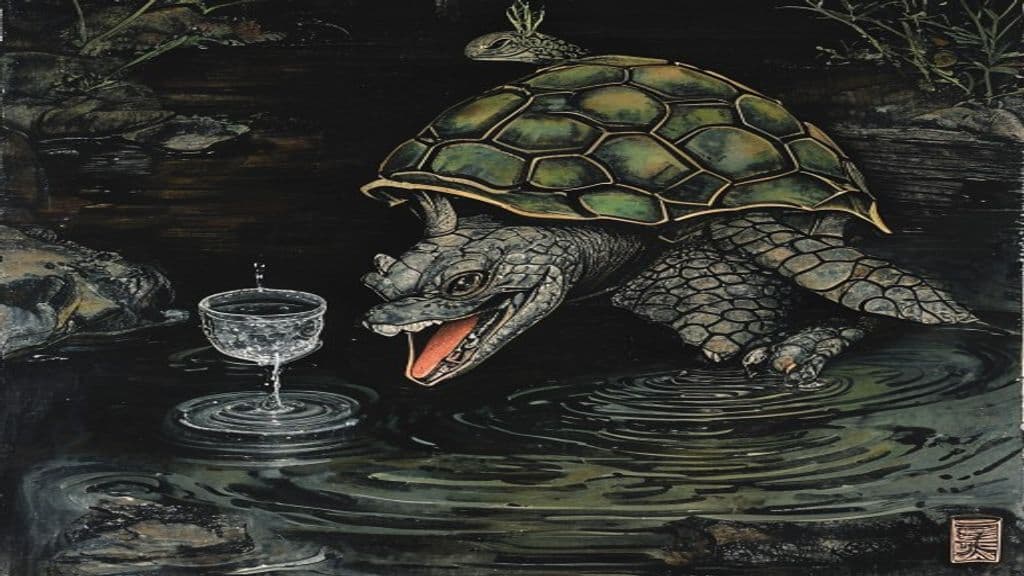
Kappa
A water-dwelling imp of Japanese folklore with a bowl of water on its head. Mischievous but bound by strict codes of politeness; dangerous near rivers.
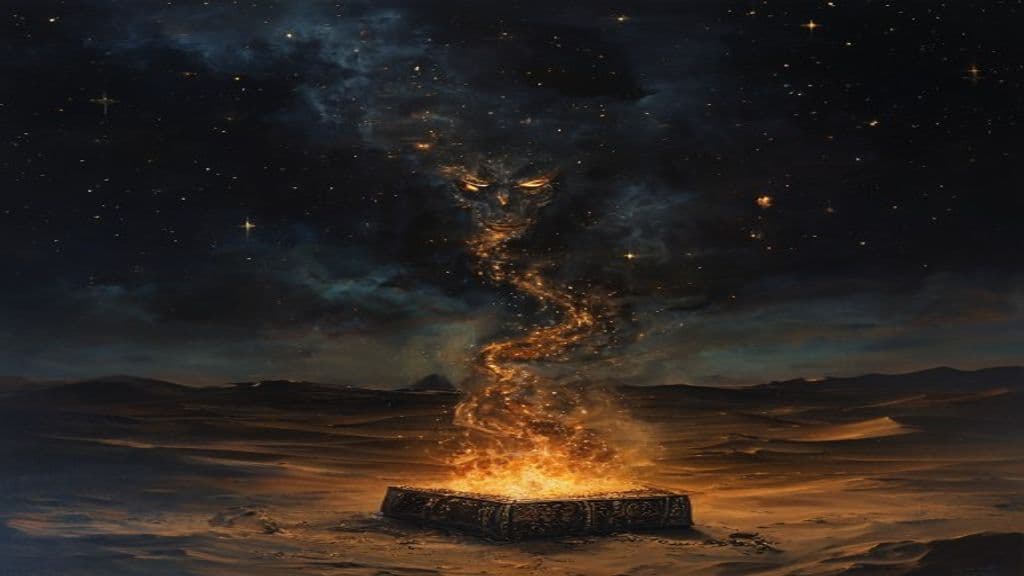
Djinn
The class of supernatural beings created from smokeless fire in Islamic cosmology — a parallel civilization to humanity, capable of belief or unbelief, with their own prophets, society, and judgment before God.
Jann
The weakest class of djinn in Islamic tradition, associated with desert winds and taking the form of snakes or whirlwinds, dwelling in empty wilderness and posing little threat to those who know the proper invocations.
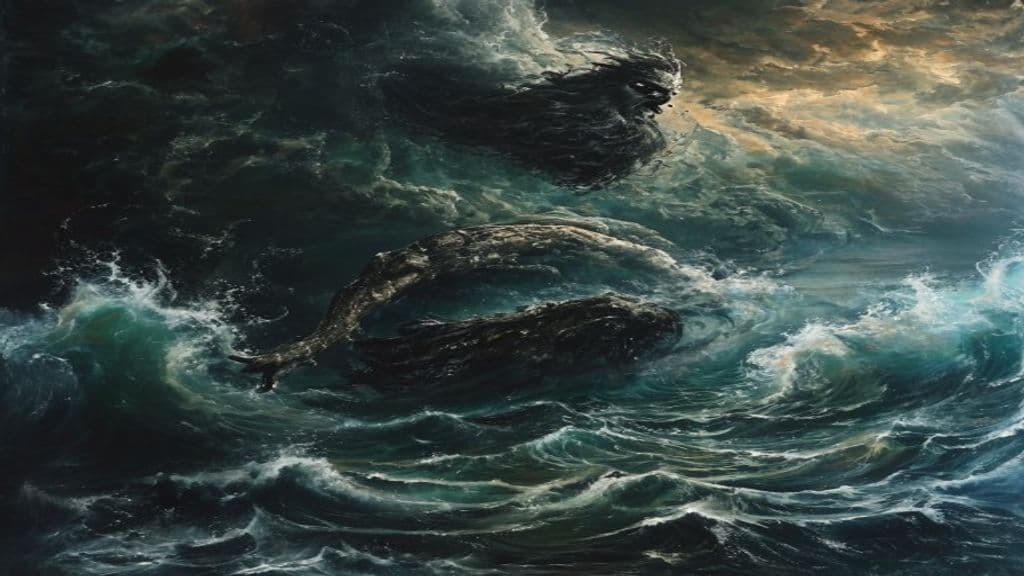
Marid
The most powerful class of jinn in Islamic tradition — beings of the sea, associated with the deep ocean, storms, and the granting of wishes at terrible cost. The classic genie of the Arabian Nights.
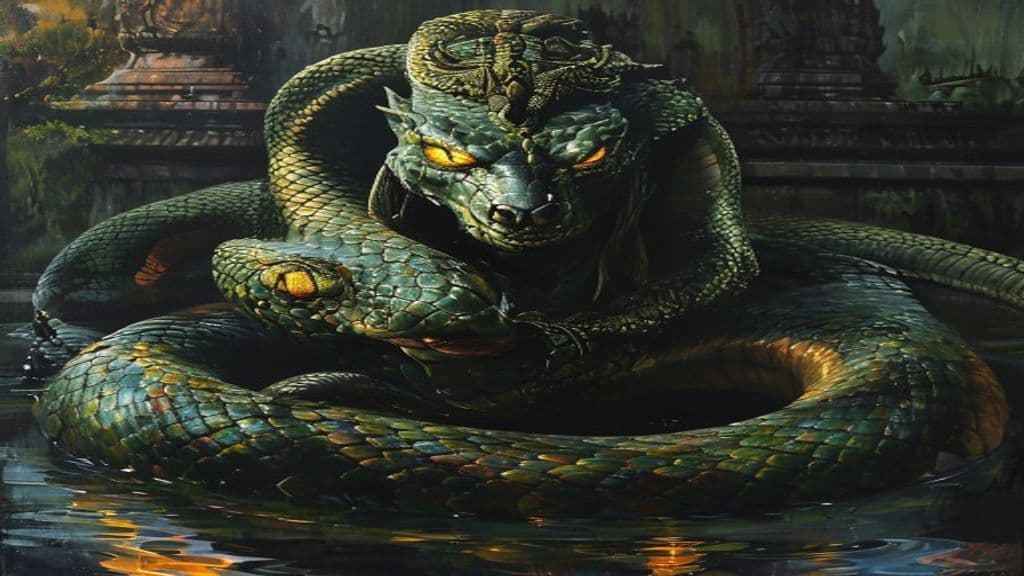
Naga
Divine serpent beings of Hindu, Buddhist, and Jain cosmology — powerful guardians of water, earth, and underground treasures. Revered as deities in South and Southeast Asia.
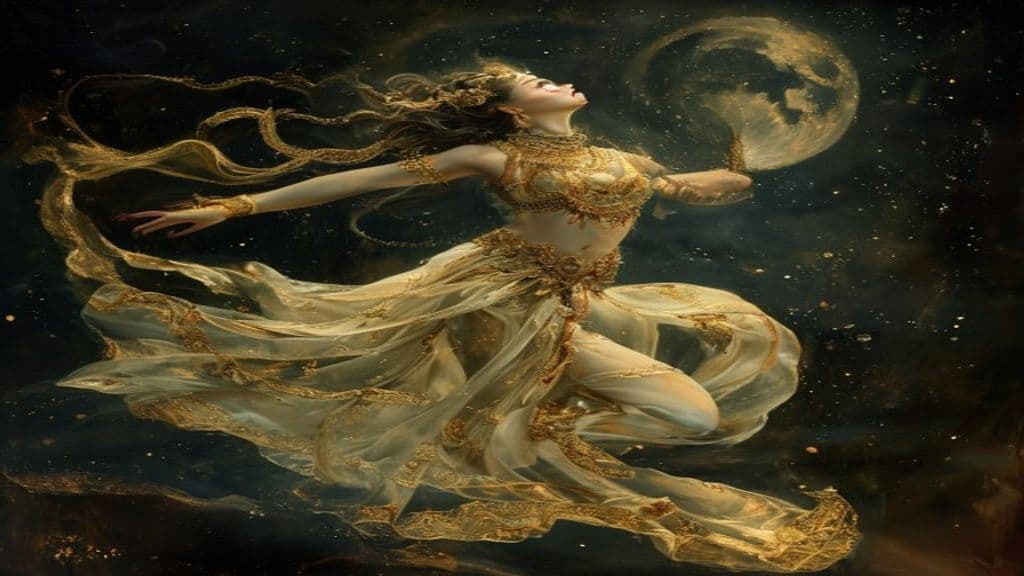
Apsara
Celestial dancers and water nymphs of Hindu cosmology — beautiful semi-divine beings who dance at the court of Indra and, by his command, descend to earth to distract sages from excessive asceticism.
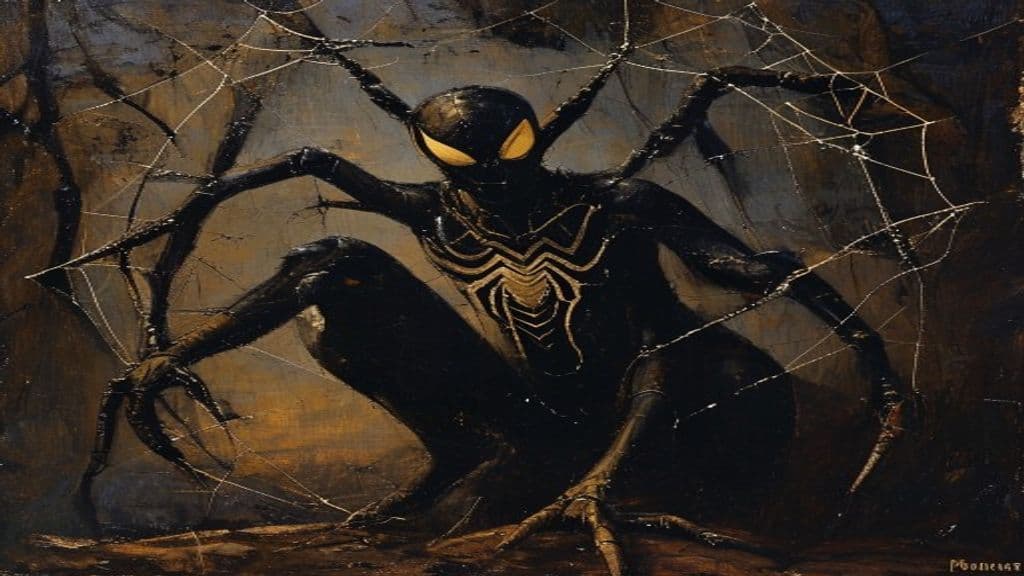
Anansi
The spider trickster god of Akan folklore — cunning, mischievous, and wise. Keeper of stories and teacher of human beings, brought through the slave trade into Caribbean and African-American tradition.
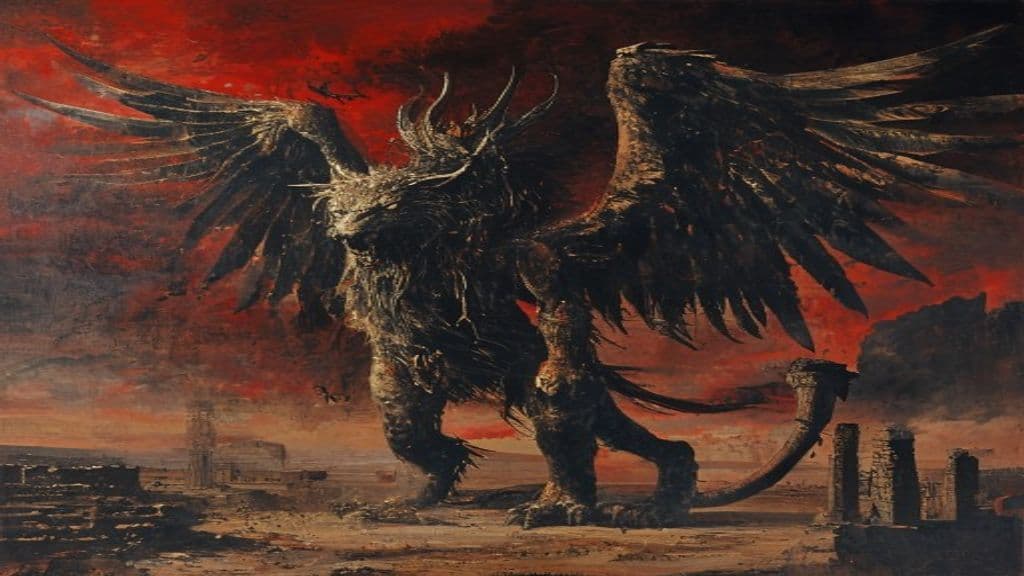
Pazuzu
The king of the wind demons of ancient Mesopotamia, lord of the southwest wind — paradoxically invoked as a protector against Lamashtu and other demons despite being evil himself.
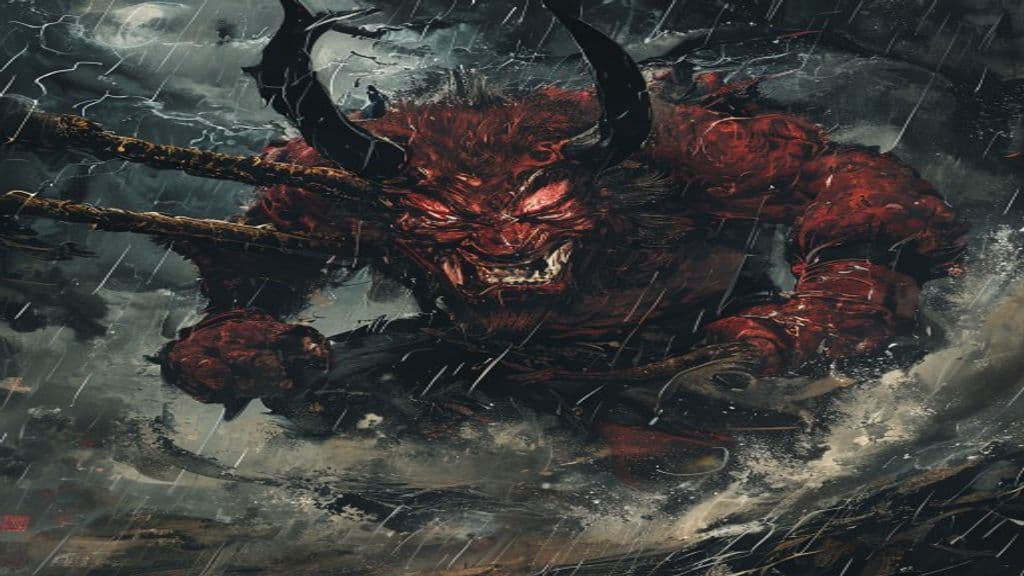
Oni
Powerful supernatural beings of Japanese folklore — associated with misfortune, disease, and the punishment of sinners in hell. Fearsome, often depicted as guardians of the underworld.
Calybe
Calybe (Ancient Greek: Καλυβη, Kalybē) is a name applied to minor female personages in classical literature: a Trojan nymph named as a consort of King Laomedon and mother of Bucolion, a follower in Dionysus’ retinue in Nonnus’ Dionysiaca, and an attested occurrence as an "aged priestess of Juno" in a Vergilian index entry. The attestations are brief and nominative; no sustained myth or ritual tradition centred on Calybe survives in the provided sources.
Hippomedon
Hippomedon (Ancient Greek: Ἰππομέδων) is a personal name borne by multiple mortal figures in Greek myth and epic cycles, including one of the Seven against Thebes and several minor warriors associated with the Trojan War; the name is also transmitted in medieval romance under forms such as Ipomedon/Ipomadon.
Anaxiroe
Anaxiroe is a named female figure in archaic Greek genealogical tradition associated with the ruling families of Elis. In the supplied sources she appears only in relational roles (daughter of Coronus; in some accounts the wife of Epeius) and carries no supernatural attributes, cult, or ritual functions.
Anaxo
Anaxo (Ancient Greek Ἀναξώ) is a proper name applied to mortal women in ancient Greek mythic genealogies and narratives. Attested figures named Anaxo appear as a Mycenaean princess—daughter of Alcaeus, wife of Electryon, and mother of Alcmene—and as a young woman from Troezen who was carried off by the hero Theseus. The name carries a lexical sense of female authority in Greek but denotes human participants in dynastic and abduction cycles rather than a supernatural class.
Anaye (Navajo tradition)
A 'race of monsters or evil gods' in Navajo mythology, killed by the hero Nayenezgani. (Note: - Power tier: Primordial (as they are described as "evil gods") - Appearance: Add that it's unclear and no physical description is provided - Abilities: Clarify that their powers were formidable enoug)
Anba George (Saint George of Assiut)
Anba George is a Coptic Orthodox bishop venerated as a saint and martyr in Coptic hagiographical and liturgical tradition. Associated with Assiut in Upper Egypt and the Monastery of St. George, his life is commemorated in Synaxarium-type records; hagiography recounts his leadership of communal fasting and prayer and his subsequent arrest and martyrdom in the 12th century.
Anbay
Anbay (Qatabanian: 𐩱𐩬𐩨𐩺, romanized ʾnby, ʾAnbāy) is a pre-Islamic South Arabian deity worshipped in the kingdom of Qataban (in modern Yemen). He functioned primarily as a god of justice and as an oracular deity, invoked in legal and administrative contexts and described as attendant to the moon god Amm.
Ancalagon the Black
A singular, individuated dragon of J. R. R. Tolkien’s legendarium, bred by the Dark Power Morgoth as a wrought weapon of war. Described as the greatest of the dragons and the first of the winged dragons, Ancalagon appears at the end of the First Age in the War of Wrath where his aerial assault and catastrophic fall shape the close of that age.
Ancamna
Ancamna is a Gallo‑Roman local goddess attested in the Moselle valley and commemorated as the consort of regional forms of Mars (notably Lenus Mars and Mars Smertulitanus). She appears in civic cult contexts at Trier, Ripsdorf and Möhn where altars and votive offerings link her to tribal protection and to the genii of Treveri pagi; some scholars suggest a possible association with a spring rather than a martial character.
Ancasta
Ancasta is a locally attested Celtic goddess known from a single Roman-period votive inscription from Clausentum (modern Bitterne, near Southampton). She appears as a named deity venerated in the context of a fulfilled vow; little else about her cult, appearance, or powers is recorded in the surviving sources.
Ancestors of Enlil (Enki-Ninki deities)
A sequence of Sumerian divine pairs (en-/nin- names) conceived as the primordial ancestors culminating in Enlil; chiefly attested in god lists and invoked as authoritative primordial names in ritual, especially in incantations and exorcisms.
Ancestral Spirit or Tutelary Deity
In Hawaiian tradition, an 'aumakua is a tutelary deity or ancestral spirit that watches over and protects specific families or individuals. (Note: - Power tier: Primordial does not match the abilities described (watching over families/individuals, associated with natural phenomena), which suggests a Greater or Lesser power tier would be more pla)
Community Record
- [1]Ancaeus (son of Poseidon) - Wikipedia. Wikipedia, 'Ancaeus (son of Poseidon)'wiki
- [2]Ancaeus - Wikipedia. Wikipedia, 'Ancaeus' summarywiki
- [3]Argonautica, Book I - Apollonius of Rhodes. Apollonius of Rhodes, Argonautica, Book I (catalogue and passages noting Ancaeus' skill at steering)literary
- [4]Apollodorus' Library - Jason and the Argonauts (archive reading summary). Apollodorus (as presented in archive/legendary passages), noting Tiphys' death and Ancaeus undertaking to steer the shipliterary
- [5]LP0033 Medea and the Argonauts (Archive audio). Archive audio reading of Legendary Passages including the Argonauts catalogue and narrative references to Ancaeusother