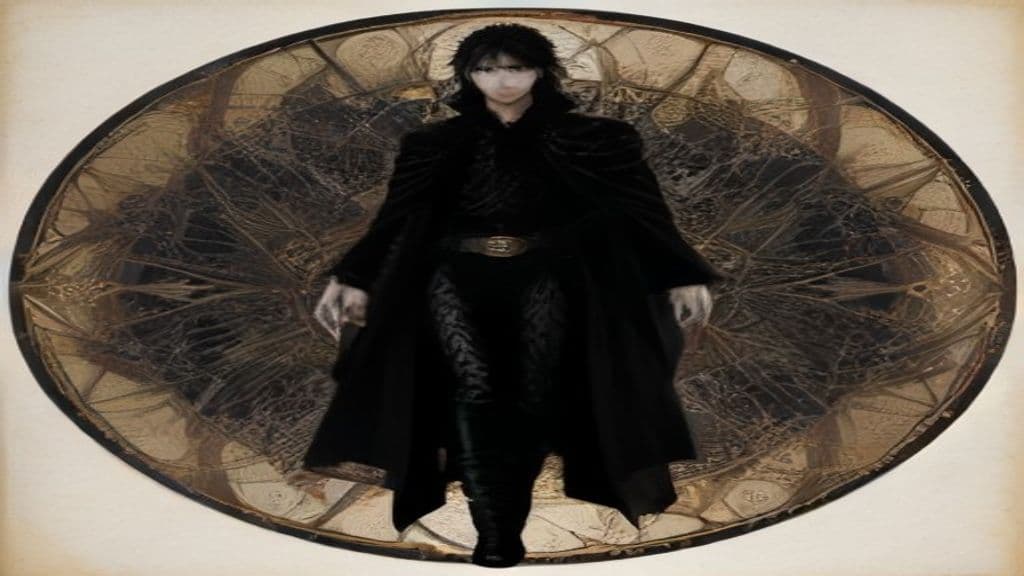
In the grimoire/Goetic tradition represented by the Ars Goetia and its modern summaries, Andras appears as one of the catalogued named infernal officers — a fallen spirit who holds rank within a hierarchical host and commands subordinate legions when summoned by ritual operators. Modern fantasy/tabletop adaptations (explicitly noted as game-world reworkings) present Andras as an entity 'raised from the murderous souls of the Phlegethon' and unleashed to destroy mortals; this latter origin is a contemporary fictional cosmology found in roleplaying material rather than a classical-grimoire provenance.
Classical grimoire summaries identify Andras as a named Goetic spirit but provide only fragmentary iconographic detail in the consulted secondary sources; popular modern summaries and derivative pages describe him as hostile and associated with violent imagery. The supplied materials do not contain a full, original-grimoire citation giving a canonical physical description, and therefore concrete iconographic elements (specific mounts, weapons, or visage) cannot be reliably reconstructed from the provided sources alone.
Across the grimoire-derived summaries consulted, Andras is consistently associated with sowing discord among people and causing strife; Thelemapedia and Ars Goetia summaries warn he is dangerous to conjurers and their companions and can kill those who summon him if ritual care is not observed. Many grimoire-style listings attribute command of legions to named spirits; the consulted derivative sources state Andras commands thirty legions. In modern roleplaying adaptation (5e SRD), Andras is described as composed of murderous souls with the explicit purpose of destroying mortals and as a being whose unleashing risks disruption of the divine order. These abilities combine interpersonal/moral disruption (discord) with lethal, aggressive behavior toward humans in the sources provided.
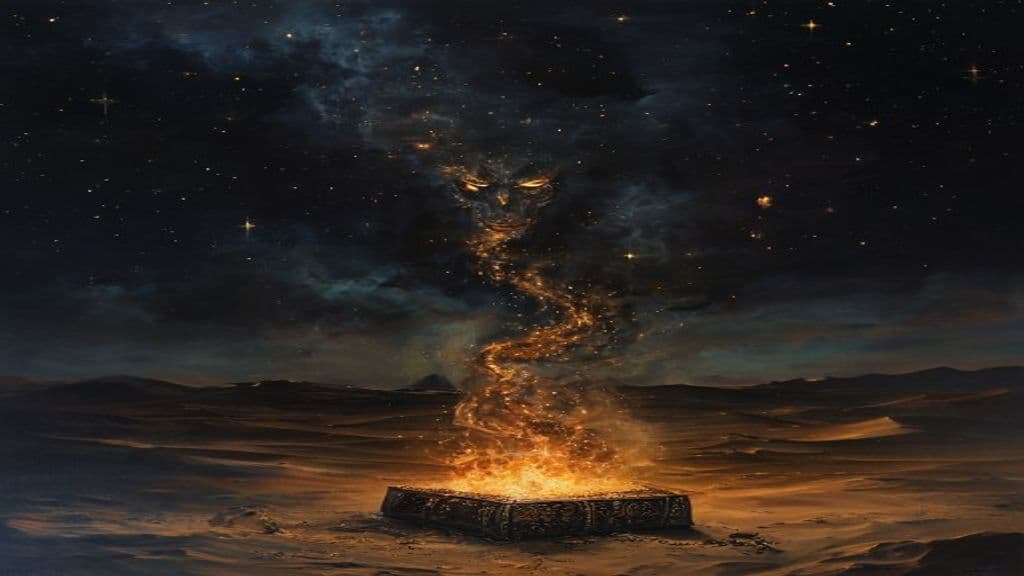
Djinn
The class of supernatural beings created from smokeless fire in Islamic cosmology — a parallel civilization to humanity, capable of belief or unbelief, with their own prophets, society, and judgment before God.
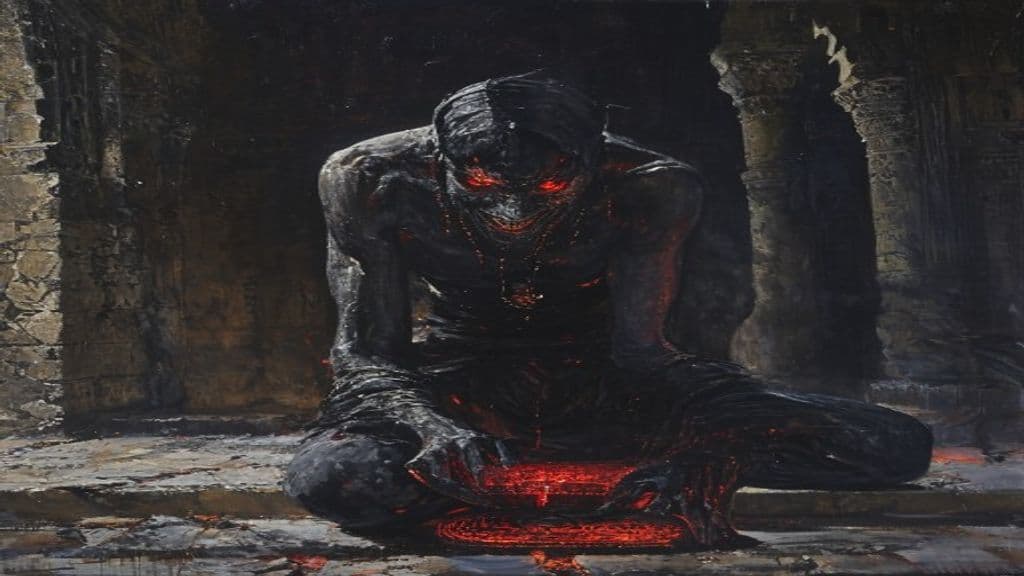
Shaitan
A class of corrupted djinn who follow Iblis and dedicate themselves to leading humans astray — distinct from Iblis himself, the Shayatin are a species of evil djinn who whisper doubts and temptations into the minds of the living.
Bifrons
Bifrons is a named spirit catalogued in Western grimoire and demonological compilations (notably the Lesser Key of Solomon and Johann Weyer's Pseudomonarchia Daemonum). He is presented as a ranked operative spirit who can be summoned and is credited with teaching arts and sciences, knowledge of gems, woods and herbs, and with moving corpses from their graves.
Andarta
Andarta is a local Celtic goddess attested by votive inscriptions in and around the town of Die (modern Drôme) in the territory of the Vocontii during the Roman imperial period. She is recorded in seven dedications as Dea Augusta Andarta (c. 150–200 AD) and appears to have functioned as a tutelary deity associated with civic welfare, victory, and Romanized cultic practice.
Andhrímnir
Andhrímnir is the named cook of the Æsir and the einherjar in Old Norse myth, responsible for slaughtering and preparing the beast Sæhrímnir daily in Valhalla and for producing the gods' mead from Heiðrún's milk. He is attested in the Poetic Edda and summarized in modern reference works.
Andjety
Andjety is an ancient Egyptian regional deity of the ninth nome (Andjet/Busiris) associated with kingship, funerary renewal, and local underworld functions; he appears in Pyramid and Coffin Texts and is often syncretized with Osiris in temple imagery and royal ritual.
Andlang
Andlang (Old Norse Ǫndlangr / Andlang) is presented in Snorri Sturluson's Prose Edda as the second of a ninefold scheme of heavens, placed between the first heaven (containing the halls of the gods) and the third heaven, Vídbláin. In Snorri's account Andlang functions as a shelter and dwelling-place for the souls of the dead during and after the destruction of Ragnarök.
Andraemon
Andraemon (Ancient Greek: Ἀνδραίμων, Andraímon) is a personal name borne by several mortal figures in Greek myth and genealogical tradition. The name appears across variant accounts as husbands, fathers, kings, colonists, and a suitor; it functions within heroic genealogies and local foundation stories rather than as a supernatural being.
Andragius
Andragius (also attested Androgius) is a legendary king of the Britons recorded in Geoffrey of Monmouth’s pseudo‑historical regnal lists and later compilations. He appears as a node in a constructed sequence of rulers—not described as a supernatural being—and is principally attested by name, genealogical relationships, and position in succession.
Andrast
Andrast is a Sindarin place-name in J. R. R. Tolkien's Middle-earth, denoting a long coastal cape or peninsula in southwest Gondor (also identified with Ras Morthil). It is a geographic toponym recorded in Tolkien's maps and scholarly indexes rather than a sentient or supernatural being.
Andraste
Andraste (also attested as Andrasta or Andate in some passages) is a named supernatural figure invoked by the Iceni in the Roman account of Boudica's rebellion (AD 60). Recorded by Dio Cassius as a recipient of Boudica's rallying prayer, Andraste functions in surviving sources as a tutelary war figure associated with victory and the preservation of liberty.
Andrea Beaumont (the Phantasm)
Andrea Beaumont is a fictional human character in the DC Animated Universe who, as the masked vigilante known as the Phantasm in Batman: Mask of the Phantasm (1993), stages a Death‑like avenger persona. Her apparent supernatural effects are produced by theatrical devices (not innate powers) and she functions narratively as a foil and dark parallel to Bruce Wayne/Batman.
Andrealphus
Andrealphus is a spirit named in the Ars Goetia (Lesser Key of Solomon) tradition, described as a Marquis who governs thirty legions. He is classically credited with teaching geometry, mensuration, and astronomy and with the ability to assume or cause bird/peacock form.
Andrew the Apostle
Andrew the Apostle (Greek Ἀνδρέας, Latin Andreas) is one of the Twelve Apostles in the New Testament, a fisherman from Bethsaida, the brother of Simon Peter, described as the “first-called” who introduced others to Jesus. Post-biblical traditions depict him as an early missionary and founder of Christian communities (notably claims of missions to Thrace, Scythia, and founding the see of Byzantium) and as a martyr crucified at Patras.
Community Record
- [1]Andras (Thelemapedia entry). Thelemapedia. 'Andras' entry (grimoire/occult encyclopedia summary).wiki
- [2]Ars Goetia - All The Tropes summary. AllTheTropes. Summary and listing of Goetic spirits, contextualizing Andras within the Ars Goetia tradition.other
- [3]Andras Demon – 5th Edition SRD. 5e System Reference Document entry 'Andras Demon' (modern roleplaying adaptation describing origin from Phlegethon and purpose to destroy mortals).wiki
- [4]Andras (DeliriumsRealm page). DeliriumsRealm. Overview of Andras in Goetia and later grimoires (derivative occult summary).other
- [5]Wikipedia: András (disambiguation/notes). Wikipedia entry noting modern/name usages and disambiguation (source material set includes material unrelated to the grimoire entity).wiki