
Sources present multiple and sometimes conflicting origins. Jubilees describes the "angels of the presence" as among the highest orders created early (on the first day in Jubilees' account) so they might participate with God in Sabbath-keeping, placing them at the dawn of cosmic ordering. In prophetic and historical passages such as Isaiah the term appears idiomatically to describe God's salvific action (Isaiah 63:9), and the Septuagint rendering at least once treats the phrase as referring to the Lord Himself rather than a created intermediary. Later Enochic and intertestamental traditions list a circle of throne-attendants (Michael, Raphael, Gabriel, Phanuel/Uriel/Sariel) among those who "stand before" the Lord and sometimes identify one of these named figures with the Angel of the Presence.
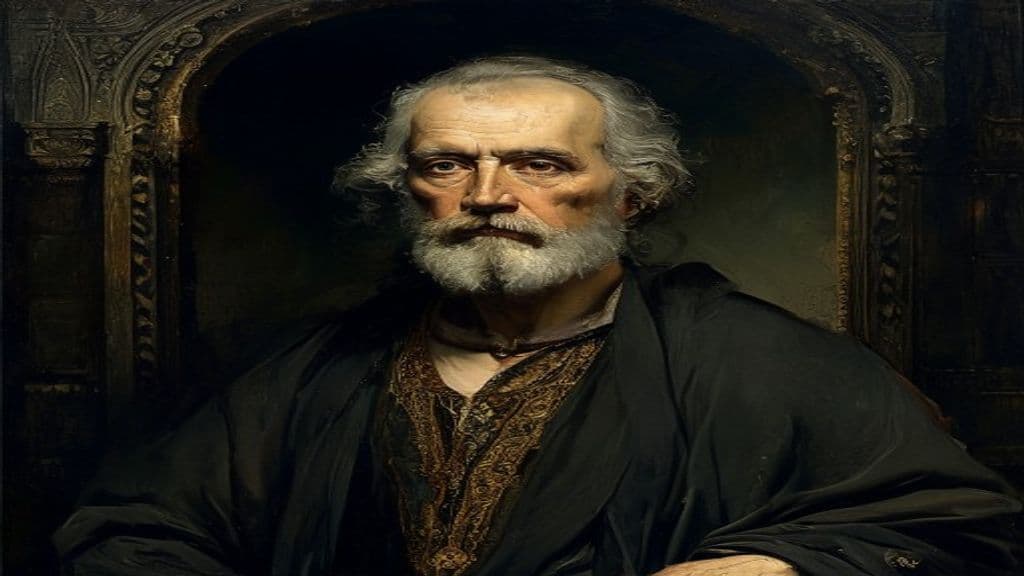
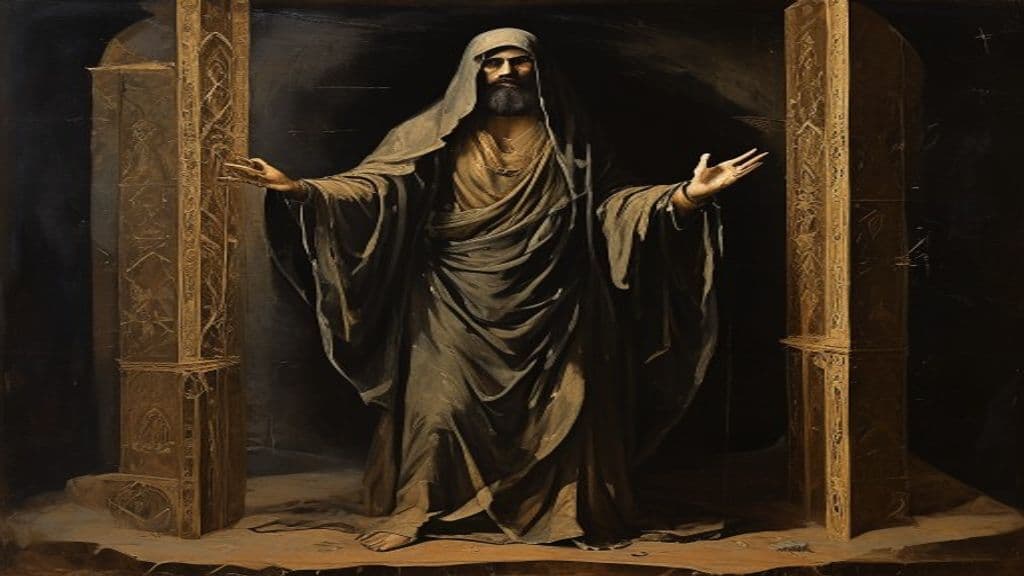
The available sources do not provide a consistent physical iconography. Descriptions emphasize functional positioning — "standing before the glory of the Lord" or "entering before the Lord's glory" — rather than bodily detail. In throne-room and theophanic contexts (e.g., Tobit, Enochic lists, Luke's citation of Gabriel) the Angel of the Presence is imagined as an immediate attendant at God's court, but no specific visual features or garments are specified in the cited materials.
Cited texts associate the Angel of the Presence with privileged actions on behalf of Israel: saving Israel in moments of affliction (Isaiah 63:9), revealing sacred history and law to human mediators (Jubilees' revelations to Moses), and bestowing blessings on patriarchal figures (Testament of Judah). The office is described as having authority to speak and act with special access to God. Sources differ on the degree of agency: some present these as actions performed by a distinct celestial agent, while others (e.g., the Septuagint rendering of Isaiah) treat the language as referring directly to God's own salvific action rather than a created intermediary. Luke records Gabriel asserting his rank by saying he "stands in the presence of God," which is cited to indicate high angelic status.
Michael
Michael is presented in the supplied sources as a masculine given name and disambiguation headword applied to people, historical rulers, cultural works, places, and other uses; the provided material treats it as an onomastic item rather than as a single supernatural being.

Gabriel
A principal heavenly messenger in Jewish, Christian, and Islamic literatures, Gabriel is portrayed as an archangel who reveals and explains divine messages, announces births and divine intent, and executes certain divine judgments in apocalyptic texts.

Uriel
Uriel is an archangel figure in Jewish and Christian apocryphal, liturgical, and popular traditions, variously described as an interpreter of prophecy, guardian of cosmological thresholds (Gate of Eden, Tartarus/pit), regent of light or the sun, and a guide or agent in salvation narratives. His prominence and specific functions vary by tradition (Second Book of Esdras, Ethiopian homily, apocryphal gospels, patristic and later angelologies).
Sariel
Sariel (Heb. Śārīʾēl) is a named angel attested in Jewish apocryphal literature and in late‑antique apotropaic contexts. He is listed among a small group of prominent angels charged with oversight functions (e.g., set over spirits who sin) and appears as an invoked protective name in ritual artefacts and sectarian practice.
Alukah
In Jewish tradition, Alukah is a blood-lusting monster or vampire described in the Hebrew Bible's Proverbs 30:15. (Note: 1. Power tier should be Minor Spirit (or possibly Lesser) since it feeds on animals and doesn't match the Primordial description. 2. Abilities don't accurately reflect "blood-lusting monster" or vampi)
Ambrose of Alexandria
Ambrose of Alexandria (before 212 – c. 250) was a wealthy, educated layman of Alexandria who became a close disciple, patron, and ordained deacon in the circle of the theologian Origen. He is remembered in Christian sources as a convert from earlier heterodox affiliations, a supporter who provided books and scribes, a stimulus to Origen's writings, and a confessor who suffered persecution under Maximinus Thrax.
Ananias son of Nedebeus
Ananias son of Nedebeus (Hebrew: חנניה בן נדבאי, Ḥananyá ben Nadváy) is presented in Jewish and early Christian sources as the historical high priest of Jerusalem who served c. 47–58 CE. He appears in the Acts of the Apostles as the presiding official at parts of the legal proceedings against Paul and is discussed in later historical commentary (including Josephus under the variant 'Ananias ben Nebedeus').
Asmodeus
Asmodeus (Heb. Ashmedai/Ashmeday; Gr. Asmodaios; Arabic Sakhr in some accounts) is a named malignant spirit appearing in Near Eastern Jewish, Christian deuterocanonical, and later Islamic storytelling. Traditions portray him as a princely or kingly figure among malevolent spirits who intervenes in human affairs—notably hostile to marriages and in contest with King Solomon—and who can be driven off or bound by ritual fumigation and angelic agency.
Broxa
A nocturnal bird entity in Jewish folklore that sucks milk from goats and human blood at night. (Note: - Power tier: Greater (broxa's sucking of human blood suggests a higher power level than Minor Spirit) - Weaknesses: not specified in source material - Wards: not specified in source material)
Hashmal
In the supplied Jewish textual materials, Hashmal (Hebrew חַשְׁמַל; pl. Hashmallim) appears both as a luminous element in Ezekiel's prophetic theophany and as the name of an angelic rank in later Jewish angelology, described in secondary sources as administrative officers of Heaven.
Ishim
Ishim is attested in the supplied sources solely as a label for a rank or class of angels within Jewish angelic hierarchies. The provided material contains no theological, narrative, descriptive, or ritual detail about this rank beyond that classificatory identification.
Angel of Hadley
A New England colonial legend of a sudden, providential defender who appeared in Hadley, Massachusetts during attacks in King Philip's War. The figure is commonly identified in tradition with the fugitive regicide Colonel William Goffe; accounts blend possible historical actions, contemporary silence or obfuscation, and later legendary embellishment that calls the rescuer an 'angel.'
Angel of Portugal
A Catholic devotional national guardian angel venerated as the heavenly custodian of Portugal. Recognized in popular devotion, private revelation narratives (notably the 1916 visitations connected to Fátima), and in Portuguese liturgical practice through a feast instituted in the early 16th century and restored in the 20th century.
Angel of the Lord
A recurring divine messenger in the Hebrew Bible and New Testament who appears on behalf of the God of Israel, acting as God's representative in speech and deed. The figure—Hebrew מַלְאַךְ יְהוָה (mal’ākh YHWH)—functions as intermediary, guide, protector, judge, and announcer at decisive narrative moments.
Angelia
Angelia (Ancient Greek: Ἀγγελία) is an ancient Greek poetic personification of 'Message', attested in Pindar (5th century BC) as named a daughter of the messenger-god Hermes. She functions in the literary-cosmic vocabulary as the embodiment of a delivered message rather than as a separately attested cultic deity or independent supernatural class.
Angelos (Angelia)
Angelos (Ancient Greek: Ἄγγελος) or Angelia (Ἀγγελία) is a minor divine figure in Greek myth attested only in a scholion on Theocritus' Idyll 2. She is described as a daughter of Zeus and Hera who was entrusted to and raised by nymphs; the preserved account is fragmentary and breaks off abruptly.
Community Record
- [1]Angel of the Presence (Wikipedia). Wikipedia, 'Angel of the Presence' entry (summarizing Isaiah, Jubilees, Enoch, Tobit, Testaments, Septuagint readings, and later traditions)wiki
- [2]Wikidata: Angel of the Presence. Wikidata item for 'Angel of the Presence' summarizing linked referenceswiki
- [3]Archive summary references (Tobit, Jubilees, Testaments citations). Supporting archive links listed in research notes (general references to angelic literature and devotional materials cited in source list); specific primary-text quotations not provided in the available materialsother