
Gabriel's figure emerges in Hebrew scripture and is further elaborated in intertestamental and later Jewish, Christian, and Islamic traditions. In the Hebrew Bible/Old Testament he appears in Daniel (e.g., Daniel 8:15–26; 9:21–27) as the revealer who interprets visions. In intertestamental literature such as 1 Enoch Gabriel is enumerated among the chief angels (one of seven) and is assigned tasks including the punishment of certain fallen angels; rabbinic texts (e.g., the tradition identifying the 'man clothed in linen' of Ezekiel with Gabriel appears in Yoma 77a) place him among the high celestial officers. In Christian New Testament tradition (Gospel of Luke) Gabriel announces the births of John the Baptist and Jesus. Islamic tradition regards Gabriel (Jibrīl) as the archangel who delivered revelations to Muhammad, including the initial verses of al-ʿAlaq in the account of the first revelation. These scriptural and extra-canonical sources together shape Gabriel's origin as a named divine messenger and executor within a developing angelic hierarchy (sources summarized from Source 1).
Across the traditions summarized in the sources Gabriel is presented as an angelic being who 'takes the form of a man' and, like other angels in these literatures, is described as having wings; rabbinic interpretation identifies certain visionary figures (for example the 'man clothed in linen' in Ezekiel) with Gabriel, suggesting a humanlike, linen-clad appearance in some commentarial contexts. The supplied materials do not provide a single standardized iconography beyond these textual identifications and the general statement that he appears as a man with wings (Source 1).
The sources present Gabriel primarily as a revealer and messenger: in Daniel he interprets apocalyptic visions; in Luke he announces births to Zechariah and Mary; in Islamic tradition he is the transmitter of revelation to Muhammad (traditionally including the first revealed verses of al-ʿAlaq). Intertestamental literature (notably 1 Enoch) assigns Gabriel roles in punitive and eschatological missions—sending him to punish or bind certain transgressing angels and to act on God's behalf at judgment. Rabbinic traditions depict him as one of the principal angels who stands before God and as a heavenly officer more often executing divine will toward the world, contrasted with Michael's mainly heavenly/defensive function (all summaries and attributions drawn from Source 1). The provided sources do not describe mundane magical faculties (e.g., shapeshifting mechanics) beyond his communicative and executive functions.
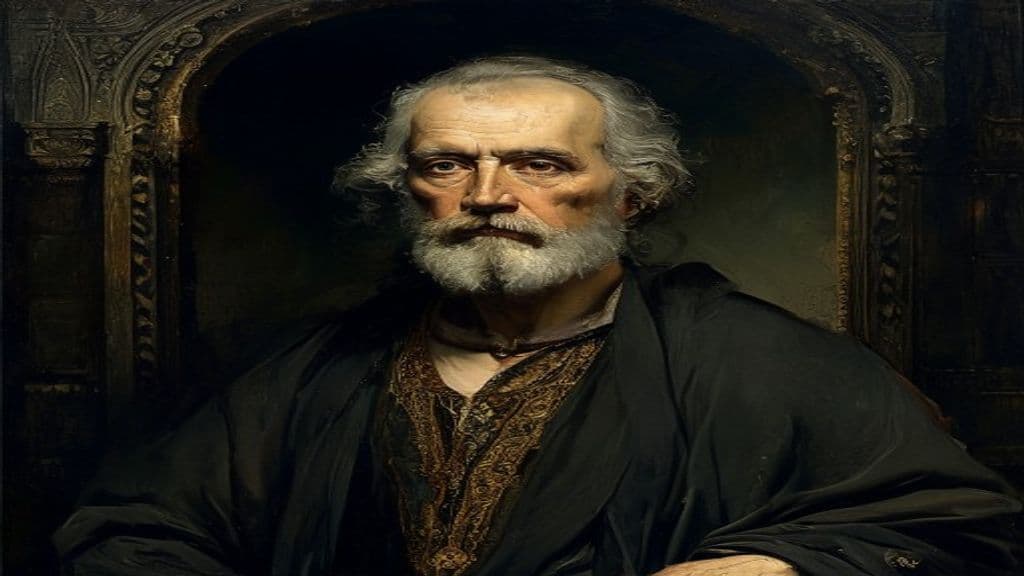
Michael
Michael is presented in the supplied sources as a masculine given name and disambiguation headword applied to people, historical rulers, cultural works, places, and other uses; the provided material treats it as an onomastic item rather than as a single supernatural being.

Uriel
Uriel is an archangel figure in Jewish and Christian apocryphal, liturgical, and popular traditions, variously described as an interpreter of prophecy, guardian of cosmological thresholds (Gate of Eden, Tartarus/pit), regent of light or the sun, and a guide or agent in salvation narratives. His prominence and specific functions vary by tradition (Second Book of Esdras, Ethiopian homily, apocryphal gospels, patristic and later angelologies).
Abel
Abel is the second son of Adam and Eve in the Genesis narrative, a shepherd whose accepted offering and subsequent murder by his brother Cain form the biblical account of the first death. Later interpretive traditions expand his role, treating him as an archetypal righteous victim, a postmortem avenging or adjudicating figure, and in some systems (notably Mandaean) identifying him with an angelic lightbeing.
Abraham
Abraham (originally Abram) is the foundational patriarchal ancestor in the Hebrew Bible whose life establishes a covenantal relationship between his family/people and God. He functions as an exemplar of faith, the progenitor of promised descendants, and a narrative anchor for claims of land, blessing, and communal identity in later religious traditions.
Abraham (Ibrāhīm) in Islam
Ibrāhīm (Abraham) in Islam is a human prophet and messenger chosen by God, a paradigm of pure monotheism (hanīf), patriarchal ancestor to later peoples and prophets, and traditionally regarded as having helped establish the Kaʿbah with his son Ismāʿīl. He is called Khalīl Allāh ('Friend of God') and is central to rites commemorated in Hajj and Eid al‑Adha.
Adam (ʾĀdam)
In Islamic theology Adam (Arabic: آدم, ʾĀdam) is presented as the first human being and the first prophet (nabī), created by God from earth/clay, granted life by God's spirit, placed in a paradisal Garden, taught knowledge (the "Names"), tested by divine command, tempted by Iblīs, and ultimately sent to live and die on Earth while remaining eligible for repentance and forgiveness.
Adam and Eve
Adam and Eve are the primordial human pair in the Abrahamic creation narratives who function as the first man and woman, placed in the Garden of Eden to steward creation. Their eating of the forbidden fruit produces a changed human condition—knowledge of good and evil, shame, pain, labor, mortality—and their story underpins later doctrines such as the Christian doctrine of original sin while being read differently across Jewish and Islamic traditions.
Adonai
Adonai (אֲדֹנָי) is one of the sacred Hebrew names used in Judaism to refer reverently to the singular God. It functions as a liturgical and devotional substitute or form for the divine Name and is treated with linguistic and ritual care in Jewish practice; it also appears in Christian liturgy (e.g., the Advent antiphon “O Adonai”).
Adonay
Adonay (אֲדֹנָי, often transcribed Adonai or Adonay) is a sacred Hebrew appellation meaning roughly "Lord" or "Master," used in Jewish liturgical and scriptural language as a reverent name for the divine. In the provided sources it functions as a theological title within Judaism rather than a personified folkloric being; discussions around it center on reverent usage and the communal care taken with divine names.
Allah
Allah is the Arabic-language term for the singular monotheistic God of the Abrahamic tradition as used in Islamic theology and by Arabic-speaking Jews and Christians. Linguistically related to other West Semitic divine names, the term in Islamic usage functions as God's unique proper name (Lafẓ al-Jalālah) and denotes the transcendent creator and sovereign of the universe.
Alpha and Omega
A titulary formula and visual symbol formed from the first and last letters of the Greek alphabet (Α/α and Ω/ω), used in Christian scripture and art to denote God's or Christ's totality — 'the beginning and the end.' It functions as a theological appellation rather than an independent supernatural being.
Al‑Yasa (Elisha)
Al‑Yasa (Elisha) is a prophetic figure attested in Abrahamic scriptural traditions. In the Hebrew Bible he is described as an Israelite prophet and 'wonder‑worker'; later traditions in Christianity and Islam also recognize him among the line of prophets.
Angel
A spiritual or heavenly being functioning primarily as a messenger and intermediary between a transcendent deity and humanity; angels also act as protectors, guides, and executors of divine will across several Abrahamic and adjacent traditions.
Angel of the Lord
A recurring divine messenger in the Hebrew Bible and New Testament who appears on behalf of the God of Israel, acting as God's representative in speech and deed. The figure—Hebrew מַלְאַךְ יְהוָה (mal’ākh YHWH)—functions as intermediary, guide, protector, judge, and announcer at decisive narrative moments.
Community Record
- [1]Gabriel (encyclopedia summary). Wikipedia contributors, 'Gabriel,' Wikipedia, The Free Encyclopedia, https://en.wikipedia.org/wiki/Gabriel (summary as provided in research notes).wiki
- [2]Wikidata entry: Gabriel. Wikidata, 'Q4925914' (Gabriel) as listed among linked data resources referenced in research notes.other