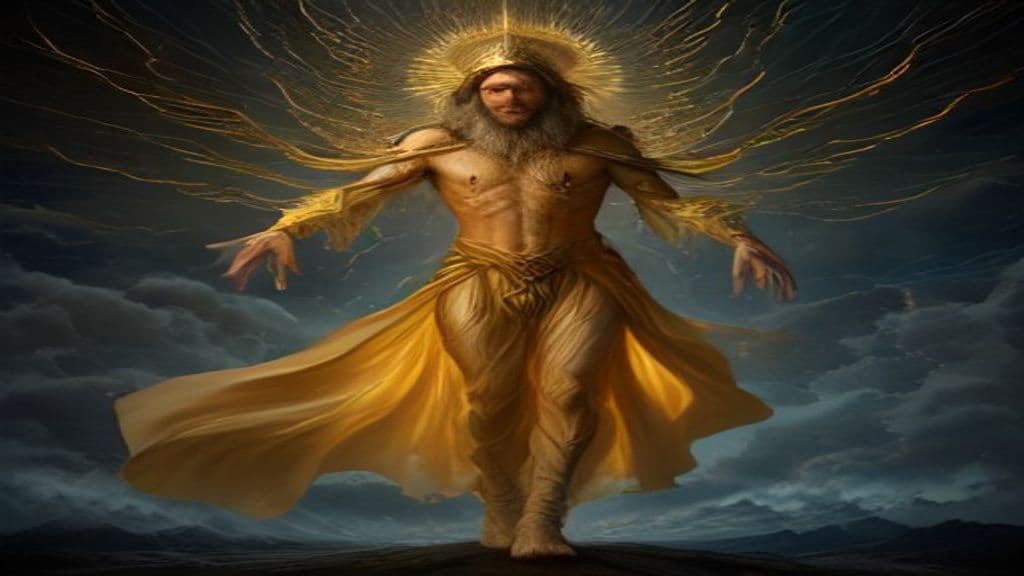
The earliest attestation in the supplied materials is the word hashmal in Ezekiel's Merkabah/chariot vision (Ezekiel 1:4–5), where it appears as a radiant substance or color within a divineophany. In later Jewish angelological schemata (as reported in the provided sources) the term is taken over as the name of an angelic rank (Hashmallim), placed fourth among ten ranks in Maimonides' list as cited in the secondary material. Thus the concept shows a developmental trajectory from descriptive visionary language to technical classificatory usage in Jewish intellectual history.
In Ezekiel's vision the term is associated with a bright, lustrous element: the quoted passage describes a stormy wind, cloud and fire, and 'out of the midst thereof as the colour of electrum' (hashmal in the Hebrew); classical translations include the Septuagint's elektron and the Authorized Version's 'amber.' The supplied angelological descriptions do not provide a detailed anthropomorphic portrait of Hashmallim, emphasizing instead their role within the heavenly order rather than specific bodily features.
The provided sources characterize Hashmallim primarily in administrative and governance terms: one glossual entry describes them as angels who 'govern and administrate Heaven' and analogizes their functions to human political and civil-service roles (politicians, cops, lawyers, civil servants). They are reported in the supplied material to be closely associated with the archangel Gabriel (an attribution presented in the gloss source). The materials do not ascribe specific combative, healing, or elemental powers beyond their bureaucratic and hierarchical functions; their placement as the fourth rank in a tenfold hierarchy (as cited) implies an established office within a broader celestial bureaucracy.

Gabriel
A principal heavenly messenger in Jewish, Christian, and Islamic literatures, Gabriel is portrayed as an archangel who reveals and explains divine messages, announces births and divine intent, and executes certain divine judgments in apocalyptic texts.
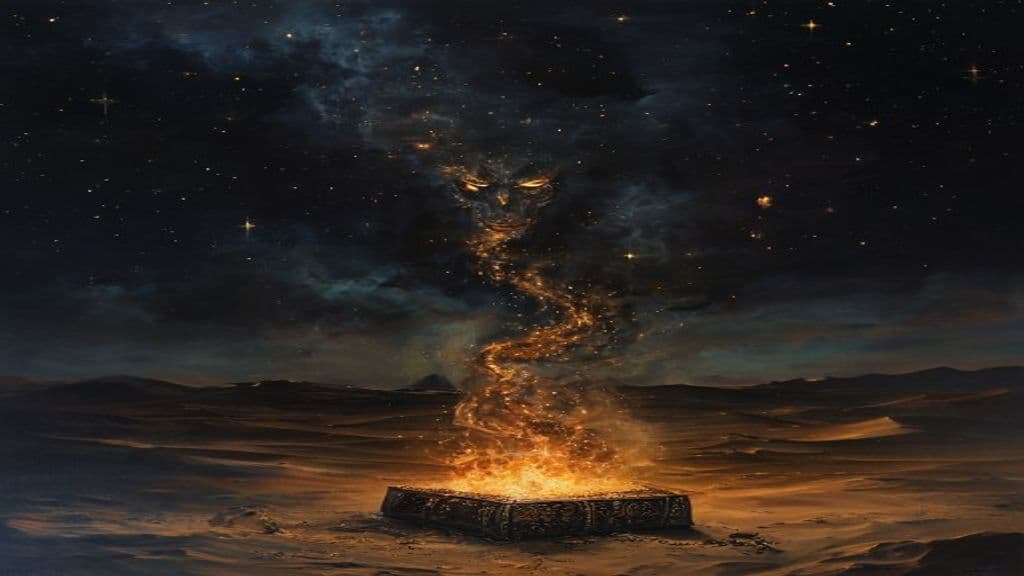
Djinn
The class of supernatural beings created from smokeless fire in Islamic cosmology — a parallel civilization to humanity, capable of belief or unbelief, with their own prophets, society, and judgment before God.
Alukah
In Jewish tradition, Alukah is a blood-lusting monster or vampire described in the Hebrew Bible's Proverbs 30:15. (Note: 1. Power tier should be Minor Spirit (or possibly Lesser) since it feeds on animals and doesn't match the Primordial description. 2. Abilities don't accurately reflect "blood-lusting monster" or vampi)
Ananias son of Nedebeus
Ananias son of Nedebeus (Hebrew: חנניה בן נדבאי, Ḥananyá ben Nadváy) is presented in Jewish and early Christian sources as the historical high priest of Jerusalem who served c. 47–58 CE. He appears in the Acts of the Apostles as the presiding official at parts of the legal proceedings against Paul and is discussed in later historical commentary (including Josephus under the variant 'Ananias ben Nebedeus').
Angel of the Presence
A high-ranking heavenly attendant described in Hebrew and Second Temple literature as one who "stands in the presence" of God and acts on God's behalf toward Israel. Sources treat the figure either as an elite created angelic office (one of the attendants who enter before the Lord) or, alternately, as a scriptural idiom referring to God's own saving presence.
Asmodeus
Asmodeus (Heb. Ashmedai/Ashmeday; Gr. Asmodaios; Arabic Sakhr in some accounts) is a named malignant spirit appearing in Near Eastern Jewish, Christian deuterocanonical, and later Islamic storytelling. Traditions portray him as a princely or kingly figure among malevolent spirits who intervenes in human affairs—notably hostile to marriages and in contest with King Solomon—and who can be driven off or bound by ritual fumigation and angelic agency.
Broxa
A nocturnal bird entity in Jewish folklore that sucks milk from goats and human blood at night. (Note: - Power tier: Greater (broxa's sucking of human blood suggests a higher power level than Minor Spirit) - Weaknesses: not specified in source material - Wards: not specified in source material)
Ishim
Ishim is attested in the supplied sources solely as a label for a rank or class of angels within Jewish angelic hierarchies. The provided material contains no theological, narrative, descriptive, or ritual detail about this rank beyond that classificatory identification.
Harsomtus
Harsomtus (also Harsomptus, Somtus) is an ancient Egyptian child-deity associated with fertility, birth and the solar-primordial creative principle. Worshiped in local temple contexts (notably Dendera and Edfu) and venerated in mammisi (birth-houses), he functions as a youthful or infant form of the Horus/Ra divine line and is integrated into regional triads and family-group theology.
Harut and Marut
A pair of figures named in the Qur'an (Surah 2:102) and elaborated in classical Islamic exegesis as heavenly beings associated with Babylon and the transmission of sorcery; their status (angels, kings, or men) and culpability are debated across commentaries. They function etiologically to explain the origin of illicit magic and as exemplars of divine testing or temptation.
Hashihime
Hashihime (橋姫, "Bridge Maiden/Princess") is a Japanese literary and folkloric figure variously depicted as a poetic emblem of lonely waiting at bridges and, in later tales and drama, as a woman who through ritual transforms into a violent, bridge-associated vengeful spirit.
Hasshaku-sama
Hasshaku-sama (八尺様) is a contemporary Japanese urban-legend figure depicted as a very tall, pale womanlike spirit associated with isolated rural zones; circulating since the late 2000s in internet folklore, she is said to target children and young people and is warded in stories by sealed rooms, talismans, salt, and boundary Jizō statues.
Hat Man
A modern popular-paranormal variant of the 'shadow person' phenomenon: described in sources as a humanoid, shadow-like figure discussed in paranormal communities and occasionally linked in contemporary notes to drug- or sleep-related experiences.
Hata no Kawakatsu
Hata no Kawakatsu (秦河勝 / Hada no Kōkatsu) is a semi-legendary Asuka-period courtier and leader of the Hata clan attested in classical chronicles. In the Nihon Shoki he appears as a high-ranking official who received a Buddha image from Prince Shōtoku, founded Hachioka-dera (Kōryū-ji), escorted foreign envoys, and suppressed the popular cult of Tokoyo-no-Kami. Later medieval traditions expand his biography with legendary accretions (e.g., claimed descent or identification with Qin imperial lineage, enshrinement as Ōsake Daimyōjin, and association with performing-arts ancestry).
Community Record
- [1]Hashmal (Wikipedia article). Wikipedia, 'Hashmal' article (supplied excerpt describing Ezekiel usage, Maimonides placement, and modern Hebrew meaning).wiki
- [2]Wikidata entry Q5679052 (Hashmal). Wikidata item for Hashmal (metadata reference supplied among sources).other
- [3]Hashmal Angel (Imaginova glossary entry). Gloss entry noting Hashmallim as angels who 'govern and administrate Heaven' and linking them to the archangel Gabriel (supplied as Source 8).other
- [4]Discussion: 'What's the meaning of "Hashmal" (electricity in modern Hebrew) in the bible? (Ezekiel 1:4)'. Community Q&A discussing translation history and semantic range from Ezekiel to modern Hebrew usage (supplied among sources).other