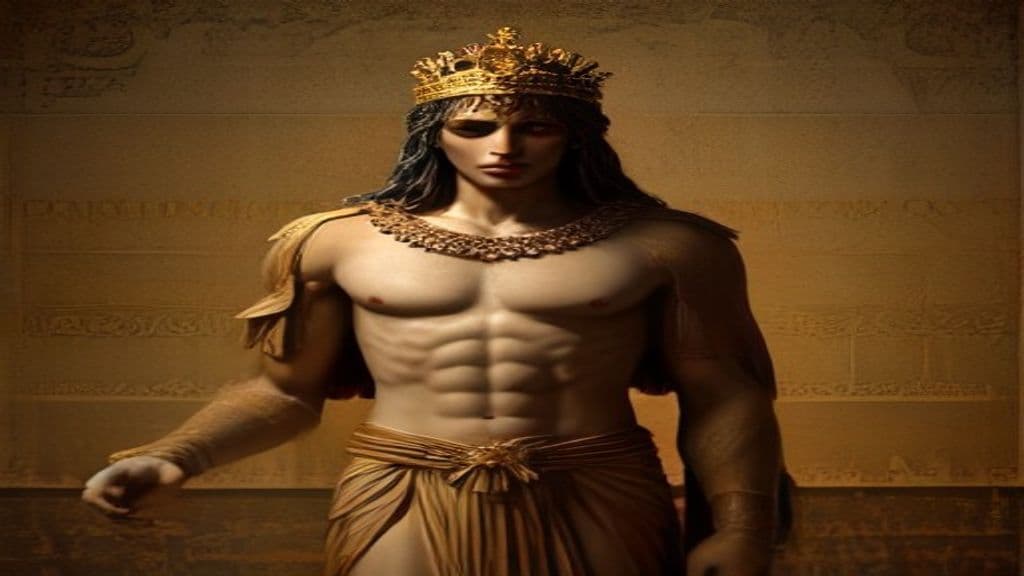
The bearers of the name Antiphates appear within the mythic-historical framework of Greek epic. Sources present multiple unrelated persons with the name: one is attested as king of the Laestrygones in the Odyssean travel episodes (the giant tribe encountered by Odysseus), another is listed among the Greek warriors hidden inside the wooden horse at Troy in Trojan War narratives, one is named in genealogical sequences as a son of Melampus (ancestor of Amphiaraus' line), and another is reported in Virgilian tradition as a son of Sarpedon who accompanies Aeneas to Italy and is killed by Turnus. The tradition thus assigns the name to distinct epic actors rather than originating a single eponymous supernatural being.
Descriptions in the surviving summaries are sparse and vary by bearer. The Laestrygonian Antiphates is identified as king of the Laestrygones, a tribe characterized as gigantic cannibals (implying great stature and cannibalistic behavior in that episode); the sources do not provide a detailed physical portrait. Other named bearers are presented as ordinary heroic-age warriors or genealogical figures with no distinctive physical traits recorded in the cited material.
Most bearers act as mortal warriors or genealogical figures within epic narratives. The Laestrygonian Antiphates is attributed aggressive predatory behavior—he kills and initiates an attack on Odysseus' scouting party, resulting in the slaughter of men and loss of ships in the Odyssean episode. Other bearers perform typical martial roles (a hidden warrior inside the wooden horse who participates in the fall of Troy; a Trojan or Italian-era warrior slain in battle; members of heroic family lines). The sources do not ascribe explicit supernatural powers or magical faculties to these figures beyond the monstrous size and cannibalism associated with the Laestrygones.

Antimachus of Teos
Antimachus of Teos (Greek: Ἀντίμαχος ὁ Τήϊος) is an early Greco-Ionian epic poet cited in later antiquity as the putative author or ascription-anchor for fragmentary Theban-cycle material (notably sometimes the Epigoni). Later authors quote or reference him for sententiae and as a chronological marker; his identity is contested and sometimes conflated with the much later Antimachus of Colophon.
Antinoe
Antinoe (Ancient Greek: Ἀντινόη) is primarily attested as a proper name in classical and later sources: several mortal women in Greek myth (founding and tragic narratives) and as the place-name Antinopolis/Antinoë in Roman Egypt. The surveyed materials do not present Antinoe as a discrete supernatural being, nor record rituals or wards directed against an entity by this name.
Antinous
Antinous was a Greek youth from Bithynia who became the favourite of the Roman emperor Hadrian; after his premature death c.130 CE Hadrian ordered his deification and founded an organized cult (including the city Antinoöpolis and commemorative games) that spread across the Roman Empire and was syncretized in some contexts with the Egyptian god Osiris.
Antinous of Ithaca
Antinous is a mortal Ithacan noble, the son of Eupeithes, and the leading suitor of Penelope in the Homeric tradition. Portrayed as violent, over‑confident, and a violator of xenia, he organizes aggression against Odysseus's household and is the first suitor slain by Odysseus upon his return.
Antioche
Antioche is a variant form of the Greek personal name more commonly rendered as Antiope, attested for several distinct women in Greek myth (including Amazonic and dynastic figures) and reused as a toponym and ecclesiastical/literary name in later traditions. The sources treat Antioche not as a single supernatural class but as a personal name with multiple local and literary usages.
Antiope
Antiope is a name applied to several distinct mortal women in Greek mythic tradition, most commonly an Amazon daughter of Ares and a Theban princess mother of Amphion (by Zeus). The figures named Antiope appear across variant local narratives rather than as a single, consistent supernatural type.
Antiphus
Antiphus (Ancient Greek Ἄντιφος) is a personal name borne by several mortal men in Greek myth and epic traditions rather than a single supernatural being. Multiple figures named Antiphus appear in genealogies and narratives as princes, warriors, companions of heroes, colonists, and victims in the heroic age (generation of Heracles, the Trojan War, and the Odyssey).
Anton Arcane
Anton Arcane is a recurring antagonist in American comic-book fiction, portrayed variously as a scientist, sorcerer, resurrected/possessing figure, demon, and (in The New 52 continuity) the avatar of the Rot, a cosmic force of decay. He creates monstrous biogenetic creatures (the Un-Men), practices forbidden occult science, possesses other bodies, and pursues immortality and power in opposition to the protagonists such as Swamp Thing.
Antu
Antu (Antum) is a Mesopotamian goddess traditionally regarded as the feminine counterpart and spouse of the sky god Anu. Attestations range from Early Bronze Age references to a marked elevation of her cultic profile in Achaemenid and Seleucid-period Uruk, and in some late theological texts she is equated with earth or primordial and underworld figures.
Antywy
Antywy is an attested name appearing in modern lists of ancient Egyptian deities. Egyptological discussion indicates uncertainty about the correct vocalization of this name — older literature rendered it Anty while some recent commentary favors reading it as Nemty — but the provided sources give no secure information about the deity's functions, appearance, cult, or rituals.
Anu
Anu (Sumerian An; Akkadian Anu/Anum) is the divine personification of the sky in ancient Mesopotamian religion, traditionally ranked at the top of god‑lists as the source of heavenly authority (anûtu/anuti) and the fount of legitimate rule for gods and kings. Though supreme in genealogies and astronomical schema, many periods portray him as a relatively passive or figurehead deity whose active cultic role is limited until a late Seleucid reinvention in Uruk.
Anu
Anu (also Ana, Anann, Anand) is a mother-figure in early Irish tradition associated with nourishment, territorial fertility and prosperity—especially in Munster—and is variably conflated with other maternal or war-related goddesses in later sources.
Community Record
- [1]Antiphates. Wikipedia entry 'Antiphates' (overview of multiple bearers, Laestrygonian king summary)wiki
- [2]The Odyssey. Homer, The Odyssey (project Gutenberg edition) — Odyssean episodes concerning the Laestrygones and genealogical listsliterary
- [3]Antiphates - Citizendium. Citizendium summary noting Antiphates as a warrior hidden in the Trojan Horseother
- [4]Land of the Laestrygonians (summary). GreekMyths: summary of the Laestrygonian episode and cannibal ambush visited by Odysseusfolk
- [5]Wikidata: Antiphates. Wikidata entry (catalogue noting an attribution that may differ among traditions)other