
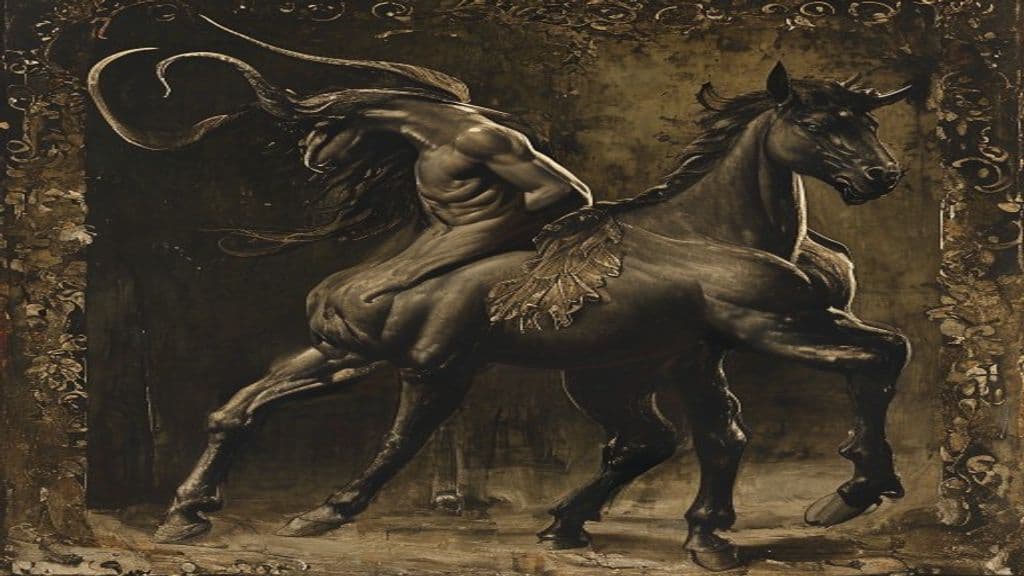
There is no single mythological origin story for Arctus in the supplied materials. Instead, the name derives from the Greek root arktos/arktos meaning 'bear' and is applied in classical sources as a proper name (e.g., appearing among mythic catalogues as a centaur and as one of the Horae) and in astronomical nomenclature as a reference to the Great Bear (Ursa Major), which in turn provided the basis for naming the Arctic region.
The sources contain no ethnographic or folkloric description of an embodied supernatural Arctus. Attestations of the term occur as (1) a star-pattern/constellation reference (the Great Bear), (2) classical personal names (e.g., a centaur on the Shield of Heracles, a named Hora), and (3) modern/fictitious personal or corporate names and taxonomic epithets (e.g., Scyllarus arctus, Arctus Baran in fiction).
No supernatural abilities, powers, or behaviors are attributed to an entity named Arctus in the provided documentation. Where behavior is described, it is either biological (the slipper lobster Scyllarus arctus as a marine species) or fictional and human (a mercenary captain characterized as ruthless in modern fiction).
Archimago
A human sorcerer figure from Edmund Spenser's The Faerie Queene who practices deceptive magic—creating false appearances and impersonations—to tempt and undermine the faith and virtue of the poem's protagonists. The figure is read by critics as an allegorical personification of religious hypocrisy and temptation; the name also contributed to later literary vocabulary for a high-ranking wizard.
Architeles
Architeles (Ancient Greek: Ἀρχιτέλης) is a personal name attested for multiple human figures in ancient Greek mythic and historical literature. The name appears in genealogical contexts (son of Achaeus; brother of Archander) and in a Calydonian/Oeneus cycle episode as the father who forgave Heracles for accidentally killing his cupbearer.
Archmail (Arthmael)
Archmail (Welsh: Arthmael) is a legendary king of the Britons recorded in Geoffrey of Monmouth’s regnal tradition. He is presented in modern summaries as having come to power in 161 BC and as succeeding his brother Beldgabred and preceding Eldol in the king-list.
Archon (Gnosticism)
In Gnostic traditions, an archon (Greek ἄρχων, árchōn) is a cosmic ruler or architect of the visible, material cosmos. Archons function as intermediate powers that construct, govern, and limit the created world and are frequently depicted as obstacles to the soul's return to higher spiritual realms.
Archura
Archura (Arçura) is a Turkic woodland chura — a shapeshifting forest spirit associated with particular woodland tracts and wild animals. Traditions portray Archura as a protector of wildlife and a trickster-like figure that can be dangerous to humans.
Arcturan
A modern, polyvalent label used in science fiction, fandom, and New Age/spiritual communities to denote beings, languages, or cultural attributes said to originate from the star Arcturus. Usage is contemporary and variable: in SF it names extraterrestrial races or languages; in New Age contexts it appears as a 'starseed' or channelled lineage and source of spiritual contact.
Ardat-lilî
Ardat-lilî are a class of female phantom-spirits in Ancient Mesopotamian sources: the restless ghosts of young women who died without sexual fulfillment or marriage. Presented in exorcistic and medical texts from the Old Babylonian period onward, they are blamed for seductive attacks on young men and for illnesses variously described as the 'hand of ardat-lilî.' Ritual responses include incantations, exorcism, and a prescribed 'mock marriage' to placate the spirit.
Ardescus
Ardescus is presented as an instance of the class of ancient Greek river gods: personified deities tied to particular rivers, often integrated into local worship and genealogies and placed in Hesiodic theogony as offspring of Oceanus and Tethys.
Ardhanārīśvara
Ardhanārīśvara is an androgynous iconographic form in Hindu tradition combining Shiva and his consort Pārvatī into a single deity split vertically as male and female, symbolizing the inseparability and synthesis of masculine and feminine cosmic principles.
Ardina
Ardina is a Marvel Comics fictional cosmic/magical construct described in comic-book continuities as a female being formed from the Silver Surfer's energies (Power Cosmic) and appearing in storylines involving the Defenders, the Order, and related Marvel mythic figures.
Arduinna
Arduinna is a local Gallo-Roman tutelary goddess of the Ardennes (Arduenna) — a divine personification of wooded heights — attested in two inscriptions and later equated with the Roman Diana. Iconography associating her with a boar-riding huntress exists in modern literature but the identification is uncertain.
Aredvi Sura Anahita
Aredvi Sura Anahita is the Avestan Yazata of waters and fertility in ancient Iranian religion and Zoroastrianism, praised in the Aban (Aban Yasht) as the mighty, undefiled river and invoked in liturgical offerings to waters.
Community Record
- [1]Arctus (Wikipedia). Wikipedia, 'Arctus' entrywiki
- [2]Ursa Major (Wikidata). Wikidata: Ursa Major (Q8918)wiki
- [3]EYEWITNESS Arctic & Antarctic [US Version feat. Martin Sheen] (Archive.org). Eyewitness: Arctic & Antarctic (archive item), noting etymology linking Arctic to the Great Bearother
- [4]Scyllarus arctus (Wikipedia). Wikipedia, 'Scyllarus arctus' (taxonomic use of arctus)wiki
- [5]k_a_webb — Entries tagged with race: arctus. k_a_webb dreamwidth tag entries describing a fictional race 'Arctus' in the world Beshaki with 'night magic' (fictional worldbuilding)literary
- [6]Star Trek Mercenary Raider Starship (Thingiverse / Archive). Archive item referencing a fictional character name 'Arctus Baran' used in fan/fictional materialother
- [7]LA PUERTA DEL GEHENA Heavy Rock Radio Nº224 (Archive.org). Archive listing referencing the band Steel Arctus (modern cultural reuse of the name)other
- [8]Arctus Aerospace (Dealroom). Dealroom company profile for Arctus Aerospace (modern corporate name usage)other