
In Mesopotamian textual tradition ardat-lilî are described as the ghosts/phantoms of young women (Akkadian ardat/ardatu = young woman, maid) who died without experiencing marriage or sexual relations. Their social lack—unfulfilled marriage or sexual life—is given as the motivating condition for their posthumous unrest and hostile behavior toward the living. They are named members of the broader lil- corpus (lilû/lilītu) and appear in Sumerian and Akkadian literary, exorcistic, and medical texts rather than as objects of cultic worship.
Cuneiform sources typically portray ardat-lilî as youthful and appealing in appearance (often rendered in Sumerian as ki-sikil-líl-lá, 'phantom maid' or 'demon-maiden'), a contrast with other hostile spirit-types described as faceless, ever-changing (uttakkarū) or strange (nakru). No consistent, detailed iconography is preserved in the attested ritual and literary materials; suggestions that specific surviving reliefs depict ardat-lilî are treated as speculative in modern scholarship.
Ardat-lilî are attested as attempting to seduce young men and as causing ailments in the living. Texts record an affliction called the 'hand of ardat-lilî' (qāt ardat lilî), invoked as the cause of la'bu—an illness variously interpreted by modern scholars as a skin disease, a fever, psychiatric/neurological disorder, or an unidentified bodily fluid; the primary sources do not fix a single medical diagnosis. They belong to the lil- family of wind/ghost-spirits, are listed as subjects of Pazuzu in some texts, and in one text are associated with the retinue of the god Erra, situating them as subordinate, dangerous spirit-entities rather than gods.
Weaknesses
- ritualmock marriage (ritual simulated marriage to satisfy the spirit's unmet social/sexual obligations)
- conditionperform warding rites on the twelfth day of the month (calendrical prophylaxis attested in STT ii, 300)
Wards
- mantraincantations and exorcistic formulas against ardat-lilî (Old Babylonian attestation)
- ritualmock marriage (karmu/ritual marriage prescribed in exorcistic-medical formulas)
- conditionconduct preventive incantations and exorcisms, especially using trained exorcists/physicians
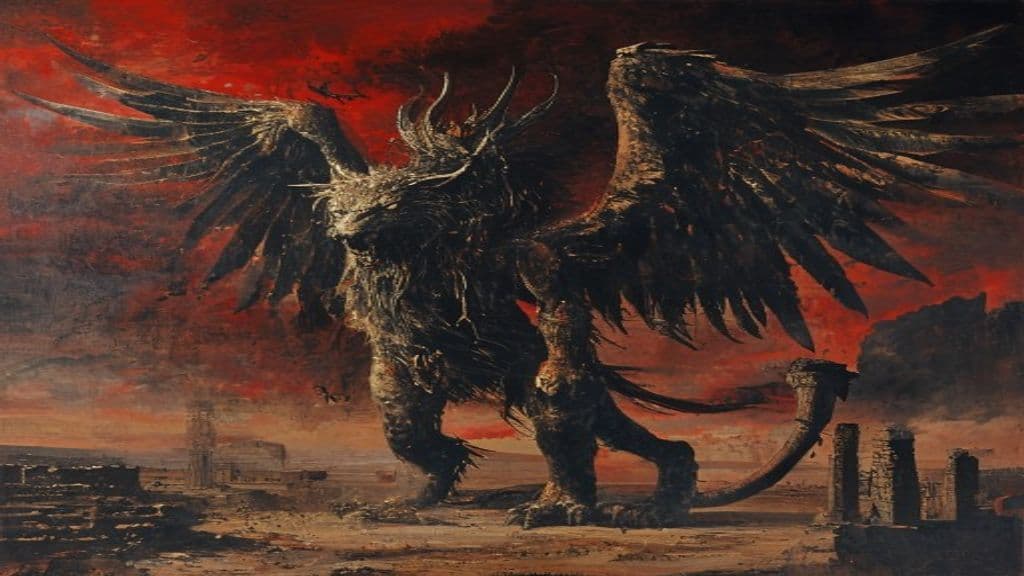
Pazuzu
The king of the wind demons of ancient Mesopotamia, lord of the southwest wind — paradoxically invoked as a protector against Lamashtu and other demons despite being evil himself.
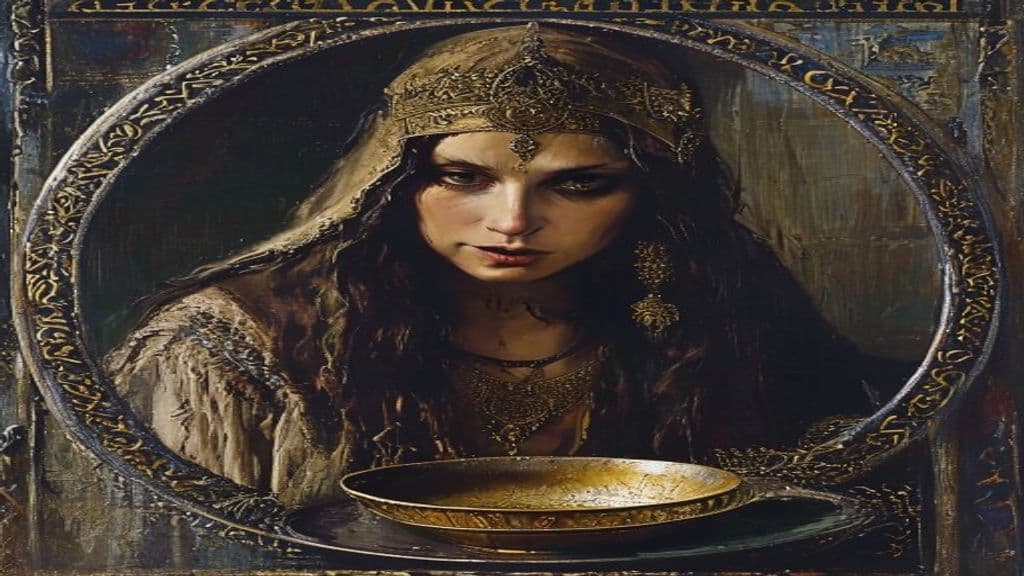
Lilith
Lilith is a feminine night‑spirit in Jewish mythic, magical, and folkloric traditions associated with harmful nocturnal activity, especially threats to sleeping people and infants. The figure appears both as a class of night‑spirits (lilit/lilītu) in Near Eastern demonologies and as an individualized dangerous woman in later medieval Jewish narratives and amulets.
Architeles
Architeles (Ancient Greek: Ἀρχιτέλης) is a personal name attested for multiple human figures in ancient Greek mythic and historical literature. The name appears in genealogical contexts (son of Achaeus; brother of Archander) and in a Calydonian/Oeneus cycle episode as the father who forgave Heracles for accidentally killing his cupbearer.
Archmail (Arthmael)
Archmail (Welsh: Arthmael) is a legendary king of the Britons recorded in Geoffrey of Monmouth’s regnal tradition. He is presented in modern summaries as having come to power in 161 BC and as succeeding his brother Beldgabred and preceding Eldol in the king-list.
Archon (Gnosticism)
In Gnostic traditions, an archon (Greek ἄρχων, árchōn) is a cosmic ruler or architect of the visible, material cosmos. Archons function as intermediate powers that construct, govern, and limit the created world and are frequently depicted as obstacles to the soul's return to higher spiritual realms.
Archura
Archura (Arçura) is a Turkic woodland chura — a shapeshifting forest spirit associated with particular woodland tracts and wild animals. Traditions portray Archura as a protector of wildlife and a trickster-like figure that can be dangerous to humans.
Arcturan
A modern, polyvalent label used in science fiction, fandom, and New Age/spiritual communities to denote beings, languages, or cultural attributes said to originate from the star Arcturus. Usage is contemporary and variable: in SF it names extraterrestrial races or languages; in New Age contexts it appears as a 'starseed' or channelled lineage and source of spiritual contact.
Arctus
Arctus is a polyvalent name rooted in the Greek word for 'bear' (Arktos) that appears across astronomical nomenclature (the Great Bear/Arctic), classical mythographic name-lists (personal names such as a centaur or a Hora), taxonomy (species and genus names), and modern/fictitious proper names. The provided sources do not support treating Arctus as a single coherent supernatural being within a specific folkloric tradition.
Ardescus
Ardescus is presented as an instance of the class of ancient Greek river gods: personified deities tied to particular rivers, often integrated into local worship and genealogies and placed in Hesiodic theogony as offspring of Oceanus and Tethys.
Ardhanārīśvara
Ardhanārīśvara is an androgynous iconographic form in Hindu tradition combining Shiva and his consort Pārvatī into a single deity split vertically as male and female, symbolizing the inseparability and synthesis of masculine and feminine cosmic principles.
Ardina
Ardina is a Marvel Comics fictional cosmic/magical construct described in comic-book continuities as a female being formed from the Silver Surfer's energies (Power Cosmic) and appearing in storylines involving the Defenders, the Order, and related Marvel mythic figures.
Arduinna
Arduinna is a local Gallo-Roman tutelary goddess of the Ardennes (Arduenna) — a divine personification of wooded heights — attested in two inscriptions and later equated with the Roman Diana. Iconography associating her with a boar-riding huntress exists in modern literature but the identification is uncertain.
Aredvi Sura Anahita
Aredvi Sura Anahita is the Avestan Yazata of waters and fertility in ancient Iranian religion and Zoroastrianism, praised in the Aban (Aban Yasht) as the mighty, undefiled river and invoked in liturgical offerings to waters.
Aregonis
Aregonis (Ancient Greek: Ἀρηγονίς) is a mythological maternal figure in Greek genealogies, named as the wife of the seer Ampyx and mother of the Argonautic seer Mopsus in the Orphic Argonautica. In other traditions the maternal role is given to a woman called Chloris, reflecting variant naming in transmission.
Community Record
- [1]Ardat-lilî (Wikipedia). Wikipedia, 'Ardat-lilî' entry (synthesizes cuneiform sources and scholarship)wiki
- [2]Lilu (mythology) (Wikipedia). Wikipedia, 'Lilu (mythology)' (context on the lil- corpus and spirit terminology)wiki
- [3]Wikidata: Ardat-lilî. Wikidata item Q2860708 (structured data references to the entity)other
- [4]ARG Digest Issue 1: Jan-Feb 2023 (archive). Archive.org holdings cited in research notes (secondary/other materials referenced)other