
Two distinct origin strands appear in the provided material. The first is modern and documentary: Jamie Stinson, an Australian musician active in projects including Lord Kaos, Carpe Tenebrum and associations with Dimmu Borgir, uses Astennu as a stage name; Wikipedia and related music listings state his name is "derived from a creature in Egyptian mythology." The second strand appears only in a single secondary online summary (mythlok.com), which presents Astennu as a "compelling yet lesser-known figure in Egyptian mythology" linked to Thoth and lunar wisdom. The supplied materials contain no primary ancient texts, hieroglyphic spellings, or scholarly Egyptological evidence to establish an original mythic origin for Astennu; the mythlok account is therefore an uncorroborated secondary claim within this dataset.
The only appearance detail in the provided sources comes from the single secondary summary (mythlok.com), which states Astennu is "most often depicted as a baboon." No further iconographic details (attire, attributes, hieroglyphic forms, museum or inscription citations) are present in the supplied materials. Modern musical sources do not attribute any visual form to the person using the name beyond its function as a stage name.
Claims that associate Astennu with wisdom, lunar cycles, and divine judgment derive solely from the solitary secondary source (mythlok.com), which frames Astennu as a "spiritual extension or manifestation of Thoth." The supplied musician- and band-related sources attribute no supernatural abilities to the modern individual who adopted the name. No primary Egyptian texts, ritual manuals, or academic scholarship are provided here to corroborate the purported mythic functions, so these abilities remain unverified in the dataset.
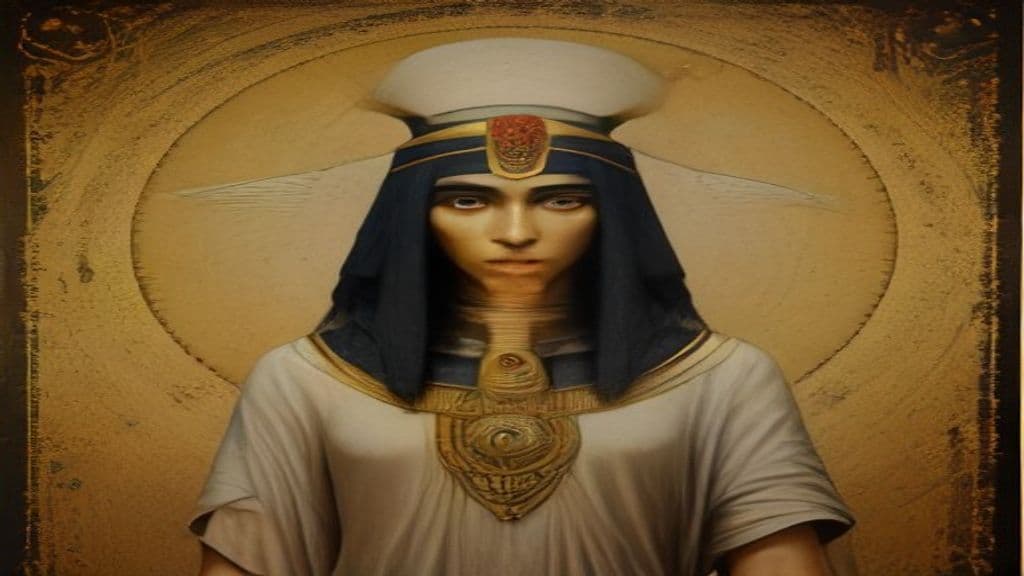
Assaracus
Assaracus is a mytho-historical king of Dardania in ancient Greek genealogical tradition, presented as a mortal ancestor within the royal house that connects to the foundation and lineage of Troy (Ilium). He is primarily attested as a dynastic progenitor—son of Tros, brother of Ilus, and father of Capys—and is not described in the supplied sources as a supernatural being.
Assessors of Maat
A collective of forty-two minor divine figures in ancient Egyptian funerary religion who act as judicial assessors in the post-mortem tribunal of Osiris. They are each associated with one of the 'Negative Confessions' in Chapter 125 of the Book of the Dead and serve to determine the deceased's conformity to Maat (truth, justice, and cosmic order).
Astacia
Astacia is attested in a brief encyclopedic note as a nymph in Greek mythology after whom, according to that note and a referenced Pauly‑Wissowa entry, Dionysus named a city. Attestation in the supplied materials is extremely limited: a one-line Wikipedia entry and a bibliographic pointer to Paulys Realencyclopädie der classischen Altertumswissenschaft (RE).
Astarion Ancunín
Astarion Ancunín is a fictional player-controllable character from Larian Studios' Baldur's Gate 3 (2023). Presented as a High Elf rogue who was infected by an Illithid tadpole and revealed to be a vampire spawn, he functions in-game as a companion/protagonist with a personal quest concerning his former master, Cazador Szarr.
Astaroth
Astaroth is a named adversarial spirit in Christian demonological literature, commonly catalogued as a high-ranking infernal officer (described in sources as a 'Great Duke' or 'Grand Duke' of Hell). The figure represents the Christian polemical reception of ancient Near Eastern goddess-names (Astarte/Ashtoreth) recast within narratives and demonological lists and appears in medieval legendary episodes as well as later occult imagery and modern popular culture.
Astarte
Astarte (Ancient Northwest Semitic ʿAṯtart; Hellenized Ἀστάρτη) is a major Bronze–Iron Age Levantine goddess worshipped in Canaanite and Phoenician contexts and widely syncretized across the ancient Mediterranean. Sources portray her with martial, erotic, and civic associations and attest organized cultic worship (temples, shrines, coin iconography) rather than folkloric anti‑spirit traditions.
Asteria
Asteria is a Greek mythic goddess, daughter of the Titans Phoebe and Coeus, associated with stars and with the island later identified as Delos. In myth she flees Zeus, transforms into a quail and then into an island that shelters Leto and hosts the birth of Apollo and Artemis; she is also named as mother of Hecate in Hesiodic tradition.
Asterion
Asterion (Ancient Greek Ἀστερίων, 'starry') is the river-god of the Asterion in Argos. He functions as a local potamos in Greek myth and cult: participant in territorial myth concerning Hera and Poseidon, progenitor of nymph-nurses of Hera, and source of a plant used in Hera's sanctuary rites.
Asterius (Giant)
Asterius (also Asterion, Aster) is a named member of the Gigantes in ancient Greek myth who takes part in the Gigantomachy and is recorded in some summaries as a Giant slain by Athena; his death is mentioned in connection with Panathenaic civic imagery in certain modern summaries of the tradition.
Asterodeia
Asterodeia (also Asterodia, Asterodea) is a name applied to several female figures in Greek myth: an Oceanid (a nymph daughter of Oceanus and Tethys) and various mortal royal women used in regional genealogies, including a Phocian princess and possible consorts of Endymion and Icarius.
Asterodia
Asterodia is a personal name found across multiple Greek mythic genealogies rather than a single coherent supernatural agent. The name appears for an Oceanid (daughter of Oceanus and Tethys) and for several mortal or near-mortal women (princesses or wives) used to explain descent, marriage alliances, and local eponymy in regions such as Phocis, Elis, and Colchis.
Asteropaios
Asteropaios is a named Homeric Paeonian leader and warrior in the Iliad, grandson of the river-god Axios (son of Pelagon), noted for ambidexterity (throwing two spears at once), who wounds Achilles' forearm before being slain and whose arms are later awarded as prizes at Patroclus' funeral games.
Community Record
- [1]Astennu (musician) — Wikipedia. Wikipedia, entry for Astennu (musician), noting: "His name is derived from a creature in Egyptian mythology."wiki
- [2]Astennu — Wikidata. Wikidata entry for Astennu (Jamie Stinson), modern musician identity.wiki
- [3]Astennu : The Lunar Baboon — Mythlok. Mythlok summary: "Astennu, a compelling yet lesser-known figure in Egyptian mythology... Most often depicted as a baboon, Astennu serves as a spiritual extension or manifestation of Thoth..." (provided excerpt).other
- [4]Lord Kaos — Wikipedia. Band biography pages referencing Jamie Stinson's musical projects and use of the name Astennu.wiki
- [5]Carpe Tenebrum — Majestic Nothingness (listing). Music release listing documenting the artist's project associated with the stage name Astennu.other
- [6]Thoth — Alchetron. Alchetron page on Thoth cited among supplementary materials linking Thoth iconography (moon disk, scroll, pens, scales) though the supplied material does not directly connect those items to Astennu.other