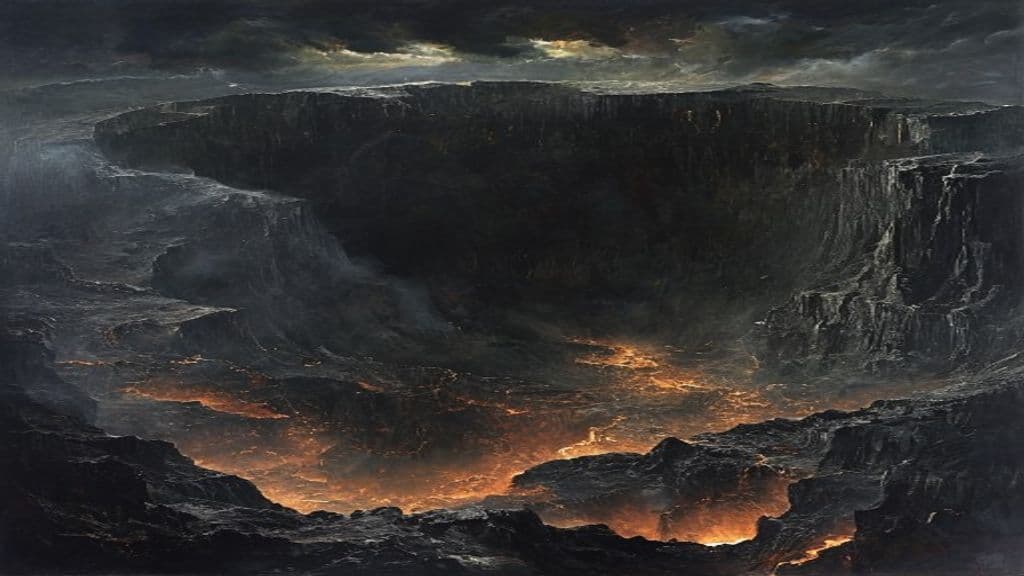
Avernus is a volcanic crater approximately 3.2 kilometres (2.0 mi) in circumference with no distinct physical description of an entity.
There are no reported interactions or abilities associated with Avernus as an entity.
Weaknesses
- localized natureInability to affect events outside its crater
Wards
None recorded.
Acron (King of the Caeninenses)
Historical figure and leader of the Caeninenses, a neighboring tribe to the Romans. Rejected the proposal of intermarriage with Romulus. (Note: 1. Power tier: Acron is described as a king, but no source material indicates his abilities or powers are deity-level (Ancient) or cosmic (Primordial). Greater seems plausible. 2. Origin story: The dr)
Carmen (Roman Tradition)
A carmen is a type of supernatural entity or force in Roman tradition, used for expiation and execration through verbal incantations and rituals. (Note: - Power tier should be Primordial (cosmic-level entity as described in source material) - Add sensory cues, weaknesses, and wards based on the abilities of a carmen (e.g., incantations and rituals may)
Corona Australis
A constellation in the Southern Celestial Hemisphere associated with various cultural interpretations. (Note: 1. Power tier should be "Primordial" as Corona Australis is an astronomical object and not a deity-level entity. 2. Abilities are not mentioned in the source material; delete this section entirely. 3.)
Founding of Rome
The collective process of gradual union and formation of settlements on hilltops in ancient Rome. (Note: - Power tier: Primordial (not Lesser, as it's a historical process rather than a supernatural entity) - Abilities: Remove "The exact nature of this process is unclear" and replace with something accur)
Interpretatio Slavica
A cultural practice among Slavic peoples to identify and equate their deities with those of neighboring cultures and Christian saints. (Note: - Power tier should be Ancient (deity-level), as it's a cultural practice rather than a supernatural being. - Sensory cues, weaknesses, and wards are not applicable to this entity, as it's an abstract)
Remoria
A place within Roman tradition associated with the founding of Rome by Romulus and Remus. (Note: - Power tier: Reduce from Primordial to Ancient (as it's a geographical site associated with deity-level figures, but not a deity itself) - Summary: Update to reflect its connection to the founding of)
Aventinus
Aventinus is a mytho-historical Roman figure presented in sources as a minor heroic/eponymous personage associated with the Aventine Hill and appearing in traditions surrounding Aeneas' Italian wars. He is variously described in brief accounts as a son of Hercules and the priestess Rhea (in Virgilian citation) and in alternate traditions as an early Latin/Alban king whose name explains the toponym Aventine.
Aventinus of Alba Longa
Aventinus of Alba Longa is a legendary king in the Alban/Latial regnal tradition, presented in ancient commentators and later summaries as an eponymous figure whose burial or shrine on the Aventine Hill provided an etiological explanation for that place-name. He appears in king-lists as a successor in the line purportedly descending from Aeneas and is variously dated in later regnal chronologies to the 9th–8th centuries BC.
Averis
Averis is documented in the provided sources as an English-language surname and proper name used by real people and organizations; there is no evidence in these materials that Averis refers to a supernatural or folkloric being.
Averruncus
Averruncus (also Auruncus) is an ancient Roman divine name/agent associated with averting harm. Attested in Roman antiquarian discussion as a power invoked to ward off disaster to people and harvests, Averruncus appears both as a specialized protective function and as an indigitamentum (a ritual name or aspect) applied to greater gods to secure their local, protective action.
Aveta
Aveta is a local maternal deity attested in Roman-period Gaul, chiefly among the Treveri around Augusta Treverorum (Trier). She is represented in altars and terracotta votive figurines emphasizing motherhood and fertility; some scholars interpret associated evidence as indicating links with springs and healing.
Awarikus (Warikas)
Awarikus (also rendered Warikas) was a historical king of the Neo‑Hittite/Luwian polity Ḫiyawa (Adanawa/ancient Adana in Cilicia) who reigned in the mid–late 8th century BCE (c. 738–709 BCE). He is attested in Hieroglyphic Luwian, Phoenician, and Neo‑Assyrian (Akkadian) sources as a local ruler who entered vassalage and treaty relations with the Neo‑Assyrian Empire and undertook fortification and administrative projects within his realm.
Community Record
- [1]