
Bhaiṣajyasamudgata is attested in Mahāyāna sūtras: he is named in chapter 23 of the Lotus Sūtra (which recounts the Medicine King/Bhaiṣajyarāja narrative) and is co-featured with Bhaiṣajyarāja in a dedicated Guan (contemplation/visualization) sūtra. The Lotus Sūtra chapter tells the story of the Medicine King, who in a past life burned his body as the supreme offering and was reborn over numerous lifetimes to heal illnesses; Bhaiṣajyasamudgata is recorded in the tradition as the paired bodhisattva in the contemplative sutra devoted to the two, thereby situating him within the same healing/salvific narrative complex and the contemplative practices that invoke those figures (sources: Lotus Sūtra chapter reference; Guan sutras listing; Wikipedia summary).
The provided sources do not supply a detailed iconographic or physical description of Bhaiṣajyasamudgata. He is presented in the textual record as a bodhisattva to be visualized in contemplative practice (the Guan literature), but specific conventional iconographic attributes or East Asian visual types are not given in the cited excerpts (sources: Guan sutras listing; Lotus Sūtra chapter reference; Wikipedia summary).
Scriptural material and sūtra listings associate Bhaiṣajyasamudgata with healing and with being an object of visualization practice. The Contemplation Sutra named for Bhaiṣajyarāja and Bhaiṣajyasamudgata functions as a guide for meditators cultivating samādhi by visualizing these bodhisattvas, and the Lotus Sūtra narrative about the Medicine King emphasizes rebirths dedicated to curing disease; by association Bhaiṣajyasamudgata participates in that therapeutic/contemplative register. The sources describe him as embodying the Buddha's healing activity and as a focus for devotional-meditative practices rather than as the performer of unrecorded miraculous feats (sources: Guan sutras listing; Lotus Sūtra chapter reference; Wikipedia summary).
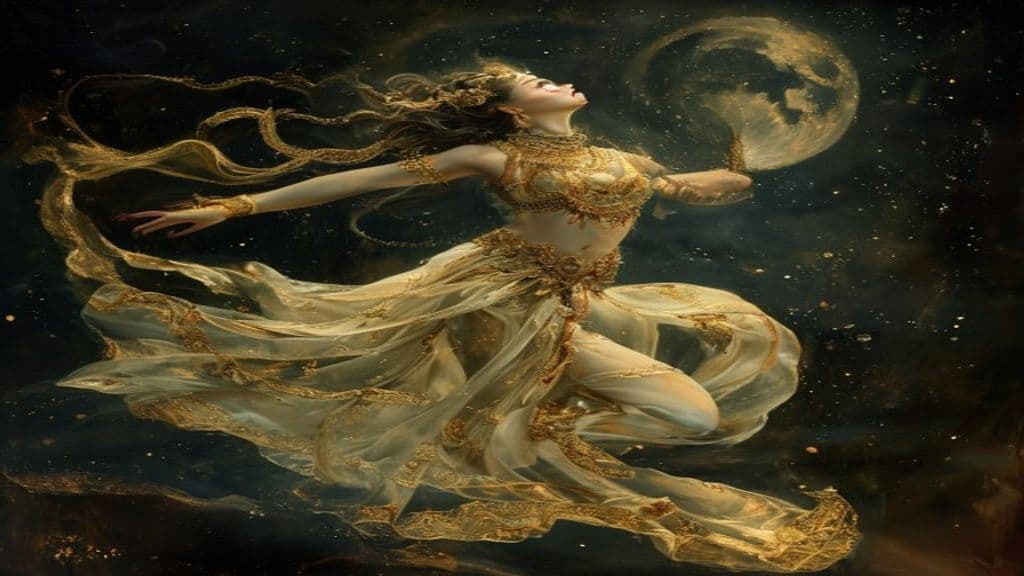
Apsara
Celestial dancers and water nymphs of Hindu cosmology — beautiful semi-divine beings who dance at the court of Indra and, by his command, descend to earth to distract sages from excessive asceticism.
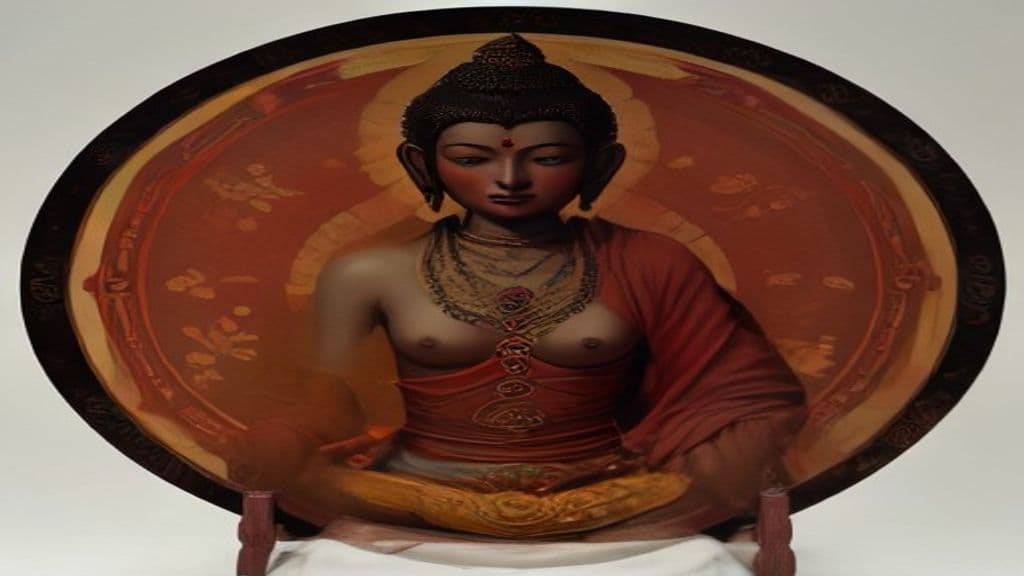
Samantabhadra
Samantabhadra is a sacred name used across Indian-origin traditions. In Mahāyāna Buddhism it denotes a major bodhisattva associated with practice, vows, and the transfer of merit; in Tibetan Buddhism the name (Tibetan: Kuntu Zangpo) is also used for an Adi‑Buddha or primordial principle in Dzogchen contexts; separately, Samantabhadra is the name of a historical second‑century Digambara Jain monk and author of works such as the Ratnakaranda Gaurav.

Maitreya
Maitreya (Pali: Metteyya) is the bodhisattva prophesied in Buddhist traditions to be the next fully awakened Buddha who currently resides in Tushita heaven and will be reborn on earth to re-establish the Dharma. In modern esoteric/Theosophical literature he is also depicted as an advanced spiritual teacher in a hidden hierarchy, a distinct framing from the classical Buddhist accounts.
Akshobhya
Akshobhya is a transcendent buddha of Mahāyāna and Vajrayāna Buddhism, one of the Five Wisdom (Dhyāni) Buddhas. He personifies 'mirror knowledge' (ādarśa-jñāna), is conventionally placed in the East, and is lord of the eastern Pure Land Abhirati; in esoteric texts he is associated with the eastern Vajra division and invoked in mantra/mandala ritual contexts.
Amitābha
Amitābha is a central celestial Buddha of Mahayana Buddhism who presides over the western Pure Land called Sukhāvatī. Devotional practices invoking his 'measureless' light and life (nianfo/nembutsu) are presented in Pure Land traditions as a path by which beings may be reborn in his buddhafield and quickly attain Buddhahood.
Anantacāritra
Anantacāritra (Sanskrit: अनन्तचारित्र) is a bodhisattva figure in the Lotus Sūtra, identified as one of the four great perfected bodhisattvas who attend Gautama Buddha. The name is glossed as "Boundless Practice" and, in Tiantai commentary, is read as representing eternity.
Arhat
An arhat (Sanskrit: arhat; Pāli: arahant) is in Buddhist traditions a human practitioner who has gained insight into the true nature of existence, attained nirvāṇa, and been liberated from the cycle of rebirth. The status and valuation of arhatship vary by school: some traditions equate it with full liberation, while others treat it as distinct from or inferior to the bodhisattva/buddha ideal.
Avalokiteśvara
A central Mahāyāna and Vajrayāna bodhisattva who embodies great compassion (mahākaruṇā), Avalokiteśvara hears the cries of sentient beings and manifests in many forms to relieve suffering. Venerated across South, Central, and East Asia, the figure functions devotionally (mantra and sutra recitation) and iconographically in multiple gendered and regional guises.
Bhaisajyaguru
Bhaisajyaguru (Bhaiṣajya‑guru; Medicine Buddha) is a Mahāyāna buddha associated with healing, medicine, and a pure land called Vaiḍūryanirbhāsa (Pure Lapis Lazuli). He functions as a therapeutic savior whose remedies operate through the "medicine of his teachings," vows, devotional practice, and radiance associated with lapis‑lazuli light.
Bhaiṣajyarāja (Medicine King Bodhisattva)
Bhaiṣajyarāja (Sanskrit: Bhaiṣajyarāja; Chinese: 藥王 Yào Wáng) is a Mahāyāna bodhisattva associated with healing, medicine, and supreme self‑offering. He appears in the Lotus Sūtra and in visualization/contemplation sutras and is often connected ritually and iconographically with the Medicine Buddha (Bhaiṣajyaguru) and with the paired bodhisattva Bhaiṣajyasamudgata.
Cintāmaṇicakra (Nyoirin Kannon / Ruyi-lun Guanyin)
Cintāmaṇicakra is a bodhisattva-manifestation of Avalokiteśvara (Guanyin), identified with the wish-fulfilling jewel (cintāmaṇi) and wheel (cakra). In Mahāyāna sources the figure functions as one of six Avalokiteśvara forms tied to deliverance across the six realms (especially the deva realm) and is invoked through a dhāraṇī for karmic purification, protection, and fulfillment of aspirations.
Dharmapāla
In Buddhist traditions, a dharmapāla is a protective deity or guardian whose role is to defend the Dharma (the Buddha's teaching) and to avert obstacles to spiritual practice. Appearing across Mahāyāna and Vajrayāna contexts (notably Tibetan, Chinese, and Japanese), dharmapālas range from local worldly guardians to wrathful enlightened emanations invoked in tantric ritual.
Eight Legions (Aṣṭasenā / Hachi Bushū)
The Eight Legions (Sanskrit aṣṭasenā; Japanese Hachi Bushū 八部衆) are a grouped category of Buddhist divine and semi-divine beings assembled from multiple non-human classes whose described function in Mahāyāna sources is to protect the Dharma. They appear as part of the Buddha's audience in sutras such as the Lotus Sutra and the Golden Light Sutra and are represented in temple iconography with locally variable memberships.
Five Wisdom Kings
A class of wrathful, mantric protector-deities in East Asian Mahāyāna (notably Japanese) Buddhism, identified with the Sanskrit Vidyārāja and Japanese Myō-ō and described in sources as guardians of the cosmic Buddha Dainichi (Vairocana) and of esoteric teachings.
Green Tara
Green Tara (Tārā, Ārya Tārā, Jetsün Dölma) is a central female buddha/bodhisattva figure in Mahāyāna and especially Vajrayāna Buddhism, venerated as a liberator who grants swift assistance, removes obstacles, and functions as a meditation deity (yidam) embodied in green form.
Community Record
- [1]Bhaiṣajyasamudgata. Wikipedia, 'Bhaiṣajyasamudgata' page summarywiki
- [2]The Visualization Contemplation Sutra Pure Land Sutra 3 Of 3 Amida Amitabha Buddhism AUDIOBOOK (listing of Guan sutras). Archive.org summary listing the six visualization/contemplation sutras including the 'Sutra on the Contemplation of the Two Bodhisattvas Bhaiṣajyarāja and Bhaiṣajyasamudgata (Guan Yaowang Yaoshang erpusa jing 觀藥王藥上二菩薩經)'other
- [3]Ancient Accounts of King Śubhavyūha [Chapter XXVII] (Lotus Sūtra chapter reference). Wisdom Library listing for Lotus Sūtra chapter 23 (The Bodhisattva Bhaiṣajyarāja) which situates the Medicine King narrative of burning his body and subsequent rebirths healing diseases; Bhaiṣajyasamudgata is associated in the tradition and named in the separate contemplation sūtraliterary