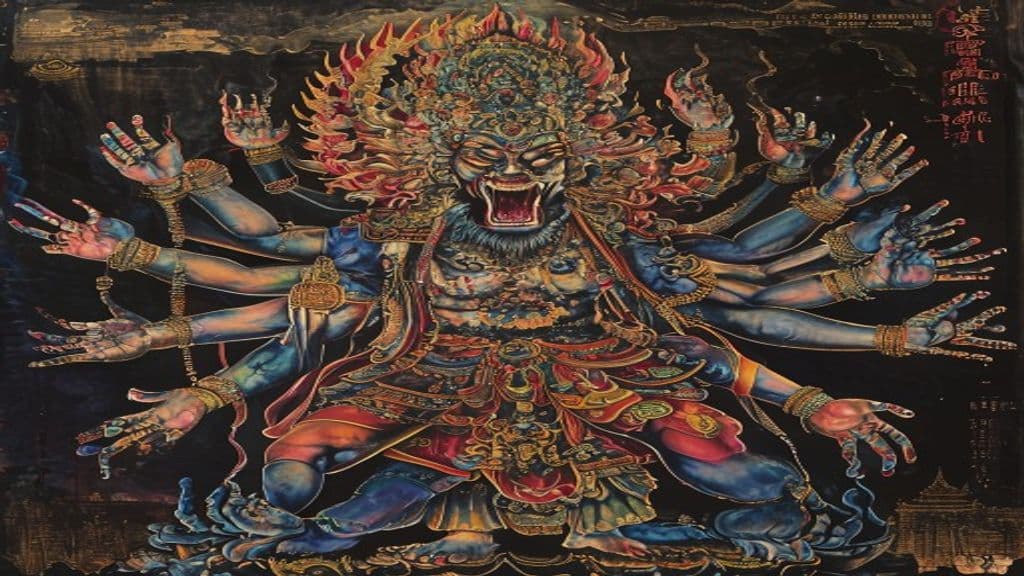
The term dharmapāla (Sanskrit: dharma + pāla, 'dharma protector') designates a class of protective beings rather than a single mythic origin. Doctrinal accounts distinguish two broad kinds — worldly guardians (lokapāla) and wisdom protectors (jnanapāla) — and present many dharmapālas as emanations of bodhisattvas (for example, many forms of Mahākāla as emanations of Avalokiteśvara; Yamāntaka as an emanation of Mañjuśrī). The devotional and institutional practice venerating dharmapālas in Tibet is traceable to the early 8th century, after which schools and monasteries often adopted specific protector figures tied to places and lineages.
In Mahāyāna and tantric iconography dharmapālas are frequently depicted in wrathful, terrifying forms intended to frighten away obstacles: dark-colored skin (blue, black, or red), fierce expressions with protruding fangs, and sometimes multiple heads, many hands, or many feet as seen in Vajrayāna thangka depictions. Not all traditions deploy wrathful imagery in the same way; the wrathful form is doctrinally framed as a compassionate, skillful means to defend the Dharma.
Dharmapālas are invoked to avert inner and outer obstacles that impede practitioners, to foster necessary conditions for practice, and to protect institutions (many monasteries have a dedicated dharmapāla comparable to a genius loci). Wisdom Protectors are described as enlightened beings who manifest wrathful activity for the benefit of sentient beings; Worldly Guardians function as local or domain guardians. One enumerative category identifies the Aṣṭagatyaḥ (the eight nonhuman kinds: Garuḍa, Deva, Nāga, Yakṣa, Gandharva, Asura, Kinnara, Mahoraga) among protective beings, indicating the category can include a range of nonhuman guardians.
Weaknesses
- conditionDependence on proper invocation and veneration
- conditionRole limited to protective function—wrathful action is doctrinally constrained to benefit sentient beings
- conditionInstitutional authority: their protective role is often tied to being specifically appointed or venerated by a monastery or school
Wards
- ritualDevotional veneration and invocation (tantric liturgy, visualization, mantric practice)
- ritualInstitutional dedication of a specific dharmapāla to a monastery (functioning as a genius loci)
- conditionCultivation of the Dharma and tantric practice to create conditions that dharmapālas are said to foster
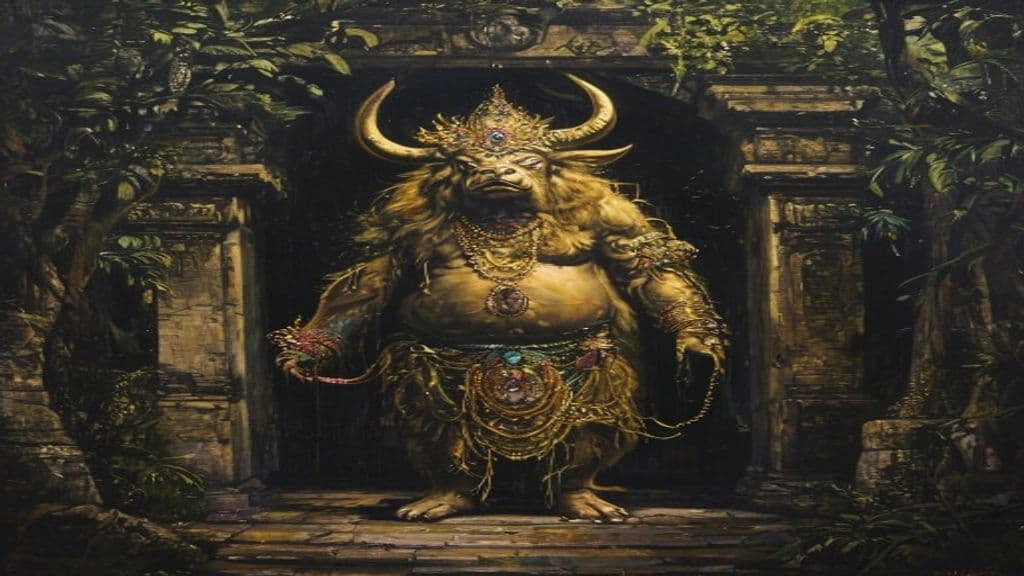
Yaksha
Nature spirits of Hindu, Buddhist, and Jain cosmology — guardians of forests, treasures, and wilderness. Ambivalent beings, capable of great benevolence to the respectful and terrible harm to the greedy.
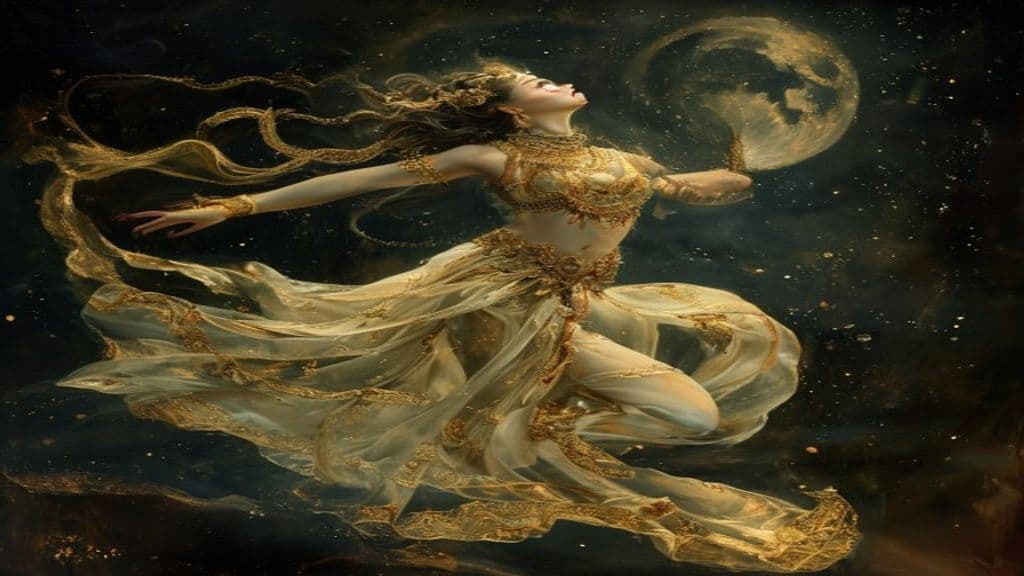
Apsara
Celestial dancers and water nymphs of Hindu cosmology — beautiful semi-divine beings who dance at the court of Indra and, by his command, descend to earth to distract sages from excessive asceticism.
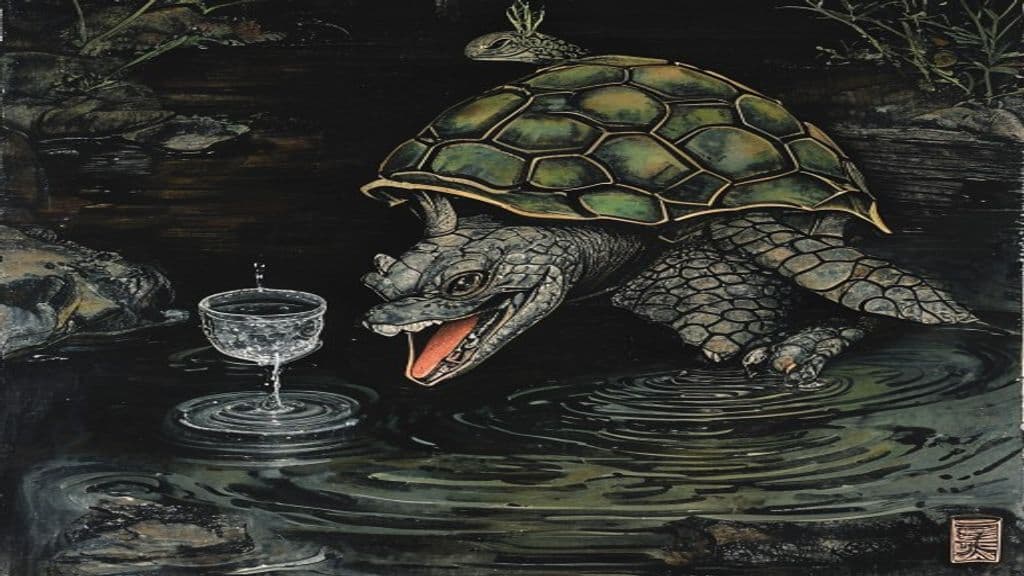
Kappa
A water-dwelling imp of Japanese folklore with a bowl of water on its head. Mischievous but bound by strict codes of politeness; dangerous near rivers.
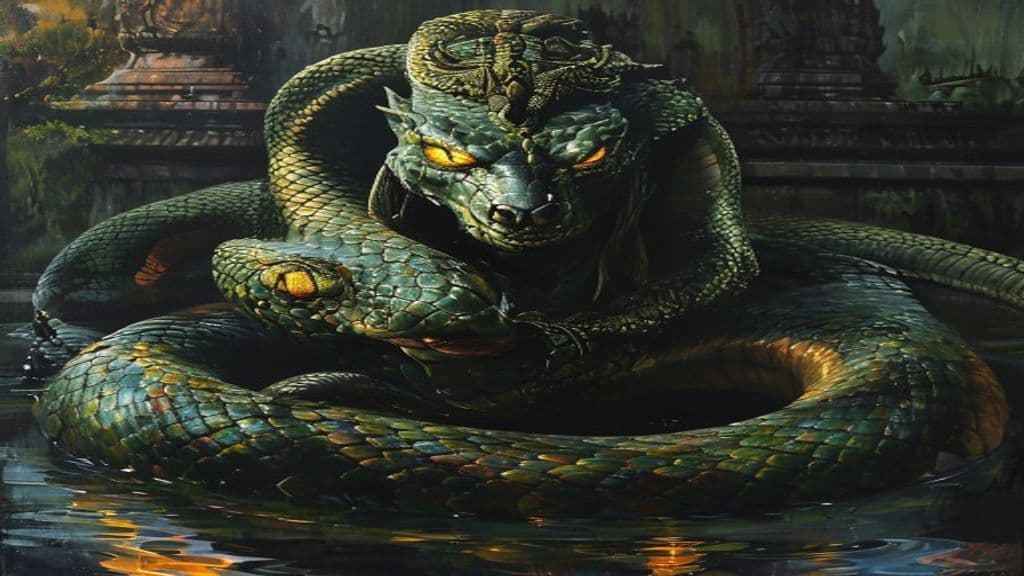
Naga
Divine serpent beings of Hindu, Buddhist, and Jain cosmology — powerful guardians of water, earth, and underground treasures. Revered as deities in South and Southeast Asia.
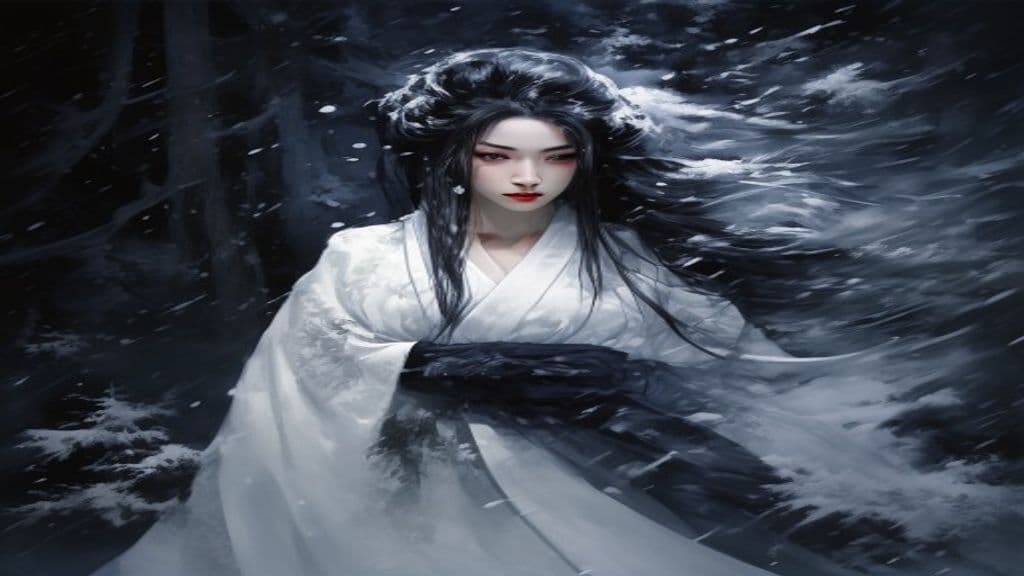
Yuki-onna
The Snow Woman of Japanese folklore — a spirit born of blizzards who appears to travelers lost in snowstorms. Beautiful and lethal, she can show mercy or bring death depending on her mood.
Acala
Acala (Sanskrit: अचल, 'The Immovable') is a wrathful protective deity (dharmapala) in Vajrayāna and East Asian esoteric Buddhism, classed among the Wisdom Kings (Vidyārāja). He functions as a ritual focus for visualization and mantra practice intended to remove obstacles and bind or destroy hostile forces.
Akshobhya
Akshobhya is a transcendent buddha of Mahāyāna and Vajrayāna Buddhism, one of the Five Wisdom (Dhyāni) Buddhas. He personifies 'mirror knowledge' (ādarśa-jñāna), is conventionally placed in the East, and is lord of the eastern Pure Land Abhirati; in esoteric texts he is associated with the eastern Vajra division and invoked in mantra/mandala ritual contexts.
Amitābha
Amitābha is a central celestial Buddha of Mahayana Buddhism who presides over the western Pure Land called Sukhāvatī. Devotional practices invoking his 'measureless' light and life (nianfo/nembutsu) are presented in Pure Land traditions as a path by which beings may be reborn in his buddhafield and quickly attain Buddhahood.
Anantacāritra
Anantacāritra (Sanskrit: अनन्तचारित्र) is a bodhisattva figure in the Lotus Sūtra, identified as one of the four great perfected bodhisattvas who attend Gautama Buddha. The name is glossed as "Boundless Practice" and, in Tiantai commentary, is read as representing eternity.
Arhat
An arhat (Sanskrit: arhat; Pāli: arahant) is in Buddhist traditions a human practitioner who has gained insight into the true nature of existence, attained nirvāṇa, and been liberated from the cycle of rebirth. The status and valuation of arhatship vary by school: some traditions equate it with full liberation, while others treat it as distinct from or inferior to the bodhisattva/buddha ideal.
Avalokiteśvara
A central Mahāyāna and Vajrayāna bodhisattva who embodies great compassion (mahākaruṇā), Avalokiteśvara hears the cries of sentient beings and manifests in many forms to relieve suffering. Venerated across South, Central, and East Asia, the figure functions devotionally (mantra and sutra recitation) and iconographically in multiple gendered and regional guises.
Bhaisajyaguru
Bhaisajyaguru (Bhaiṣajya‑guru; Medicine Buddha) is a Mahāyāna buddha associated with healing, medicine, and a pure land called Vaiḍūryanirbhāsa (Pure Lapis Lazuli). He functions as a therapeutic savior whose remedies operate through the "medicine of his teachings," vows, devotional practice, and radiance associated with lapis‑lazuli light.
Bhaiṣajyarāja (Medicine King Bodhisattva)
Bhaiṣajyarāja (Sanskrit: Bhaiṣajyarāja; Chinese: 藥王 Yào Wáng) is a Mahāyāna bodhisattva associated with healing, medicine, and supreme self‑offering. He appears in the Lotus Sūtra and in visualization/contemplation sutras and is often connected ritually and iconographically with the Medicine Buddha (Bhaiṣajyaguru) and with the paired bodhisattva Bhaiṣajyasamudgata.
Bhaiṣajyasamudgata
A Mahāyāna bodhisattva associated with the therapeutic activity of the Buddha and invoked in visualization (Guan) sūtras. He is named alongside the Medicine King (Bhaiṣajyarāja) and is the co-subject of a dedicated contemplation sūtra used in meditative-healing practice.
Bhrikuti
Bhrikuti is a historic-legendary 7th-century Nepali princess of the Licchavi line who became queen-consort to the Tibetan king Songtsen Gampo and, in Tibetan religious imagination, is represented iconographically and devotionally as an emanation or incarnation of Green Tara. Sources credit her with bringing sacred Buddhist images, skilled Newar craftsmen, and patronage that aided the establishment of Buddhism in Tibet; she is not presented in the sources as a harmful folk spirit.
Bodhisattva
A bodhisattva is a being or practitioner in Buddhist thought who has generated bodhicitta — the wish and compassionate intention to attain awakening (bodhi) for the benefit of all sentient beings. In Early/Theravāda contexts the term often denotes the Buddha in his pre‑awakening lives, while Mahāyāna expands it into an ideal and category of spiritually advanced, active helpers and devotees.
Bönpo Lu (local mountain spirits)
A research label for local mountain-associated spirits situated in Himalayan/Tibetan ritual worlds; the term as presented is not documented in detail in the supplied sources. The available materials place such landscape spirits within a broader Bön and Tibetan Buddhist milieu where mountains and local non-human agents are engaged through offerings and ritual specialists.
Community Record
- [1]Dharmapala. Wikipedia, 'Dharmapala'wiki
- [2]Dharmapala (Wikidata). Wikidata entry Q131107505other
- [3]Maha Bodhi and the United Buddhist World vol.49. Archive.org, Maha Bodhi and the United Buddhist World, vol.49other
- [4]Christianity and Buddhism: a multicultural history of their dialogue. Archive.org, Lai, 'Christianity and Buddhism: a multicultural history of their dialogue'other
- [5]Maha Bodhi and the United Buddhist World vol.47. Archive.org, Maha Bodhi and the United Buddhist World, vol.47other