
Born to Shakuntalā and King Dushyanta, Bharata (initially named Sarvadamana in some accounts) is reared in the environment associated with Sage Kanva's household; Kanva functions as his foster‑grandfather and officiant in later rites. Narrative variants in the epic and Purāṇic layers recount that, after dynastic peril and the slaying or lack of sons, Bharata secures a male heir through propitiation of the devas or through sacrificial rites mediated by sages such as Bharadvāja or Kanva. Over a mythic reign he expands and shapes a polity that, by tradition, comes to be called Bhārata after him.
Sources give only legendary markers rather than prolonged physical description. The Mahābhārata reports that as a child he bore the sign of a chakra on his right hand, read as an imperial omen. Epic and dramatised accounts ascribe prodigious bodily strength (hyperbolic phrases such as 'born with the strength of 10,000 elephants') and narrative episodes of taming wild beasts (Kalidasa's dramatization describes the young Sarvadamana opening the mouths of tigers and lions). No standardized measurements of height, complexion, or dress are provided in the cited material.
Tradition ascribes to Bharata exceptional physical prowess (legendary strength and dominion over wild animals) and exemplary royal capacities: he is depicted as a world‑conquering cakravartin who performs large-scale Vedic sacrifices to secure and display sovereignty. The Drona Parva of the Mahābhārata records that Bharata performed vast numbers of major sacrifices (explicitly: 1,800 Aśvamedha yajñas, 100 Rājasūya yajñas, and hundreds of Vajapeya yajñas) and made enormous donations, with Sage Kanva officiating his rituals. He also engages in propitiatory ritual actions to obtain an heir (a son given by the devas in one account; alternatively a son produced or blessed through sacrificial action with sage Bharadvāja in other variants). These are ritual‑political powers rather than supernatural abilities; the texts present them as legitimating acts within the Vedic/sacral order.

Bharadvaja
Bharadvaja is a canonical Vedic maharṣi (sage) and eponymous progenitor of a lineage and multiple textual corpora in ancient Indian tradition. Treated as an authoritative seer, teacher, and recipient/attributor of ritual, technical, and ethical knowledge, his name appears across Vedic, epic, Purāṇic, and Buddhist literature as an individual sage and as a clan/author label.
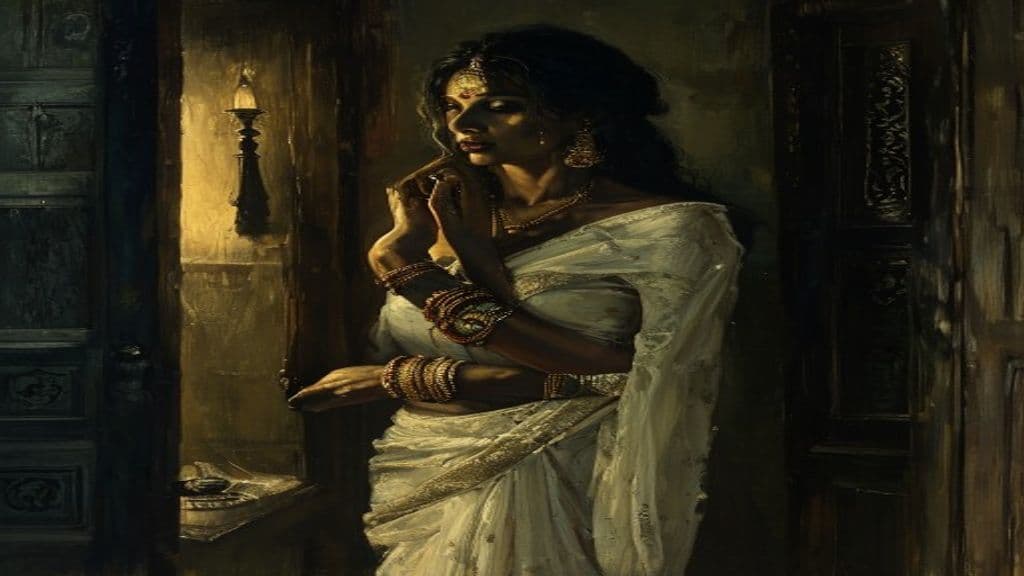
Shakchunni
Bengali ghost of a married Brahmin woman who died before her husband — identifiable by her white sari and conch-shell bangles, she possesses living married women and refuses to relinquish domestic life.
Adi (asura)
Adi is attested in modern reference works as the name of an Asura who 'appears in the Matsya Purāṇa.' Beyond this single-line citation in secondary sources, no descriptive material about the figure is provided in the supplied research notes.
Bhīma
Bhīma (Bhīmasena) is one of the principal heroes of the Hindu epic Mahābhārata: the second of the five Pāṇḍava brothers, a semi‑divine warrior famed for prodigious physical strength, mastery of the gada (mace), and ferocious devotion to family and vows. He is presented as the mythic son of the wind god Vāyu, whose divine paternity explains his extraordinary attributes and role in the Kurukṣetra War, where he slays the hundred Kaurava brothers among other foes.
Indrani
Indrani (Sanskrit: Indrāṇī), also called Śacī / Shachi and Poulomī, is the queen and consort of the Vedic and Puranic god Indra. Presented in Vedic hymns and later epic and Purānic narratives, she functions as Indra's wife, a personification of aspects of his power in some hymns, and an agentic figure in courtly celestial stories such as the Nahusha episode.
Kamadeva
Kamadeva is the anthropomorphic divine personification of the principle called kāma in Vedic and Purāṇic Hindu literature, representing desire, attraction, and the creative force of longing. He appears both as an impersonal cosmological principle in early Vedic hymns and as a named, youthful deity in later Purāṇic narratives and iconography.
Māyā Sītā (Chāyā Sītā)
Māyā Sītā or Chāyā Sītā is an illusory substitute for the goddess-heroine Sītā found in later Purāṇic and bhakti retellings of the Rāmāyaṇa. Created within the epic world by divine agency (often Agni or Rama), she functions as an ontological replica who endures the abduction and captivity in Sītā’s stead in order to preserve the real Sītā’s purity and to reconcile devotional concerns about Rama’s and Sītā’s reputations.
Bhaisajyaguru
Bhaisajyaguru (Bhaiṣajya‑guru; Medicine Buddha) is a Mahāyāna buddha associated with healing, medicine, and a pure land called Vaiḍūryanirbhāsa (Pure Lapis Lazuli). He functions as a therapeutic savior whose remedies operate through the "medicine of his teachings," vows, devotional practice, and radiance associated with lapis‑lazuli light.
Bhaiṣajyarāja (Medicine King Bodhisattva)
Bhaiṣajyarāja (Sanskrit: Bhaiṣajyarāja; Chinese: 藥王 Yào Wáng) is a Mahāyāna bodhisattva associated with healing, medicine, and supreme self‑offering. He appears in the Lotus Sūtra and in visualization/contemplation sutras and is often connected ritually and iconographically with the Medicine Buddha (Bhaiṣajyaguru) and with the paired bodhisattva Bhaiṣajyasamudgata.
Bhaiṣajyasamudgata
A Mahāyāna bodhisattva associated with the therapeutic activity of the Buddha and invoked in visualization (Guan) sūtras. He is named alongside the Medicine King (Bhaiṣajyarāja) and is the co-subject of a dedicated contemplation sūtra used in meditative-healing practice.
Bharadvaja
Bharadvaja is a canonical Vedic maharṣi (sage) and eponymous progenitor of a lineage and multiple textual corpora in ancient Indian tradition. Treated as an authoritative seer, teacher, and recipient/attributor of ritual, technical, and ethical knowledge, his name appears across Vedic, epic, Purāṇic, and Buddhist literature as an individual sage and as a clan/author label.
Bharata (Ramayana)
Bharata is the younger half-brother of Rāma in the Hindu epic Rāmāyaṇa, who refuses the throne after Rāma's exile and serves as regent of Ayodhyā from Nandigrāma, ruling in Rāma's name while living an ascetic life. In devotional and pilgrimage traditions he is also assimilated into divine schema—described in some sources as an incarnation of Viṣṇu's Panchajanya and presented among the quadruple expansion of Rāmācandra.
Bhargava (Hindu tradition)
A Brahmin race or dynasty founded by the legendary sage Bhrigu in Hindu mythology. (Note: - Power tier should be Ancient (deity-level), not Primordial, as there's no indication of cosmic powers. - Abilities section needs clarification that the source doesn't provide specific information on)
Bhasmasura
Bhasmasura is an asura in Shaiva-derived regional lore who was granted a boon by Shiva that made anyone whose head he touched with his hand instantly turn to ash (bhasma). His arrogance leads Vishnu (in the form Mohini) to trick him into placing his hand on his own head during a dance, causing him to burn himself to ashes.
Community Record
- [1]Bharata (Mahabharata) - Wikipedia. Wikipedia contributors, 'Bharata (Mahabharata)', Wikipedia, The Free Encyclopedia.wiki
- [2]The Mahabharata of Krishna-Dwaipayana Vyasa (archive). English prose translation (archival edition) of the Mahābhārata used for parva references.literary
- [3]Abhijñānaśākuntalā (dramatised account summarized). Summary of Kalidasa's dramatisation as cited in the research notes (Abhijñānaśākuntalā references to Sarvadamana's childhood exploits).literary
- [4]Skanda Purāṇa (purāṇic variants referenced). Purāṇic genealogical variants and Maruta adoption account as noted in the research summary.literary