
Bharata is born to King Daśaratha and Queen Kaikeyī as the younger half-brother of Rāma. In the narrative of the Rāmāyaṇa, when Rāma is exiled through palace intrigue, Bharata refuses to accept the kingship offered by his mother, travels to the forest to seek Rāma, and carries Rāma's sandals back to Ayodhyā to place them on the throne. Devotional and pilgrimage literature further frames him theologically as an incarnation or emanation associated with Viṣṇu (described in some sources as the Panchajanya) and as part of Rāmācandra's quadruple expansion with Lakṣmaṇa and Śatrughna in Treta-yuga.
Sources give little in the way of bodily description; narrative emphasis falls on Bharata's demeanour and dress during his regency. He is described as renouncing royal splendour—shunning riches, dressing in bark and keeping matted hair—and is depicted carrying Rāma's sandals on his head when establishing regency at Nandigrāma. Accounts highlight these ascetic signifiers rather than specific physical features.
Bharata's primary attributes are ethical and political: filial devotion, renunciation, and rightful regency. He administers Kosala from Nandigrāma for the fourteen years of Rāma's exile, performs ritual acts such as funerary libations for Daśaratha and assists Rāma at the aśvamedha, and in later/epilogue accounts is credited with dynastic foundations (sons Taksha and Pushkala ruling Takshashila and Pushkalavati) and martial episodes (e.g., vanquishing gandharvas on the Sindhu). These roles are narrative and devotional functions rather than supernatural powers.
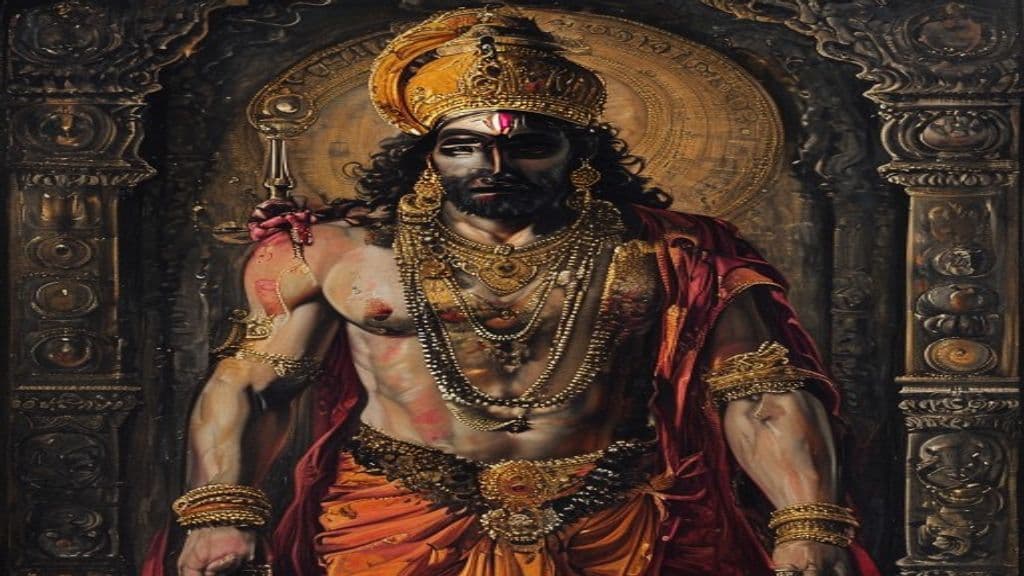
Rāma
Rāma is a major divine-hero in Hindu tradition, worshipped as the seventh avatar of Viṣṇu and the central protagonist of the Ramayana. He is portrayed both as the ideal man (maryāda puruṣottama) and, in Rama-centric sects, as the Supreme Being; his life-story (birth in Ayodhyā, 14-year exile, Sītā's abduction, and the defeat of Rāvaṇa) functions as a primary exemplar of dharma.

Lakshmana
Lakshmana is the younger half-brother and devoted attendant of Rama in the Ramayana tradition. Portrayed as an ideal companion and protector during Rama’s fourteen-year exile and the war with Ravana, the Puranas also describe him as an incarnation (avatara) of the serpent Shesha, linking him to the divine order surrounding Vishnu.
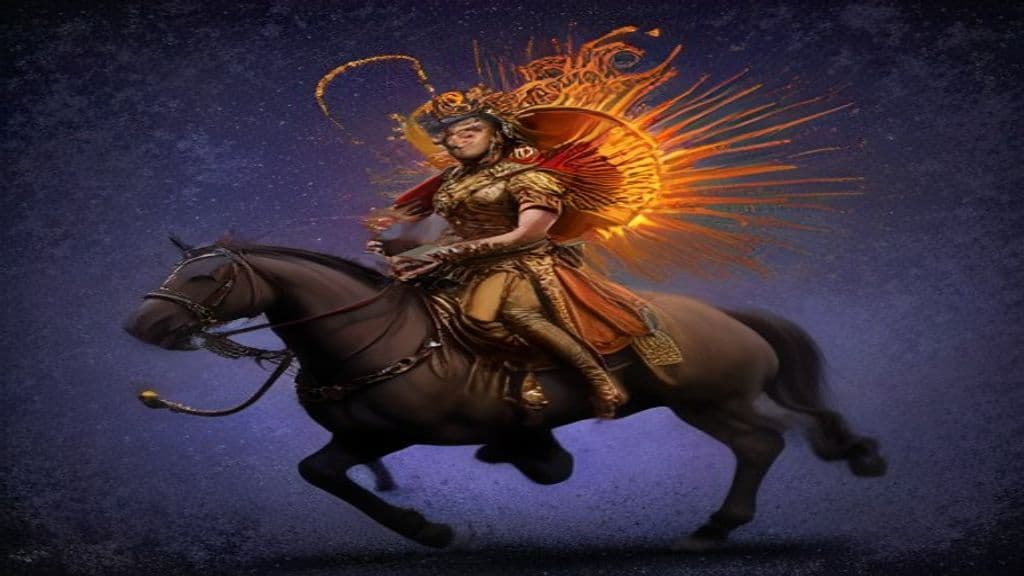
Dasharatha
Dasharatha is the king of Kosala and ruler of Ayodhya in the Ramayana tradition, father of Rama, Bharata, Lakshmana, and Shatrughna. His life in the epic ties royal duty, Vedic ritual (notably the Puthrakamesti yagnam), oath-keeping, and karmic consequence together, culminating in Rama's exile and Dasharatha's death from grief.
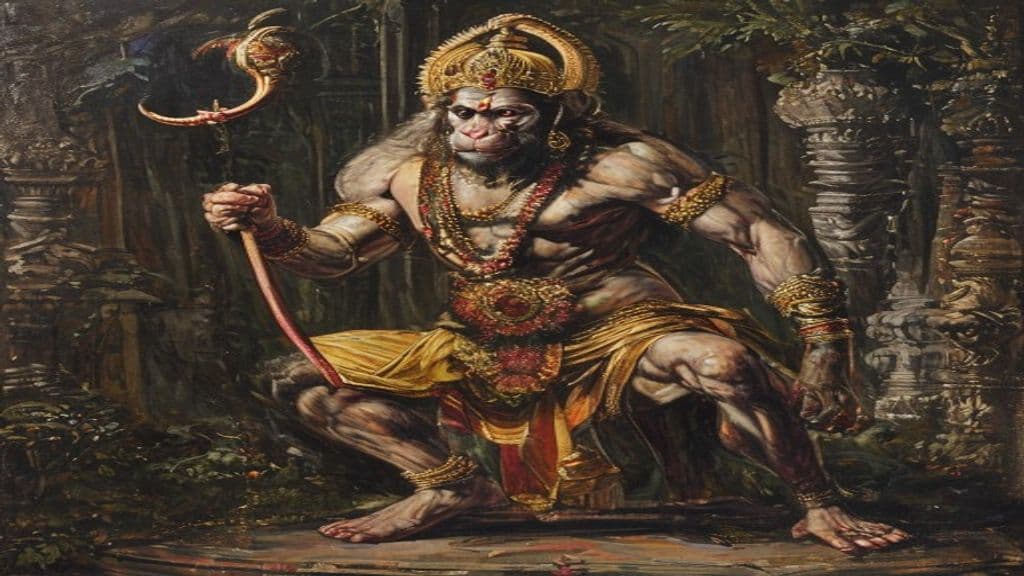
Hanuman
Hanuman is a divine vanara (monkey‑like being) in Hindu literature, foremost companion and devoted servant (Rama-dūta) of Lord Rama in the Ramayana. Revered in later Bhakti traditions, he is worshipped as a protector and exemplar of devotion, strength, and service.
Jambavan
Jambavan is a long-lived rājā of the bears in Hindu epic tradition who acts as warrior, strategist, and wise elder; he aids avatars of Vishnu (notably Rama and Krishna), appears across multiple yugas, and is associated with narrative episodes such as the Kishkindha counsel to Hanuman and the Syamantaka gem combat with Krishna.
Jaṭāyu
Jaṭāyu is a demigod in the Hindu epic the Rāmāyaṇa who takes the form of a vulture. He is presented as the younger son of Aruṇa and Shyeni, brother of Sampati, and fought Rāvaṇa in an attempt to rescue Sītā before dying of wounds; Rāma performs his final funeral rites.
Kumbhakarna
Kumbhakarna is a gigantic rakshasa featured in the Hindu epic Ramayana as a younger brother of Ravana, famed for prodigious size, an enormous appetite, great martial prowess, and a supernatural sleep pattern produced by a divine curse/boon; he recognizes Rama's divinity but fights out of loyalty and is slain by divine weapons during the war.
Bhaisajyaguru
Bhaisajyaguru (Bhaiṣajya‑guru; Medicine Buddha) is a Mahāyāna buddha associated with healing, medicine, and a pure land called Vaiḍūryanirbhāsa (Pure Lapis Lazuli). He functions as a therapeutic savior whose remedies operate through the "medicine of his teachings," vows, devotional practice, and radiance associated with lapis‑lazuli light.
Bhaiṣajyarāja (Medicine King Bodhisattva)
Bhaiṣajyarāja (Sanskrit: Bhaiṣajyarāja; Chinese: 藥王 Yào Wáng) is a Mahāyāna bodhisattva associated with healing, medicine, and supreme self‑offering. He appears in the Lotus Sūtra and in visualization/contemplation sutras and is often connected ritually and iconographically with the Medicine Buddha (Bhaiṣajyaguru) and with the paired bodhisattva Bhaiṣajyasamudgata.
Bhaiṣajyasamudgata
A Mahāyāna bodhisattva associated with the therapeutic activity of the Buddha and invoked in visualization (Guan) sūtras. He is named alongside the Medicine King (Bhaiṣajyarāja) and is the co-subject of a dedicated contemplation sūtra used in meditative-healing practice.
Bharadvaja
Bharadvaja is a canonical Vedic maharṣi (sage) and eponymous progenitor of a lineage and multiple textual corpora in ancient Indian tradition. Treated as an authoritative seer, teacher, and recipient/attributor of ritual, technical, and ethical knowledge, his name appears across Vedic, epic, Purāṇic, and Buddhist literature as an individual sage and as a clan/author label.
Bharata (Mahābhārata)
Bharata (Sanskrit: भरत) is a legendary human emperor and ancestral king in the Indic epic tradition. Portrayed as a cakravartin‑type sovereign and progenitor, his deeds, rituals, and lineage provide an eponymous foundation for the name Bhārata and for later dynastic identity.
Bhargava (Hindu tradition)
A Brahmin race or dynasty founded by the legendary sage Bhrigu in Hindu mythology. (Note: - Power tier should be Ancient (deity-level), not Primordial, as there's no indication of cosmic powers. - Abilities section needs clarification that the source doesn't provide specific information on)
Bhasmasura
Bhasmasura is an asura in Shaiva-derived regional lore who was granted a boon by Shiva that made anyone whose head he touched with his hand instantly turn to ash (bhasma). His arrogance leads Vishnu (in the form Mohini) to trick him into placing his hand on his own head during a dance, causing him to burn himself to ashes.
Bhavānī
Bhavānī (भवानी) is an aspect/epithet of the Hindu Mother Goddess (Devī/Shakti) revered as a giver of life and a warrior who defeats demons; she is both a cultic tutelary deity (notably at Tulja Bhavani, Tuljapur) and a pan-Indian manifestation identified with forms such as Durgā, Katyayani and Mahalakshmi in the cited sources.
Bheru (Bhairu)
No supplied sources describe Bheru/Bhairu as a supernatural being in Rajasthani folk belief. The element "Bheru" appears only in personal names and place-name materials in the provided documents; there is no ethnographic or folkloric description of an entity by this name in the source set.
Community Record
- [1]Bharata (Ramayana) - Wikipedia. Wikipedia contributors, 'Bharata (Ramayana)', Wikipedia, The Free Encyclopediawiki
- [2]Bharata (Ramayana) - Wikipedia (alternate link). Wikipedia contributors, 'Bharata (Ramayana)', Wikipedia, The Free Encyclopediawiki
- [3]Sri Ayodhyā Dhama Yatra (Archive). Sri Ayodhyā Dhama Yatra (pilgrimage/devotional guide)literary