
Folktales and compendia portray the ceasg as a water-dwelling female figure of Scottish tradition who inhabits sea, rivers and streams. Scholarly commentary preserved in the collected sources (Donald MacKenzie) suggests an interpretive hypothesis that the figure may derive from an older sea-goddess cult to which humans were once sacrificed; this suggestion is presented as scholarly interpretation in the secondary literature rather than as an origin narrative recorded in the tales themselves.
Standard accounts describe the ceasg as having the upper body of a beautiful woman with long flowing hair and a fish tail — specifically likened to the tail of a grilse (a young salmon). Variant tales describe a form large enough to swallow a human whole; these monstrous versions retain the woman/fish morphology but are notable in the narratives for their capacity to enclose living people within the mermaid's stomach.
Tale-material records several recurrent motifs: a captured ceasg can be made to grant three wishes; ceasgs may marry humans and produce descendants (maritime families and pilots are sometimes reputed to descend from such unions); even after returning to the water a ceasg in stories will take an interest in and protect her human descendants (guiding to good fishing grounds, protecting in storms). In some narratives a ceasg swallows people alive; these tales include a motif where her life-force is externalized in a special egg, and destroying that egg kills her. Music (a harp) is recorded in a tale as capable of charming or pacifying her long enough for an escaped captive to exit her body. A wizard figure appears in narratives as the adviser who instructs a hero to find and destroy the life-egg.
Weaknesses
- otherexternal life-seat (special egg)
- othersusceptibility to musical charm (harp in narrative)
Wards
- ritualcapture to compel wishes
- ritualdestruction of the life-egg (narrative method to kill monstrous ceasg)
- ritualharp-music pacification (temporary charm used in a tale)
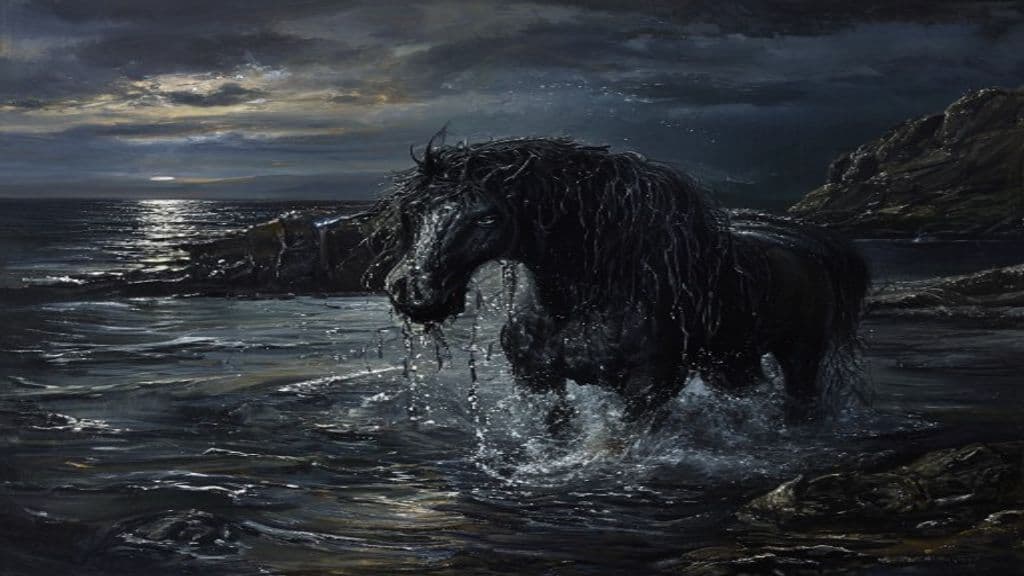
Each-Uisge
The most dangerous water horse in Scottish Highland folklore — haunting sea-lochs and mountain lakes, more violent than the river kelpie, known for consuming its victims whole.
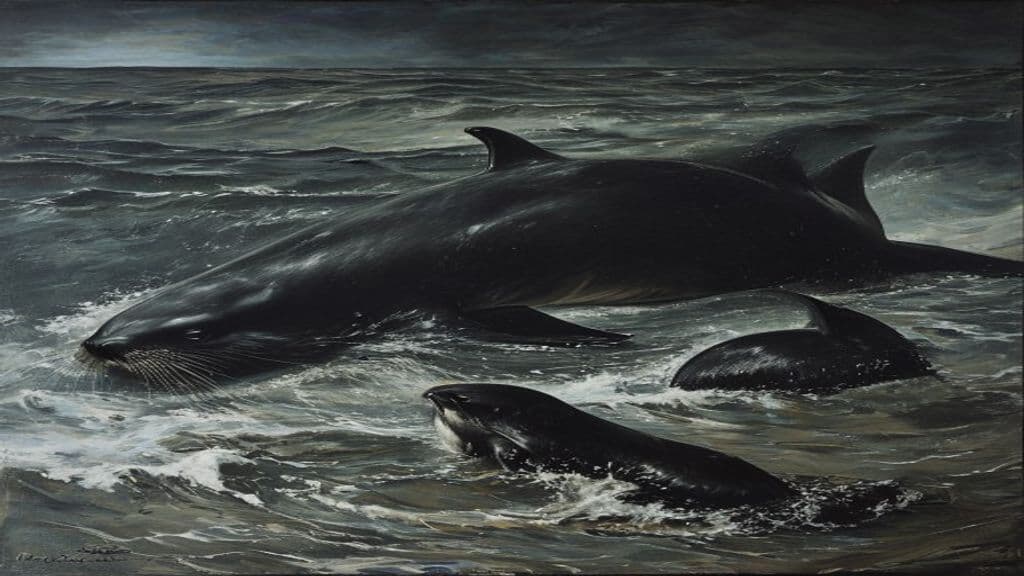
Selkie
A seal-being from northern Atlantic coastal folklore said to shift between seal and human forms by removing or donning a seal skin. Tales focus on intimate relations with humans, the selkie's longing for the sea, and the narrative motif of a hidden skin that prevents return to the ocean.
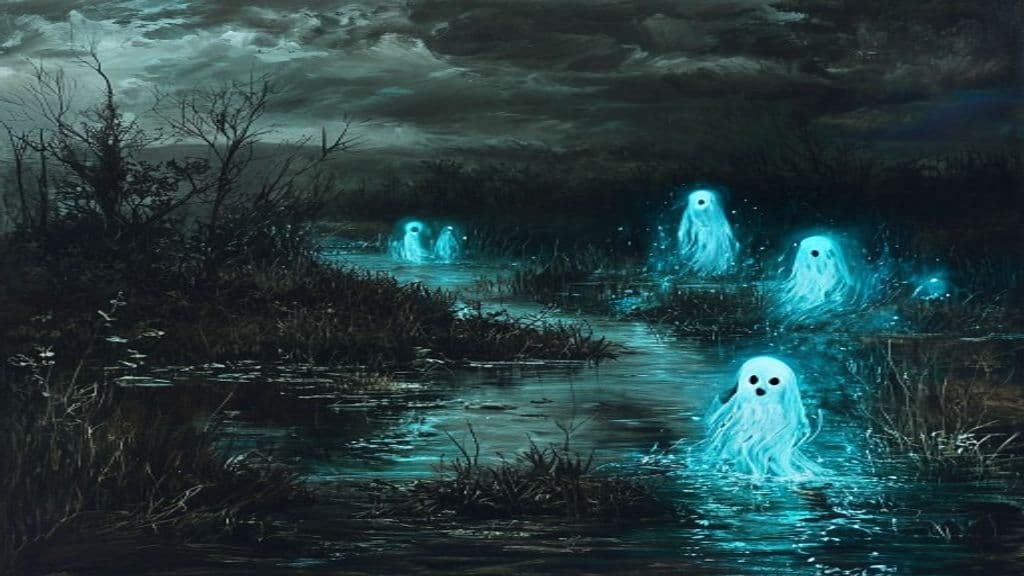
Will-o'-the-Wisp
A wandering light seen over marshy ground at night, leading travellers astray into bogs and fens. Possibly a spirit, possibly the soul of the unbaptised dead, possibly the devil himself.
Aos Sí
Aos Sí are a broad class of supernatural beings in Gaelic (Irish and Scottish) folklore associated with the mounds and liminal places of the landscape. They are variously described as descendants or later forms of the Tuatha Dé Danann, ancestral or nature spirits, or otherworldly folk who coexist with humans and can be helpful or dangerous when offended.
Bauchan
A household-associated hobgoblin from Scottish Highland folklore, the bauchan is portrayed as ambivalently belligerent and helpful; in at least one recorded tale it accompanies a human household across the Atlantic and can shapeshift into a goat.
Beithir
In Scottish Gaelic tradition the beithir is a very large snakelike creature—often called a serpent or dragon—associated with mountains, corries and bodies of water. It is portrayed as venomous and deadly in local tales, linked in etymology and interpretation to lightning/thunderbolt imagery, and classed among water-associated monsters (fuath).
Biasd Bheulach
A named monster or spirit reported in Scottish folklore as haunting the Odal (Odal) Pass on the Isle of Skye. Attested primarily as a place‑bound uncanny being in modern summaries and lists of Scottish folk creatures, the entity is recorded with very limited detail in the cited sources.
Bodach
A Gaelic folkloric personage literally meaning "old man" (Old Irish botach) who functions variously as a trickster, bogeyman, household figure and — in some accounts — an omen of death (Bodach Glas). The term also carries historical social meanings (tenant/peasant) and is sometimes identified with higher mythic figures (e.g., Manannán mac Lir) in specific tales.
Brownie
A household spirit from Scottish and related British traditions that performs nocturnal domestic labour in return for small offerings left by the hearth. Brownies are protective, place-tied domestic beings who work while humans sleep and will depart or become mischievous if offended.
Cat sìth
A feline supernatural being in Celtic folklore, especially Scottish tradition, described in some accounts as a large black cat with a white spot on its chest associated with the fairy/otherworld; alternative traditions identify it as a witch able to transform into a cat up to nine times.
Church Grim
A site-bound guardian spirit in English, Scottish and Nordic/Scandinavian folklore that watches over an individual Christian church and its churchyard, defending the consecrated ground from profanation and hostile spirits. Forms and origin accounts vary by region, including a large black dog in English tradition, the bound spirit of an animal (often a lamb) in Scandinavian accounts, and in some Scottish strands the spirit of the most recently buried person acting as a temporary watcher.
Glaistig
A figure from Scottish folklore variously described as a Green Lady, house/estate spirit, herding guardian or a dangerous female lure. Traditions portray the glaistig as ambivalent—beneficent when respected (protecting cattle, households, or bestowing favors) and harmful when offended (luring men, injuring travellers).
Goblin
A class of small, often grotesque humanoid beings in European folk belief that range from household helpers to tricksters and violent figures. Goblins occupy liminal spaces—hearths, cellars, ruins and wild places—and their behavior toward humans depends on region, story, and reciprocal treatment.
Linton Worm
A serpent-like monstrous "worm" from Scottish Borders folklore associated with a hollow on Linton Hill; traditionally described as a large wyrm that ravaged people, livestock and crops and was overcome in a heroic confrontation. The legend is presented in sources as medieval in origin and comparable to other British worm/dragon tales such as the Lambton Worm.
Loch Ness Monster
A persistent anomalous large animal-like presence said to inhabit Loch Ness in the Scottish Highlands, popularly nicknamed 'Nessie'. It occupies a space between older Celtic water-beast motifs and a modern media-amplified cryptid and tourist symbol, with episodic sightings, disputed photographs, and sonar claims since the early 20th century.
Community Record
- [1]Ceasg - Wikipedia. Wikipedia contributors. "Ceasg." Wikipedia, The Free Encyclopedia.wiki
- [2]Ceasg (Wikidata). Wikidata entry for Ceasg (Q5055767).other
- [3]Ceasg: The Terrifying Scottish Mermaid Of Folklore | Spooky Isles. Spooky Isles. "Ceasg: The Terrifying Scottish Mermaid Of Folklore."folk
- [4]The Ceasg, the Saltire and the Thistle – More Scottish Legends | Culloden Battlefield. Culloden Battlefield blog. "The Ceasg, the Saltire and the Thistle – More Scottish Legends."folk
- [5]Myths, gods & fantasy (compendium). Compiled folklore/myth compendium listing ceasg among other mythic creatures.other