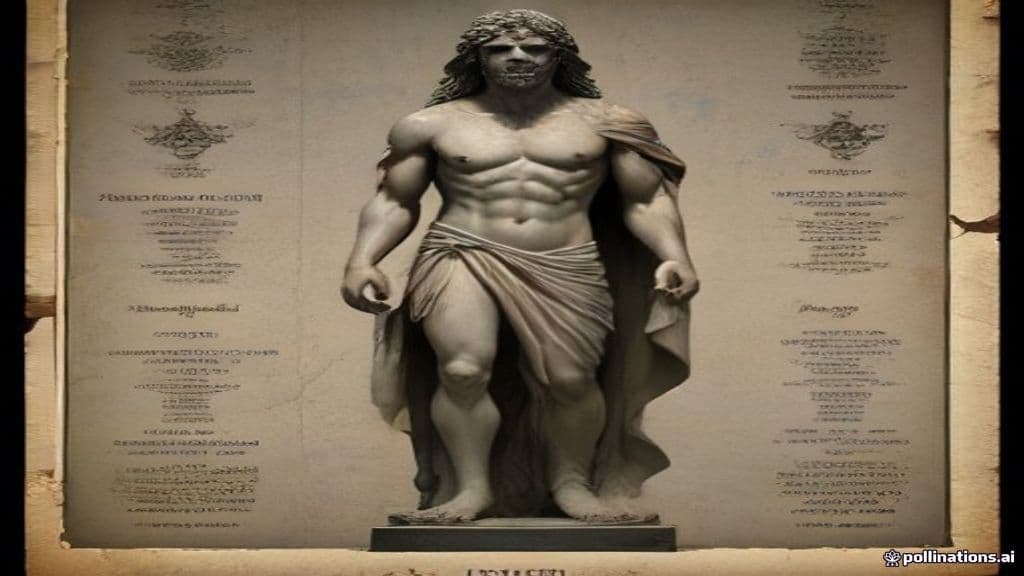
In the surviving literary tradition Boeotus is presented as an eponymous founder associated with the land later called Boeotia. The most commonly attested genealogy makes him a son of the god Poseidon and the woman Arne; variant accounts present a different Boeotus as son of Itonus and the nymph Melanippe. Some sources further connect Boeotus to local figures such as Onchestus (named as a son in some traditions). These accounts place him in mythic prehistory as the ancestor through whom regional name and descent are explained.
No surviving passages in the cited sources provide a physical description of Boeotus. Ancient authors who preserve his genealogy do not record details of his height, garments, or distinguishing bodily features; extant material treats him as a named ancestral figure rather than a visually depicted being.
The cited sources attribute no supernatural powers, recurring spirit-activity, or cultic functions to Boeotus. His role in the tradition is genealogical and toponymic: he transmits lineage and serves as eponym for the Boeotians. He is not described performing miracles, magic, or punitive acts in the provided material.
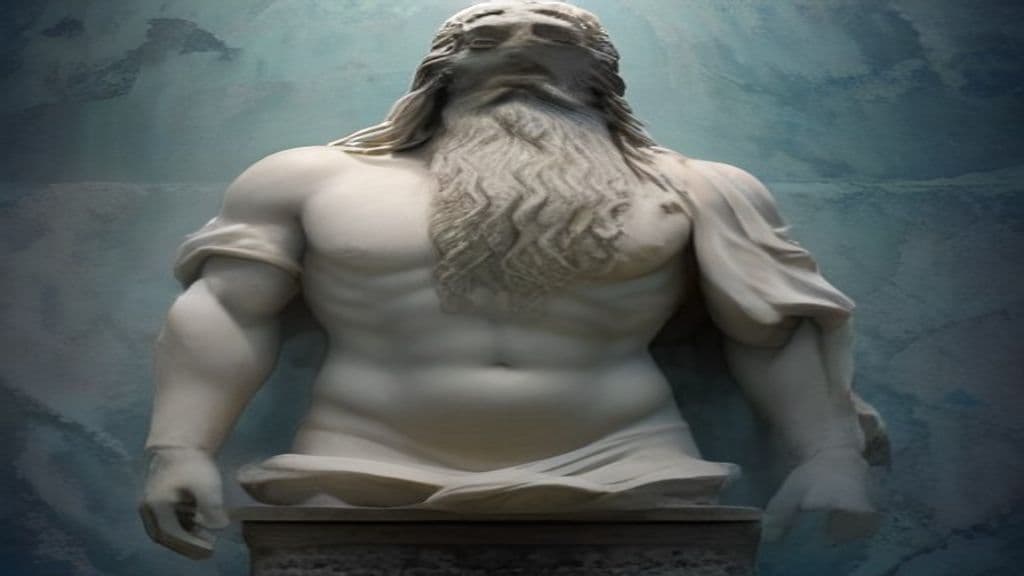
Poseidon
Poseidon is a principal deity of the ancient Greek pantheon, counted among the Twelve Olympians; he presides over the sea, storms, earthquakes and horses and functions as protector of seafarers and guardian of cities and colonies.
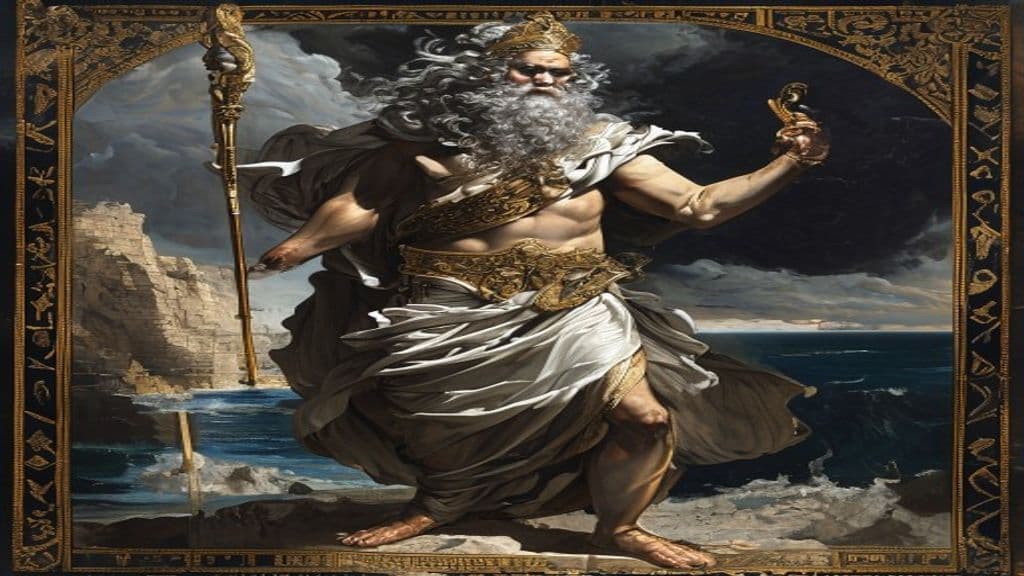
Aeolus
Aeolus is a name applied to multiple related figures in Greek myth: an eponymous son of Hellen (founder of the Aeolian people), a son of Poseidon who led colonial ventures to Tyrrhenian islands, and a son of Hippotes depicted in epic as a ruler or keeper of the winds. Ancient mythographers note confusion and overlap among these persons.
Argeia (Argia / Argea)
Argeia (Ancient Greek Ἀργεία; variants Argia, Argea) is primarily attested as a mortal name in Greek mythic genealogies — notably a daughter of Adrastus of Argos, wife of Polynices and mother of Thersander, Adrastus, and Timeas. The lexical form Argeia is also used in modern scientific taxonomy as a genus of parasitic isopods and as a species epithet (e.g., Chimarra argeia) in entomology.
Batea of Troad
Batea (Ancient Greek: Βάτεια) is a mythic female ancestor and eponym in early Greek accounts tied to the foundation myths of the Trojans/Dardanians. Presented as a member of the Teucrian royal house and consort of Dardanus, she is credited with giving her name to a hill in the Troad and to the town Bateia and functions mainly to link genealogical descent and territorial claims.
Chaetus
Chaetus (Ancient Greek: Χαῖτος) is a mortal figure in Greek mythic genealogies identified as one of the sons of King Aegyptus. He is best known as one of the Aegyptid princes who married a daughter of Danaus (Asteria) and was slain on his wedding night along with most of his brothers.
Chlorus
Chlorus is a mythic genealogical figure attested in brief classical/compilatory sources of Greek tradition. He appears as a link in a lineage (son of Pelasgus, father of Haemon, ancestor of Thessalus) used etiologically to connect eponyms such as Haemonia and Thessaly to named progenitors.
Eurymede
Eurymede (Ancient Greek Εὐρυμήδη / Εὐρυμέδη, romanized Eurumēdē / Eurymēdē) is a personal name borne by mortal women in Greek mythic genealogies. In the sources provided she appears as a human matron or princess whose familial relationships connect her to heroes (notably Bellerophon) or to the daughters of Oeneus (the Meleagrides).
Orestheus
Orestheus is a mythic founder-figure in Greek tradition appearing in variant genealogies as either a son of Deucalion and Pyrrha associated with the Ozolian Locrians of Aetolia (noted for a vine-origin wonder-tale) or as one of the fifty sons of Lycaon credited with founding Oresthasion/Oresteion in Arcadia. He functions as an eponymic ancestral figure used to explain place-names and tribal identities.
Philomache (Phylomache)
Philomache (Ancient Greek: Φυλομάχη), also spelled Phylomache, is a mythological mortal woman appearing in classical Greek genealogical traditions as a Minyan princess of Orchomenus who in some accounts is named as the wife of Pelias of Iolcus and mother of Acastus and several daughters. She functions as a dynastic link in heroic-age family networks rather than as a supernatural being.
Phocus of Aegina
Phocus of Aegina is a mythic mortal prince of the Aeacid house, named in classical summaries and genealogies as a son of King Aeacus of Aegina and Psamathe. In the supplied sources he functions as a genealogical and political figure within the heroic-age network of kings rather than as a supernatural being or cultic figure.
Polycaste
Polycaste (Ancient Greek: Πολυκάστη) is the proper name borne by several distinct mortal women in Greek myth and genealogical tradition. The name is used for different princesses and household women (daughter, sister, wife, mother) who appear in separate narrative and genealogical contexts rather than denoting a single supernatural being.
Theronice
Theronice (Ancient Greek: Θηρονίκη) is an Olenian princess in Greek mythic genealogies, daughter of King Dexamenus, twin sister of Theraephone, wife (in some traditions) of one of the Molionides and mother of Amphimachus. She is presented in sources as a mortal genealogical figure whose primary function is to link families and heroic lineages in the Peloponnese.
Thestius
Thestius (Ancient Greek: Θέστιος) is a mythic, mortal king of Pleuron in Aetolia appearing in Greek genealogical and local‑hero traditions. He functions primarily as a dynastic ancestor and regional ruler whose family and political actions connect several better‑known heroic cycles, and some variants link him etiologically to a river‑name and a tragic domestic death.
Body of Light
A layered-humanity concept from classical Neoplatonism through Renaissance and later esoteric traditions: a quasi-material luminous vehicle (also called the astral or subtle body) that mediates between the physical body and the divine, enabling ascent through planetary/heavenly spheres and serving as the carrier of certain mental faculties.
Community Record
- [1]Boeotus (son of Poseidon) — Wikipedia. Wikipedia, article 'Boeotus (son of Poseidon)'wiki
- [2]Boeotus — Attalus name-index. Attalus: 'Boeotus - in ancient sources'other
- [3]Diodorus Siculus, Library of History, Book IV (ch. passages). Diodorus Siculus, Library of History, Book IV (passages on genealogies and local founders)literary
- [4]Boeotus — Wikipedia (general Boeotus entry). Wikipedia, article 'Boeotus'wiki
- [5]Who's Who in Classical Mythology (reference handbook). Grant, 'Who's Who in Classical Mythology' (reference summary entries)other