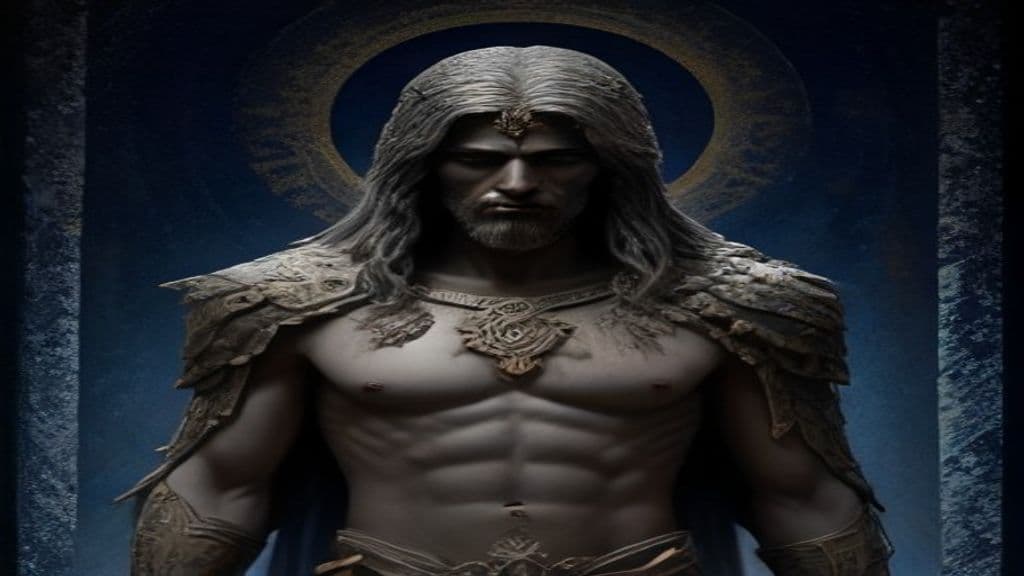
Classical sources and later summaries present Thestius as a king of the Pleuronians in Aetolia who belongs to the heroic generation. He appears in varying genealogical accounts: he is cited as father of notable figures (for example Althaea and Leda) and as a dynastic link between local houses (Pleuron/Calydon) and broader heroic networks. Multiple traditions record differing names for his wife and mothers of his children, reflecting variant local genealogies rather than a single canonical origin.
Ancient excerpts and summaries provide no physical description or iconography for Thestius. He is represented in the literary record through his kinship, political role, and narrative actions rather than by defined bodily attributes.
No supernatural powers or magic are ascribed to Thestius in the supplied sources. His capacities are social and political: he rules as king of the Pleuronians; he fathers children (including Althaea and Leda) who figure in other myths; he acts as ally and patron (for example aiding Tyndareus and Icarius in acquiring lands across the Acheloüs on condition of shared possession); and in at least one variant (reported from Plutarch) he commits a tragic domestic homicide and subsequently drowns himself, producing an etiological explanation for a river name. His agency is mortal, dynastic, and tragic rather than supernatural.
Weaknesses
- conditionmortal vulnerability (liable to error and grief as attested in tragic variant)
Wards
None recorded.
Typhon
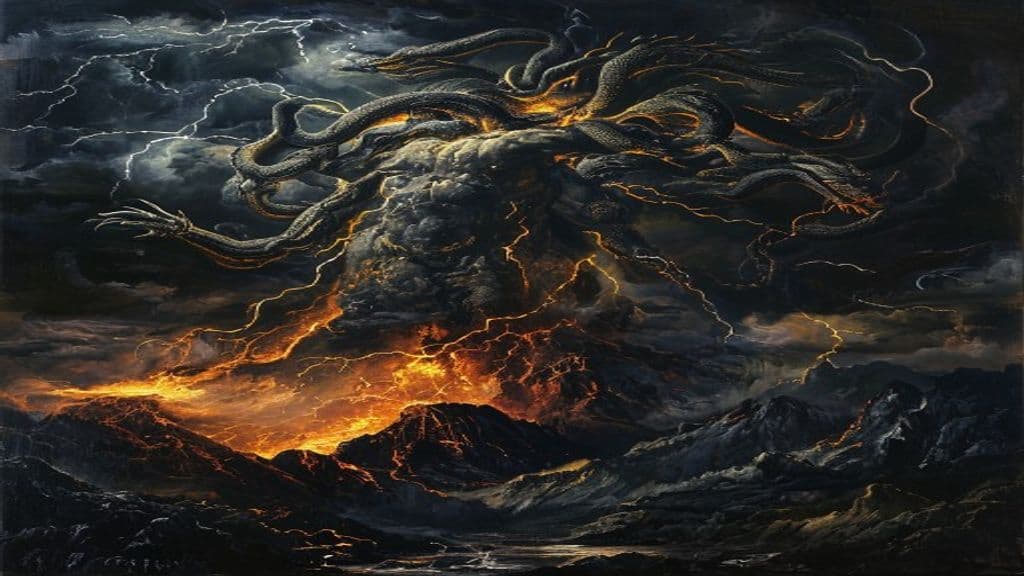
The last great monster of Greek mythology — a vast, fire-breathing giant whose shoulders sprouted a hundred serpent heads, nearly toppling Zeus from Olympus.
Erlking
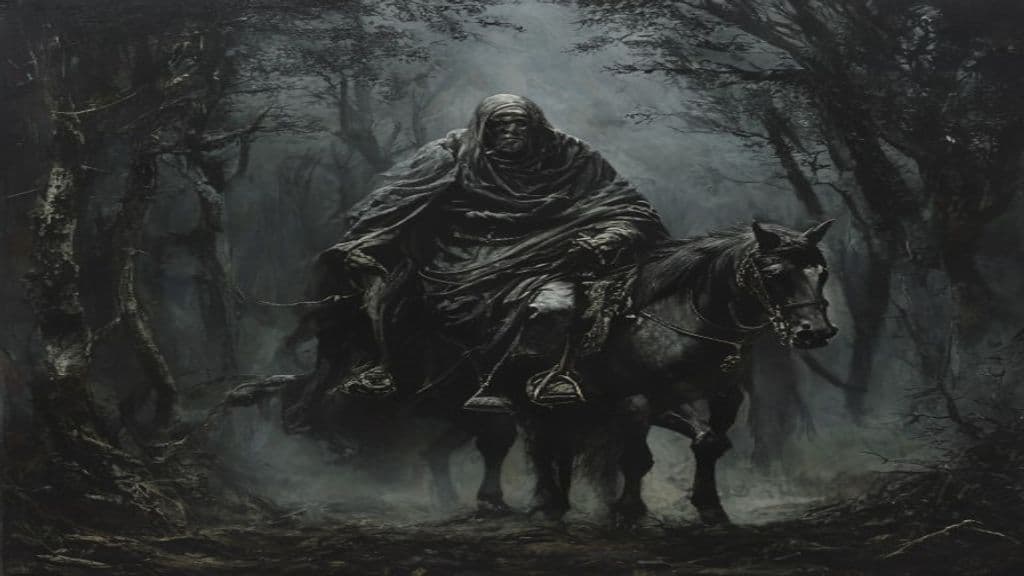
A sinister Germanic spirit of forest and mist who takes children — appearing to them as a welcoming figure while adults see nothing, the child dying in its parent's arms.

Jann
The weakest class of djinn in Islamic tradition, associated with desert winds and taking the form of snakes or whirlwinds, dwelling in empty wilderness and posing little threat to those who know the proper invocations.
Djinn
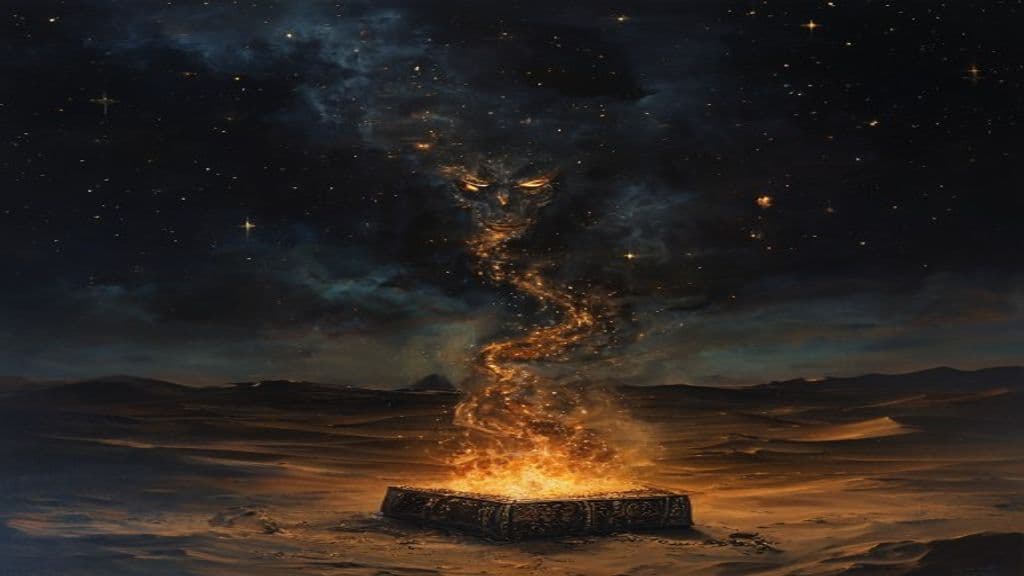
The class of supernatural beings created from smokeless fire in Islamic cosmology — a parallel civilization to humanity, capable of belief or unbelief, with their own prophets, society, and judgment before God.
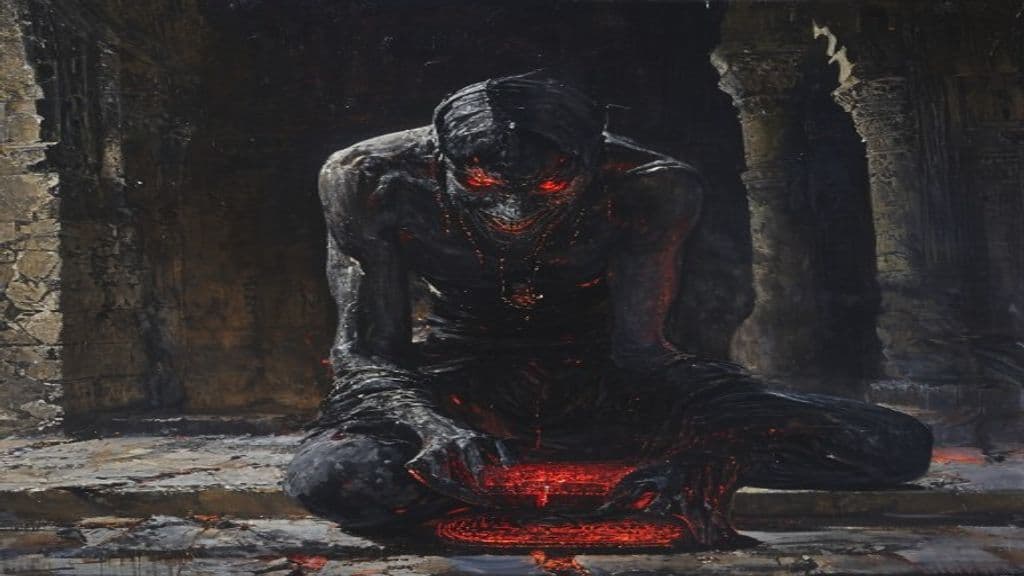
Shaitan
A class of corrupted djinn who follow Iblis and dedicate themselves to leading humans astray — distinct from Iblis himself, the Shayatin are a species of evil djinn who whisper doubts and temptations into the minds of the living.
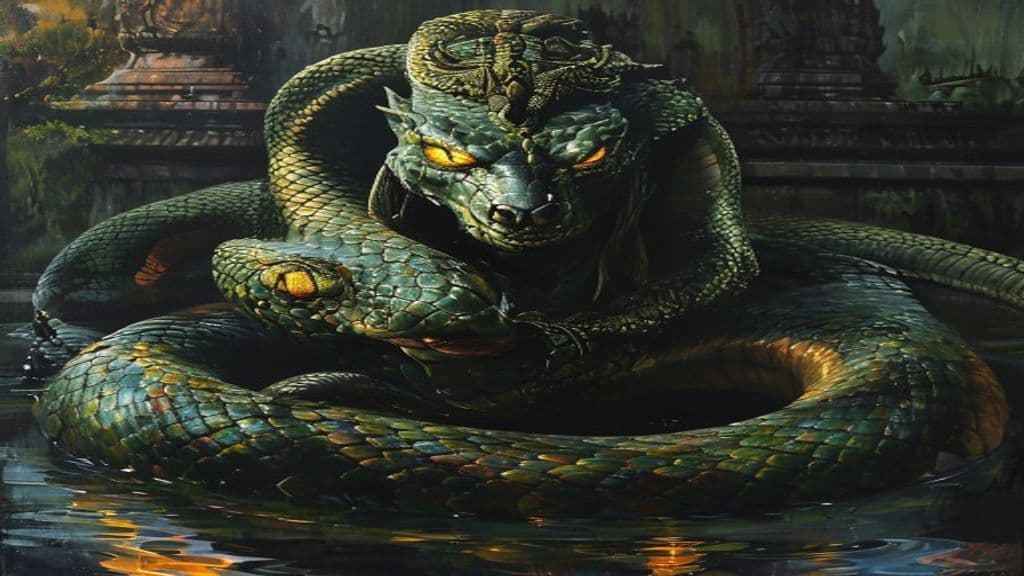
Naga
Divine serpent beings of Hindu, Buddhist, and Jain cosmology — powerful guardians of water, earth, and underground treasures. Revered as deities in South and Southeast Asia.
Argeia (Argia / Argea)
Argeia (Ancient Greek Ἀργεία; variants Argia, Argea) is primarily attested as a mortal name in Greek mythic genealogies — notably a daughter of Adrastus of Argos, wife of Polynices and mother of Thersander, Adrastus, and Timeas. The lexical form Argeia is also used in modern scientific taxonomy as a genus of parasitic isopods and as a species epithet (e.g., Chimarra argeia) in entomology.
Batea of Troad
Batea (Ancient Greek: Βάτεια) is a mythic female ancestor and eponym in early Greek accounts tied to the foundation myths of the Trojans/Dardanians. Presented as a member of the Teucrian royal house and consort of Dardanus, she is credited with giving her name to a hill in the Troad and to the town Bateia and functions mainly to link genealogical descent and territorial claims.
Boeotus (son of Poseidon)
Boeotus is a mythic eponymous ancestor in Greek tradition credited with giving his name to the region and people of Boeotia. He appears in genealogical accounts as a son of Poseidon (often with Arne) or in variant traditions as son of Itonus and the nymph Melanippe, functioning chiefly as a founding ancestor rather than an active cultic or supernatural agent.
Chaetus
Chaetus (Ancient Greek: Χαῖτος) is a mortal figure in Greek mythic genealogies identified as one of the sons of King Aegyptus. He is best known as one of the Aegyptid princes who married a daughter of Danaus (Asteria) and was slain on his wedding night along with most of his brothers.
Chlorus
Chlorus is a mythic genealogical figure attested in brief classical/compilatory sources of Greek tradition. He appears as a link in a lineage (son of Pelasgus, father of Haemon, ancestor of Thessalus) used etiologically to connect eponyms such as Haemonia and Thessaly to named progenitors.
Eurymede
Eurymede (Ancient Greek Εὐρυμήδη / Εὐρυμέδη, romanized Eurumēdē / Eurymēdē) is a personal name borne by mortal women in Greek mythic genealogies. In the sources provided she appears as a human matron or princess whose familial relationships connect her to heroes (notably Bellerophon) or to the daughters of Oeneus (the Meleagrides).
Orestheus
Orestheus is a mythic founder-figure in Greek tradition appearing in variant genealogies as either a son of Deucalion and Pyrrha associated with the Ozolian Locrians of Aetolia (noted for a vine-origin wonder-tale) or as one of the fifty sons of Lycaon credited with founding Oresthasion/Oresteion in Arcadia. He functions as an eponymic ancestral figure used to explain place-names and tribal identities.
Philomache (Phylomache)
Philomache (Ancient Greek: Φυλομάχη), also spelled Phylomache, is a mythological mortal woman appearing in classical Greek genealogical traditions as a Minyan princess of Orchomenus who in some accounts is named as the wife of Pelias of Iolcus and mother of Acastus and several daughters. She functions as a dynastic link in heroic-age family networks rather than as a supernatural being.
Phocus of Aegina
Phocus of Aegina is a mythic mortal prince of the Aeacid house, named in classical summaries and genealogies as a son of King Aeacus of Aegina and Psamathe. In the supplied sources he functions as a genealogical and political figure within the heroic-age network of kings rather than as a supernatural being or cultic figure.
Polycaste
Polycaste (Ancient Greek: Πολυκάστη) is the proper name borne by several distinct mortal women in Greek myth and genealogical tradition. The name is used for different princesses and household women (daughter, sister, wife, mother) who appear in separate narrative and genealogical contexts rather than denoting a single supernatural being.
Theronice
Theronice (Ancient Greek: Θηρονίκη) is an Olenian princess in Greek mythic genealogies, daughter of King Dexamenus, twin sister of Theraephone, wife (in some traditions) of one of the Molionides and mother of Amphimachus. She is presented in sources as a mortal genealogical figure whose primary function is to link families and heroic lineages in the Peloponnese.
Thessalus
Thessalus is an ancient Greek personal name applied to multiple mythic and historical men who function as eponyms, local founders, or notable professionals (actor, physician). The name (Ancient Greek Θεσσαλός, 'Thessalian man') appears across genealogical traditions tying figures to Thessaly, in classical theatrical records, and in histories of medicine referring to the Methodic school.
Community Record
- [1]Thestius — Wikipedia. Wikipedia, 'Thestius' entry (summary of classical sources)wiki
- [2]The Library of Apollodorus (Argonautica material) — Archive LP0080. Archive: LP0080 - VI Argonauts - Jason & The Argonauts, from The Library of Apollodorus (collections referencing genealogies)literary
- [3]Intro to the Argonauts — Archive LP0031. Archive: LP0031 Intro to the Argonauts (compilation material summarizing heroic genealogies)literary
- [4]Thebes & Thespius — Archive LP0056. Archive: LP0056 Thebes & Thespius (compilation referencing overlapping heroic genealogies)literary
- [5]Plutarch (summarized variant on Thestius and the river Axenos). Summary of Plutarch variant in provided research notes describing the misrecognition, the slaying of his son Calydon, and subsequent drowning into the river Axenos (afterwards called Thestius)literary
- [6]Greek Legends and Myths — Thestius. Online compilation of Greek mythic genealogies (Thestius entry)other