No origin story or cosmogonic narrative for Buga is recorded in the supplied materials. The consulted sources identify Buga only as a named heavenly deity within Evenki belief (Wikipedia disambiguation entry) and as a supreme sky god in a short popular summary (Godchecker). Beyond those terse identifications, the provided excerpts offer no ethnographic or mythic account of Buga's birth, genealogy, or role in creation.
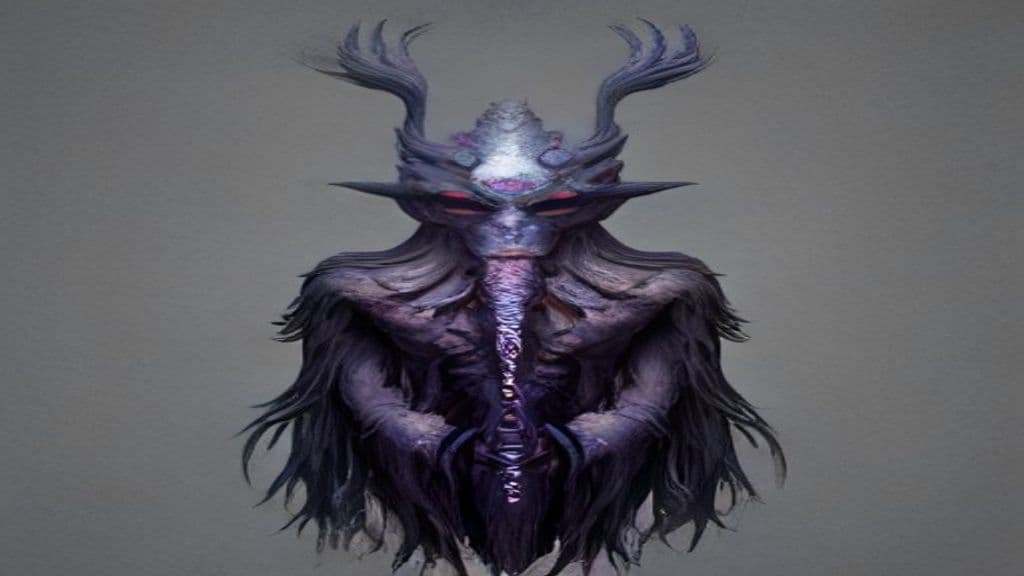
The provided sources do not describe any physical appearance, iconography, anthropomorphic or zoomorphic form for Buga. The entity is referenced solely by function/name in the brief summaries consulted; whether Buga is visualized, represented in material culture, or remains an entirely non-anthropomorphic celestial force is not attested in the available excerpts.
The only attested attribute in the sources is Buga's association with the sky/heaven and, in one popular summary, designation as a 'supreme god.' The supplied materials do not enumerate specific powers, actions, or narratives (for example creation, judgment, weather control, or moral enforcement). Any further statements about abilities would be conjectural and are not supported by the cited excerpts.
Weaknesses
- otherNo information in provided sources
Wards
- otherNo information in provided sources
Budha
Budha (Sanskrit: बुध) is the personification of the planet Mercury in Indian astronomical and astrological tradition. He functions both as the observed planetary body whose motions are recorded in classical Sanskrit astronomical texts and as a navagraha deity associated with intelligence, memory, and the weekday Budhavara (Wednesday).
Budini
The Budini (Ancient Greek Βουδῖνοι) are recorded in Graeco-Roman ethnographic sources as a human tribal people of the forest‑steppe north of the Black Sea, associated with the Vorskla river valley and the multiethnic city of Gelonus in the first millennium BC. Classical accounts portray them as a hunting-dependent, linguistically distinct group noted for red hair and blue eyes; some archaeological interpretations tentatively link them to anomalous mortuary deposits.
Budli (Buðli)
Budli (Old Norse Buðli) is a legendary king attested in Norse saga and ballad material. He appears as a mortal royal figure, chiefly known as the father of Brynhild/Brynhildr in the Volsung-related tradition and in later Scandinavian ballads and name-lists.
Buer
Buer is a named spirit recorded in Renaissance grimoire tradition (notably the 16th-century Pseudomonarchia Daemonum) described there as a Great President of Hell who commands fifty legions of demons. Modern occult, gaming, and fan sources have elaborated visual and ritual details not attested in the supplied historical extracts.
Bug-Eyed Bandit
A nom-de-crime used by two DC Comics supervillains and later media adaptations for insect-themed criminal inventors who employ robotic or biologically inspired insect devices to commit theft, extortion, and assaults on technology-rich targets. The identity has appeared as Bertram Larvan (original comics), an unnamed son (later comics), and as a female reinterpretation Brie Larvan in Arrowverse television.
Bug-eyed monster (BEM)
A stock figure and visual trope of early- to mid-20th-century speculative fiction and related fan cultures, characterised by oversized, bulging or compound eyes and used as a conventionalised nonhuman antagonist signalling sexualized danger, abduction or general menace.
Bugbear
A folkloric scare-figure historically invoked to frighten disobedient children, classed among boogeyman-type beings. Medieval descriptions in English sources portray it as a creepy, bear-like lurker in woods; modern popular culture and gaming have reimagined it as a large goblinoid monster.
Buggane
A large, malevolent supernatural being from Isle of Man folklore, described in tales as ogre- or giant-like and sometimes a shapeshifter. Buggane stories depict it damaging buildings and livestock, attacking people, and appearing in coastal and farm contexts; some tales limit it by sacred or liminal boundaries such as water and hallowed ground.
Bugul Noz
A nocturnal spirit of Breton folklore (particularly Morbihan) whose name is glossed as 'Night Shepherd' or 'child of the night.' Accounts vary: some present the Bugul Noz as a small goblin-like nocturnal being that menaces shepherds and people who linger outdoors after dark; other informants describe a tall, foreboding twilight figure. It functions in local culture as a cautionary night-being that enforces avoidance of unsafe nighttime activity.
Bukavac
Bukavac is a demonic mythical creature from Slavic (Serbian) popular belief, attested chiefly in Syrmia. Described as an aquatic, nocturnal menace, it was said to emerge from lakes and pools to make loud noises and to jump onto people and animals, strangling them.
Bukki
Bukki (Hebrew: בֻּקִּי, Buqqī) is attested in biblical and related traditions as a personal name borne by at least two distinct human figures: a Danite prince named in Numbers 34:22 and a member of the Aaronid priestly genealogy recorded in 1 Chronicles (and echoed in Ezra-related lists). The name appears in variant forms across textual traditions (e.g., Boccas, Borith) and in modern secular usages unrelated to the ancient individuals.
Bulgae (Korean Fire Dog)
A mythical Korean fire dog said to cause eclipses by biting the Sun and Moon. (Note: * The power tier is incorrect; according to the source, Bulgae cause eclipses by biting both the Sun and Moon, but there's no indication that they're on a primordial level. It should be at least Ancie)
Community Record
- [1]Buga. Wikipedia entry (disambiguation) listing 'Buga (god), Evenk god of the heaven'.wiki
- [2]BUGA - the Evenki Supreme God (Siberian mythology). Godchecker page labeling BUGA as 'the Evenki Supreme God'.other
- [3]Siberian Mythology - Mythlok. General overview situating Evenki beliefs within Siberian shamanic/animistic contexts (used for comparative context; does not provide specific details about Buga).other