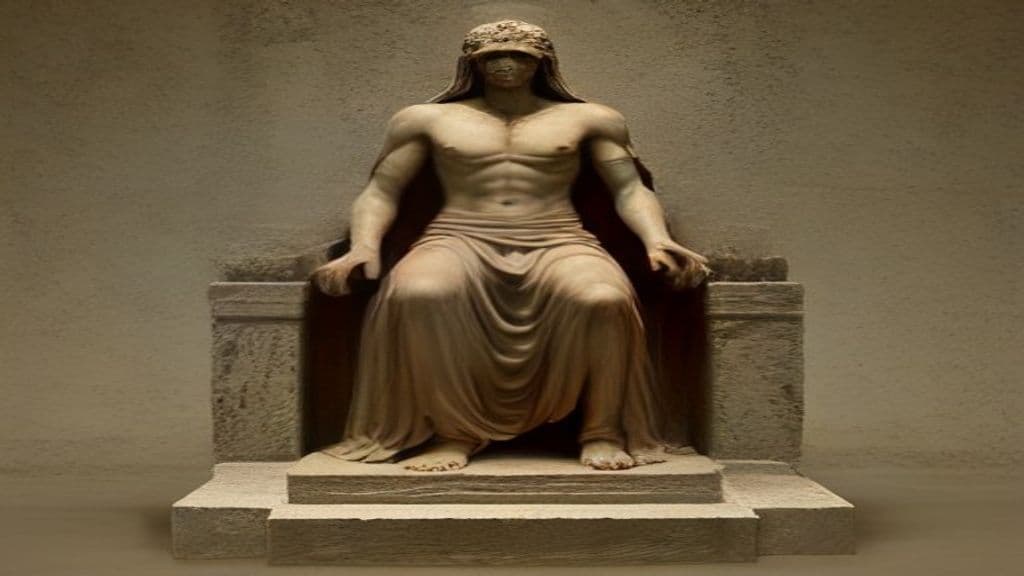
According to Pausanias and later summaries of Theban tradition, Caanthus is counted among the offspring of Oceanus and Tethys and is brother to the nymph Melia. In the mythic generation contemporary with Cadmus and other early Theban figures, Oceanus ordered Caanthus to seek out his sister Melia after she had been carried off by Apollo. That mission and its consequences compose the core of Caanthus' recorded origin-narrative, preserved in literary and topographical descriptions of Thebes.
Surviving sources do not provide an iconographic or detailed physical description of Caanthus. He is presented in the literary and topographical record as a humanlike mythic actor and as a named tomb-owner in the Theban landscape rather than as a described statue or pictorial type. Pausanias reports the location of his burial 'near a spring above the Ismenion' (the Temple of Apollo at Thebes), and later compilers treat him primarily through his actions, genealogy, and the visible tomb that marked him in Thebes rather than through bodily attributes or costume.
The sources portray Caanthus as a mortal/semidivine actor (a son of Oceanus and Tethys) with no attendant catalogue of supernatural powers; his recorded deeds are filial questing, an act of arson, and consequent lethal retribution. Specifically, he obeyed Oceanus' command to look for his sister Melia, attempted to recover her from Apollo, and when unable to remove her from the god, set fire to Apollo's sanctuary. Apollo then shot and killed Caanthus. Because the tradition describes him as vulnerable to Apollo's divine power and provides no independent magical capacities, he functions in the sources as a local heroic/cult figure rather than a powerful divine or monstrous force.
Weaknesses
- conditionvulnerability to divine retribution (killed by Apollo's arrow)
Wards
None recorded.

Cadmus
Cadmus is a legendary Phoenician prince and culture-hero in Greek myth, credited with founding Thebes, slaying a local dragon/guardian, marrying Harmonia, and—by some ancient sources—bringing a Phoenician script to Greece.

Amphion
Amphion is a figure (or set of figures sharing a name) in Greek myth best known as the son of Zeus and Antiope, twin brother of Zethus, husband of Niobe, and famed in some traditions for using music to raise the walls of Thebes. The name also appears for several minor mythic characters (an Argonaut, an Achaean at Troy, a centaur), indicating multiple onomastic uses in the Greek corpus.
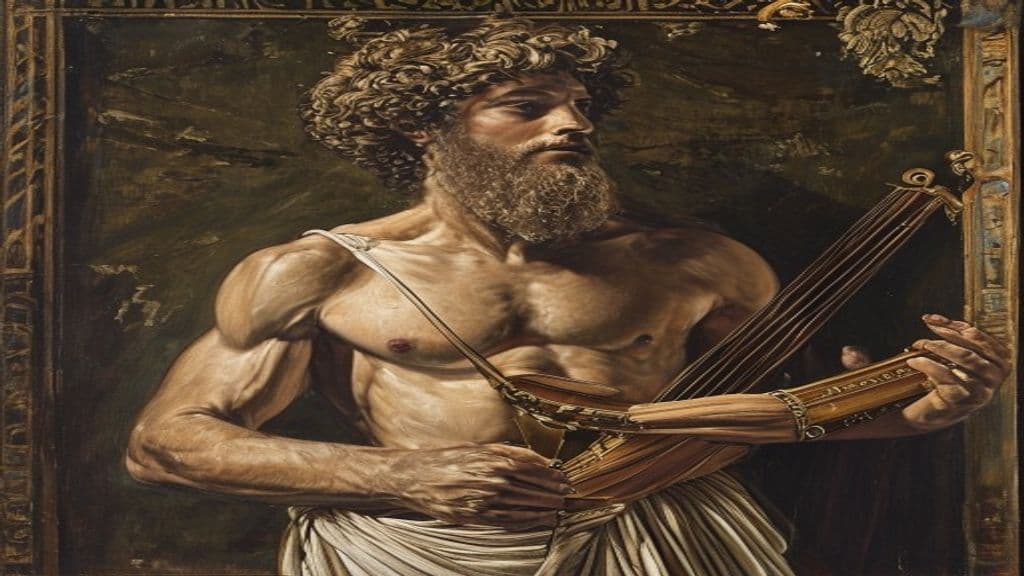
Apollo
Olympian deity of ancient Greek religion associated with prophecy, healing, music, archery, purification, and civic order. Principal patron of the Delphic oracle, protector of youth and flocks, and ambivalently both healer and bringer of plague.
Acis and Galatea
A pair of lovers from ancient Greek myth: Galatea is a Nereid (sea-nymph) traditionally counted among the daughters of Nereus and Doris; Acis is a mortal youth in classical accounts who, in Ovid's poetic version, is killed by the Cyclops Polyphemus and transformed by Galatea into a river-spirit, explaining a Sicilian stream.
Actaeon
A mortal hunter of Greek myth who, in multiple traditions, is transformed into a stag and torn apart by his own hounds after transgressing the goddess Artemis. He functions as a mythic exemplar about proper deference to divine boundaries and, in some locales, became the focus of cultic rites and memorials.
Aesepus
Aesepus is the personified river-god (potamos) of the Aesepus River in the Troad / northern Mysia of Anatolia. Attested in Hesiod's catalogue of river-children and in Homeric and geographic passages, Aesepus functions primarily as a topographical divine ancestor and eponym for a town and local genealogies.
Aethra
Aethra (Ancient Greek: Αἴθρα, romanized Aithra, lit. 'bright sky') is a name borne by multiple women in Greek myth, most prominently a princess of Troezen who is mother of the hero Theseus. In some traditions an Aethra is also listed among Oceanids, indicating a separate, water‑nymph identity in certain genealogies.
Aganippe (naiad)
Aganippe is the local Naiad of the spring called Aganippe at the base of Mount Helicon in Boeotia. The spring and its nymph are traditionally associated with the Muses and with poetic inspiration; the name Aganippe is also used as an epithet in other, sometimes divergent, local mythic or cultic contexts.
Alegenor
Alegenor (Ancient Greek: Ἀλεγήνωρ) is a minor mortal figure in Greek mythic genealogies, attested as a son of Itonus and the father of Clonius and Promachus. He functions in the sources as a genealogical ancestor situating his more active descendants among the Boeotian leaders of the Trojan War rather than as an independently acting supernatural being.
Alexander (name / epithet)
Alexander is primarily an Ancient Greek personal name (Ἀλέξανδρος, Aléxandros) meaning 'defender/protector of men.' In the assembled sources it functions as an anthroponym and occasional divine epithet (e.g., Hera Alexandros) rather than a single, discrete supernatural entity with a consistent mythic ontology.
Alexida
Alexida (Ancient Greek: Ἀλεξίδη) is an attested mythological figure in Greek literary tradition, presented as a daughter of Amphiaraus and the eponymous ancestress from whom the Elasioi (Elasii), averters of epileptic fits, were believed in Argos to descend. She is preserved in surviving references as a genealogical origin rather than an active cultic agent.
Alpheus
Alpheus (Ancient Greek: Ἀλφειός) is the personified river and river-god of the Alpheios in the Peloponnese. He is classed among the river-deities descended from Oceanus and Tethys and appears in myths linking the Arcadian/Elian river to the Sicilian well Arethusa, to Artemis, and to the labors of Heracles.
Amalthea
Amalthea (Ancient Greek Ἀμάλθεια) is a figure of Greek myth most commonly identified as the nurse of the infant Zeus. Traditions variously portray her as a nymph who tended a goat that fed Zeus or, in later Hellenistic treatments, as the goat itself; she is also associated with the "horn of Amalthea" (cornucopia), a horn reputed to yield inexhaustible food and drink.
Amnisiades
The Amnisiades (Ancient Greek: Αμνισιαδες / Αμνισιδες) are a group of naiads — freshwater nymphs — associated with the Amnisos river in Crete. They are attested in Hellenistic poetry as members of Artemis's retinue and are linked by scholarship to cult activity at a cave of Eileithyia on the Amnisos.
Amphictyon
Amphictyon (Greek: Ἀμφικτύων) is a mytho-historical ancestral king in Greek tradition associated with the generation after the great flood and with the foundation/organization of communities that dwelt around sanctuaries (the Amphictyons). He appears in variant genealogies as son of Deucalion and Pyrrha or as son of Hellen, is called king of Thermopylae and in some accounts king of Athens, and is etiologically linked to the Amphictyonic League and early cultic practice.
Community Record
- [1]Description of Greece (Pausanias) — accounts summarized. Pausanias, Description of Greece; summarized in modern compendia noting Caanthus' burial near the Ismenion and his attack on Apollo's sanctuary.literary
- [2]Caanthus — Wikipedia. Wikipedia entry summarizing Pausanias and later scholarship on Caanthus' parentage, mission to recover Melia, arson of Apollo's sanctuary, death, and tomb near the Ismenion.wiki
- [3]Caanthus | Facts, Information, and Mythology (Pantheon.org). Modern compilation summarizing ancient accounts of Caanthus' genealogy, deeds, and Theban burial-place.other
- [4]Melia (consort of Apollo) — Wikipedia. Entry on Melia summarizing her identification as an Oceanid/Naiad of the Ismenian spring and her role in Theban genealogies related to Apollo; provides contextual background for Caanthus' mission.wiki
- [5]Ismenus (Ismenos) — Theoi Project. Summary of Theban river-god and related local mythic genealogies, providing contextual links between Melia, the Ismenian spring, and Theban sanctuary traditions.other