
Scholarly and folkloric accounts place the chort within a history of syncretism. In Slavic pre-Christian frames the lexical root (*čьrtъ) has been connected by different hypotheses to notions of enchantment (*čarъ/*čara 'magic'), to cutting or lameness (*ker- giving forms meaning 'lame' or 'short'), and to drawing a line or furrow (*čersti / čьrtǫ), which has led some scholars to suggest an original fate-determining or draughtsman role. Under Christianization that older profile was merged with concepts of Satan and Hell so that chorts appear in many sources as numerous lesser denizens of Hell or as devilish minions. In some localized narratives a singular chort is even named as a son of mythic figures (one account links a chort to Chernobog and Mara). In Anatolian and Turkic-adjacent materials the cognate Çor occupies a parallel unseen realm of spirits that may be benevolent, malevolent, or neutral, demonstrating cross-cultural exchange in border regions.
Descriptions across Slavic areas portray the chort as an anthropomorphic but clearly nonhuman figure. Common features include horns, a tail, fur, a snout, claws and hooved feet (sometimes a single hoof), and backwards-bent knees or bird-like feet described in Ukrainian accounts as 'chicken' or 'stork' feet. Eyes and tongue are reported as of a 'hellish' colour. Tales emphasize imperfect shapeshifting: a chort may don human clothing to appear as a handsome young man, a count, or a huntsman yet betray itself by small details—hidden small horns in the hair, a single hoof inside a boot, a tail or fur showing under garments. Czech and Slovak descriptions often give the 'true form' as a smallish hairy man with tail, horns and one or two hoofs; Ukrainian descriptions stress a motley, failed-evil look rather than perfect malevolence.
Folktales and ethnographic summaries depict chorts as tricksters and tempters who bargain for human souls or attempt to induce vice (notably greed). In Czech and Slovak narratives the čert repeatedly tempts people to sell their souls for worldly gains but can be outwitted, and in many tales the čert himself is tricked into laborious tasks (building walls, digging ponds, moving stones). Shapeshifting is common but imperfect. In Ukrainian tradition chorts are also credited with producing negative things in the world—folk accounts attribute to them items and features such as vodka, tobacco, cliffs and ravines—and they are described as able to interact physically with the world. Turkic-adjacent Çor materials further describe such beings as sometimes composed of fire yet still able to affect people and objects; moral valence in those contexts can be mixed (Ak-çor = white/good, Kara-çor = black/evil, or neutral). Within folk-Christian framing chorts function as lesser minions of Satan or as inhabitants of Hell under Lucifer.
Weaknesses
- conditionOpposition by Christian authority / exorcism
- ritualÇoraman (Anatolian/Turkic exorcist figure)
Wards
- ritualExorcism/opposition framed by folk Christianity
- ritualÇoraman (named Anatolian exorcist role)
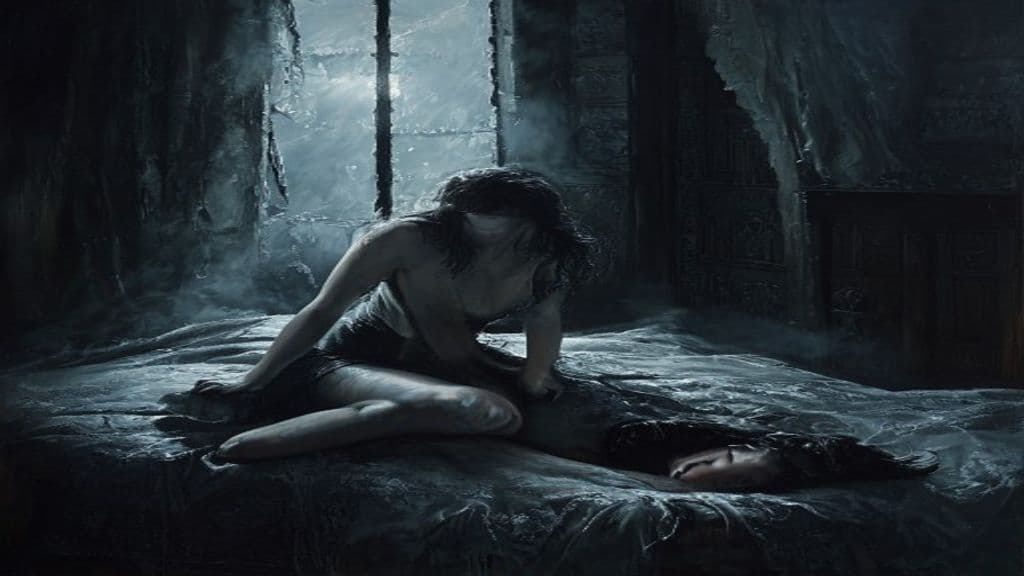
Mara
The nightmare spirit of Northern European tradition who rides sleeping people at night, causing suffocation, terror, and the sensation of an invisible weight on the chest.
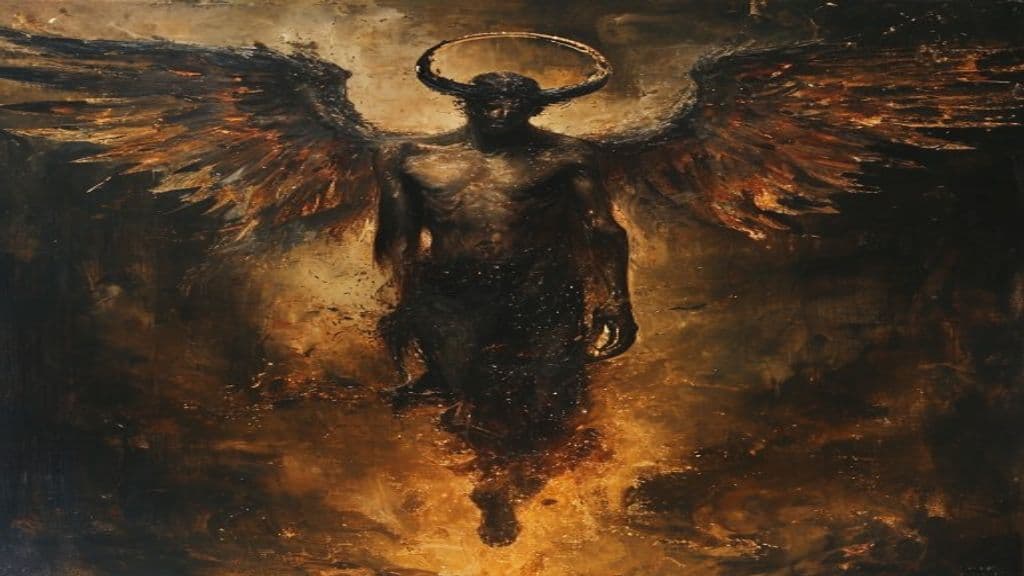
Iblis
The primordial deceiver in Islamic theology; a jinn who refused God's command to bow before Adam and was expelled from heaven. The source of all temptation and whispered suggestion.
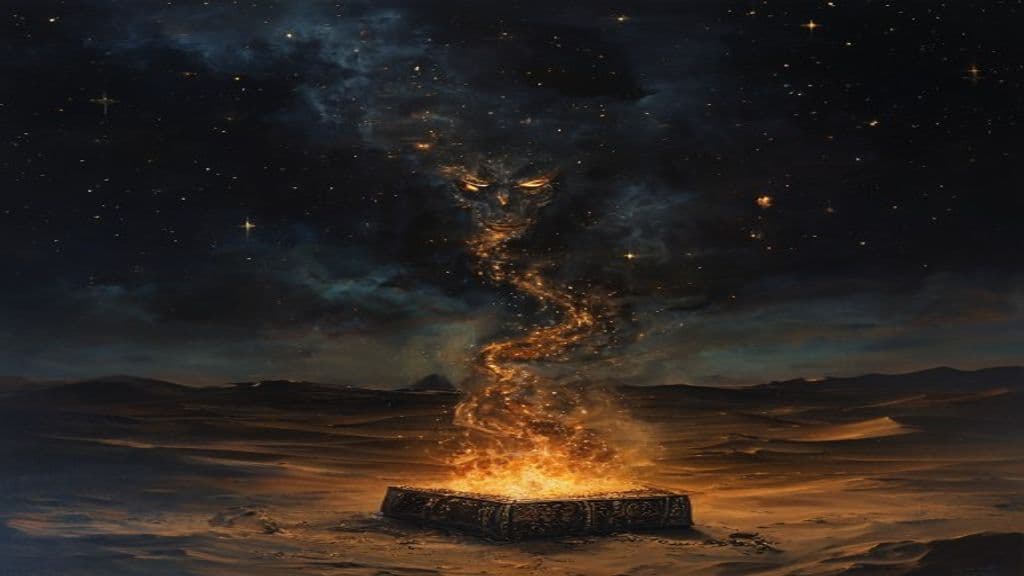
Djinn
The class of supernatural beings created from smokeless fire in Islamic cosmology — a parallel civilization to humanity, capable of belief or unbelief, with their own prophets, society, and judgment before God.
Domovoy
A Slavic household spirit bound to a particular kin/household, the Domovoy is an immanent domestic guardian and ancestral presence who protects the family's wellbeing, monitors moral conduct, and participates in domestic life; it is placated by regular offerings and specific household rites.
Marzanna
Marzanna (Polish form of Morana/Morė/Mara) is a pre-Christian Slavic seasonal goddess/personification representing winter, decay, and the death-aspect of the vegetation cycle. Her ritual 'death'—commonly enacted by destroying a humanlike effigy—marks the communal transition from winter to spring and is paired in tradition with separate spring figures (e.g., Vesna, Lada, Kostroma).
Morana (seasonal goddess)
A pan-Slavic female figure personifying the death of winter whose ritual demise at winter's end is linked to the rebirth of spring goddesses such as Kostroma, Lada, or Vesna. Sources treat her as an ancient goddess associated with seasonal rites and with dreams.
Choking Doberman
A contemporary American urban-legend narrative about a homeowner who discovers a large dog (commonly a Doberman in early tellings) choking on human fingers, which leads to the discovery and identification of a hidden burglar. Treated by folklorists as a paradigmatic "false-true" modern legend and used to signal domestic vulnerability and the prudence of protective measures.
Chokmah
Chokmah (חָכְמָה, 'wisdom') is the second sefirah on the Kabbalistic Tree of Life, described in classical kabbalistic texts as the primordial point of divine wisdom that emerges from Keter and precedes differentiation by Binah. It functions as an abstract metaphysical principle and cognitive archetype rather than a personified spirit in the provided sources.
Chonchon
A Mapuche legendary being described as the detached, flying head of a sorcerer or person who has entered into sorcery. The chonchon is associated with kalku (evil sorcerers), nocturnal covens, and functions as an omen-bearing, predatory extension of illicit witchcraft in southern Chile and Argentina.
Chondu the Mystic
Chondu the Mystic is a recurring Marvel Comics character: a human practitioner of the mystic arts who becomes a criminal associate of the Headmen and undergoes repeated bodily and mental transference, including monstrous transformations and brain transplants. He functions as an antagonist in stories that blend magic and mad-science.
Choronzon
A figure from Enochian and Thelemic occult literature described as the 'Dweller in the Abyss' and a dispersive, shapeshifting force encountered in ceremonial evocation; in Crowleyan Thelema Choronzon functions as the final liminal obstacle associated with the Abyss and Binah/Babalon complex.
Chremetes
Chremetes is the Greek name of a river in Libya and the river's divine personification (a Potamos). He appears in classical geographical and mythographic lists and as the father of the naiad Anchiroe, serving a primarily local genealogical and toponymic role in Greek sources.
Christ Child
The Christ Child (also Baby Jesus, Infant Jesus, Divine Child) is the figure of Jesus Christ in his infancy and childhood (up to about age 12). In Christian textual and devotional traditions he is not a separate being but the incarnate Jesus during early life, the focus of nativity narratives, apocryphal infancy stories, liturgical feasts, and widespread devotional images.
Christ Pantocrator
Christ Pantocrator is an iconic Eastern Christian depiction of Jesus emphasizing his sovereignty, judgment, and sustaining rule. It is a visual-theological image used in liturgy and church architecture (domes, apses, iconostasis) rather than a folkloric autonomous being.
Christian God
In Christian tradition, God is the single supreme divine reality believed to be eternal, the creator and preserver of all things, both transcendent over and immanent within creation; many Christians conceive this one God as three Persons (Father, Son, Holy Spirit). Christian sources also teach that the Son assumed human nature in the Incarnation.
Community Record
- [1]Chort — Wikipedia. Wikipedia contributors, 'Chort,' Wikipedia, The Free Encyclopedia.wiki
- [2]Chort in the wild (archival photography). Archive.org collection entry 'Chort in the wild' (photography)other
- [3]Chort Closeshot (archival photography). Archive.org collection entry 'Chort Closeshot' (photography)other
- [4]Notes on Turkic Çor and Anatolian variants (compiled in research notes). Compiled research notes supplied to editor summarizing Turkic cognates Çor, Çorabaş and the exorcist role Çoraman.folk