
The contemporary Christmas elf arises in the 19th–20th century popular and commercial culture that consolidated Santa Claus/Saint Nicholas imagery with regional household-spirit figures. Literary influence (notably the 1823 poem A Visit from St. Nicholas which calls Santa ‘a right jolly old elf’) and later visual/media standardization (19th-century periodicals and 20th-century film/television) merged the idea of diminutive helper-beings with the developing figure of Santa. Older etymology links the English word elf to Old Norse álfar and the modern persona is understood as a syncretic descendant influenced by tomte/nisse, kobolds and brownies rather than a direct continuation of a single ancient origin.
Popular contemporary depictions present Christmas elves as small, plump or childlike humanoids often clad in red or green clothing with pointy hats and large pointy ears; mid-20th-century media reinforced colorful costumes (red, green, blue, pink) and cone-shaped hats. Variants in film and television portray them as very small people (via forced perspective, child actors, or CGI), as childlike despite long lifespans, or occasionally as furry, tailed creatures depending on the production. Specific visual stereotypes (e.g., a short, plump workshop elf and one taller/thinner bespectacled elf) derive from influential media like the 1964 Rudolph special and various Santa-themed films.
In the modern mythos Christmas elves are portrayed primarily as skilled craftspersons and support staff: they are often said to make toys in Santa's workshop and to take care of his reindeer, and are depicted organizing and executing seasonal logistics. Sources describe them as long-lived (often said to live for hundreds or even thousands of years) and sometimes portrayed as ageless or eternally youthful. Contemporary media extend their roles into ranked workforces (head elves, elite teams) and specialized functions (toy artisans, maintenance technicians, and in some fictional depictions security or pilot-like roles), but these organizational and technological roles are characteristics of modern popular culture portrayals rather than older traditional folklore.
Weaknesses
- otherNo traditional weaknesses documented
Wards
- otherNo documented wards specific to Christmas elves
Kobold
The German household and mine spirit — a mischievous but potentially helpful small being who attaches to a household, bringing luck or disaster depending on how it is treated.

Nisse (tomte / tomtenisse / tonttu)
A Scandinavian household and farmstead spirit tied to a particular homestead; a small, human‑like custodian who performs chores, protects livestock and property in return for annual ritual food offerings (notably Yule porridge), and who can become dangerous if offended or neglected.
Chort
A chort is an anthropomorphic malign spirit figure in Slavic folk tradition that occupies a liminal space between older Slavic demonology and Christian notions of the devil. Depending on region and narrative function it appears as numerous lesser malignant spirits, a trickster antagonist who tempts or is tricked by humans, or as a cover-term for 'unclean forces' credited with various negative creations in the world.
Chremetes
Chremetes is the Greek name of a river in Libya and the river's divine personification (a Potamos). He appears in classical geographical and mythographic lists and as the father of the naiad Anchiroe, serving a primarily local genealogical and toponymic role in Greek sources.
Christ Child
The Christ Child (also Baby Jesus, Infant Jesus, Divine Child) is the figure of Jesus Christ in his infancy and childhood (up to about age 12). In Christian textual and devotional traditions he is not a separate being but the incarnate Jesus during early life, the focus of nativity narratives, apocryphal infancy stories, liturgical feasts, and widespread devotional images.
Christ Pantocrator
Christ Pantocrator is an iconic Eastern Christian depiction of Jesus emphasizing his sovereignty, judgment, and sustaining rule. It is a visual-theological image used in liturgy and church architecture (domes, apses, iconostasis) rather than a folkloric autonomous being.
Christian God
In Christian tradition, God is the single supreme divine reality believed to be eternal, the creator and preserver of all things, both transcendent over and immanent within creation; many Christians conceive this one God as three Persons (Father, Son, Holy Spirit). Christian sources also teach that the Son assumed human nature in the Incarnation.
Christkind
The Christkind is a Central European cultural personification of the Christ Child who functions as the traditional bringer of Christmas gifts in many domestic and civic seasonal practices. Originating in Reformation-era promotion of the infant Jesus as focus of Christmas giving, it persists in diverse regional forms (e.g., Ježíšek, Jézuska) and in civic pageantry such as the Nuremberg Christkindlesmarkt.
Christmas gift-bringer (tradition)
A culturally variable class of midwinter personae across Europe (and diasporic regions) who deliver gifts to children or the poor during seasonal celebrations (Saints' feast days, Christmas Eve, Epiphany, Yule). Treated variously as saintly figures, household spirits, childlike or old-person figures, or secularized modern personae, they function in ritual exchange and moral pedagogy rather than as a single, uniform supernatural being.
Chromia
Chromia (Ancient Greek: Χρωμία, Khrōmía) is a minor mythological woman in Greek genealogies, identified as daughter of Itonus (son of Amphictyon, grandson of Deucalion) and in some traditions named as consort of Endymion and mother of Aetolus, Paeon, Epeius, and Eurycyda. The same modern lexical form 'Chromia' is also used as a name for a public blockchain platform, a Miraheze project wiki, and as the English mineral/oxide term (Cr2O3), but these are homonymous and not conflated with the mythic figure in the available sources.
Chromios
Chromios is an ancient Greek personal name attested for several human figures in classical literary and historical sources (not a single supernatural being). Attestations include Chromios of Aitna, victor in a chariot race celebrated by Pindar (Nemean I, c. 473 BCE); a warrior/captain name found in epic/Homeric indices and scholia; an Argive survivor in the tradition of the Battle of the 300 Champions; and the modern asteroid 32726 Chromios, a Jupiter Trojan named from the Greek onomastic repertoire.
Chromis
Chromis (Ancient Greek Χρόμις) is an anthroponym attested across multiple ancient Greek and Roman mythic episodes. The name is borne by several distinct minor figures — including at least one centaur at the Centauromachy and several mortal warriors in epic war-lists — rather than a single supernatural species or cult figure.
Chrysanthius of Sardis
Chrysanthius of Sardis (Ancient Greek: Χρυσάνθιος; died AD 505) was a late-antique Greek Neoplatonist philosopher and the high-priest of Lydia. A pupil in the lineage of Iamblichus via Aedesius, he is recorded as devoted to the mystical side of Neoplatonism and noted for moderation in his priestly office.
Chrysanthus and Daria
Chrysanthus and Daria are venerated Christian martyrs of the early Church, remembered in liturgical calendars and by the cult of relics. Their legend places them in late third-century Rome, where they converted others and suffered martyrdom; their Acts survive in later Greek and Latin versions judged historically unreliable, while relics attributed to them were translated and enshrined in several medieval sites.
Community Record
- [1]Christmas elf — Wikipedia. Wikipedia: Christmas elfwiki
- [2]Christmas elf — Wikidata entry Q626396. Wikidata: Q626396wiki
- [3]A Visit from St. Nicholas (1823) — referenced in summaries. Wikipedia summary referencing 'A Visit from St. Nicholas' (1823) describing Santa as 'a right jolly old elf'literary
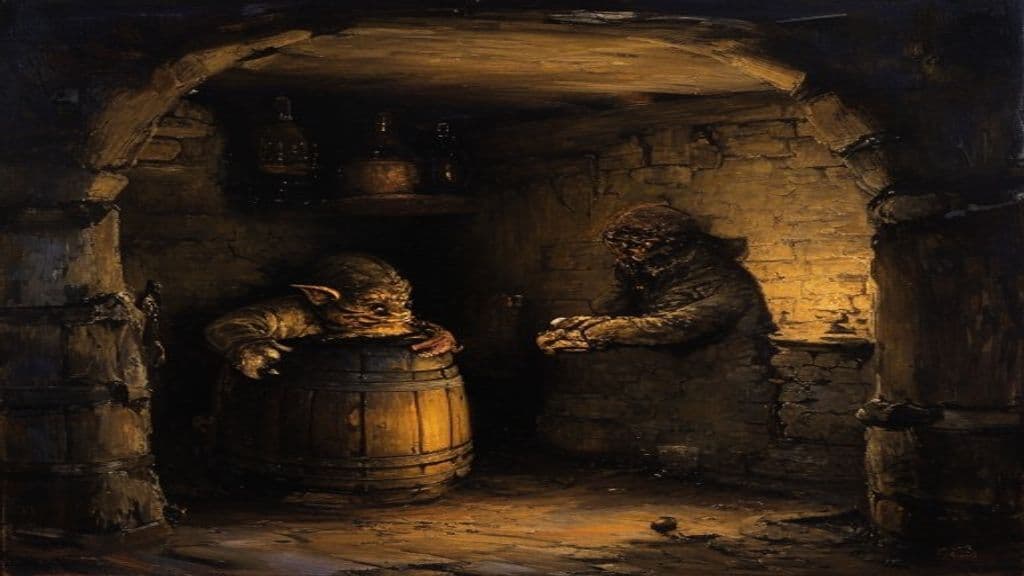
- [4]Archive: A Christmas Elf Inside The Tavern (item reference). Archive item title referenced in research notesother
- [5]Archive: Holiday-related media references (episodes/items). Archive episode referenced in research notesother