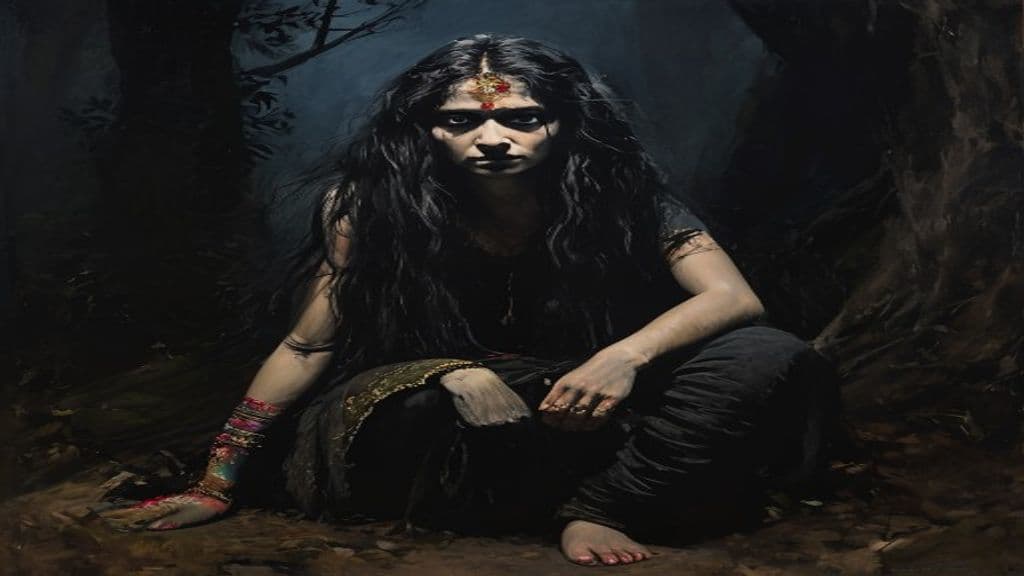
In the materials provided the chudail/churel is described as a class of female revenant that arises after a woman's violent, unjust, or traumatic death (for example rape, murder, or mistreatment). Rather than a single named individual, the term denotes a recognizable type of supernatural female being whose return is culturally framed as response or reparation for unresolved transgression; modern cinematic plots (e.g., the film Chudail No. 1) dramatize the revenant returning to possess and avenge her death when human institutions fail.
Folkloric and cinematic descriptions commonly depict the chudail as a woman with long, scruffy hair and feet turned backwards — visual markers widely recognized in South Asian portrayals. Cinematic and regional variations exist: films and popular media adapt the figure’s look for horror, comic, or sympathetic effect, so appearance can vary by production and local storytelling.
Across folklore commentary and film summaries the chudail is portrayed as a vengeful agent who haunts or attacks those responsible for her death, can possess living persons (film example: the vengeful ghost possesses a wife to kill perpetrators), and disrupts social life (marriages, relationships, community order). Academic analyses emphasize that haunting, possession, and targeted vengeance are common portrayals in both folk narratives and contemporary cinema rather than a single canonical power-set.
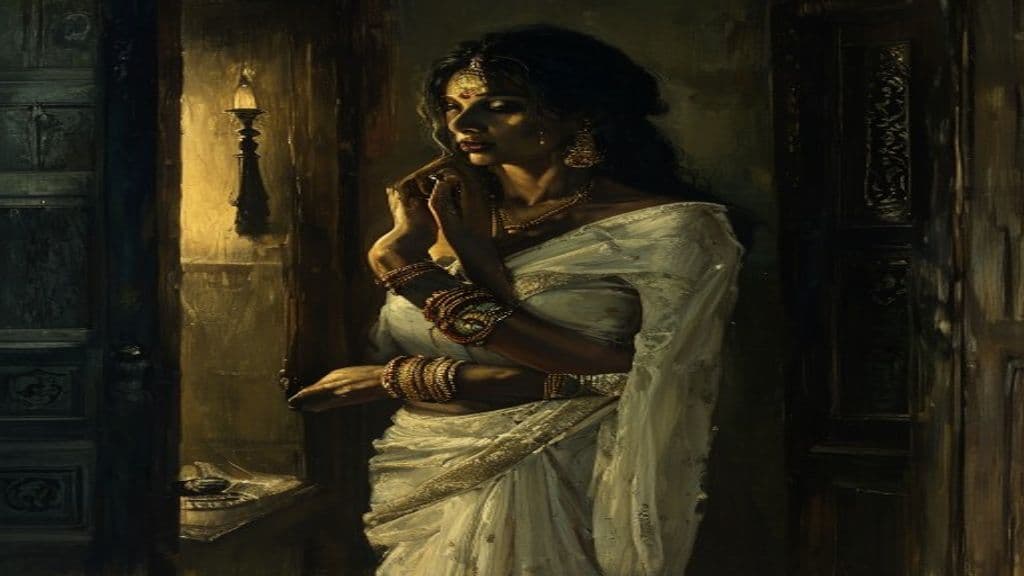
Shakchunni
Bengali ghost of a married Brahmin woman who died before her husband — identifiable by her white sari and conch-shell bangles, she possesses living married women and refuses to relinquish domestic life.
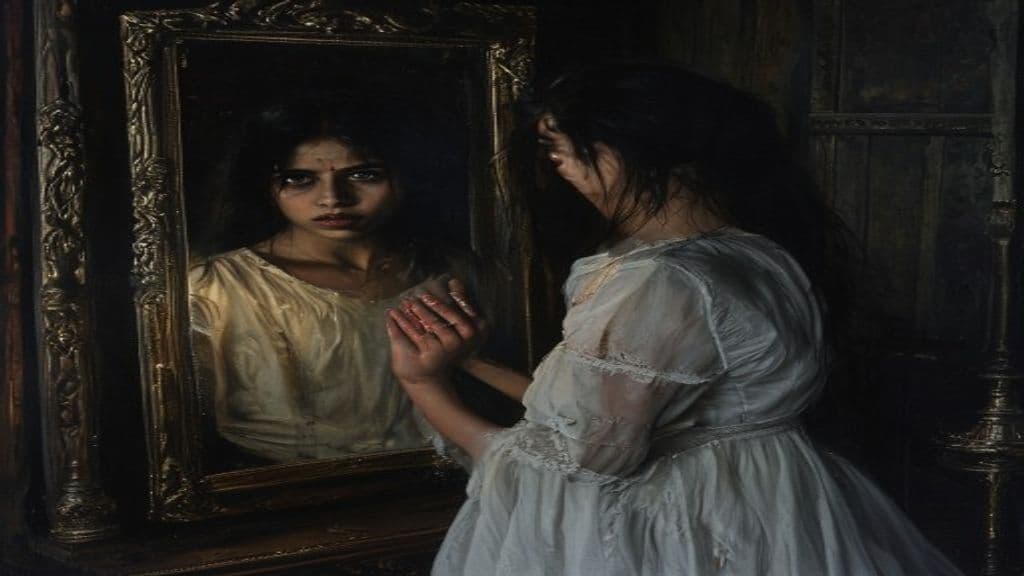
Petni
The female equivalent of the Bengali bhoot — the ghost of a young woman who died unmarried or before fulfilling her expected life. The Petni is more volatile and less predictable than the Shakchunni (married woman's ghost), driven by the particular bitterness of a life foreclosed rather than interrupted.
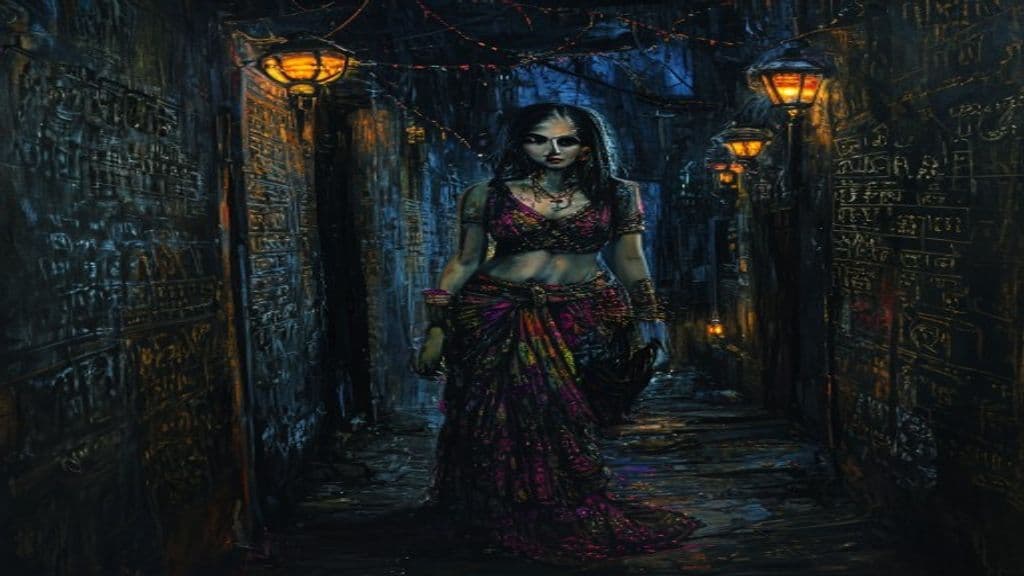
Stree
A vengeful female spirit from Chanderi who abducts men during festival nights. Warded off by the inscription 'O Stree, kal aana' — her legend, still practised on walls across Madhya Pradesh, inspired the 2018 Bollywood horror-comedy.

Churel (Chudail)
A South Asian female revenant or vengeful ghost associated with women who die cruelly or unpurified; often said to target male relatives and sometimes described as latching onto trees, producing a tree‑attached tree‑spirit variant in local tales.
Chrysothemis (daughter of Agamemnon)
Chrysothemis (Ancient Greek Χρυσόθεμις) is a mortal woman in the Greek tragic tradition, presented as a daughter of Agamemnon and Clytemnestra and sister to Electra and Orestes. In surviving dramatic sources she functions as a domestic and psychological foil to Electra: she mourns her father but counsels conciliation and self-preservation rather than avenging Agamemnon's murder.
Chrysus
Chrysus (Ancient Greek Χρυσός, Khrusos) is the personification of the metal gold in ancient Greek literary and scholastic sources. Attested chiefly in poetic lines (Pindar) and scholia, Chrysus functions as a minor divine personification or daimon that indexes gold's value, brilliance, and cosmological provenance rather than a cultic deity with independent mythic narratives.
Chthonia
Chthonia (Ancient Greek: Χθονία, 'of the earth' or 'subterranean') is a polyvalent term in ancient Greek myth and cult used as a personal name for several mythic women, an epithet for gods and goddesses in their earth-or underworld-aspects (notably Demeter), and a poetical/toponymic name for Crete. It marks persons, sanctuaries, festivals and divine functions associated with the chthonic (earth/subterranean) domain rather than designating a single, individuated supernatural being.
Chthonius (Χθόνιος / Chthonios)
Chthonius is an Ancient Greek name and epithet meaning "belonging to the earth/the underworld." It is applied to multiple distinct mythic figures — several mortal or semi-divine personages (a Spartos, a son of Aegyptus, a founder-son of Poseidon and Syme, a Centaur, a Giant) — and used as a chthonic epithet for major gods; in modern taxonomy it names a genus of pseudoscorpions.
Chuchunya (Yeti / Abominable Snowman)
A large, hairy, humanoid creature reported in modern legend and cryptozoology as inhabiting the Himalayan mountains; presented in contemporary sources as a mythical humanoid or cryptid rather than a well‑documented indigenous cosmological being. Much alleged evidence consists of anecdotal sightings, disputed recordings, photographs, and footprint casts, some of which have been judged hoaxes.
Chud
The Chud (Russian: Чудь) are an ancient, mythic people in Russian and several Finno‑Ugric oral traditions. Presented as a pre‑modern population, they appear in legends as a displaced, assimilated, or subterranean society whose disappearance and former condition help explain features of landscape and cosmology in regional folklore.
Chuhaister
Chuhaister (Ukrainian: Чугайстер) is a forest tutelary figure specific to the Ukrainian Carpathians. Portrayed both as an individual-like personage and as a limited-number type (accounts speak of one, or three, four, or seven Chuhaisters), he is an ambivalent forest man who hunts other wild spirits (notably mavkas), is associated with wind and storm phenomena, and interacts with humans—often as a solitary guardian of deep woods and high mountain wilds.
Chukwu
Chukwu is the supreme creative reality in traditional Igbo religion (Odinani), the source of all existence from which personal chi and lesser alusi derive. Chukwu functions as the ultimate authority, creator, and sustaining principle whose will is mediated in practice through intermediaries such as chi, alusi, diviners and the Arochukwu oracle.
Chullachaqui
A legendary forest being of the Peruvian and Brazilian Amazon described as a small forest creature or 'demon' notable for having one or both feet deformed; traditionally invoked in lore about people becoming lost or frightened in the jungle.
Chuma (Chuma-kik)
No reliable evidence in the provided sources identifies a supernatural entity called 'Chuma' or 'Chuma-kik' in Armenian tradition. The available materials mention the string 'Chuma' in unrelated contexts (personal names, place names, a Slavic word for plague) but supply no folkloric data linking it to Armenian spirits or monsters.
Chupacabra
A contemporary legendary creature or cryptid from parts of the Americas, blamed for unexplained livestock deaths and associated with vampiric puncturing of necks. The figure circulates largely through modern rumor, tabloid reportage, and popular culture rather than as part of an older ritual cosmology.
Chur (pseudo-deity)
Chur (Чур) is a term attested in Russian linguistic and folkloric usage that 19th‑century scholars reconstructed as a boundary patron or household protector. Its status as an actual worshipped god is disputed; surviving evidence is primarily formulaic speech, lexicographic entries, and a few literary citations rather than clear ritual or iconographic attestations.
Community Record
- [1]Chudail No. 1 (film) — Wikipedia. Wikipedia, 'Chudail No. 1' (film summary noting the vengeful ghost possesses Vicky's wife and murders the goons)wiki
- [2]Churel — Wikipedia. Wikipedia, 'Churel' (entry listing regional occurrence and variant names Petni and Shakchunni)wiki
- [3]From Chudail to Devi: Analysing Death, Evil, and Monstrous Femininity in Bulbbul. Revenant journal article (academic commentary describing the chudail as 'a woman with scruffy long hair and backwards-turned feet' and analyzing its function in cultural discourse on gendered violence)academic
- [4]How Is The Representation Of 'Chudail' In Bulbbul Different From Bhool Bhulaiyaa's Monjolika?. Feminism in India article (popular-analytical commentary on modern cinematic representations and the figure's relation to social critique)other
- [5]Stree 3 in Hyderabad: Is a ‘chudail’ roaming around near RGIA? - Telangana Today. News article referencing contemporary popular uses of the chudail motif in media and local discourseother