
The surviving summaries and scholia present Corycia as a local spring-nymph whose name gives its form to the Corycian Cave and its springs on Mount Parnassus. Genealogical traditions vary: she is cited as daughter of a local river-god — in different accounts named Kephisos or Pleistos — and in mythic genealogies she is sometimes paired with Apollo as the mother of Lycorus (Lyrcorus), an eponymous founder-figure for the city Lycoreia. Classical compilations therefore frame her origin as typical of many Greek local nymphs: a water-born daughter of a river-deity who functions as an ancestral or eponymous spirit for place and people in the Delphic sacred landscape (sources identify these points in summaries at Theoi.com and in modern reference overviews such as Wikipedia).
No primary description of Corycia's physical form is preserved in the summarized sources; classical summaries identify her by role, genealogy and topographic association rather than by appearance. Within the conceptual framework of Greek nymph-types, Corycia would have been understood as a naiad — a female spirit immanent to a spring and cave — and thus typically imagined as a youthful female presence associated with flowing water and the cave-spring setting. References that link her to other local nymphs (Castalia, Kleodora, Melaina) and to groups like the Thriae suggest that ancient observers located her visually and cultically within the ensemble of Delphic spring-nymphs, but the sources provide no direct iconographic or descriptive details beyond this contextual association (see Theoi.com, Wikipedia summaries).
The available sources record no discrete miraculous deeds or narrated interventions performed by Corycia herself. As a naiad of a sacred spring and cave she is implicitly a guardian and personification of that water-source, integrated into Delphic sacred topography; such nymphs functioned in Greek religion as local presiding spirits of natural features and could be incorporated into genealogies and local foundation myths (for example, through motherhood of an eponymous founder, Lycorus). One summary expressly calls her a Korykian naiad and notes that she is variably treated as singular or as one of a small sister-group (Corycia/Coryciae), and one modern summary describes her as “one of the Thriae nymphs” of the Corycian spring — an identification that, if followed, would place her among spring-associated figures sometimes linked elsewhere with prophetic or chthonic function. However, the sources do not attribute any particular prophetic, healing, or adversarial powers to Corycia herself; on that basis and given her place-bound role with no attested cosmic or heroic acts, she is best categorized as a Lesser-tier local spirit in the Greek supernatural taxonomy (see Theoi.com; Wikipedia).
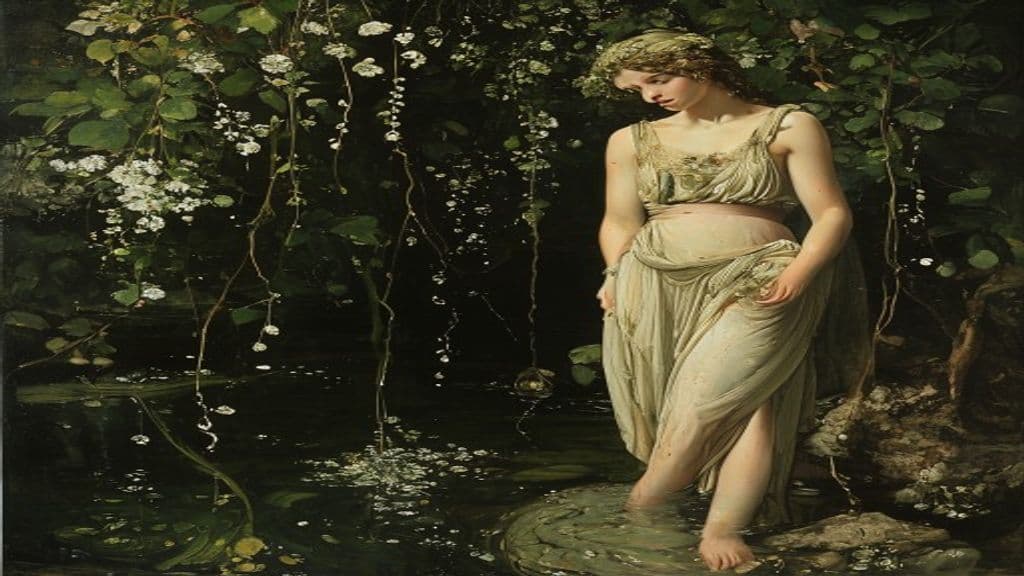
Castalia
Castalia (Ancient Greek Κασταλία, Kastalia) is a mythic naiad-nymph and the eponymous sacred spring of Delphi. In classical tradition she is a daughter of the river-god Achelous whose waters were consecrated to the Muses and were associated with poetic inspiration and ritual cleansing of the Delphic sanctuary.
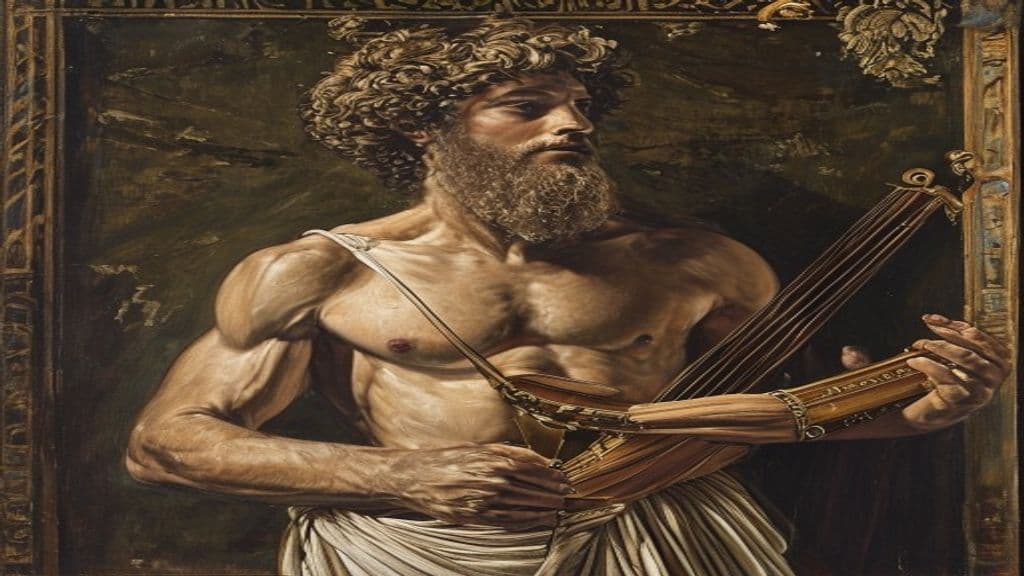
Apollo
Olympian deity of ancient Greek religion associated with prophecy, healing, music, archery, purification, and civic order. Principal patron of the Delphic oracle, protector of youth and flocks, and ambivalently both healer and bringer of plague.
Acis and Galatea
A pair of lovers from ancient Greek myth: Galatea is a Nereid (sea-nymph) traditionally counted among the daughters of Nereus and Doris; Acis is a mortal youth in classical accounts who, in Ovid's poetic version, is killed by the Cyclops Polyphemus and transformed by Galatea into a river-spirit, explaining a Sicilian stream.
Actaeon
A mortal hunter of Greek myth who, in multiple traditions, is transformed into a stag and torn apart by his own hounds after transgressing the goddess Artemis. He functions as a mythic exemplar about proper deference to divine boundaries and, in some locales, became the focus of cultic rites and memorials.
Aesepus
Aesepus is the personified river-god (potamos) of the Aesepus River in the Troad / northern Mysia of Anatolia. Attested in Hesiod's catalogue of river-children and in Homeric and geographic passages, Aesepus functions primarily as a topographical divine ancestor and eponym for a town and local genealogies.
Aethra
Aethra (Ancient Greek: Αἴθρα, romanized Aithra, lit. 'bright sky') is a name borne by multiple women in Greek myth, most prominently a princess of Troezen who is mother of the hero Theseus. In some traditions an Aethra is also listed among Oceanids, indicating a separate, water‑nymph identity in certain genealogies.
Aganippe (naiad)
Aganippe is the local Naiad of the spring called Aganippe at the base of Mount Helicon in Boeotia. The spring and its nymph are traditionally associated with the Muses and with poetic inspiration; the name Aganippe is also used as an epithet in other, sometimes divergent, local mythic or cultic contexts.
Alegenor
Alegenor (Ancient Greek: Ἀλεγήνωρ) is a minor mortal figure in Greek mythic genealogies, attested as a son of Itonus and the father of Clonius and Promachus. He functions in the sources as a genealogical ancestor situating his more active descendants among the Boeotian leaders of the Trojan War rather than as an independently acting supernatural being.
Alexander (name / epithet)
Alexander is primarily an Ancient Greek personal name (Ἀλέξανδρος, Aléxandros) meaning 'defender/protector of men.' In the assembled sources it functions as an anthroponym and occasional divine epithet (e.g., Hera Alexandros) rather than a single, discrete supernatural entity with a consistent mythic ontology.
Alexida
Alexida (Ancient Greek: Ἀλεξίδη) is an attested mythological figure in Greek literary tradition, presented as a daughter of Amphiaraus and the eponymous ancestress from whom the Elasioi (Elasii), averters of epileptic fits, were believed in Argos to descend. She is preserved in surviving references as a genealogical origin rather than an active cultic agent.
Alpheus
Alpheus (Ancient Greek: Ἀλφειός) is the personified river and river-god of the Alpheios in the Peloponnese. He is classed among the river-deities descended from Oceanus and Tethys and appears in myths linking the Arcadian/Elian river to the Sicilian well Arethusa, to Artemis, and to the labors of Heracles.
Amalthea
Amalthea (Ancient Greek Ἀμάλθεια) is a figure of Greek myth most commonly identified as the nurse of the infant Zeus. Traditions variously portray her as a nymph who tended a goat that fed Zeus or, in later Hellenistic treatments, as the goat itself; she is also associated with the "horn of Amalthea" (cornucopia), a horn reputed to yield inexhaustible food and drink.
Amnisiades
The Amnisiades (Ancient Greek: Αμνισιαδες / Αμνισιδες) are a group of naiads — freshwater nymphs — associated with the Amnisos river in Crete. They are attested in Hellenistic poetry as members of Artemis's retinue and are linked by scholarship to cult activity at a cave of Eileithyia on the Amnisos.
Amphictyon
Amphictyon (Greek: Ἀμφικτύων) is a mytho-historical ancestral king in Greek tradition associated with the generation after the great flood and with the foundation/organization of communities that dwelt around sanctuaries (the Amphictyons). He appears in variant genealogies as son of Deucalion and Pyrrha or as son of Hellen, is called king of Thermopylae and in some accounts king of Athens, and is etiologically linked to the Amphictyonic League and early cultic practice.
Community Record
- [1]CORYCIA (Korykia) - Delphian Naiad Nymph of Greek Mythology. Theoi Project, entry 'KORYKIA (Corycia)' summarizing classical sourcesother
- [2]Corycia. Wikipedia article 'Corycia' (summary of classical traditions and variants)wiki
- [3]Corycia (Wikidata). Wikidata item for Corycia (identifier and linked references)other
- [4]ToposText — people: Corycia / Lycorus references. ToposText indexing of classical references related to Corycia and associated figuresother